
Loading, please wait...
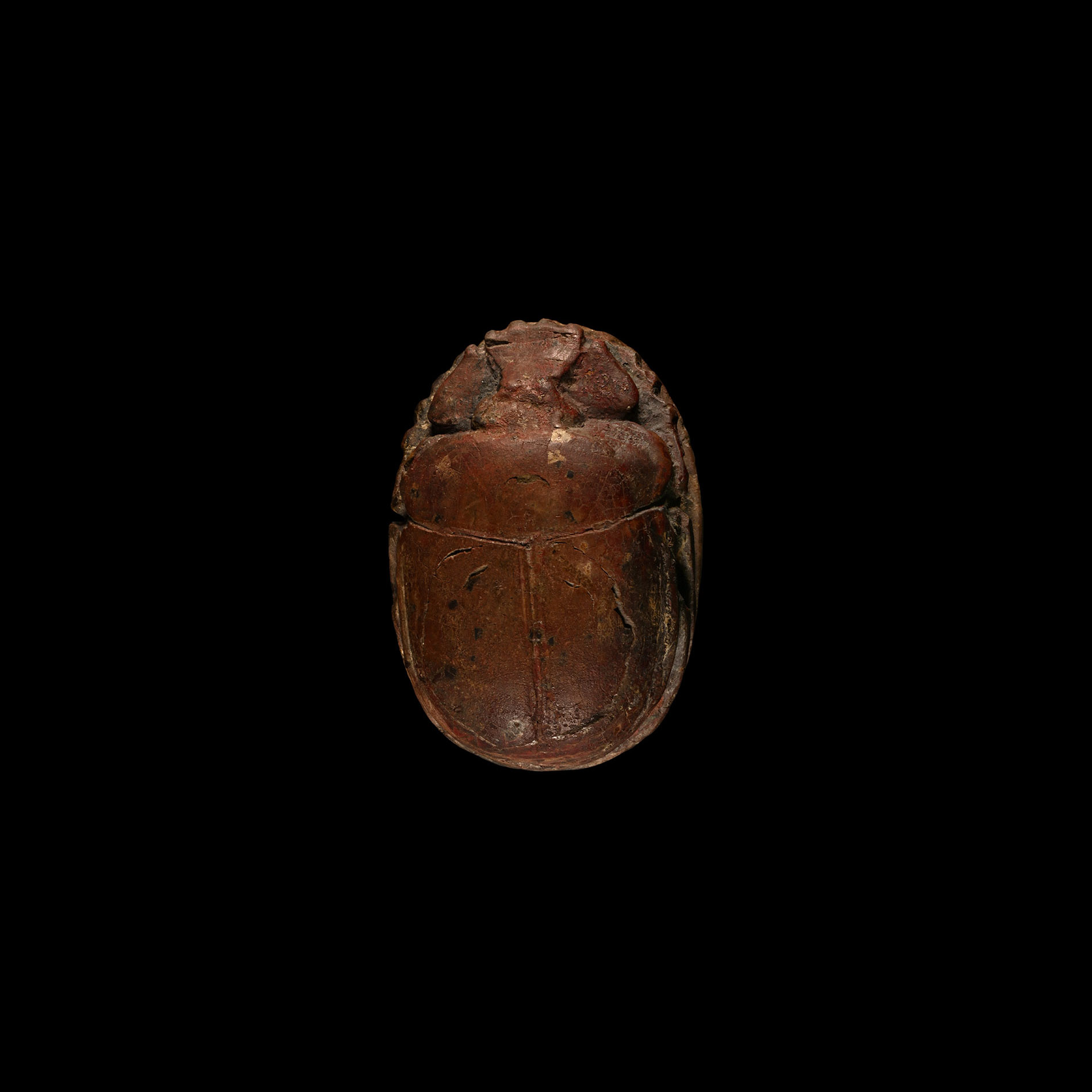
LOT 0035
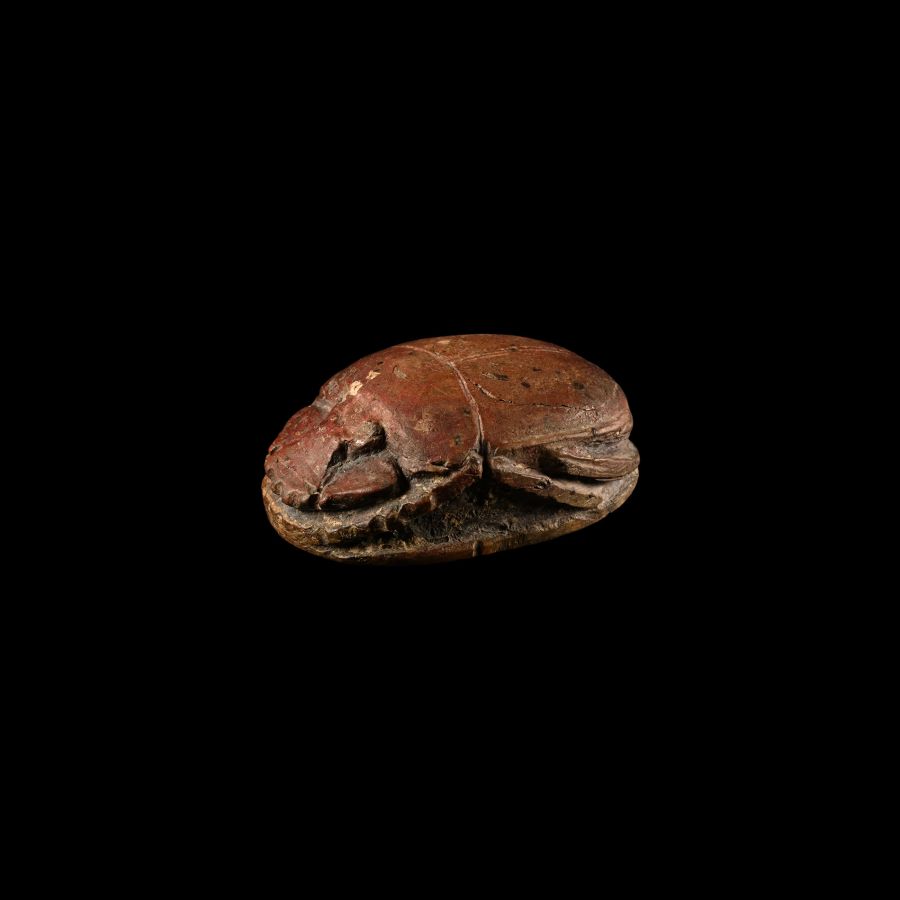
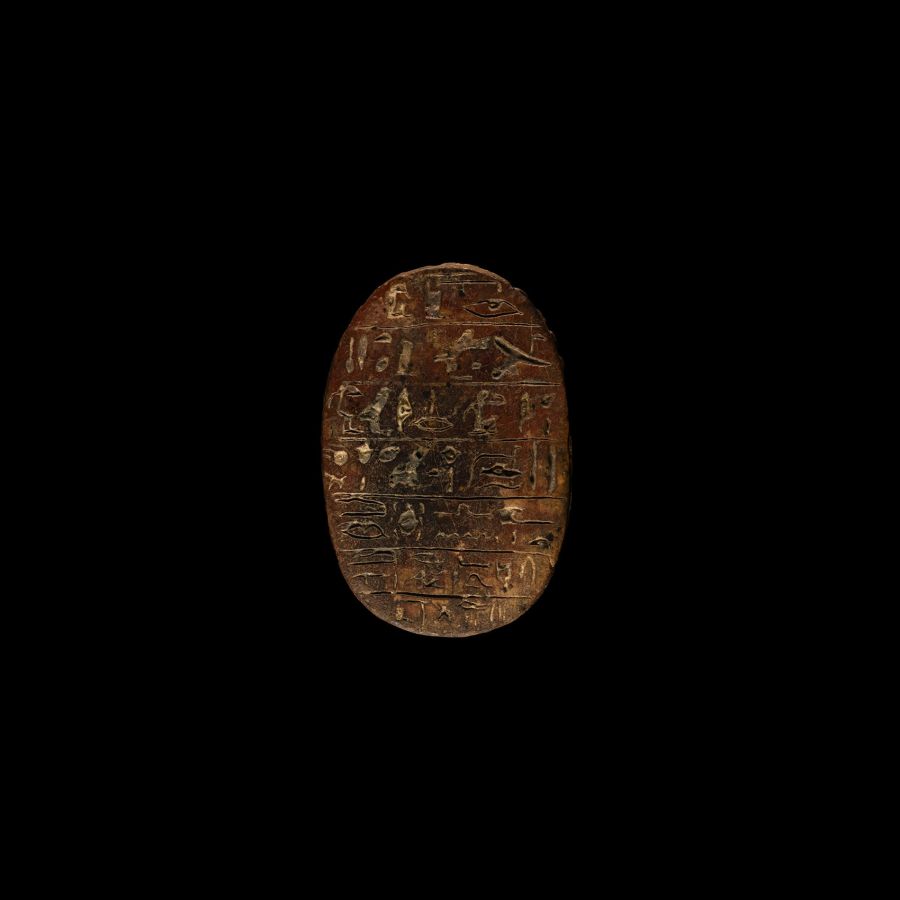
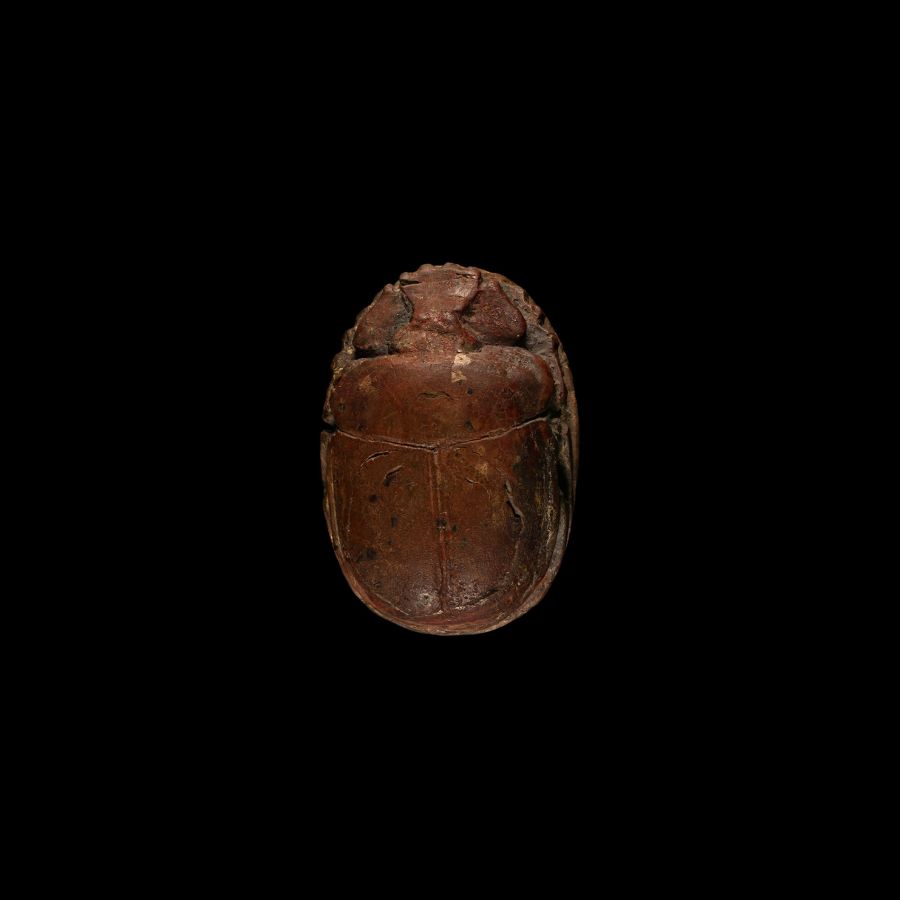
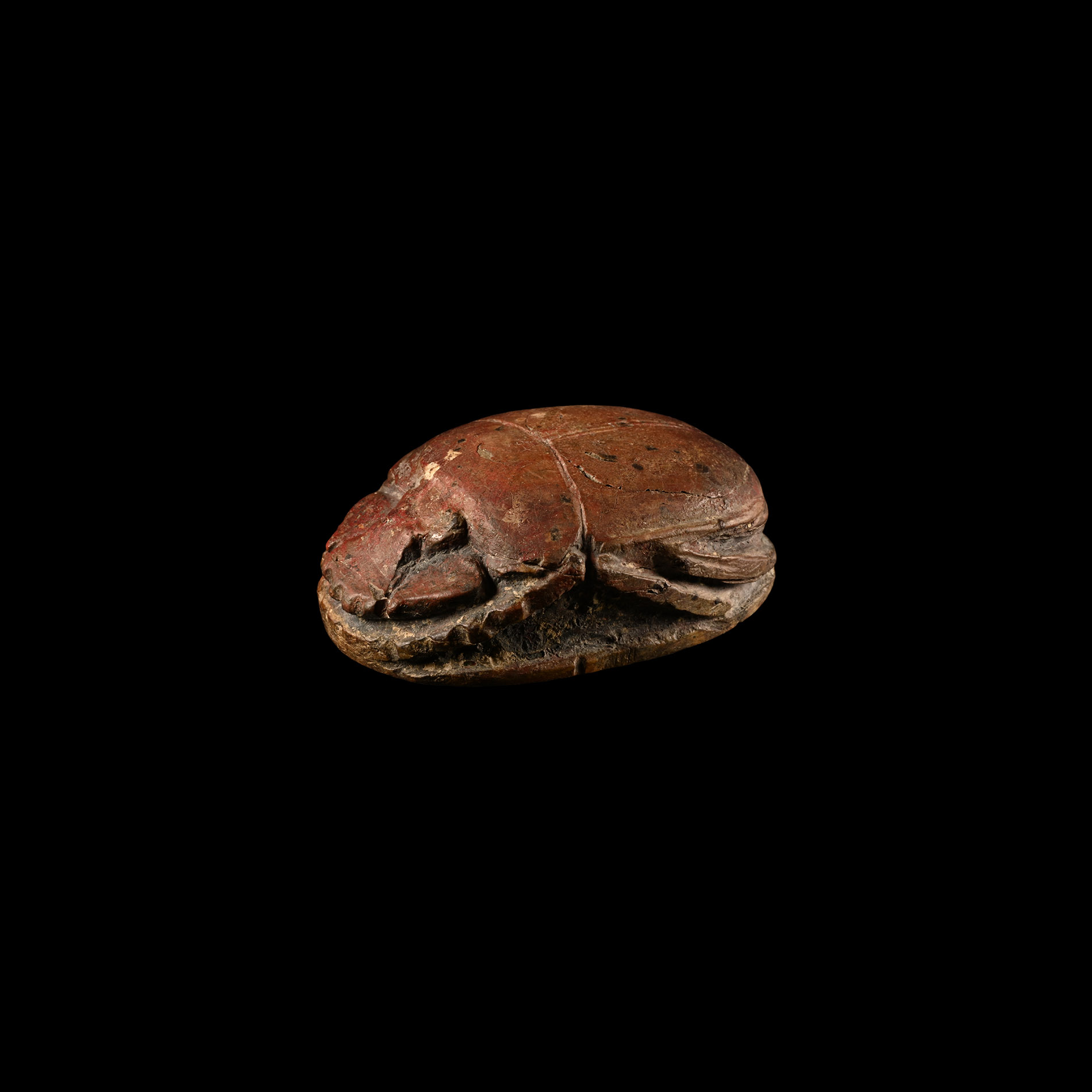
Large Egyptian Heart Scarab with Hieroglyphic Inscription
LATE PERIOD, 664-332 B.C.
2 1/8 in. (68.5 grams, 54 mm).
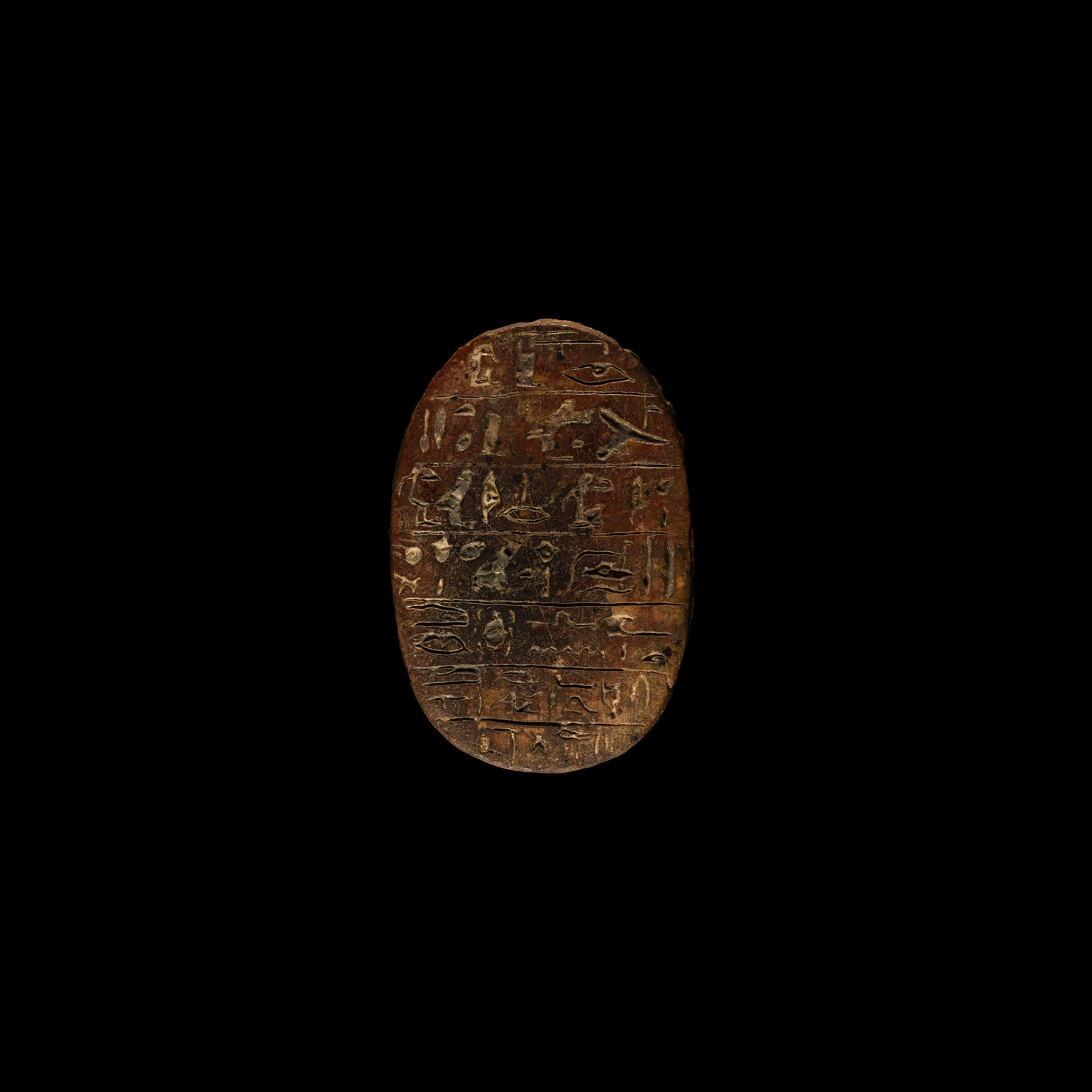
With naturalistic detailing to the upper body and legs; base engraved with seven rows of hieroglyphic text, a version of Chapter 30b of the Book of the Dead; faience or glazed steatite.
ProvenanceEx collection Charles Bouché, (1928 - 2010).
Accompanied by an academic report by Egyptologist Paul Whelan.
Accompanied by a copy of a French cultural passport no.139368.
Accompanied by old sketches of the artefact together with a provisional translation of the hieroglyphic inscription in French; mentioning the god Osiris.
This lot has been checked against the Interpol Database of stolen works of art and is accompanied by search certificate no.11845-206822
Cf. Israel Museum, inv.no.76.18.271, for a heart scaran in green schist; see Cohen Collection of Egyptian Antiquities, inv.no.249, for a small heart scarab in carnelian.
CONDITIONTimeLine Auctions follows a vetting process to ensure the authenticity and legality of all items, reinforcing our commitment to integrity and responsible trading. Each antiquity, antique, and coin lot undergoes thorough examination by a vetting committee of at least ten external specialists, professional trade association members, scientists, and archaeologists: Our Vetting Process
AUCTIONS:
TimeLine is a leading auction house specialising in antiquities, ancient art, collectables, natural history, coins, medals, and books. Our auctions offer museums, collectors, historians, and enthusiasts the opportunity to acquire unique and historically significant pieces.
LOT 0035
Large Egyptian Heart Scarab with Hieroglyphic Inscription
Estimate £8,000 - 10,000€9,280 - 11,600 (for guidance only)$10,800 - 13,500 (for guidance only)
-
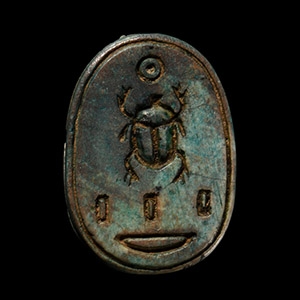
Egyptian Stone Scarab Inscribed for Tutankhamun
New Kingdom, 1334-1325 B.C.Sold for (Inc. bp): £6,500
Naturalistically modelled and coloured blue, hieroglyphs on base; pierced for suspension. 4.55 grams, 20 mm
Ex collection of Emil Saad, Paris-Alexandria. -
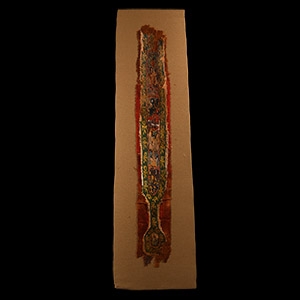
Egyptian Mounted Coptic Textile with Animals
Circa 6th-7th century A.D.Sold for (Inc. bp): £169
Comprising a clavus decorated with various bright colours (green, brown, pink, blue, yellow) with stiff animal figures (dragons and stylised eagles) and a cockerel(?) inside the orbiculus. 138 grams, 70 x 18.2 cm
Acquired 1970s-1996. Property of a North American collector. London collection, 2016.
Tabby technique on linen and wool. It is highly probable that this tapestry was part of a tunic decoration, the clavus with preserved orbiculus, running vertically on the breast and on the back of it. -
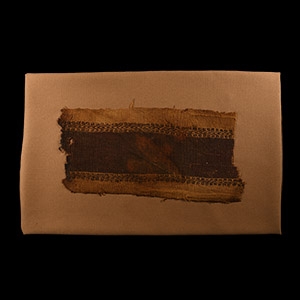
Egyptian Mounted Coptic Textile
Circa 5th-6th century A.D.Sold for (Inc. bp): £33
The decorative border from a garment (cloak?), wool weaving on linen and purple, tendril pattern; the wide, undecorated central red purple panel framed with purple wavy tendrils with arrowhead-shaped leaves. 131 grams, 41.5 x 26 cm
Acquired 1970s-1996. Property of a North American collector. London collection, 2016.
Cloaks and mantles were the main type of outer garments worn by men in late antiquity. They are mentioned in the sources under a variety of names: birrus, caracallus,cucullus, lacerna, sagum, paenula and paludamentum. Unfortunately, despite the fact that cloaks were such important garments they are preserved in far fewer numbers from burials in Egypt than tunics, except as fragments.
