
Loading, please wait...
LOT 0046
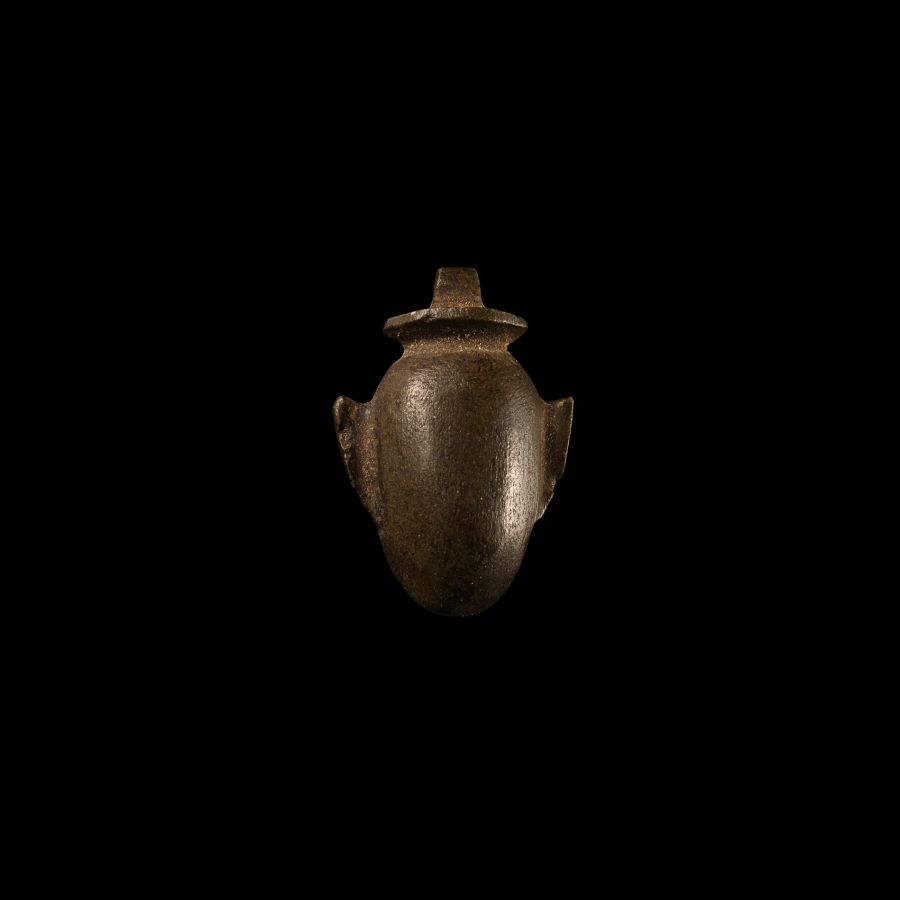
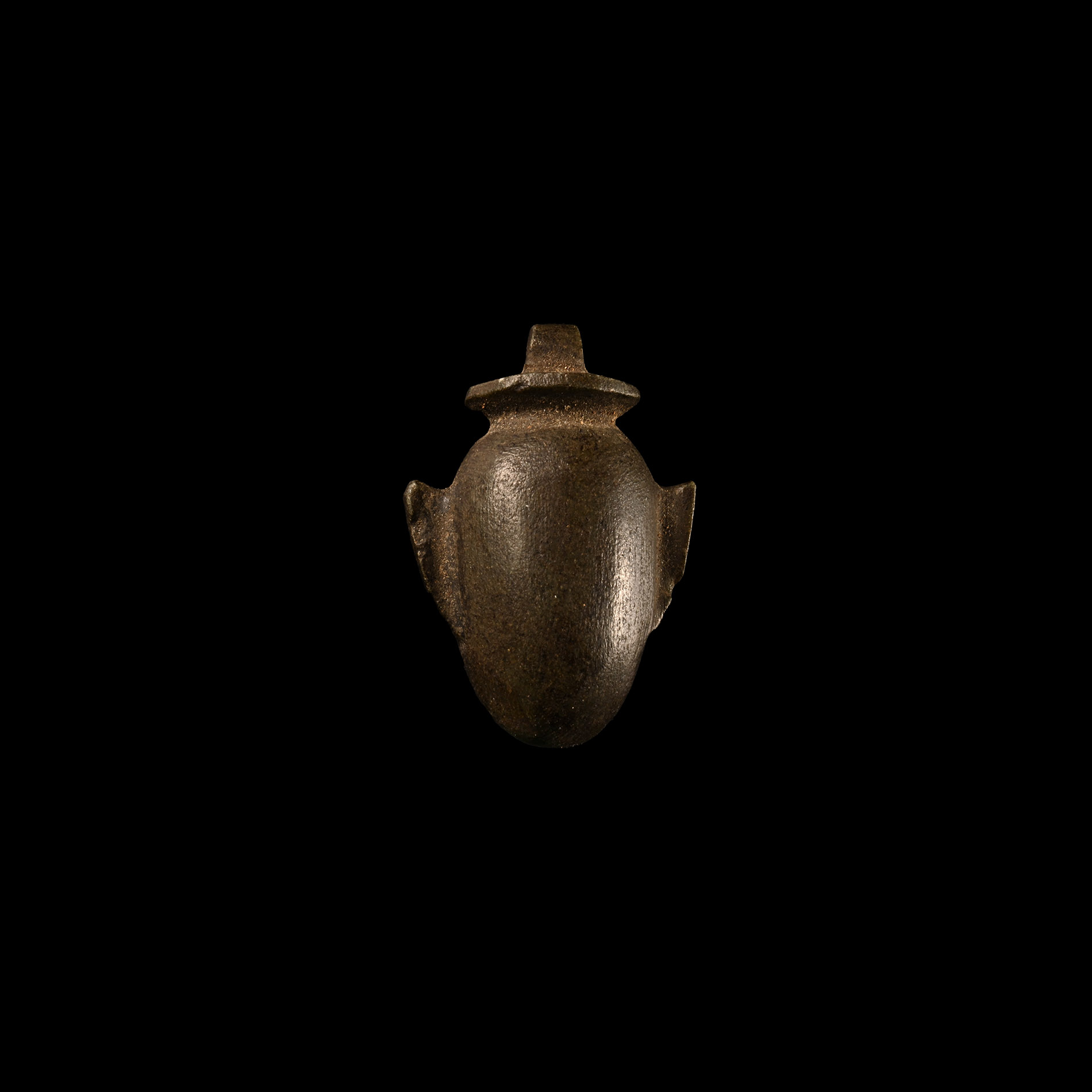
Large Egyptian Hardstone Heart Amulet
LATE PERIOD, 664-332 B.C.
1 1/8 in. (7.24 grams, 29 mm).
Oval-bodied with a discoid top and integral suspension loop. [No Reserve]
ProvenanceFrom an early 20th century collection, Carnavon, North Wales, UK.
LiteratureCf. The Metropolitan Museum, New York, accession number 10.130.1796, for a very similar example.
CONDITIONTimeLine Auctions follows a vetting process to ensure the authenticity and legality of all items, reinforcing our commitment to integrity and responsible trading. Each antiquity, antique, and coin lot undergoes thorough examination by a vetting committee of at least ten external specialists, professional trade association members, scientists, and archaeologists: Our Vetting Process
AUCTIONS:
TimeLine is a leading auction house specialising in antiquities, ancient art, collectables, natural history, coins, medals, and books. Our auctions offer museums, collectors, historians, and enthusiasts the opportunity to acquire unique and historically significant pieces.
-
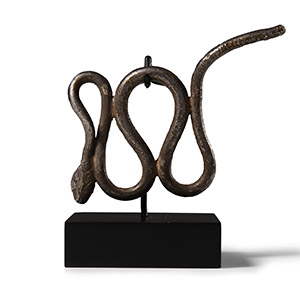
Egyptian Silver Snake Appliqué
Roman Period, 30 B.C.-323 A.D.Estimate: £600 - 800 (+bp*)
Opening Bid: £333
With its body forming meandering loops, stylised detailing to the head and tail; remains of mounting lug to the reverse of the head. 40.6 grams, 73 mm
‘The Ancient Menagerie Collection’ formerly the property of a Cambridgeshire lady, collected since the 1990s and acquired from auctions and dealers throughout Europe and the USA, now ex London collection. -
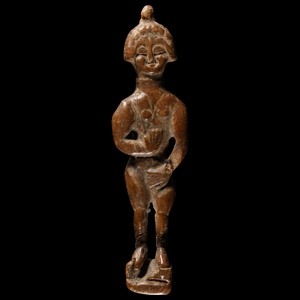
Egyptian Coptic Wood Female Figure
Circa 6th-7th century A.D.Sold for (Inc. bp): £130
Carved in the round, standing and with a bobbed hairstyle with ribbed bands and crest, extended hands covering stomach and pudenda; on a rectangular base; repaired. 72 grams, 19.5 cm
Acquired 1970s-1996. Property of a North American collector. London collection, 2016. -
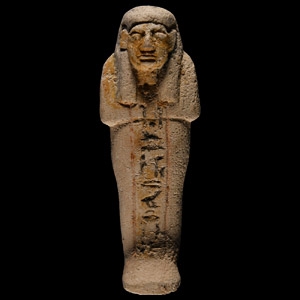
Egyptian Painted Limestone Hieroglyphic Shabti for Iru-iry
Late New Kingdom, circa 1000 B.C.Estimate: £1,000 - 1,400 (+bp*)
Opening Bid: £500
With remains of pigmented tripartite wig, face and upper body, with frontal column of hieroglyphic text with black fill and red borders, dedicating the shabti to 'The God's Father (a priestly title), Iru-iry(?)'. 95.8 grams, 11.2 cm
Acquired 1970s-1996. Property of a North American collector. London collection, 2016.
