
Loading, please wait...


LOT 0693
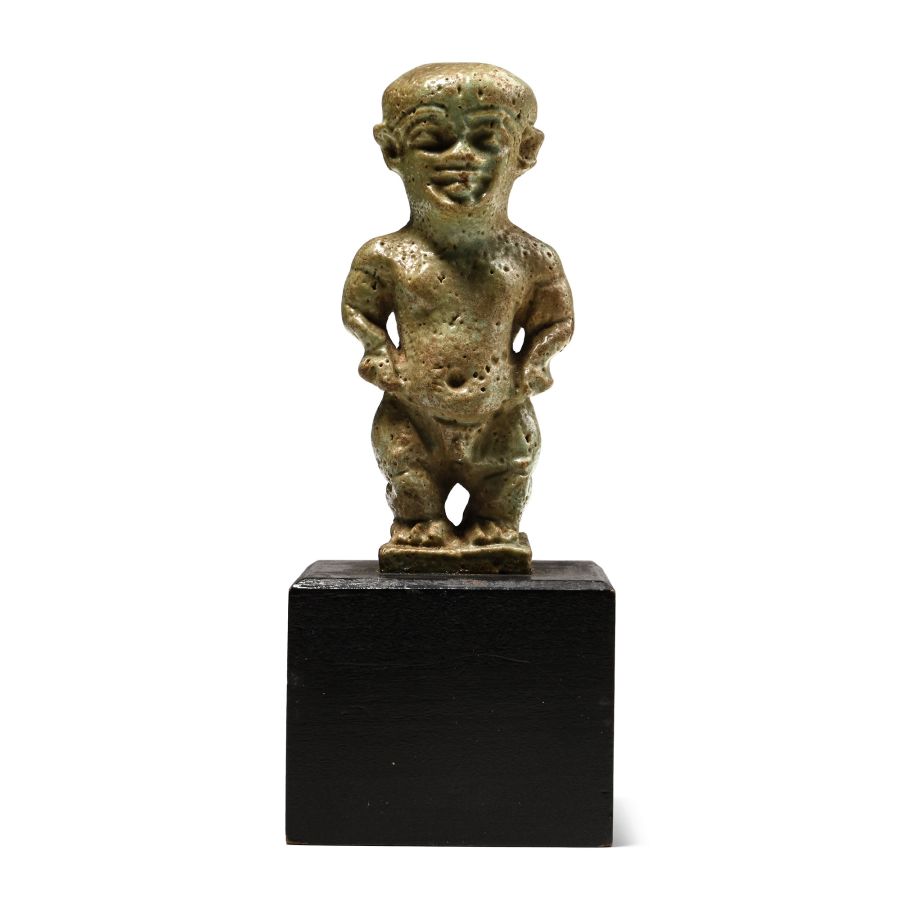
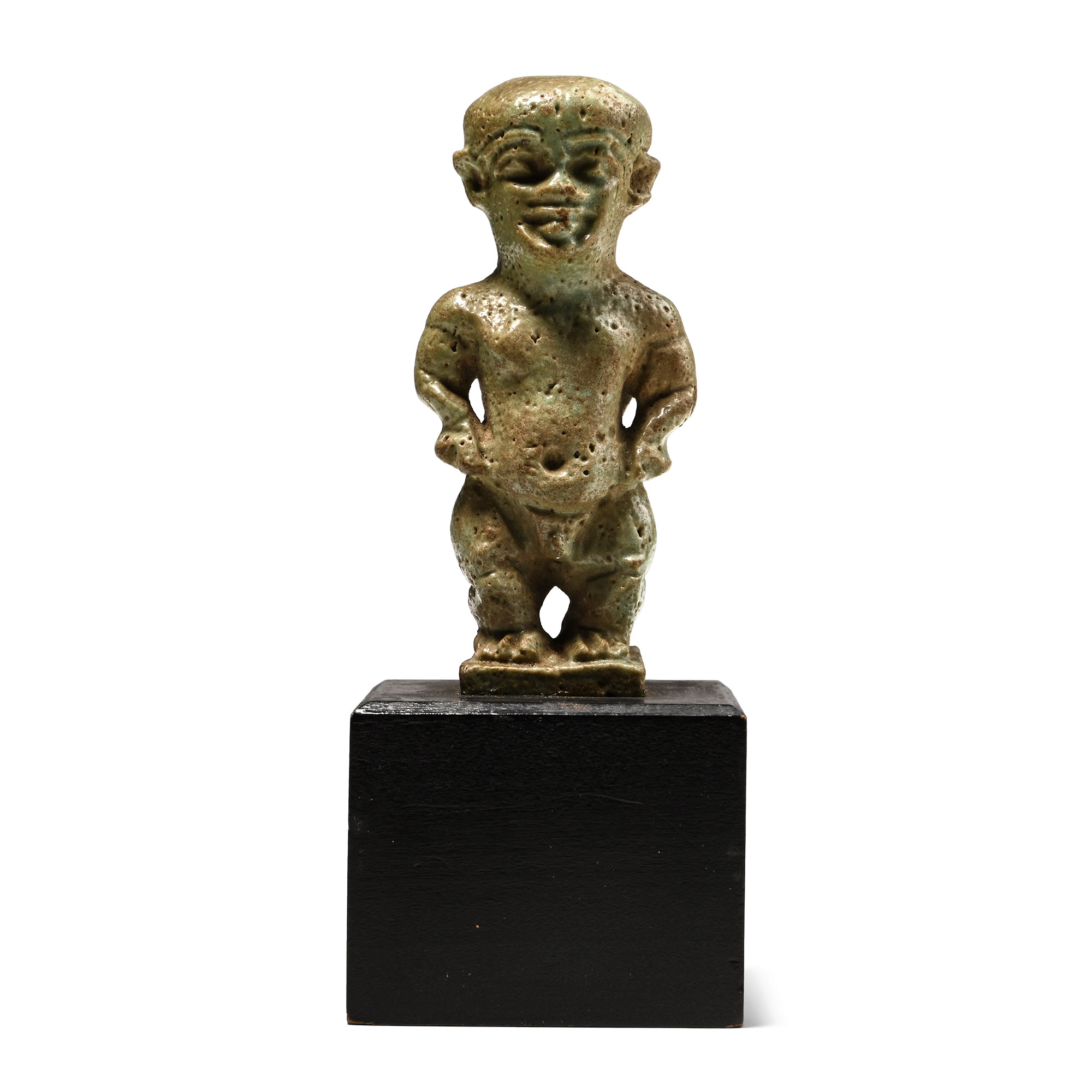
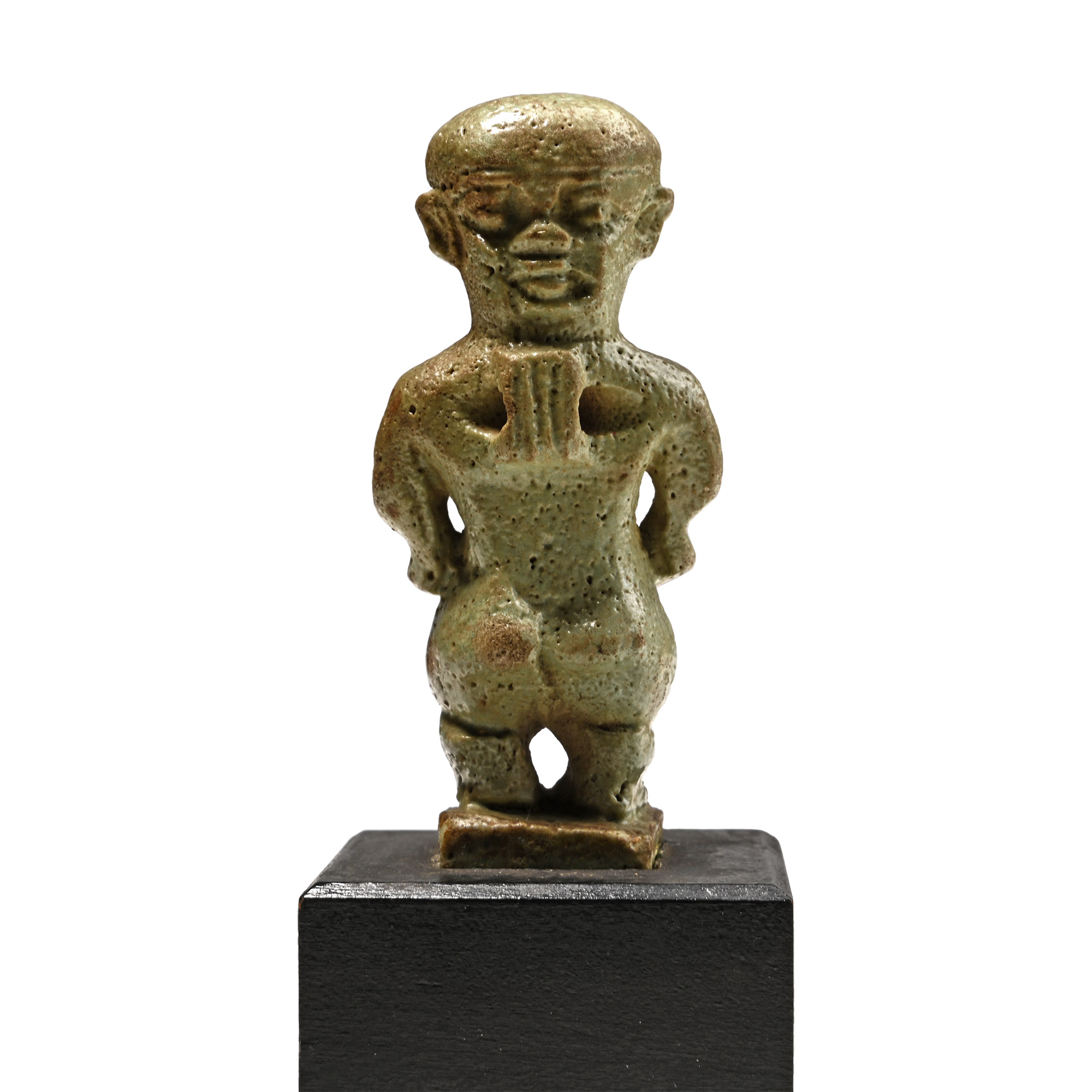
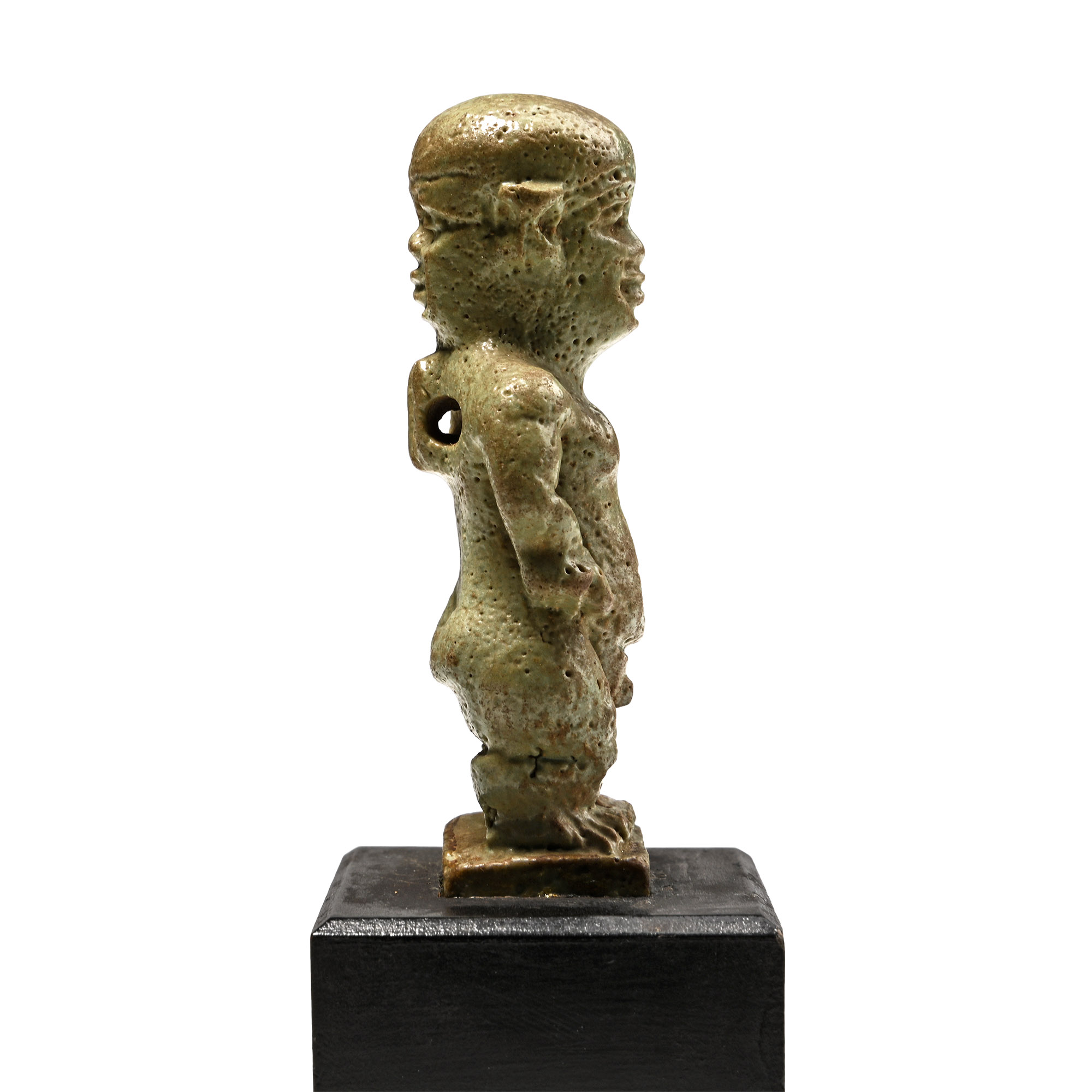
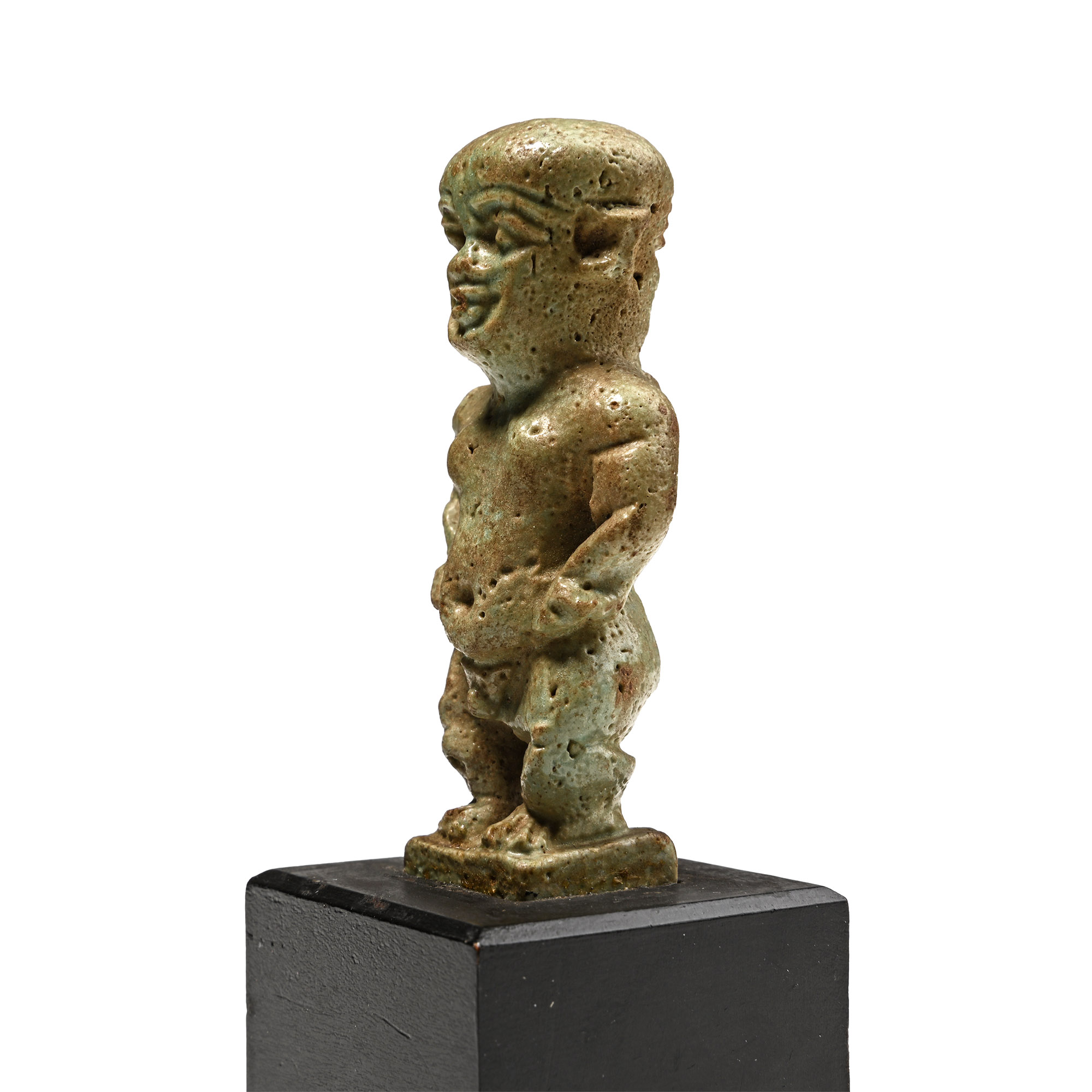
Large Egyptian Green Glazed Faience Bifacial Pataikos Amulet
LATE PERIOD, 664-332 B.C.
3 3/4 in. (54.3 grams total, 95 mm including stand).
Nude Pataikos standing with slightly bent legs on a rectangular base; his short arms bent, and his clenched fists resting at the sides of his slightly protruding belly; janiform head topped with a smooth, closely fitting cap similar to the one worn by the god Ptah; loop at the nape of the neck for use as an amulet; mounted on a custom-made stand.
ProvenanceEx Mr E.C.(1923-2014), Israel.
Inherited by his son D.L., Switzerland.
Cf. Furlan, U., Amulets of the First Millennium BCE in the Nile Delta: Continuity and Change Through Production, Consumption and Circulation, GHP 41, London, 2026, p. 110, fig. 4.12, for a comparable example from Heliopolis.
FootnotesAmulets had a diverse range of functions: they were either worn by the living or used as small votive offerings in private and official cult contexts. They also played an important role in funerary practices, as they were either wrapped into the mummy, placed on it (mummy amulets), or given to the deceased as grave goods. In the Late Period, dwarfs were venerated as popular protective deities, in analogy to Bes and Harpocrates. Moreover, since the Late Period, the creator god Ptah, who was worshipped in Memphis, was also represented as a childlike dwarf.
CONDITIONTimeLine Auctions follows a vetting process to ensure the authenticity and legality of all items, reinforcing our commitment to integrity and responsible trading. Each antiquity, antique, and coin lot undergoes thorough examination by a vetting committee of at least ten external specialists, professional trade association members, scientists, and archaeologists: Our Vetting Process
AUCTIONS:
TimeLine is a leading auction house specialising in antiquities, ancient art, collectables, natural history, coins, medals, and books. Our auctions offer museums, collectors, historians, and enthusiasts the opportunity to acquire unique and historically significant pieces.
LOT 0693
Large Egyptian Green Glazed Faience Bifacial Pataikos Amulet
Estimate £500 - 700€580 - 810 (for guidance only)$680 - 950 (for guidance only)
Opening Bid
£275 (EUR 319; USD 371) ‡+BP*
-
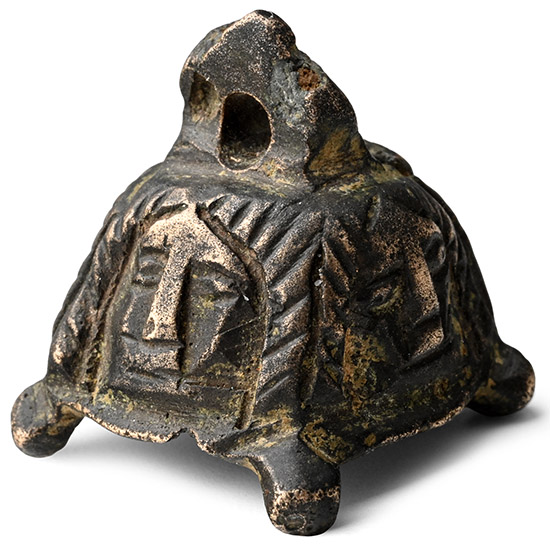
Egyptian Bronze Bell with Faces
Late-Ptolemaic Period, 664-30 B.C.Estimate: £100 - 140 (+bp*)
Opening Bid: £50
Hollow-formed miniature bell with integral loop handle, four radiating female faces to the sidewall - possibly depicting the goddess Hathor. 14 grams, 20 mm
London gentleman's collection, 1970-1990s, by descent.
The bell may have been part of a musical instrument. Many musical rituals centred on Hathor, often accompanied by musicians playing sistrums. -
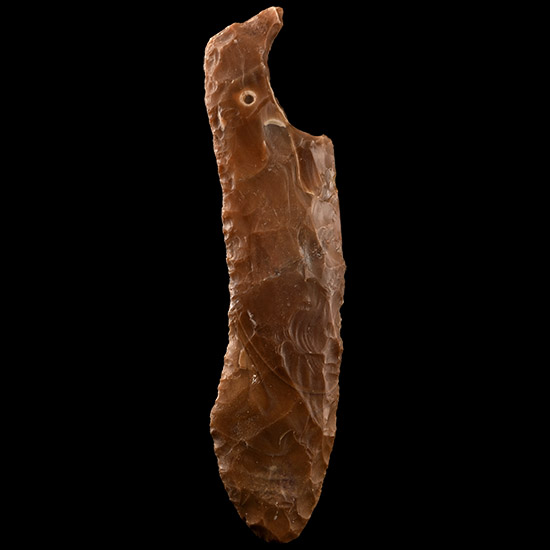
Large Egyptian Stone Age Knapped Flint Knife
Predynastic-Early Dynastic Period, Naqada II-2nd Dynasty, circa 3500-2686 B.C.Estimate: £1,000 - 1,400 (+bp*)
Opening Bid: £400
Large, expertly knapped bifacial tool with a distinct curved spine and relatively straight cutting edge, and an offset, integrated tang or handle section for hafting; the surface displays controlled flaking patterns typical of high-status ritual or funerary implements from this era. 99 grams, 19.8 cm
From the old English private collection of Mr P.D.R., acquired before 1980. -
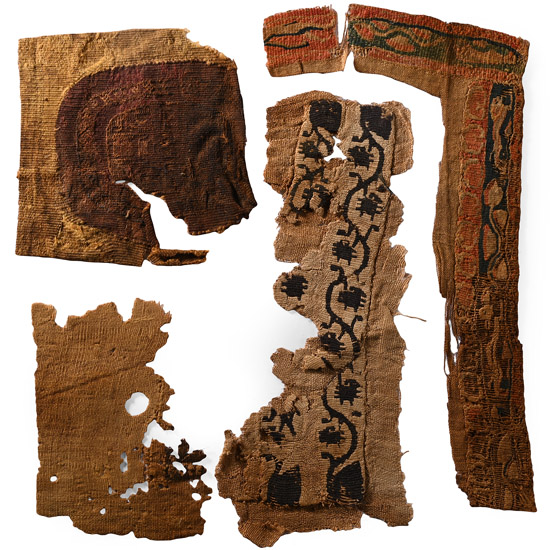
Egyptian Coptic Tunics Textile Fragments of Orbiculus and Segmenta with Animals and Geometric Decoration
Circa 4th-7th century A.D.Estimate: £70 - 90 (+bp*)
Bids: 1 | Current Bid: £5
Comprising a purple-red wool orbiculus on linen, decorated with geometric patterns; a clavus fragment featuring a double row of vegetal interlaces in natural and dark blue wool (S-twist); a fragment of green, red, and blue wool textile on linen, decorated with vegetal motifs; and an indistinct linen fragment with traces of geometric borders. 30 grams total, 13-27 cm
Acquired 1970s-1996. Property of a North American collector. London collection, 2016.
The fragments are decorative parts of tunics. These are fabrics of great decorative finesse, with some elements displaying an unusual and extremely well-preserved colour palette. The plant designs are related to the so-called Nilotic decorative pattern.
