
Loading, please wait...
LOT 0442
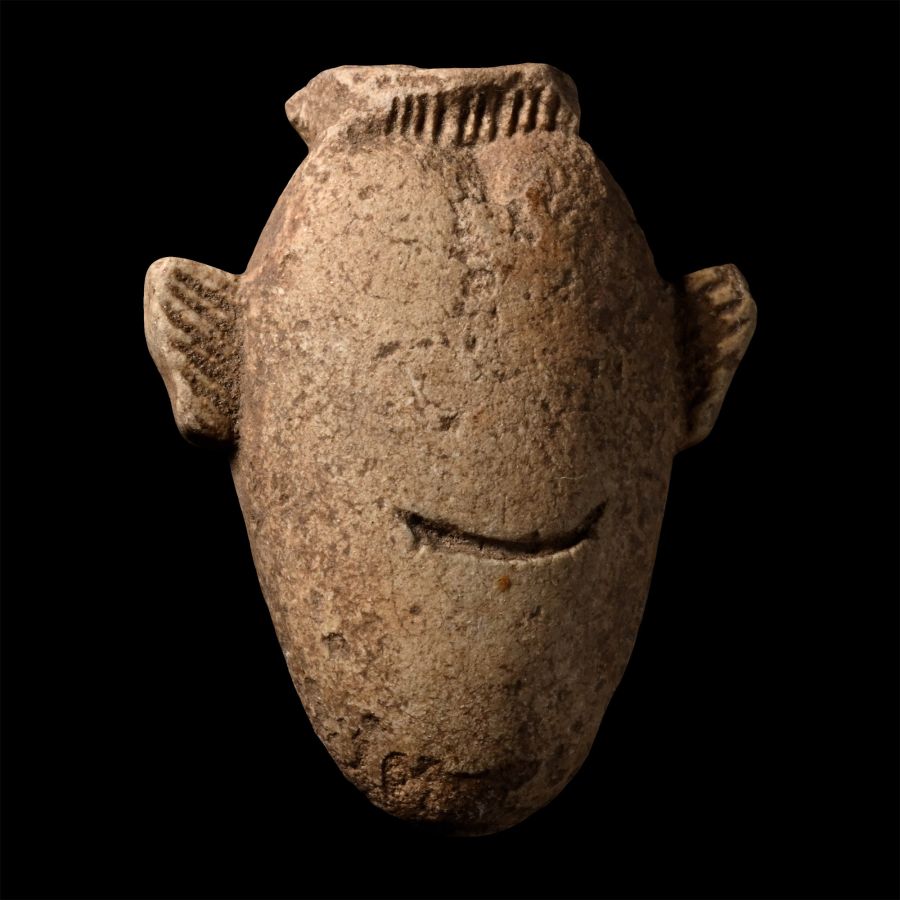
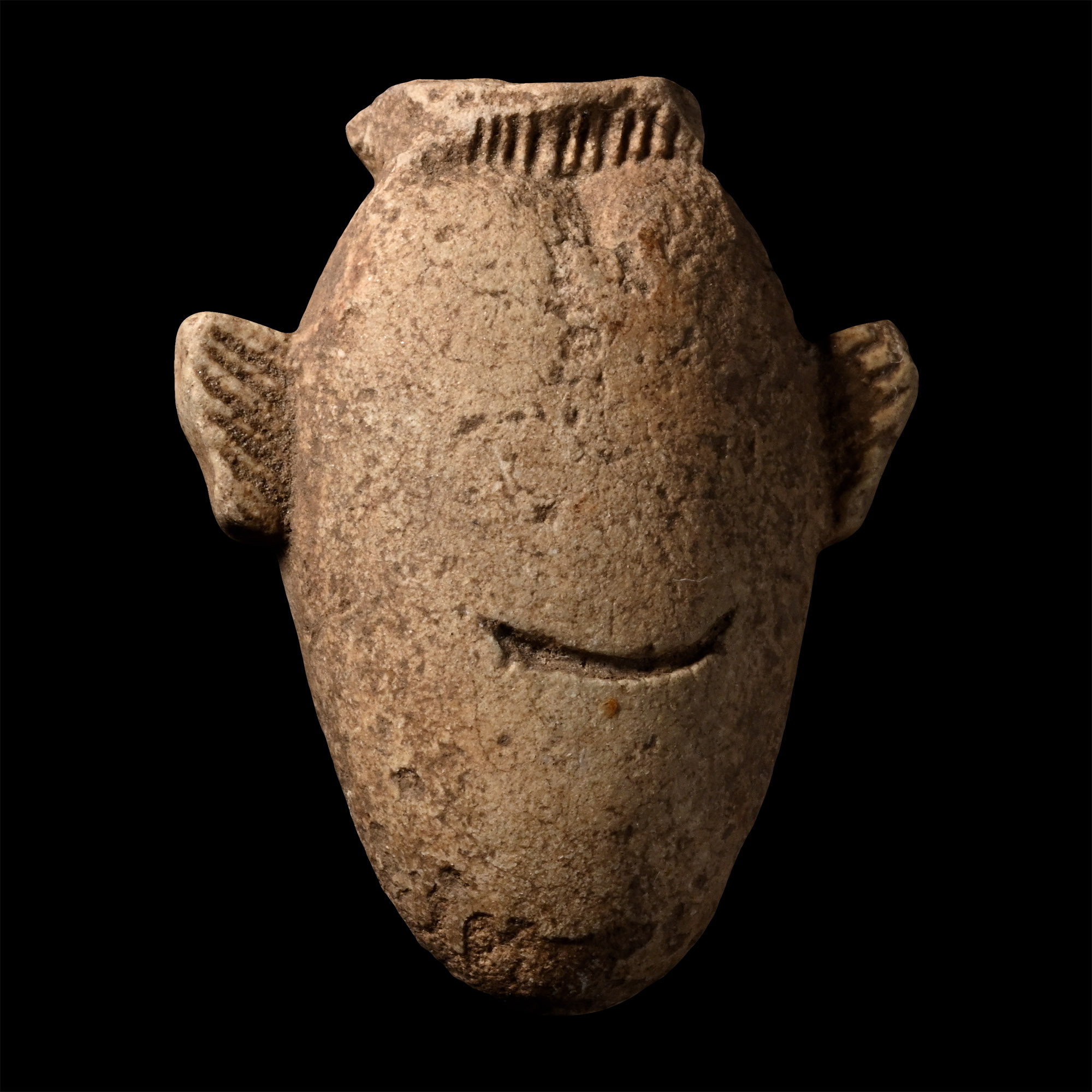
Large Egyptian Faience Heart Amulet
LATE PERIOD, 664-332 B.C.
1 1/4 in. (7.66 grams, 30 mm).
Modelled in the round with a piriform body and two lateral projections with striations. [No Reserve]
ProvenanceEx N. Thomas private collection, UK, 1980s-1990s.
Accompanied by a previous dealer's sales ticket.
See Petrie, W.M.F., Amulets. Illustrated by the Egyptian Collection in University College, London, 1914, pl.I, nos.7a-p, for type.
CONDITIONTimeLine Auctions follows a vetting process to ensure the authenticity and legality of all items, reinforcing our commitment to integrity and responsible trading. Each antiquity, antique, and coin lot undergoes thorough examination by a vetting committee of at least ten external specialists, professional trade association members, scientists, and archaeologists: Our Vetting Process
AUCTIONS:
TimeLine is a leading auction house specialising in antiquities, ancient art, collectables, natural history, coins, medals, and books. Our auctions offer museums, collectors, historians, and enthusiasts the opportunity to acquire unique and historically significant pieces.
-
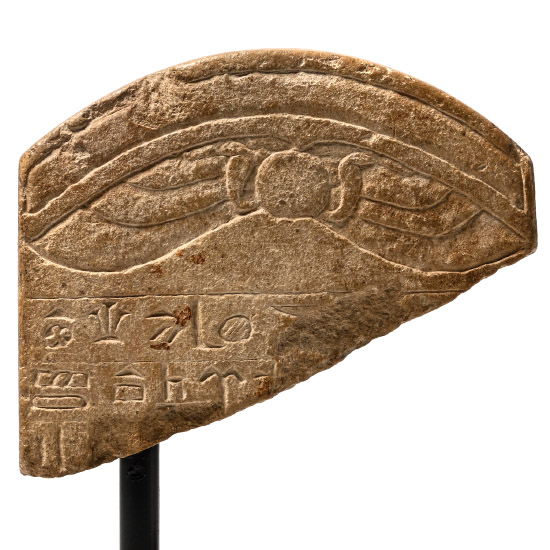
Egyptian Bifacial Magical Stela with Bes
Ptolemaic Period, circa 280-180 B.CSold for (Inc. bp): £4,160
Upper portion of an arch-top limestone stele fragment with two dressed faces; the obverse lunette features a winged sun disc flanked by uraei and two partial rows of incised pseudo-hieroglyphs below; the reverse displays the head of the god Bes in high relief, with traces of the head of the young Horus immediately below, who would have been depicted grasping the two partially preserved snakes and a scorpion carved in raised relief to the right; mounted on a custom-made display stand. 450 grams total, 11.6 cm high including stand
Frossart Collection, France, by the 19th century. Private collection, London, UK.
Although fragmentary, this stela is easily recognisable as a Horus cippus or magical stela. They were used to heal ailments caused by snake or scorpion venom. Ancient Egyptians believed that water poured over these cippi would turn into a healing liquid that the afflicted could drink or apply to their bodies. -
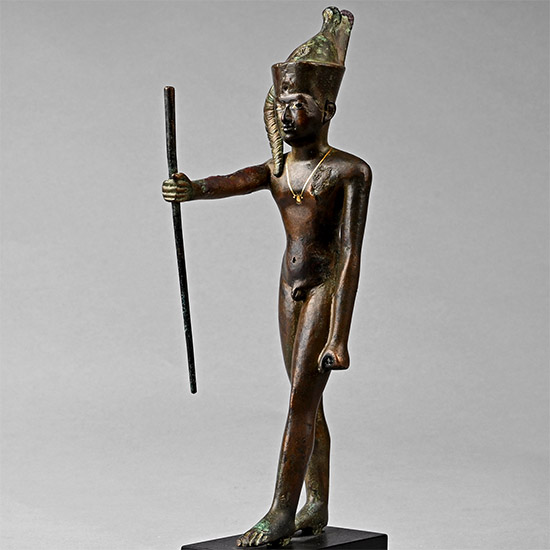
Large Egyptian Bronze Statue of the God Ihy with Gold Necklace and Silver Inlaid Eyes
Late Period, 664-332 B.C.Sold for (Inc. bp): £20,800
Depicted nude in an advancing pose; silver inlaid eyes, braided sidelock of youth; left hand by his side, drilled to accept a separate element, the other outstretched at a right angle to his body, holding a tapering cylindrical staff, not belonging; he may originally have held a sistrum, an ancient Egyptian percussion instrument, or a menat, both closely associated with the goddess Hathor; here, Ihy wears the Pschent crown with remains of uraeus, and an inlaid gold necklace suspended with an ib pendant around his neck; finely detailed facial features, with engraved Nekhbet vulture with outspread wings at the back of the crown; integral lugs on soles of feet; mounted on a custom-made stand. 899 grams total, 25 cm including stand
From the Singer family collection, Germany, acquired circa 1962. with A.A.L., Geneva, 1980. with Christie's, London, 25 April 2015, no.163 [£50,000-£70,000]. Private collection, London, UK. Accompanied by copies of the relevant Christie's catalogue pages. This lot has been checked against the Interpol Database of stolen works of art and is accompanied by search certificate number no.13309-258229.
Ihy was an Egyptian god associated with music, joy, and ritual celebrations, particularly as the divine child of Hathor and of Horus or Ra. He is typically depicted as a youthful figure, often naked or lightly clothed, wearing a sidelock of youth and carrying a sistrum or menat, both percussion instruments closely connected with ritual performances in Hathor's cult, especially at the temples of Dendera and Edfu. His name is generally understood to mean 'the musician' or 'the one who plays music,' although it may also mean 'calf', a reference to his relationship with the cow-goddess Hathor. Bronze statuettes of Ihy, such as this example, were probably produced as votive offerings dedicated in temples, especially those devoted to Hathor. Worshippers may have commissioned such figures in the hope of obtaining divine favour, protection, fertility, healing, or participation in the blessings linked with music and festivity. Some examples may also have served as cult images used in temple ceremonies or as protective objects placed in domestic or funerary settings. -
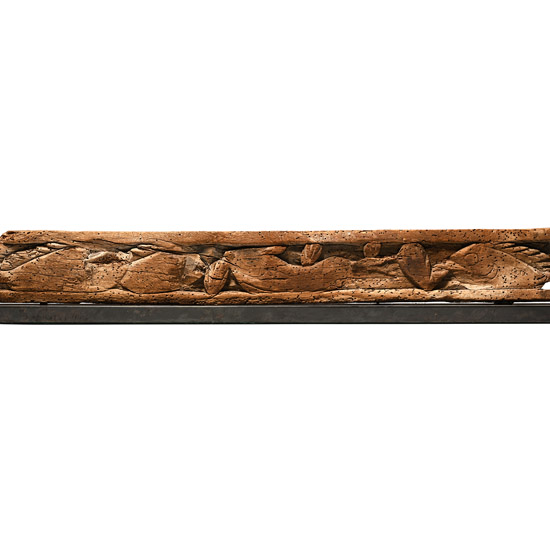
Egyptian Wooden Panel with Swimming Fish
Coptic, 6th-9th century A.D.Sold for (Inc. bp): £468
With high-relief plant motifs within thick rectilinear borders; mounted on a custom-made display stand. 730 grams total, 48.5 cm wide
Previously belonging to J Stewart, Mayfair, London, UK; acquired in the early 1980s. Property of a Middlesex gentleman.
