
Loading, please wait...
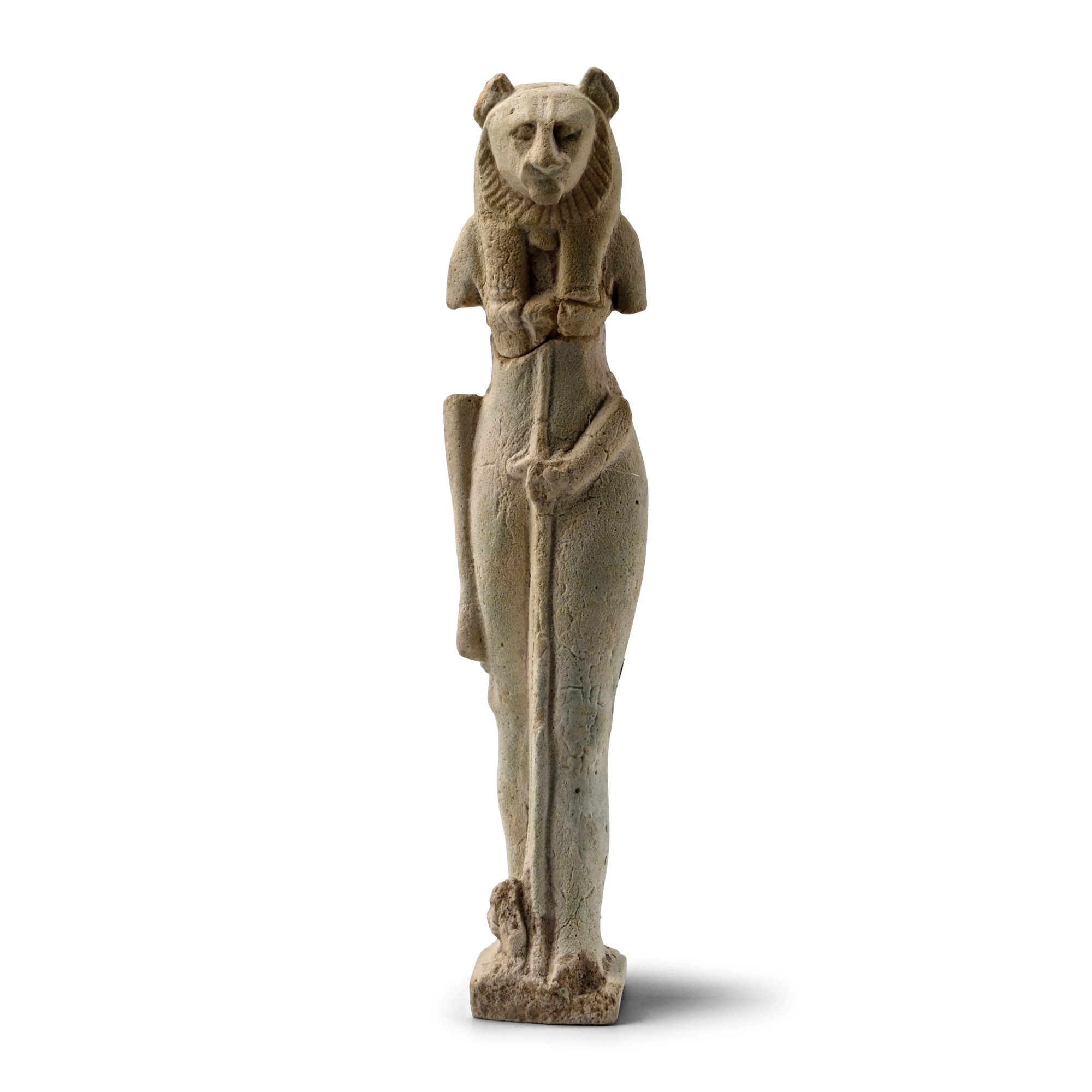
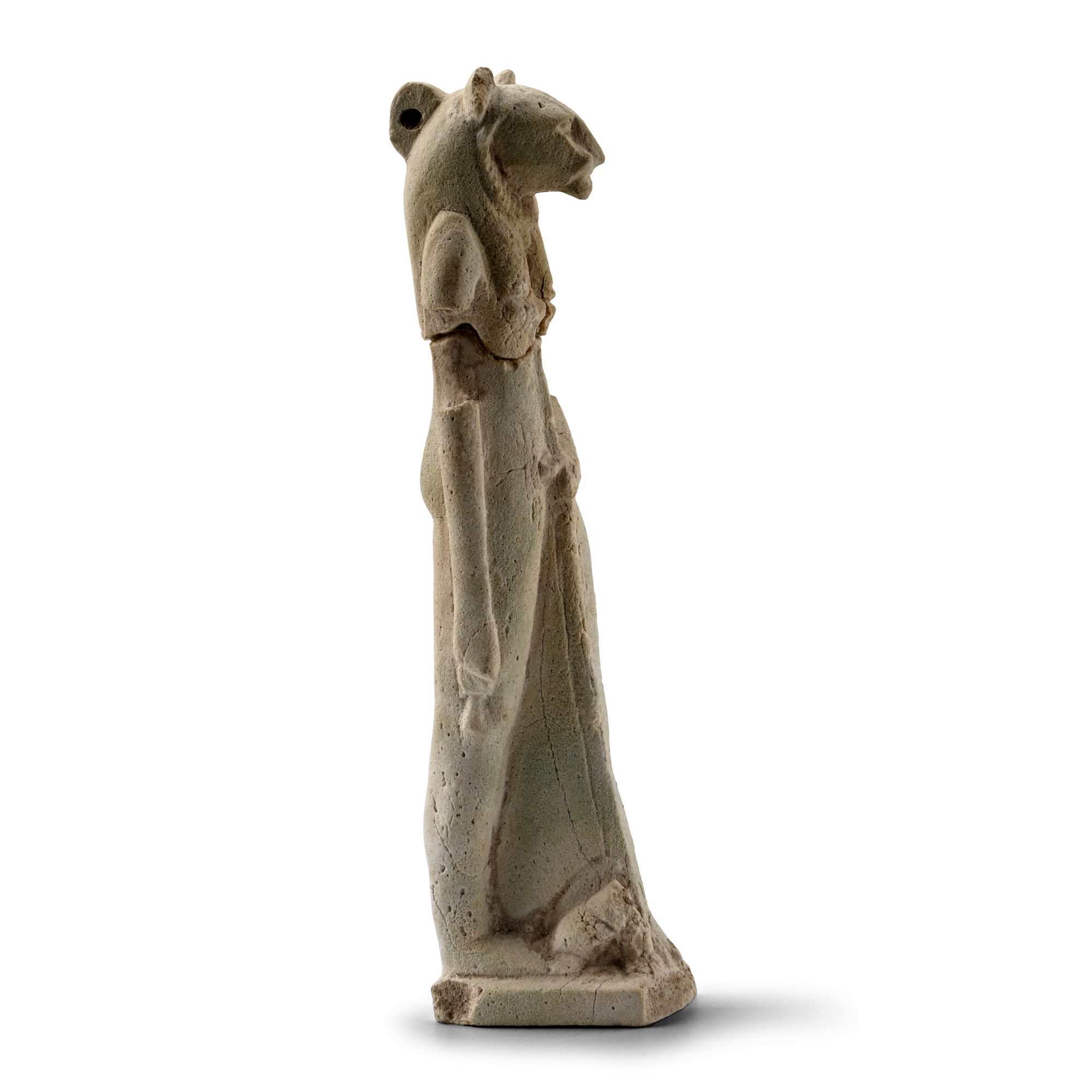
LOT 0024
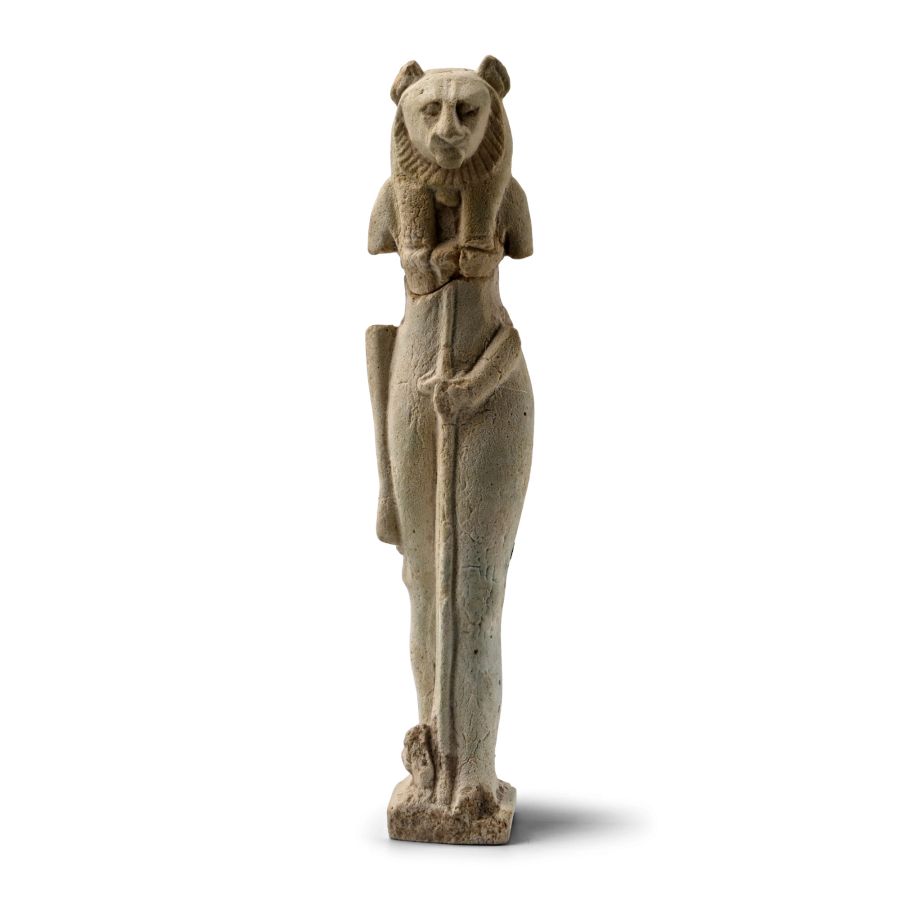
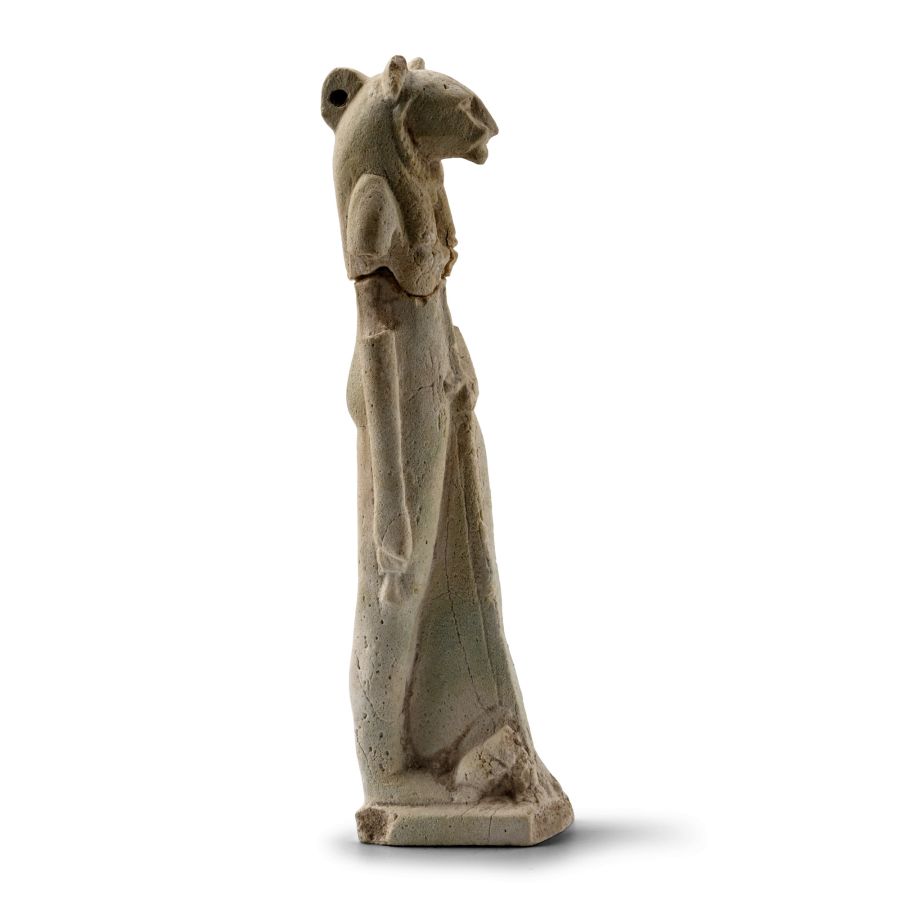
Large Egyptian Faience Figure of Sekhmet
1ST MILLENNIUM B.C.
5 1/2 in. (79 grams, 14 cm).
Modelled in the round standing, holding an ankh in her right hand, the other holding a slender staff, lion-headed, wearing an ankle-length skirt; loop behind her neck.
ProvenanceAcquired in the late 1980s.
Private collection, thence by descent.
Private collection, since the late 1990s.
This lot has been checked against the Interpol Database of stolen works of art and is accompanied by a search certificate number no.12852-241726.
This lot has been cleared against the Art Loss Register database, and is accompanied by an illustrated lot declaration signed by the Head of the Antiquities Department, Dr Raffaele D'Amato.
Cf. Andrews, C., Amulets of Ancient Egypt, London, 1994, pl.8a.
CONDITIONTimeLine Auctions follows a vetting process to ensure the authenticity and legality of all items, reinforcing our commitment to integrity and responsible trading. Each antiquity, antique, and coin lot undergoes thorough examination by a vetting committee of at least ten external specialists, professional trade association members, scientists, and archaeologists: Our Vetting Process
AUCTIONS:
TimeLine is a leading auction house specialising in antiquities, ancient art, collectables, natural history, coins, medals, and books. Our auctions offer museums, collectors, historians, and enthusiasts the opportunity to acquire unique and historically significant pieces.
-
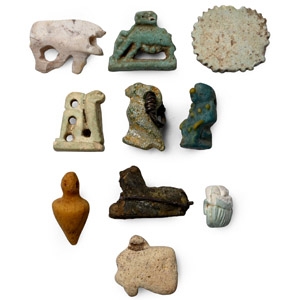
Egyptian Faience and Hardstone Amulet Group
Late-Ptolemaic Period, 664-30 B.C.Sold for (Inc. bp): £221
Including two wedjat eyes, a seated baboon, plumb bob, uraeus, scarab, falcon, recumbent lion, suckling sow (representing Nut), and a fringe-edged disc bead. 8.08 grams total, 9-18 mm
From an early 20th century collection. This lot is accompanied by an illustrated lot declaration signed by the Head of the Antiquities Department, Dr Raffaele D'Amato. -
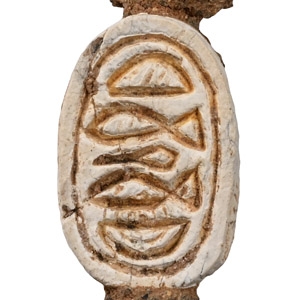
Egyptian Ring with Scarab
Late Period, 664-332 B.C.Sold for (Inc. bp): £169
Comprising a bronze D-shaped finger ring, the bezel formed by a faience scarab with symbols to the underside. 4.12 grams, 30.15 mm overall, 17.42 mm internal diameter (approximate size British J 1/2, USA 5, Europe 9.32, Japan 9)
Ex London, UK, art market, 1990s. From a private UK collection. This lot is accompanied by an illustrated lot declaration signed by the Head of the Antiquities Department, Dr Raffaele D'Amato. -
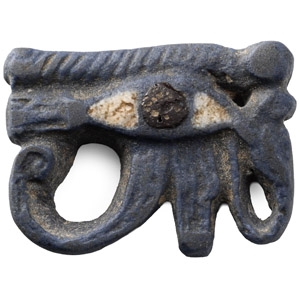
Egyptian Faience Eye of Horus Amulet
Late Period, 664-332 B.C.Sold for (Inc. bp): £520
Openwork wedjat eye amulet with black and white inlay to the eye, with a rearing cobra wearing a sun disc crown at the front. 2.28 grams, 23 mm
From an early 20th century collection. Ex London, UK, gallery. From a private UK collection This lot is accompanied by an illustrated lot declaration signed by the Head of the Antiquities Department, Dr Raffaele D'Amato.
The wedjat-eye amulet (also called the Eye of Horus) became one of the most recognisable symbols in ancient Egyptian culture. It represents the idea of protection, healing, and restoration. In myth, Horus lost his eye during his battle with Seth, and it was later magically restored, symbolising healing and the restoration of wholeness. The Eye of Horus came to represent divine power and protection and was often used in amulets for safeguarding and well-being.
