
Loading, please wait...
LOT 0722
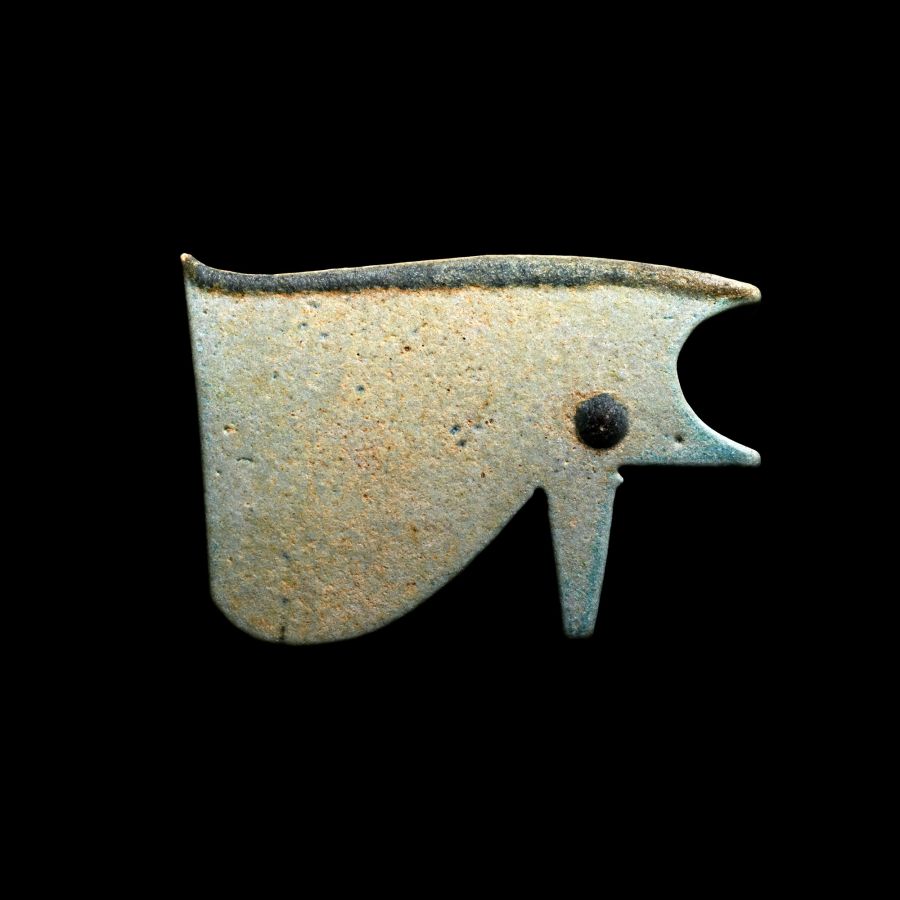
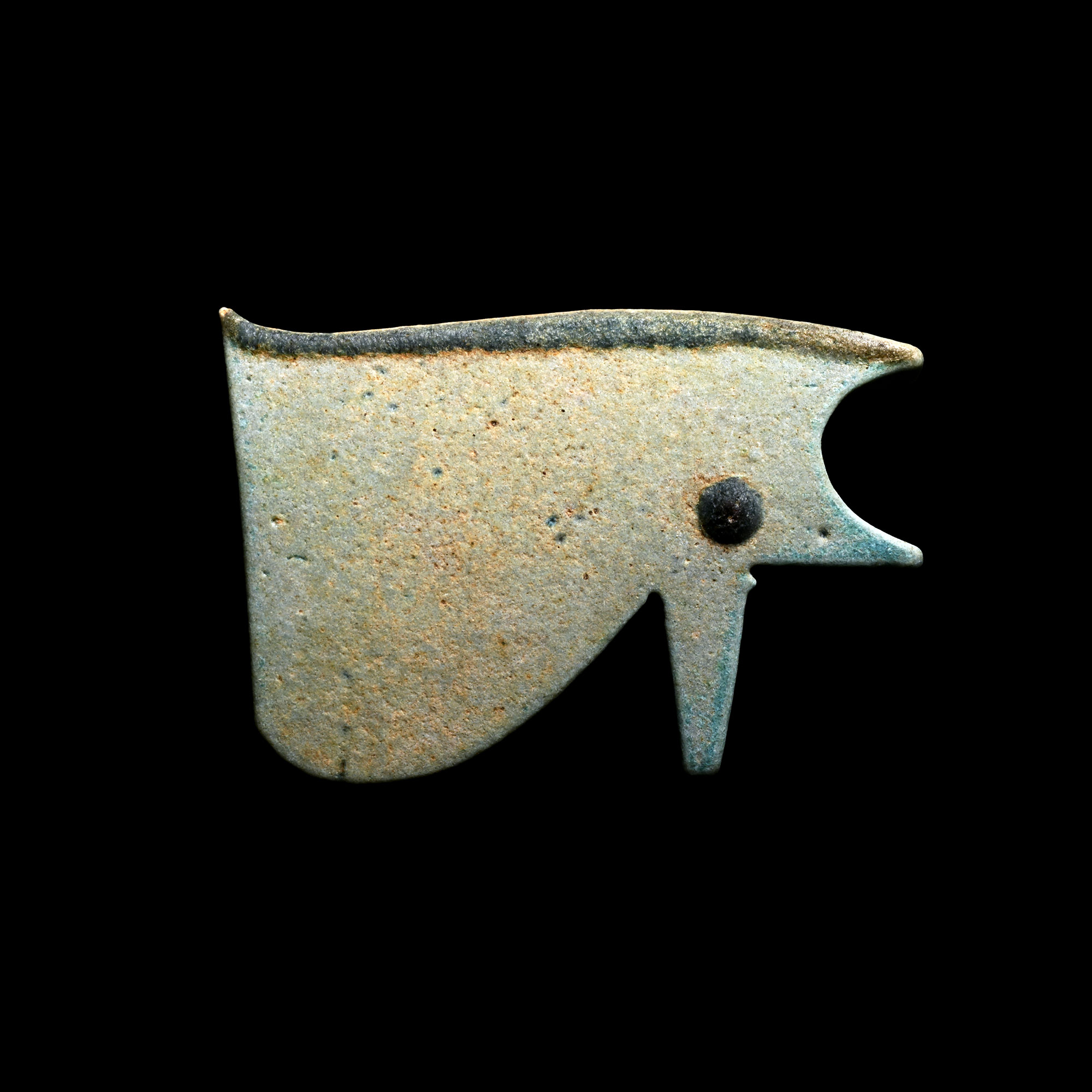
Large Egyptian Faience Eye of Horus Amulet
THIRD INTERMEDIATE PERIOD, CIRCA 1069-664 B.C.
1 5/8 in. (7.15 grams, 41 mm).
The outline displays the characteristic wedjat-eye motif: a fusion of a human eye and eyebrow, combined with specific falcon markings: a tear-like drop extending down from the front of the lower lid and a stylised curl trailing from the base; longitudinally pierced for suspension.
ProvenanceFrom a mid 20th century collection.
LiteratureCf. Petrie, W.M.F., Amulets. Illustrated by the Egyptian Collection in University College, London, 1914, pl. XXV, 138r, for a comparable example.
FootnotesThe wedjat-eye amulet depicts Horus’s healed eye, blending human and falconine features. Its ancient Egyptian name means ‘the one that is sound’. Myth holds that Seth wounded or took the eye, and Thoth later restored it. Believed to offer protection, healing, and regeneration, the popular amulet was worn by the living and the dead.
CONDITIONTimeLine Auctions follows a vetting process to ensure the authenticity and legality of all items, reinforcing our commitment to integrity and responsible trading. Each antiquity, antique, and coin lot undergoes thorough examination by a vetting committee of at least ten external specialists, professional trade association members, scientists, and archaeologists: Our Vetting Process
AUCTIONS:
TimeLine is a leading auction house specialising in antiquities, ancient art, collectables, natural history, coins, medals, and books. Our auctions offer museums, collectors, historians, and enthusiasts the opportunity to acquire unique and historically significant pieces.
LOT 0722
Large Egyptian Faience Eye of Horus Amulet
Estimate £300 - 400€350 - 460 (for guidance only)$410 - 540 (for guidance only)
Opening Bid
£150 (EUR 174; USD 203) +BP*
-
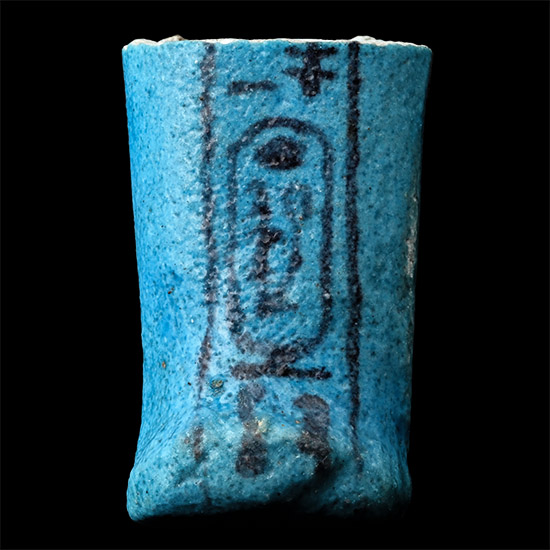
Egyptian Royal Bright Blue Glazed Shabti Fragment with Cartouche
New Kingdom, circa early 13th century B.C.Estimate: £150 - 200 (+bp*)
Opening Bid: £5
The lower legs and feet are preserved, bearing a portion of the central frontal column of inscription in black, with the sign of royalty followed by a cartouche containing a sun disc with a seated divinity beneath, wearing a feather headdress; below the cartouche are the two signs meaning 'true of voice'. 35 grams, 50 mm
From the private collection of Peter Clayton, FCILIP, Dip, Arch, FSA, FRNS, Hemel Hempstead, Hertfordshire, UK; formed since the late 1950s.
An intriguing fragment. The brilliant blue colour suggests shabtis for Seti I, although the cartouche lacks the men sign that would correctly spell his name. It seems possible that this was an artisan's mistake - after all, Seti I was buried with at least 700 shabtis. -
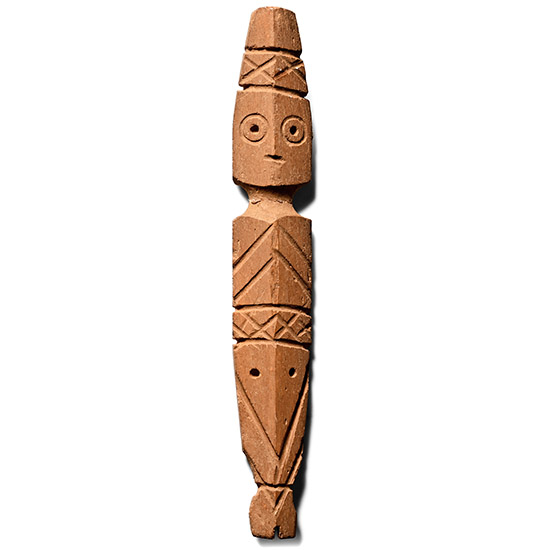
Coptic Carved Bone Doll
Circa 4th-7th century A.D.Estimate: £60 - 80 (+bp*)
Bids: 2 | Current Bid: £15
Plano-convex in section with carinated upper face, incised linear and drilled detailing. 7.92 grams, 10.3 cm
From the private collection of Peter Clayton, FCILIP, Dip, Arch, FSA, FRNS, Hemel Hempstead, Hertfordshire, UK; formed since the late 1950s. -
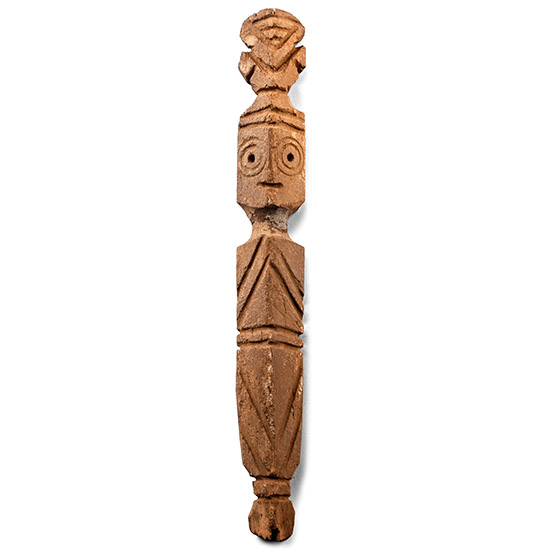
Egyptian Bone Doll
4th-6th century A.D.Estimate: £80 - 100 (+bp*)
Bids: 1 | Current Bid: £5
Highly stylised human figurine with cuts to indicate features. 9.03 grams, 11.6 cm
From the private collection of Peter Clayton, FCILIP, Dip, Arch, FSA, FRNS, Hemel Hempstead, Hertfordshire, UK; formed since the late 1950s. Accompanied by an old handwritten information slip by Peter Clayton.
