
Loading, please wait...
LOT 0627
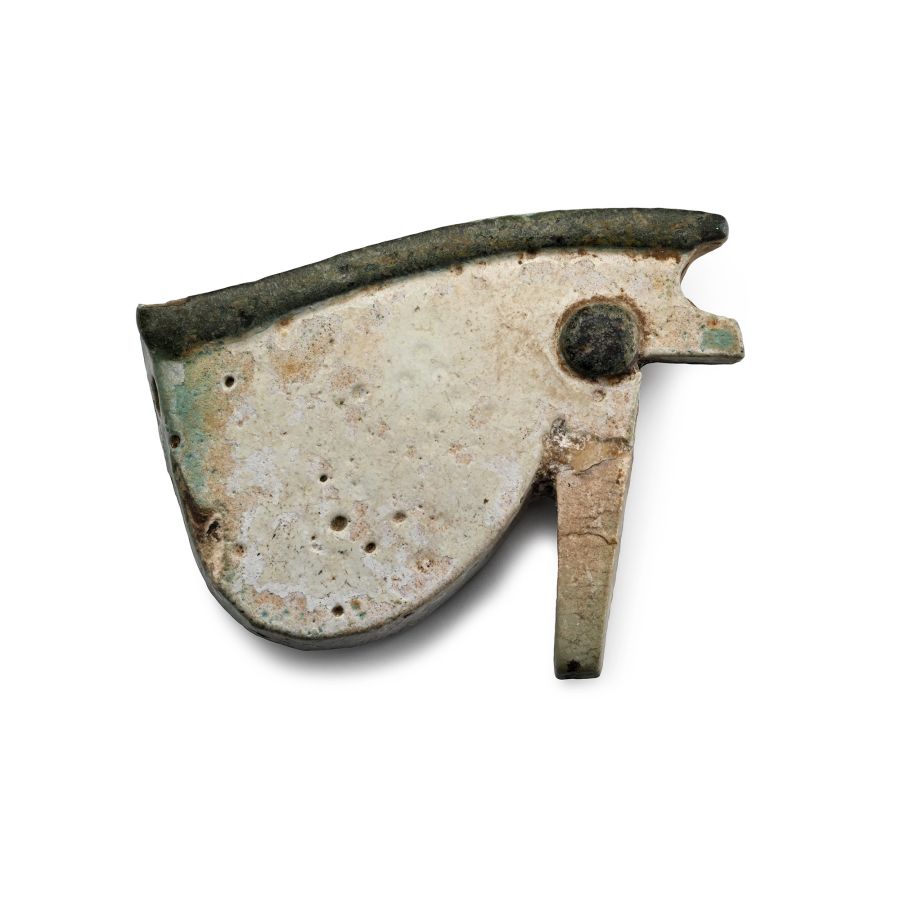
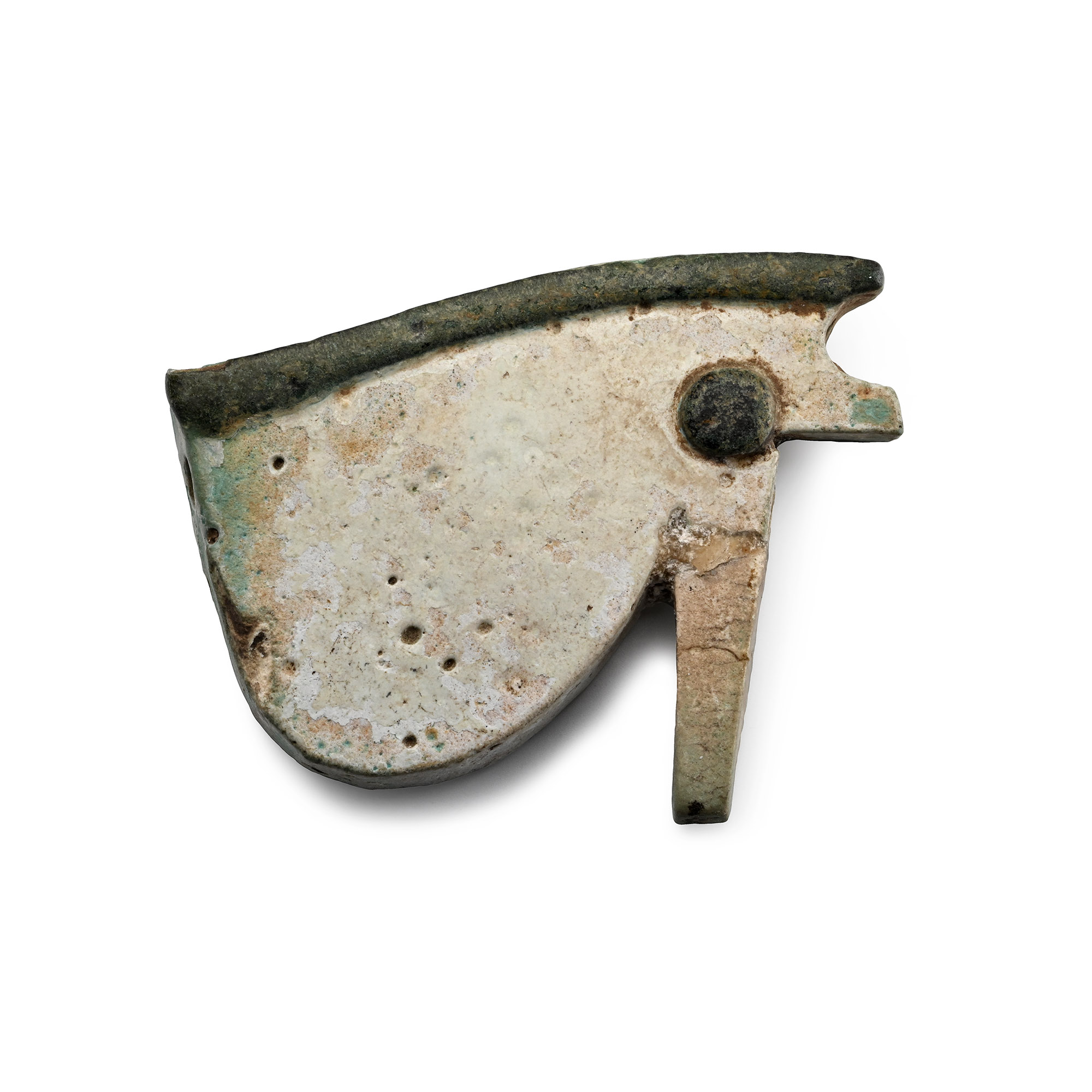
Large Egyptian Faience Eye of Horus Amulet
THIRD INTERMEDIATE PERIOD, CIRCA 1069-664 B.C.
2 in. (16.5 grams, 50.4 mm).
Sizeable wedjat-eye amulet with applied black detailing to the pupil and brow.
Provenancewith Archaeologia, Switzerland, before 1983.
Ex private North American collection.
London private collection, 2016.
Cf. Andrews, C., Amulets of Ancient Egypt, London, 1994, pl.46b, for a similarly black-highlighted wedjat-eye amulet.
FootnotesThe wedjat-eye amulet symbolises the healed eye of the god Horus, representing both human and falcon elements. The name wedjat in ancient Egyptian means ‘the one that is sound.’ According to Egyptian mythology, Horus' eye was wounded or taken by the god Seth and later restored by Thoth. The wedjat-eye amulet was believed to protect its wearer and confer qualities of recovery and regeneration. It was highly popular and was used by both the living and the dead.
CONDITIONTimeLine Auctions follows a vetting process to ensure the authenticity and legality of all items, reinforcing our commitment to integrity and responsible trading. Each antiquity, antique, and coin lot undergoes thorough examination by a vetting committee of at least ten external specialists, professional trade association members, scientists, and archaeologists: Our Vetting Process
AUCTIONS:
TimeLine is a leading auction house specialising in antiquities, ancient art, collectables, natural history, coins, medals, and books. Our auctions offer museums, collectors, historians, and enthusiasts the opportunity to acquire unique and historically significant pieces.
LOT 0627
Large Egyptian Faience Eye of Horus Amulet
Estimate £200 - 300€230 - 350 (for guidance only)$270 - 410 (for guidance only)
Opening Bid
£100 (EUR 116; USD 135) +BP*
-
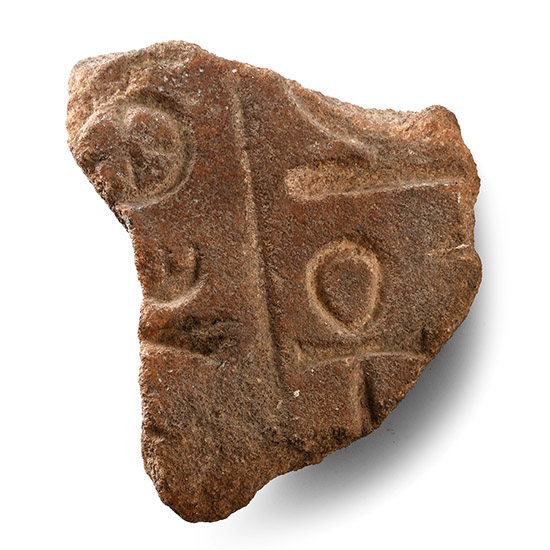
Egyptian Red Quartzite Granite Hieroglyphic Fragment with Part of Cartouche
New Kingdom, 18th Dynasty, Amarna Period, 1379-1362 B.C.Estimate: £100 - 140 (+bp*)
Bids: 2 | Current Bid: £25
Irregular fragment preserving portions of two vertical columns of hieroglyphic text, including the lower part of a royal cartouche with an ankh sign beneath. 74 grams, 64 mm
Acquired in March 1979. From the private collection of Peter Clayton, FCILIP, Dip, Arch, FSA, FRNS, Hemel Hempstead, Hertfordshire, UK; formed since the late 1950s. Accompanied by an old handwritten information card by Peter Clayton, collection no.144.
After Akhenaten's death, the pharaoh's monuments were systematically smashed or defaced. Numerous excavations at Amarna rarely recovered complete or near-complete statuary. -
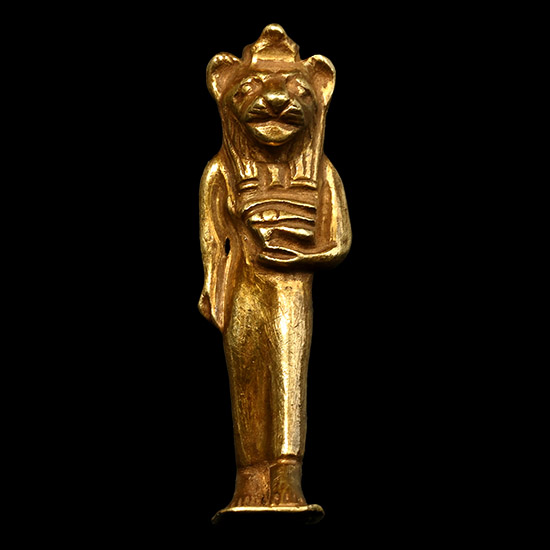
Egyptian Gold Sekhmet Statuette
Late Period-Ptolemaic Period, circa 664-30 B.C.Estimate: £5,000 - 7,000 (+bp*)
Opening Bid: £2,500
Figure of the lioness-headed goddess standing on a rectangular plinth, wearing a striated lappet wig with uraeus and an ankle-length, tight-fitting dress, her right arm extended down her side and her left hand holding a wedjat-eye symbol against her chest; a suspension loop behind her head. 5.31 grams, 28 mm
From the collection of a UK gentleman, London, UK, by descent from his family collection 1970s. This lot has been checked against the Interpol Database of stolen works of art and is accompanied by search certificate no.13544-263324.
The wedjat-eye and lioness are potent, often intertwined symbols in ancient Egyptian mythology. The wedjat, representing Horus’s healed eye, signifies protection and healing, while the lioness—linked to the goddesses Sekhmet and Wadjet—embodies power and fierce defence as the “Eye of Ra”. Together, in amulets and in Egyptian art, they convey healing, protection, and strength. -
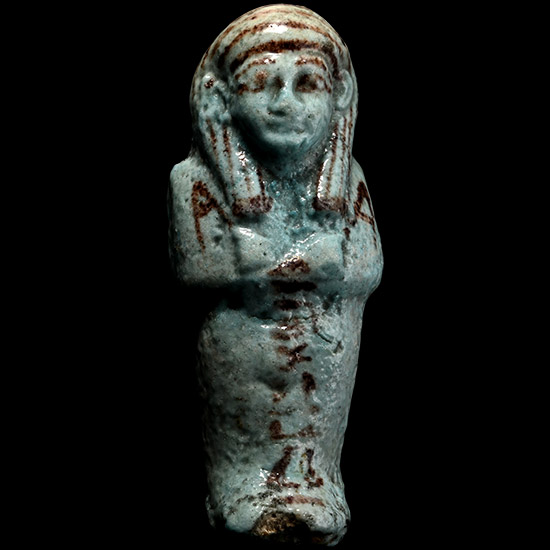
Egyptian Blue Glazed Shabti of Payefadjer
Third Intermediate Period, 21st Dynasty, circa 1070-945 B.C.Estimate: £500 - 600 (‡+bp*)
Opening Bid: £275
Squat mummiform type with face framed by a tripartite wig, hands modelled in relief, holding agricultural tools applied in paint; seed-bag at the back; central vertical hieroglyphic inscription on the lower front reading: 'The Osiris, wab-(priest), lector-(priest), Payefadjer (pꜢy.f-Ꜥḏr), true of voice'. 93 grams, 96 mm
Ex Ms E.C.(1923-2014), Israel. Inherited by her son D.L., Switzerland.
