
Loading, please wait...
LOT 0443
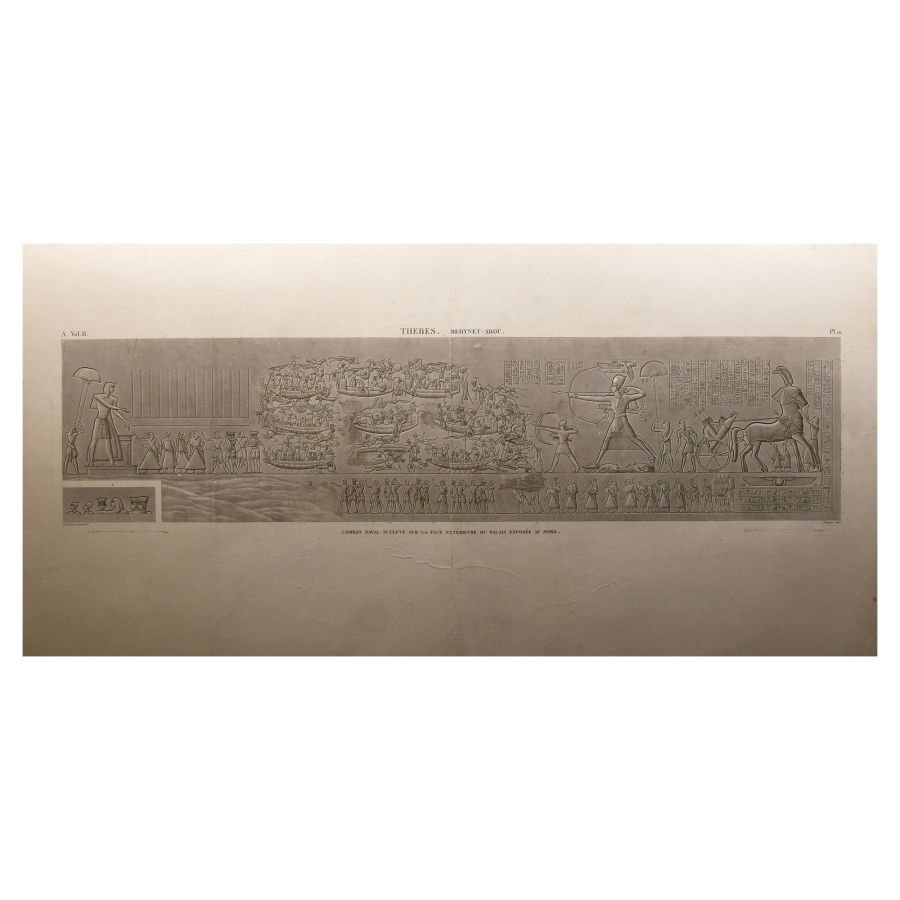
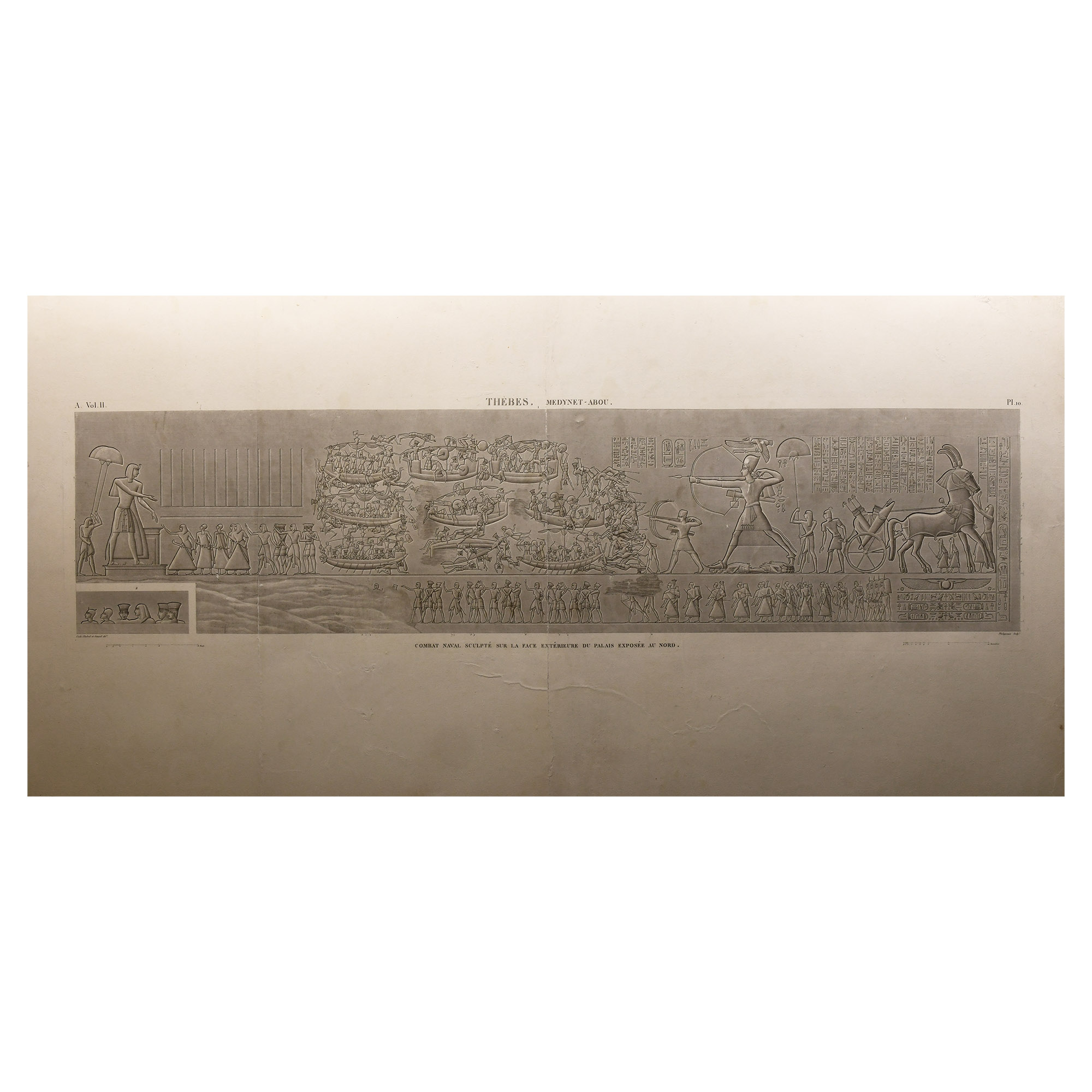
Large Egyptian Expedition Lithograph Print of Thebes
1820 A.D.
51 1/4 x 26 1/2 in. (375 grams, 130.5 x 67 cm).
Phillipeaux - Thèbes - Medynet-Abou. Combat Naval sculpté sur la face extérieure du palais exposée au nord - Proof etching on laid paper of plate 10 from La Description de l’Égypte: Antiquités, Volume II: Commission des sciences et arts d’Égypte with later backing sheet.
ProvenanceFrom the collection of a North American priest.
Acquired between 1981-1996.
Property of a North American collector.
Produced between February 1802 and 1830 on the orders of Napoleon Bonaparte; published between 1809 and 1828. Just 1,000 copies were distributed to various institutions, printed on on laid paper with an 'Égypte ancienne et moderne' watermark. The book is subtitled Recueil des observations et des recherches qui ont été faites en Égypte pendant l’expédition de l’Armée française, publié par les ordres de Sa Majesté l’Empereur Napoléon le Grand (Gathering of observations and discoveries which were made in Egypt during the expedition of the French army, published on the orders of His Majesty the Emperor Napoleon the Great). It was the world's first encyclopaedia devoted exclusively to the remains of ancient Egypt. The plates of this book are the first to present the archaeological sites of Thebes (Luxor). The frieze is from the palace wall of Meninet - Abou.
CONDITIONTimeLine Auctions follows a vetting process to ensure the authenticity and legality of all items, reinforcing our commitment to integrity and responsible trading. Each antiquity, antique, and coin lot undergoes thorough examination by a vetting committee of at least ten external specialists, professional trade association members, scientists, and archaeologists: Our Vetting Process
AUCTIONS:
TimeLine is a leading auction house specialising in antiquities, ancient art, collectables, natural history, coins, medals, and books. Our auctions offer museums, collectors, historians, and enthusiasts the opportunity to acquire unique and historically significant pieces.
-
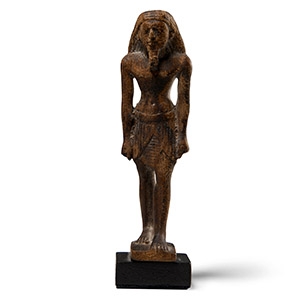
Egyptian Wooden Male Figure
Third Intermediate Period, circa 1070-730 B.C.Sold for (Inc. bp): £598
Striding on a rectangular base, wearing a belted kilt, bag wig and with short beard; mounted on a custom-made display stand. 19 grams total, 11 cm high including stand
Part of an old collection dating back to the 19th century. Ex property of a gentleman, acquired before the 1980s. Private collection of Mr T.H., Norfolk, UK. -
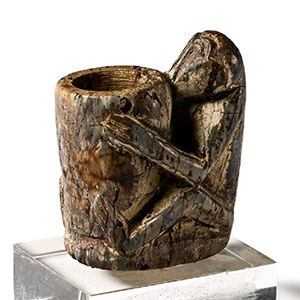
Egyptian Glazed Steatite Seated Monkey Holding a Kohl Pot
New Kingdom, 1225-1070 B.C.Estimate: £1,200 - 1,700 (‡+bp*)
Opening Bid: £600
The monkey holding a kohl pot of roughly cylindrical form; set on an integral oval base; rim of kohl perforated twice; mounted on a custom-made display base. 21.2 grams total, 37 mm high including stand
with François de Riqules, Archéologie, 11-12 November 2001, lot 198. -
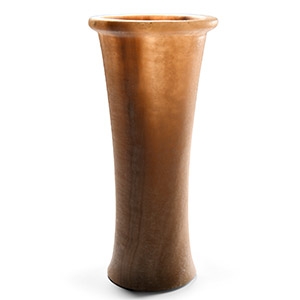
Egyptian Alabaster Cylindrical Vase
Late Period, 664-332 B.C.Estimate: £2,000 - 3,000 (+bp*)
Opening Bid: £1,000
Carved from cream-coloured Egyptian alabaster containing fine veining throughout; relatively thick walls flaring to form a wide mouth with flat-topped lip, then tapering towards the gently spreading, flat- bottomed base. 7.69 kg, 21 cm high
Acquired whilst living and working in Egypt 1920s. Private collection of a surveyor for the Air Ministry, UK, thence by descent for three generations. Private collection, UK, acquired 2011 from the UK art market. This lot has been checked against the Interpol Database of stolen works of art and is accompanied by search certificate no.11947-209448.
