
Loading, please wait...
LOT 0659
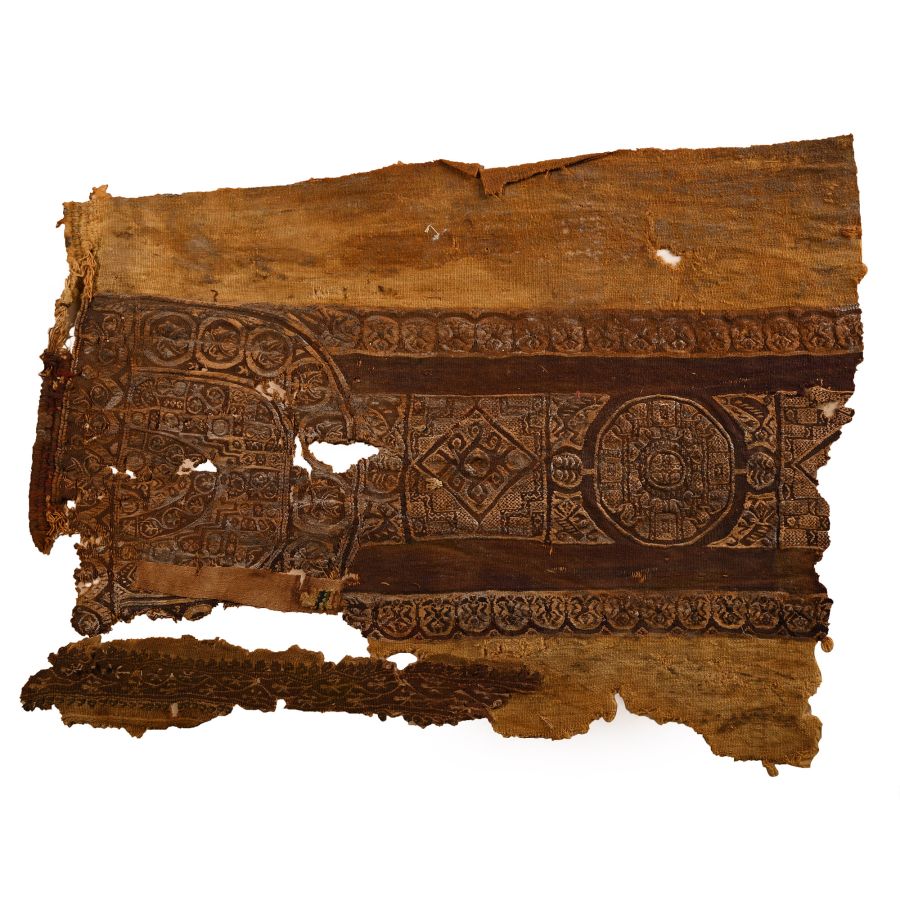
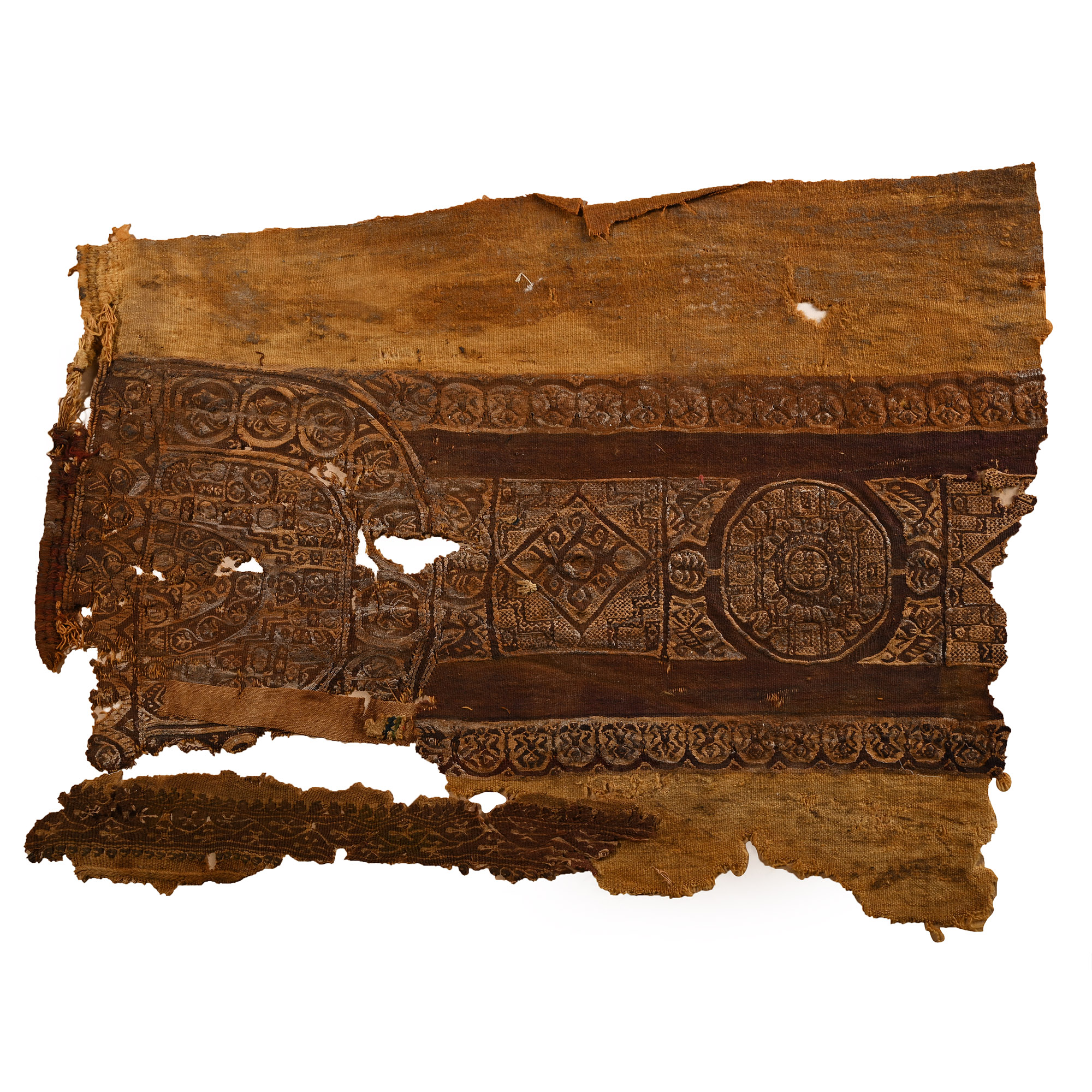
Large Egyptian Coptic Tunic Textile Fragment with Central Broad Clavus and Side Clavus
CIRCA 7TH-8TH CENTURY A.D.
22 5/8 in. (236 grams total including paper folder, 57.5 cm).
Comprising a large portion of tunic, with a complete section of the collar (maniakion) divided in successive decorative circular bands, ornamented with geometric patterns of floral elements, plants, interlaces; a central segmentum broadly decorated with geometric patterns, palmettes, triangles, and a round medallion with an impressive floral design; the segmentum is bordered by two purple stripes, flanked by other two bands of vegetal ornaments enclosed in medallions; the terminal part of the tunic still presents the fastening stripes of selvedges in rope forming the lowed border; S-twist yellow-orange and purple wool warp on linen; a long clavus in purple wool on linen decorated with vegetal interlaces, the borders meander decorated. [No Reserve]
ProvenanceAcquired 1970s-1996.
Property of a North American collector.
London collection, 2016.
Cf. Del Francia Barocas, L., Museo dell'Alto Medioevo, Roma, I materiali Copti, no.63 A-B-C, pp.222-223, for similar textiles.
FootnotesThe large fragment featuring geometric and vegetal decoration may date to the early period of the Islamic conquest, when tunic ornamentation began to take on an increasingly abstract and geometric character, often linked to the representation of plants and Nilotic flora. The rich decoration of the tunic and the use of purple suggest that it may have belonged to an aristocrat or a wealthy ecclesiastic of the Coptic-Greek population, or perhaps to a dignitary of the Umayyad Empire.
CONDITIONTimeLine Auctions follows a vetting process to ensure the authenticity and legality of all items, reinforcing our commitment to integrity and responsible trading. Each antiquity, antique, and coin lot undergoes thorough examination by a vetting committee of at least ten external specialists, professional trade association members, scientists, and archaeologists: Our Vetting Process
AUCTIONS:
TimeLine is a leading auction house specialising in antiquities, ancient art, collectables, natural history, coins, medals, and books. Our auctions offer museums, collectors, historians, and enthusiasts the opportunity to acquire unique and historically significant pieces.
LOT 0659
Large Egyptian Coptic Tunic Textile Fragment with Central Broad Clavus and Side Clavus
Estimate £200 - 300€230 - 350 (for guidance only)$270 - 410 (for guidance only)
Opening Bid
£5 (EUR 6; USD 7) +BP*
-
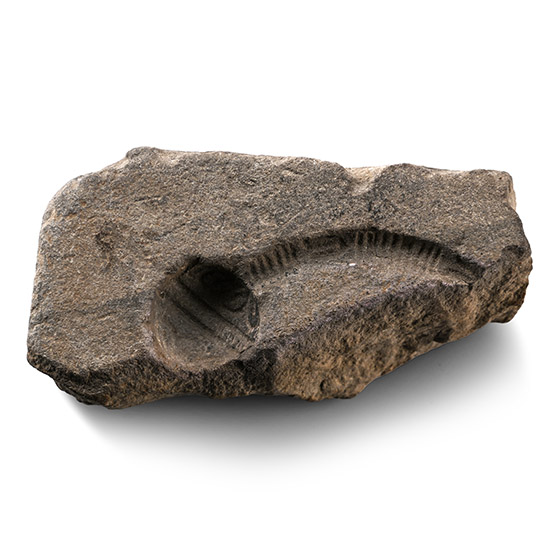
Egyptian Steatite Mould Fragment
New Kingdom, 18th Dynasty, Amarna Period, 1379-1362 B.C.Estimate: £80 - 100 (+bp*)
Opening Bid: £5
Irregular fragment with deep-cut design for an item of jewellery, ribbed shank ending in a sphere with rosette. 64 grams, 63 mm
Acquired in April 1980. From the private collection of Peter Clayton, FCILIP, Dip, Arch, FSA, FRNS, Hemel Hempstead, Hertfordshire, UK; formed since the late 1950s. Accompanied by an old handwritten information card by Peter Clayton, collection no.147. -
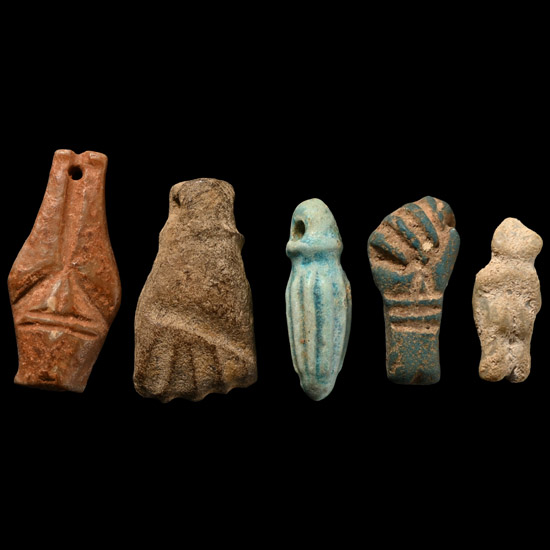
Romano-Egyptian Faience Amulet Group
Roman Period, 30 B.C.-323 A.D.Estimate: £60 - 80 (+bp*)
Opening Bid: £5
Comprising: a melon, two clenched-fist amulets, and two female figurines. 7.01 grams total, 18-26 mm
From the private collection of a European gentleman (1942-2024), formed since the 1970s. -
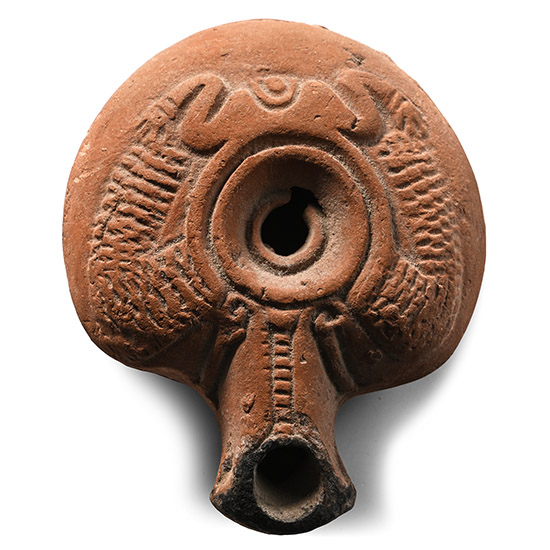
Romano-Egyptian Terracotta Frog Oil Lamp
Roman Period, 3rd-4th century A.D.Estimate: £80 - 100 (+bp*)
Opening Bid: £5
Cordate in plan and biconvex in section, with a short volute nozzle and low-relief stylised frog detailing on the discus; basal ring enclosing 'B' mark; old collector's ticket: 'Buff terracotta lamp in form of a frog with nozzle standing out from front of lamp. Frog is very stereotyped, beneath B. 3-4th century A.D. Found in Alexandria. From Puys-Aubert collection in Alexandria. March 1963.' 102 grams, 92 mm
From the private collection of Peter Clayton, FCILIP, Dip, Arch, FSA, FRNS, Hemel Hempstead, Hertfordshire, UK; formed since the late 1950s. Accompanied by an old handwritten identification card written by Peter Clayton.
