
Loading, please wait...
LOT 0012
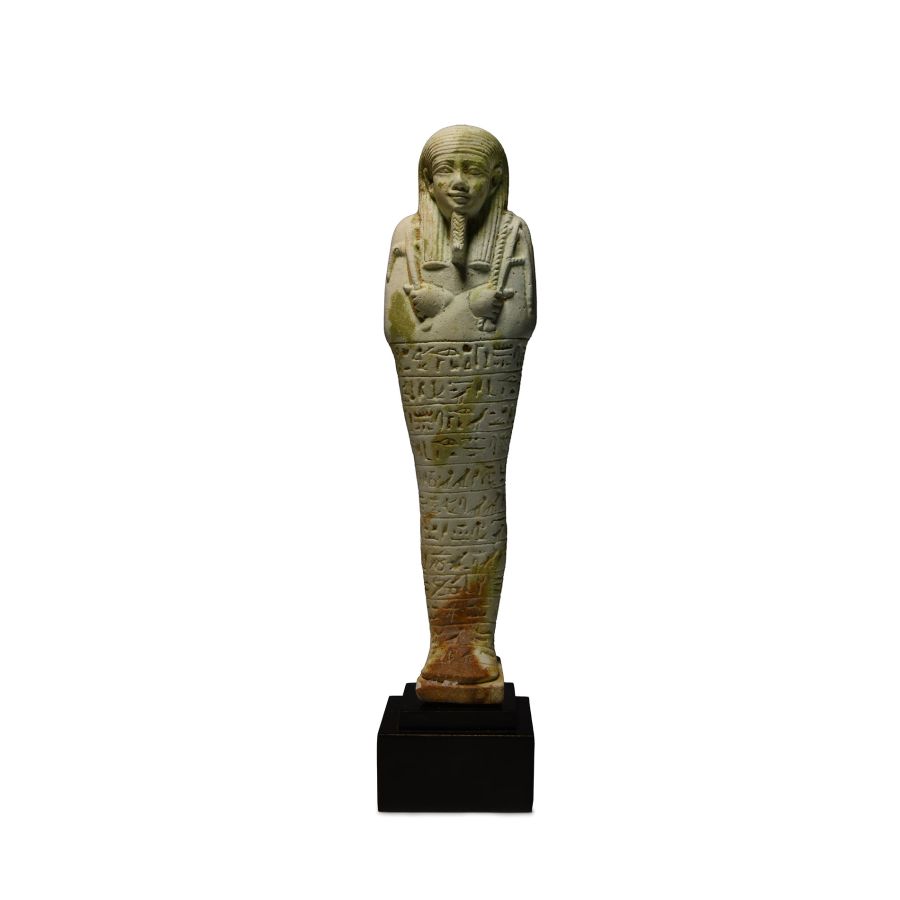
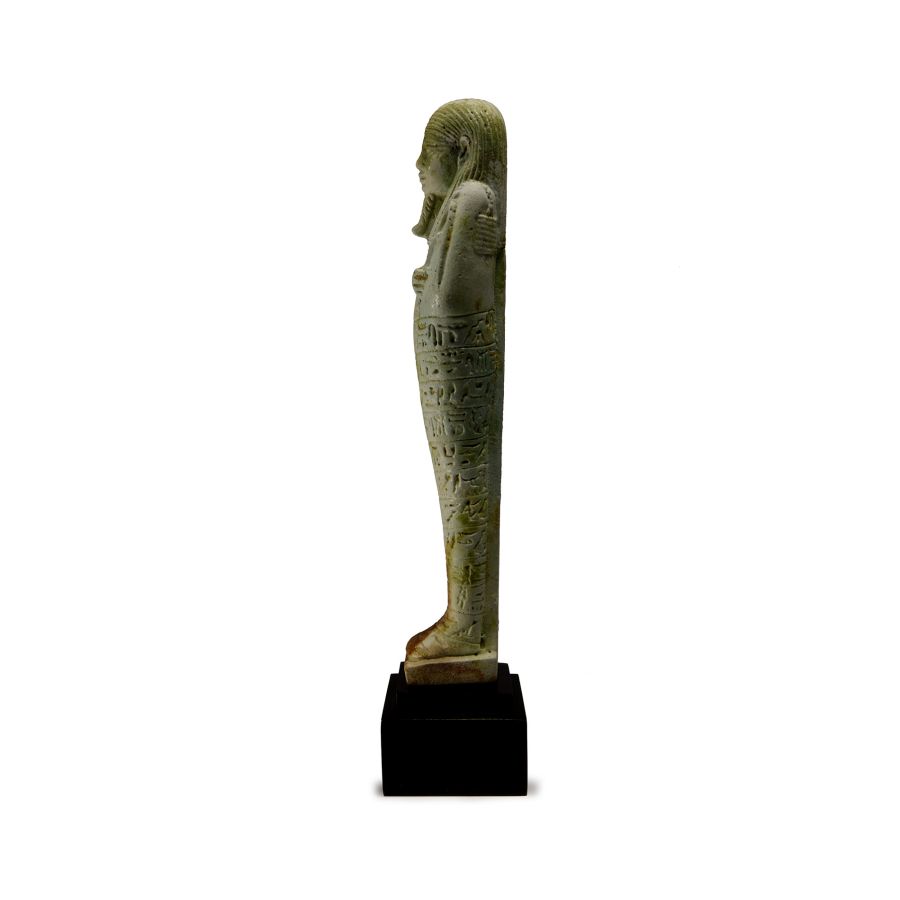
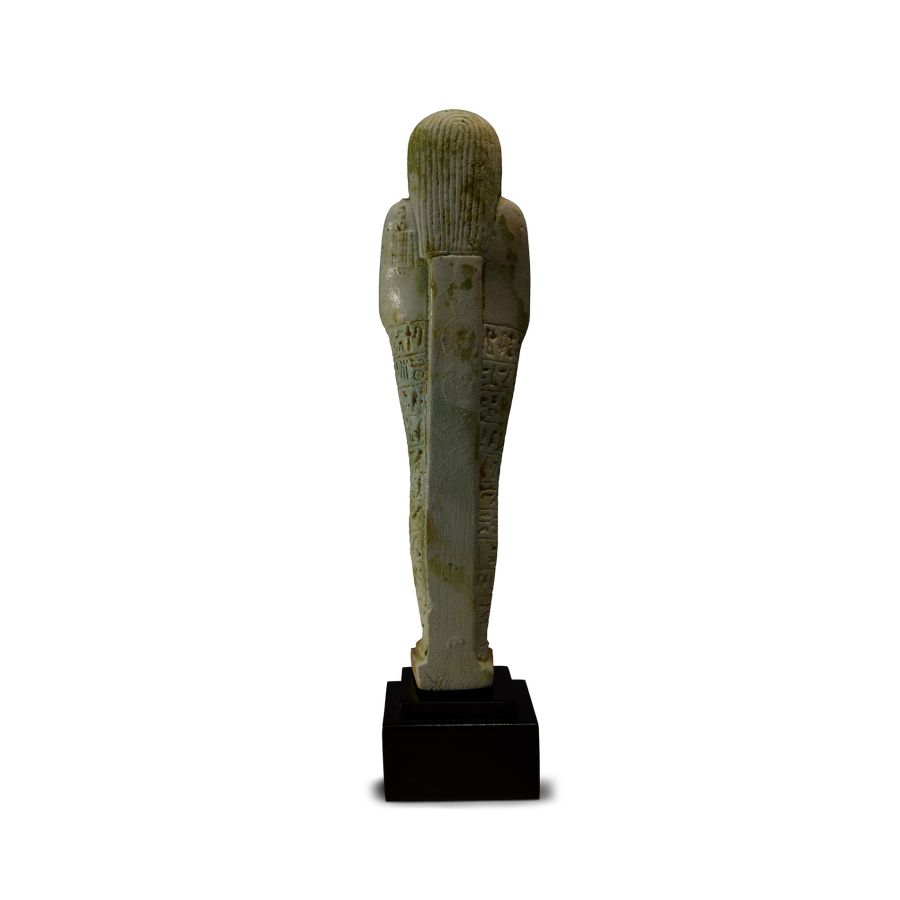
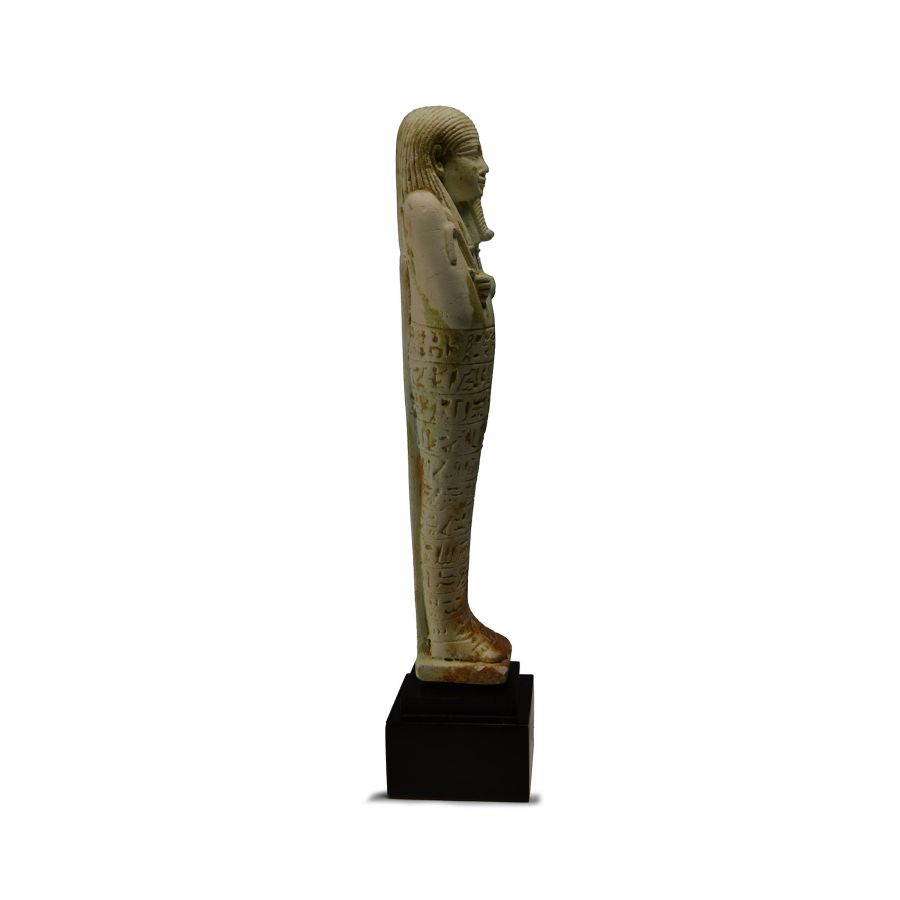
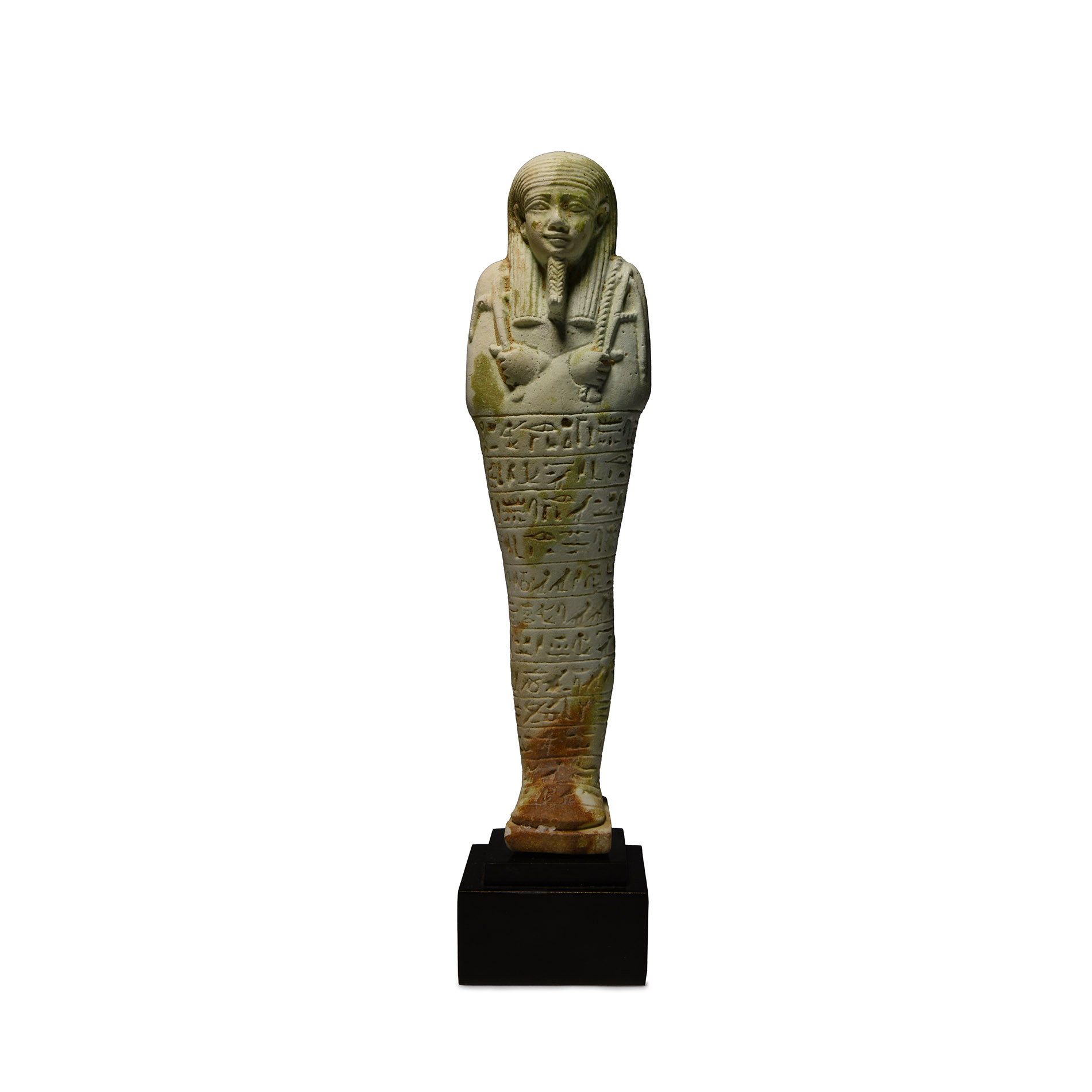
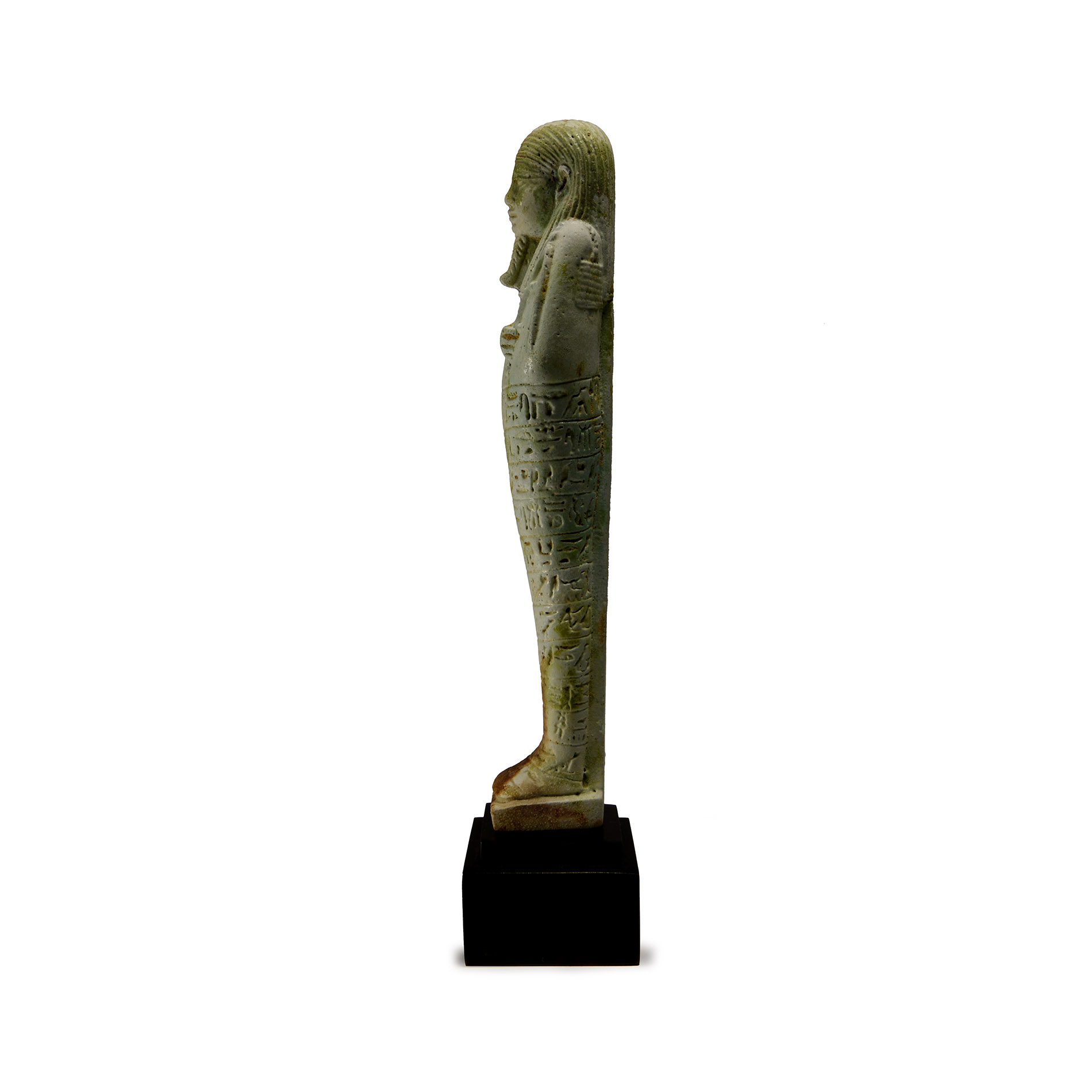
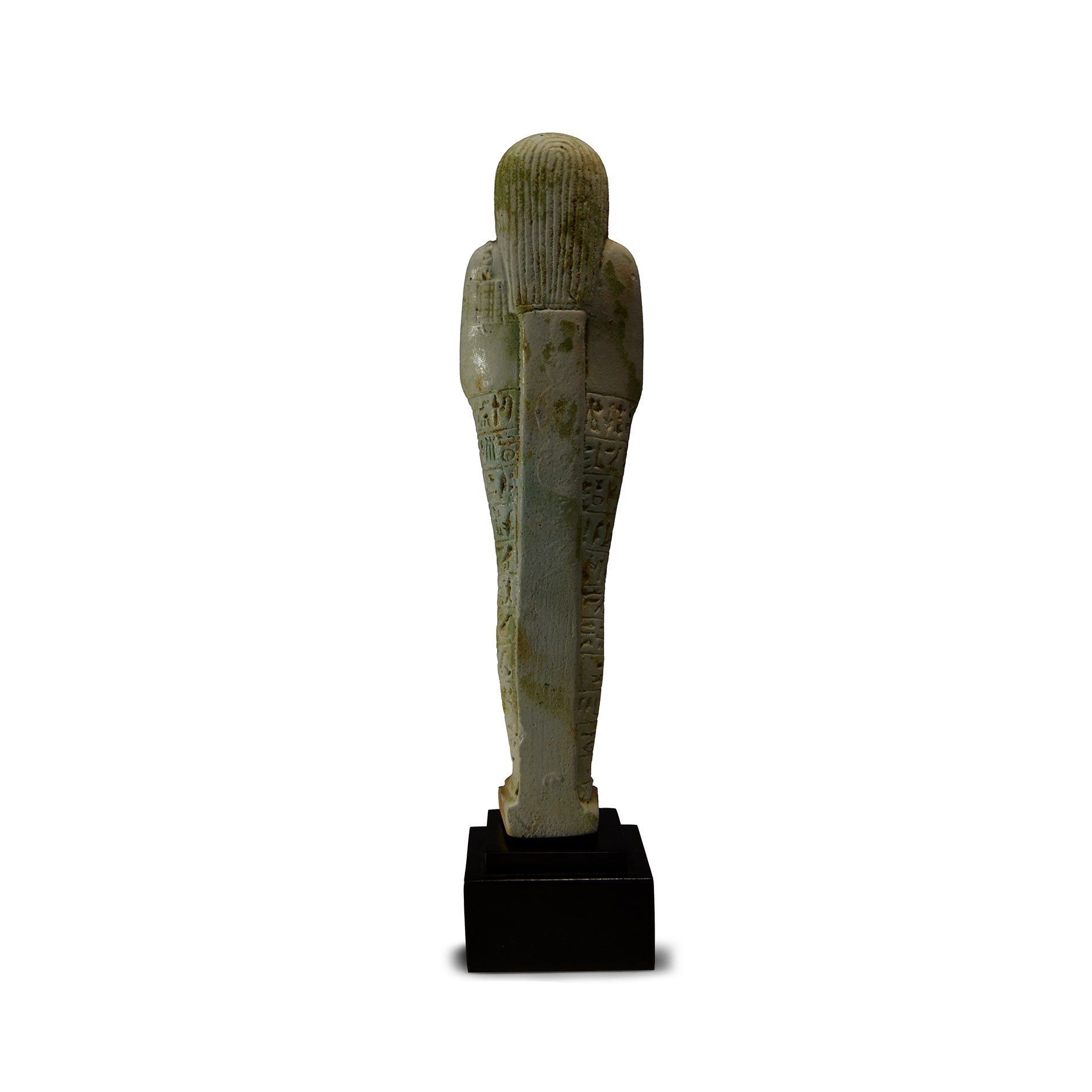
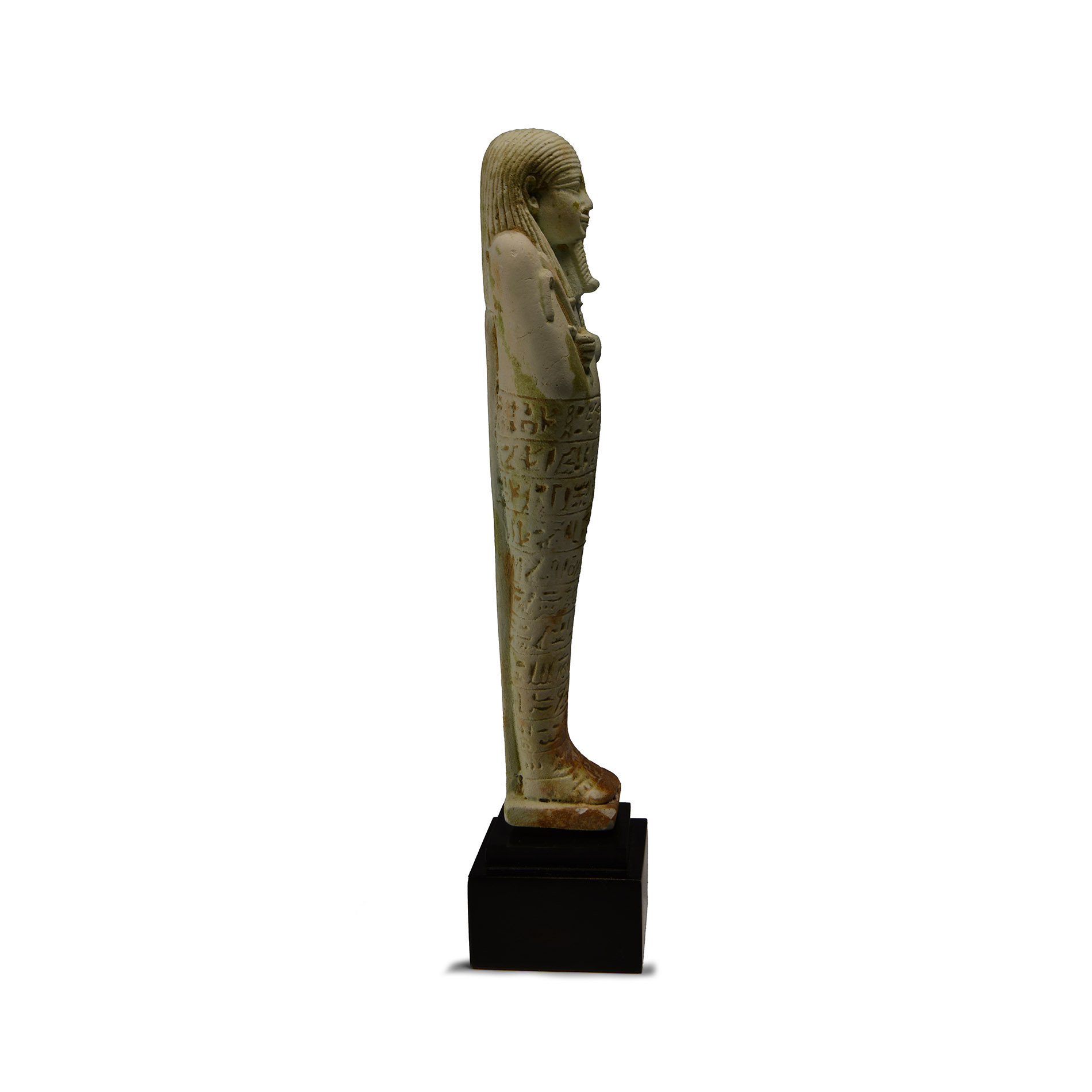
Large Egyptian Composition Shabti for Pa-di-Osiris
LATE PERIOD, 26TH-30TH DYNASTY, 664-343 B.C.
7 3/4 in. (9 1/4 in.) (248 grams, 19.5 cm high (410 grams total, 23.5 cm high including stand)).
Of mummiform type and decorated with a blue-green glaze; inscribed for a priest named Pa-di-Osiris, whose mother’s name is Sed-irt-binut; the shabti wearing a striated tripartite wig and long plaited divine beard; holding a pick in the left hand, the right hand holding a hoe and the cord of a seed bag hanging over his left shoulder; the face expertly modelled with carefully rendered cosmetic lines around the eyes, narrow eyebrows, and slightly smiling lips giving it a serene expression characteristic of the finest ushabtis of the period; standing on an integral plinth from which a plain back pillar terminating at the base of the wig extends; twelve horizontal rows of hieroglyphic inscription, the Sixth Chapter of the Book of the Dead; accompanied by a custom-made display base.
ProvenanceAcquired on the Geneva art market, 1980.
Swiss collection, early 1980s until 2000.
UK private collection, 2000.
Accompanied by an academic report by Egyptologist Paul Whelan.
This lot has been checked against the Interpol Database of stolen works of art and is accompanied by search certificate no.11802-206400.
Cf. National Museums Liverpool, accession number M13871, for a similar shabti with different dedication; cf. The Metropolitan Museum, accession number 16.9.1, for a shabti of comparable form.
FootnotesThe epithet 'true of voice' following the mother’s name, but not that of the owner, is a rather infrequent arrangement in shabti/ushabti inscriptions but can be found on other fine examples from this period. Pa-di-Osiris’s title is unusual, but may belong to the cult of the god Shu whose name is sometimes followed by the epithet, 'he who supports heaven'. The text contains Schneider’s version VIIA of The Book of the Dead Chapter 6.
CONDITIONTimeLine Auctions follows a vetting process to ensure the authenticity and legality of all items, reinforcing our commitment to integrity and responsible trading. Each antiquity, antique, and coin lot undergoes thorough examination by a vetting committee of at least ten external specialists, professional trade association members, scientists, and archaeologists: Our Vetting Process
AUCTIONS:
TimeLine is a leading auction house specialising in antiquities, ancient art, collectables, natural history, coins, medals, and books. Our auctions offer museums, collectors, historians, and enthusiasts the opportunity to acquire unique and historically significant pieces.
LOT 0012
Large Egyptian Composition Shabti for Pa-di-Osiris
Estimate £8,000 - 10,000€9,280 - 11,600 (for guidance only)$10,800 - 13,500 (for guidance only)
-
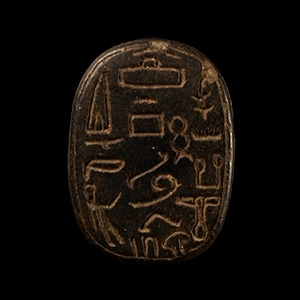
Large Egyptian Hardstone Scarab with Hieroglyphs
Late Period, 664-323 B.C. or laterSold for (Inc. bp): £442
Carved with semi-naturalistic anatomical detailing; shallow engraved hieroglyphs to the base. 8.7 grams, 24 mm
From an early 20th century collection, Carnavon, North Wales, UK. -
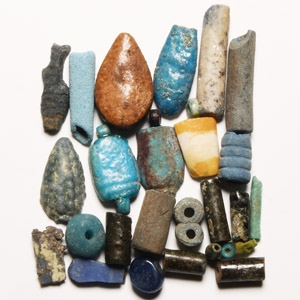
Egyptian Composition Amulet and Bead Collection
Late Period, 664-332 B.C.Sold for (Inc. bp): £85
Composed of various types of beads; glazed and pierced for suspension. 6.4 grams total, 6-18 mm
Ex early 20th century Home Counties, UK, collection. -
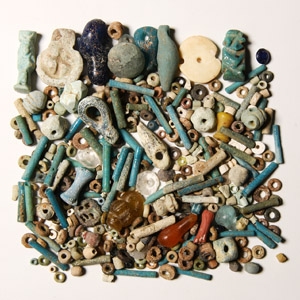
Egyptian and Other Faience Amulet and Bead Group
New Kingdom, 1315-1069 B.C. and laterSold for (Inc. bp): £286
Most covered in a coloured glaze; amulets including fruits and deities; beads of a range of types. 34 grams total, 2-20 mm
UK gallery, early 2000s.
