
Loading, please wait...
LOT 0046
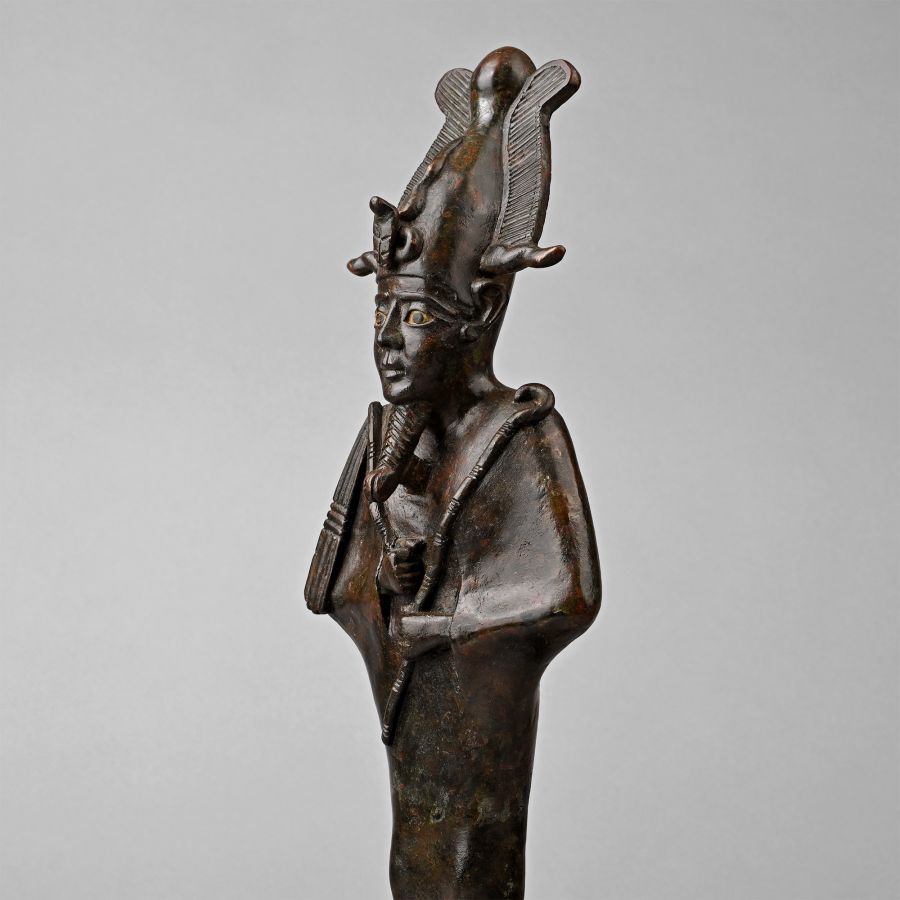
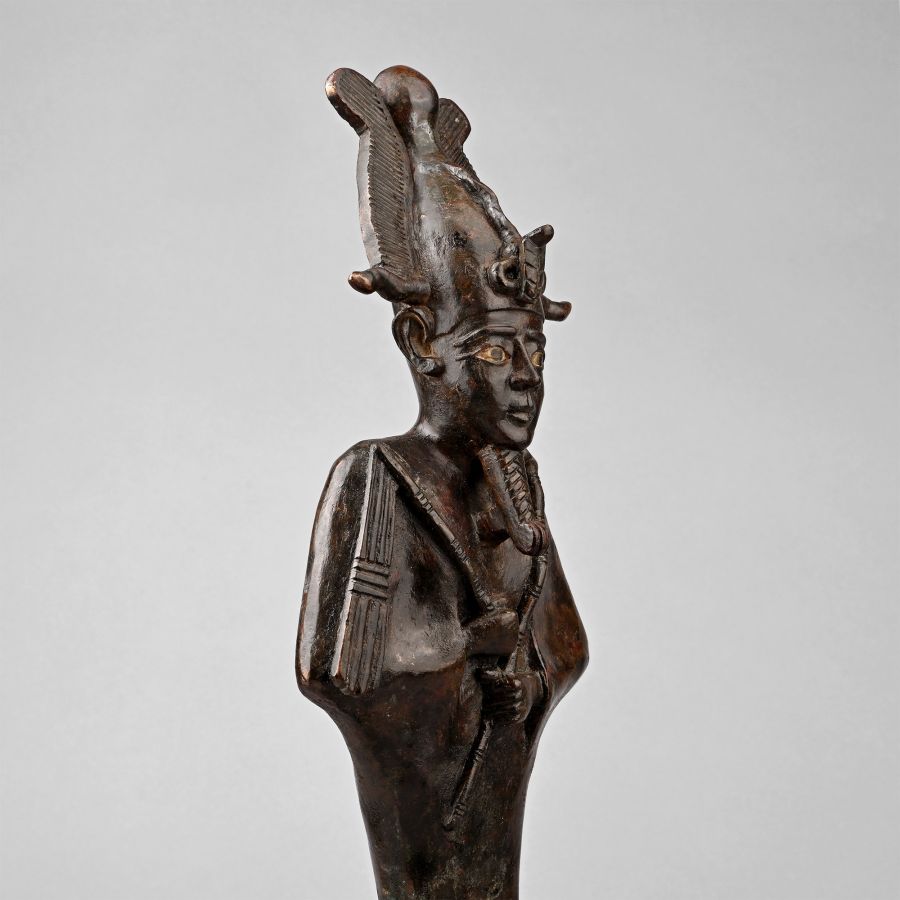
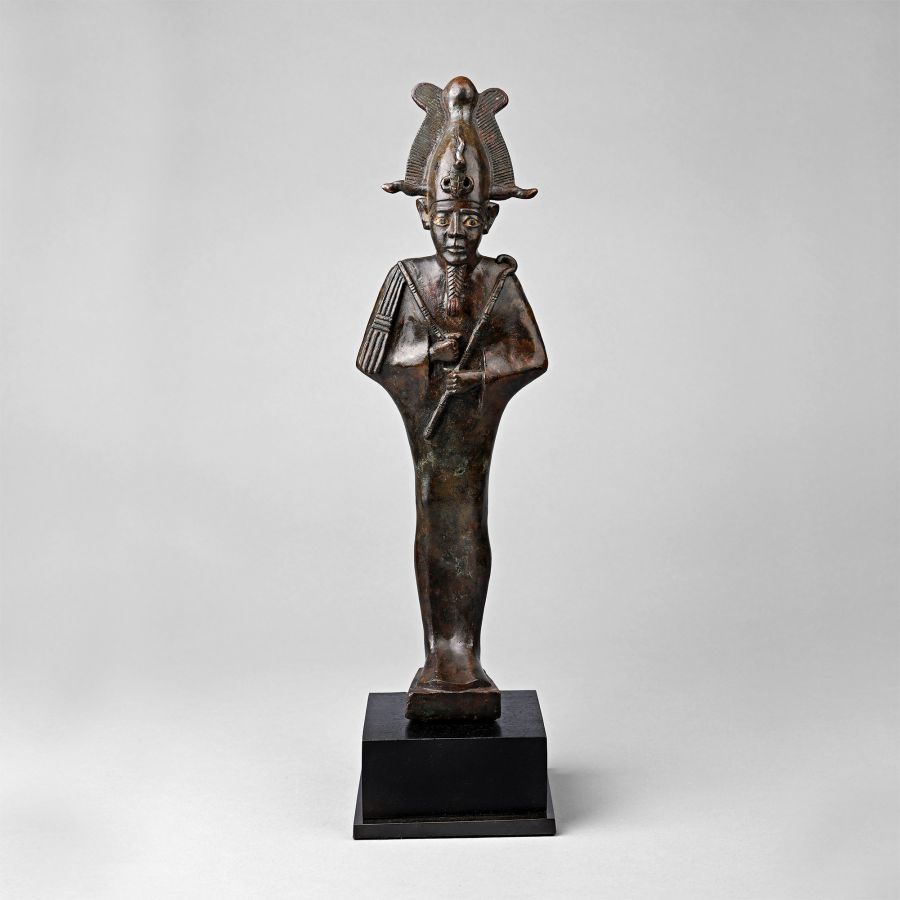
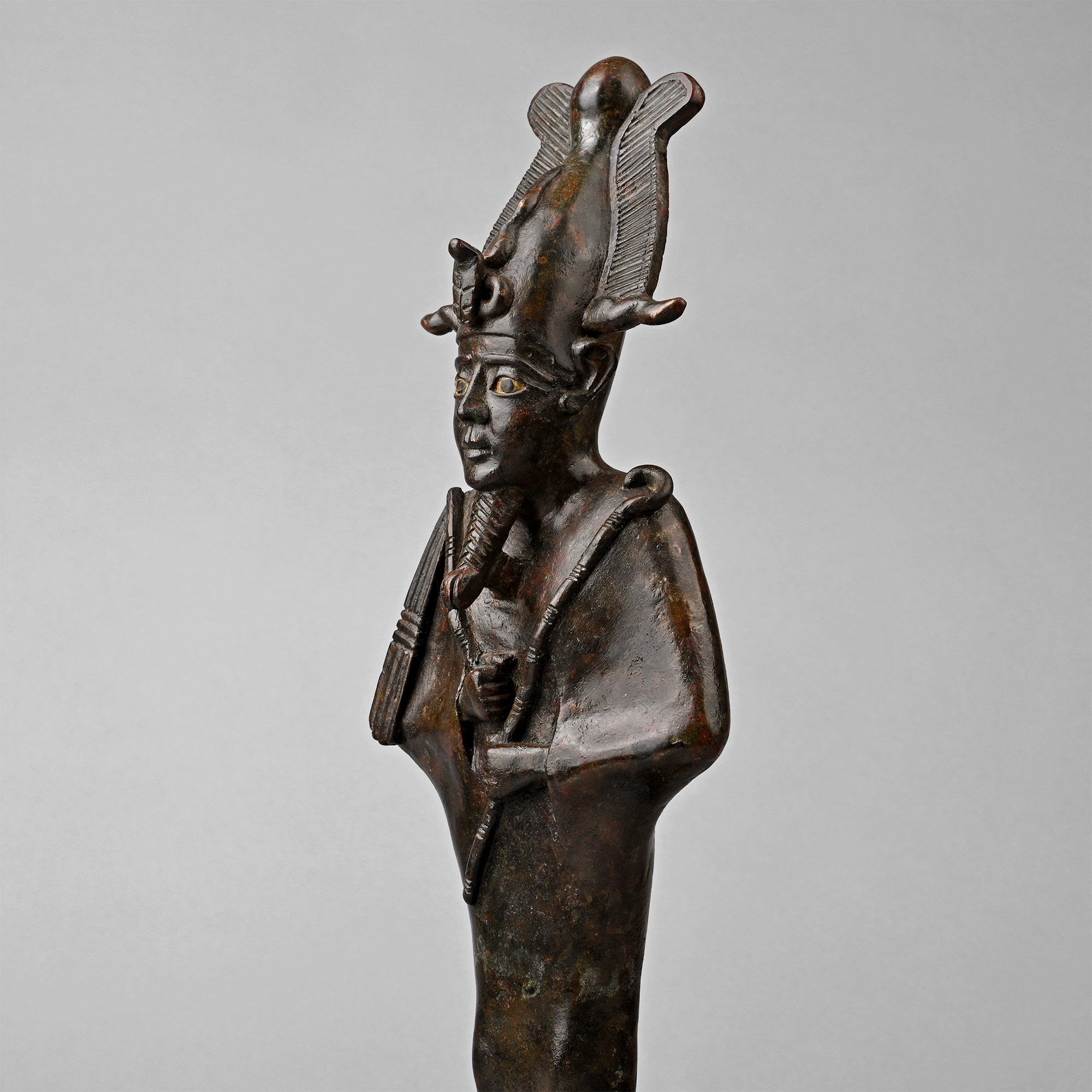
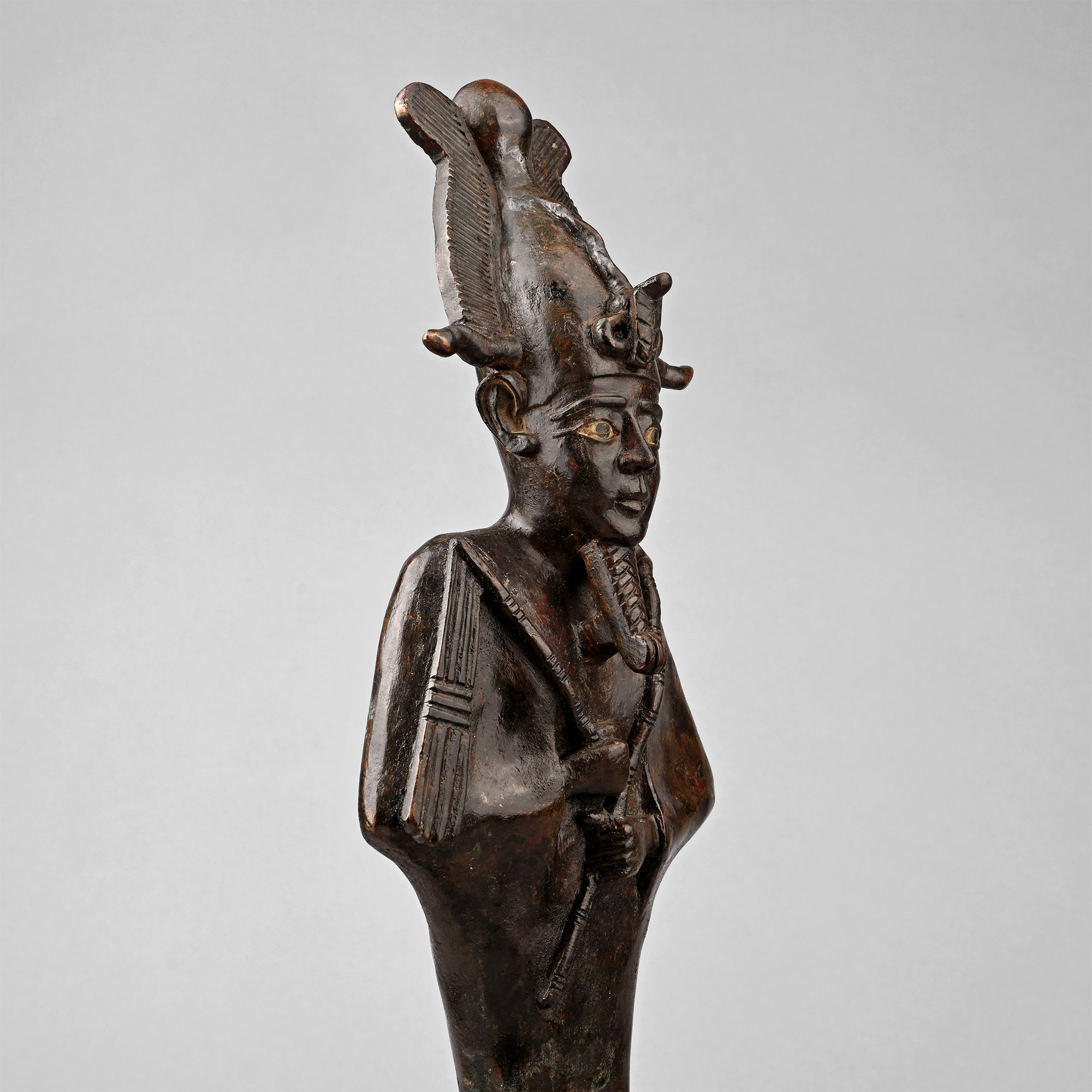
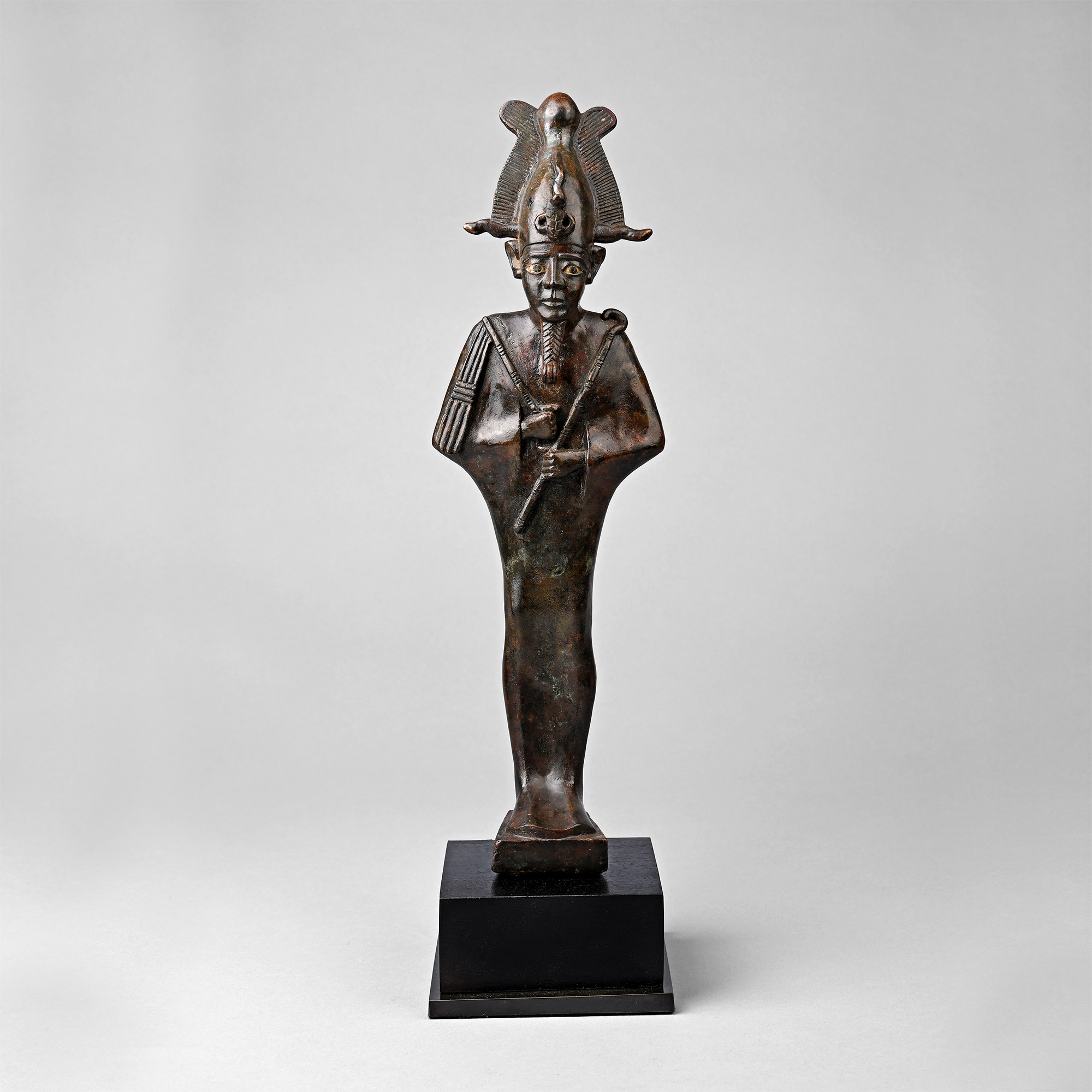
Large Egyptian Bronze Statue of Osiris
LATE PERIOD-PTOLEMAIC PERIOD, CIRCA 664-30 B.C.
16 3/8 in. (3.76 kg total, 41.5 cm high including stand).
Modelled in the round, standing erect and wearing a long, tight-fitting garment, with hands emerging from openings to hold the nekhakha flail and heka crook; on his head is an atef crown, consisting of the white crown with lateral feathers, ram's horns and a uraeus; below his chin extends a braided false beard, supported behind with a short tab; the eye sockets inlaid with glass; mounted on a custom-made stand.
ProvenanceFrom an old Japanese private collection formed in the 1970s.
Mr M.S. prior to 1988.
Acquired from the above 18 April 1988.
M. Yekta, UK private collection UK.
Acquired from the above 17 Aug 2021.
This lot has been checked against the Interpol Database of stolen works of art and is accompanied by search certificate no.13469-262425.
Cf. Daressy, G., Catalogue général des antiquités égyptiennes du Musée du Caire N° 38001-39384 Statues de divinités, Cairo, 1906, pl. XVII, no. 38.268, for a comparable statuette.
FootnotesOsiris was one of the most important gods of ancient Egypt, associated with the afterlife, resurrection and the regeneration of life. As ruler and judge of the dead, he offered the promise of rebirth to those who hoped to attain eternal life. Bronze statuettes of Osiris were dedicated in temples and placed in tombs as votive offerings. They expressed personal piety and devotion while invoking the god’s protection and his power to grant rebirth in the afterlife.
CONDITIONTimeLine Auctions follows a vetting process to ensure the authenticity and legality of all items, reinforcing our commitment to integrity and responsible trading. Each antiquity, antique, and coin lot undergoes thorough examination by a vetting committee of at least ten external specialists, professional trade association members, scientists, and archaeologists: Our Vetting Process
AUCTIONS:
TimeLine is a leading auction house specialising in antiquities, ancient art, collectables, natural history, coins, medals, and books. Our auctions offer museums, collectors, historians, and enthusiasts the opportunity to acquire unique and historically significant pieces.
LOT 0046
Large Egyptian Bronze Statue of Osiris
Estimate £18,000 - 24,000€20,880 - 27,840 (for guidance only)$24,300 - 32,400 (for guidance only)
Opening Bid
£9,000 (EUR 10,440; USD 12,150) +BP*
-
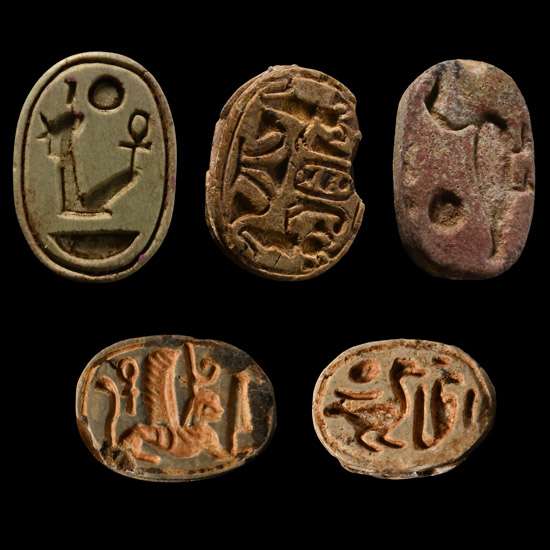
Egyptian and Phoenician Stone Scarab Group
New Kingdom-Late Period, circa 1380-332 B.C.Estimate: £120 - 170 (+bp*)
Opening Bid: £5
Mixed group of scarabs and scaraboids, all inscribed on the undersides with hieroglyphs and motifs, including the cartouches of Amenhotep III and Thutmosis III. 7.7 grams total, 13-17 mm
From the private collection of a European gentleman (1942-2024), formed since the 1970s. -
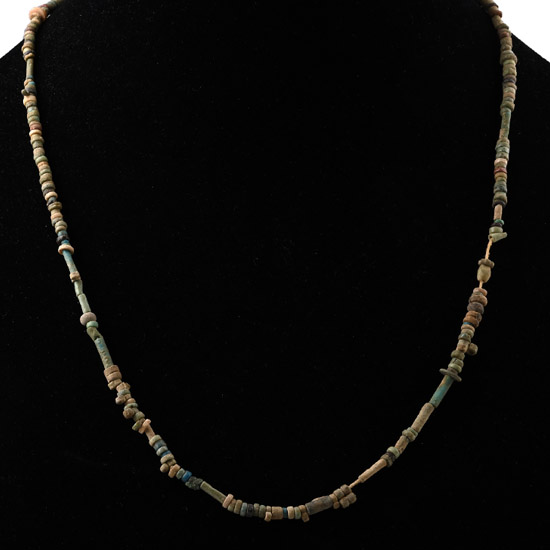
Egyptian Faience Mummy Bead Necklace String
Late Period-Ptolemaic Period, circa 664-30 B.C.Estimate: £60 - 80 (+bp*)
Opening Bid: £5
Composed of green- and blue-glazed disc and tubular beads, restrung. 8.03 grams, 60 cm
Excavated from Egypt in 1914. From the private collection of Mr David Sams and his wife Elizabeth Kate Sams, gentry and amateur archaeologists who travelled to Egypt in 1914 with their daughter Ethel. Mr Sams and his wife led digging expeditions from which these items come from the family estate of Mr and Mrs Sams, by direct descent to their granddaughter. -
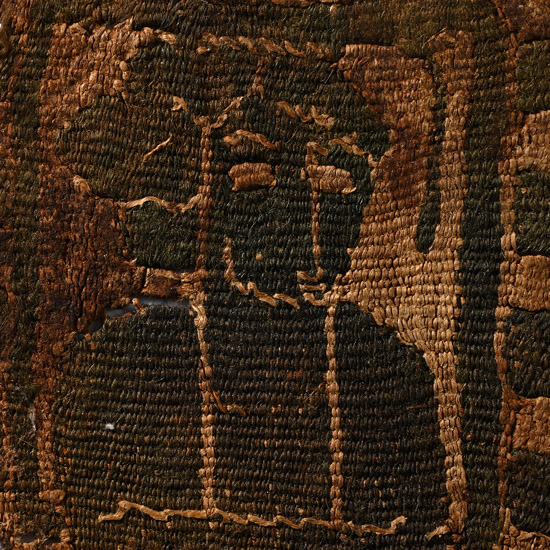
Egyptian Coptic Textile Fragment of a Tablion from a Tunic with Facing Bust
Circa 5th century A.D.Estimate: £60 - 80 (+bp*)
Opening Bid: £5
In linen and wool, showing the half-bust of a man clad in tunica paragaudata, borders with geometric decorations. 4.68 grams, 10 cm
Acquired 1970s-1996. Property of a North American collector. London collection, 2016.
The tabula, or tablion, was a square embroidery used to decorate tunics or mantles. This one, interestingly, shows a man dressed in the typical late Roman tunic, featuring the image of a soldier or military servant.
