
Loading, please wait...
LOT 0616
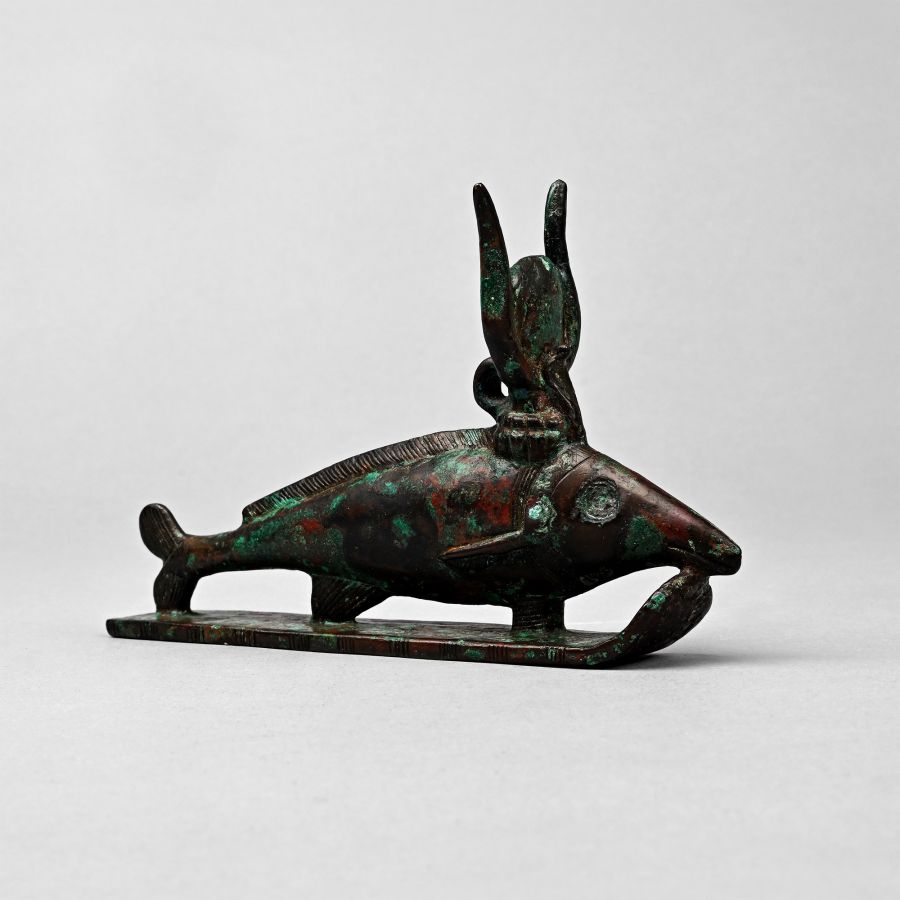
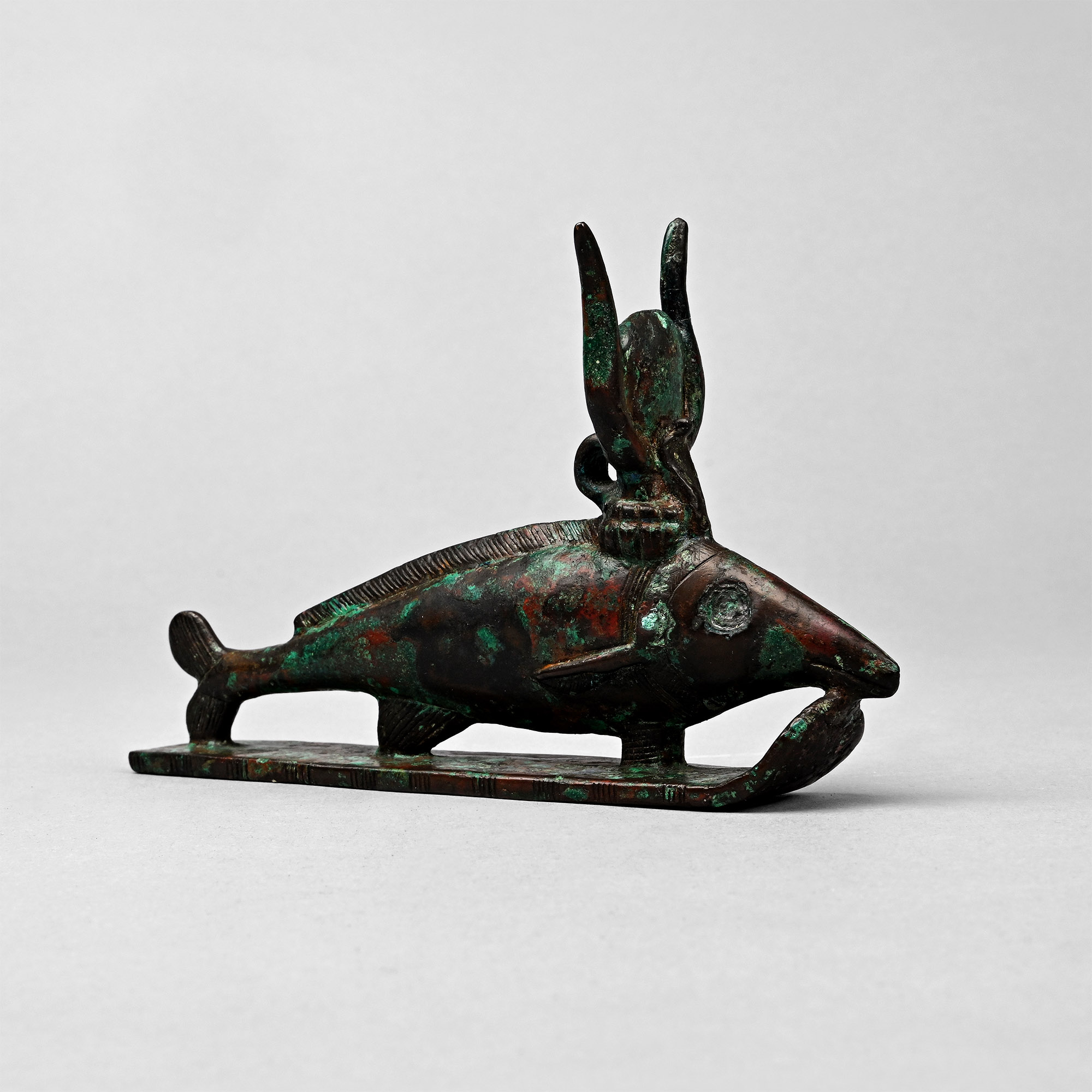
Large Egyptian Bronze Oxyrhynchus Fish of Per-Medjed with Hieroglyphic Inscription
LATE PERIOD-PTOLEMAIC PERIOD, 664-30 B.C.
6 3/4 in. (585 grams, 17 cm).
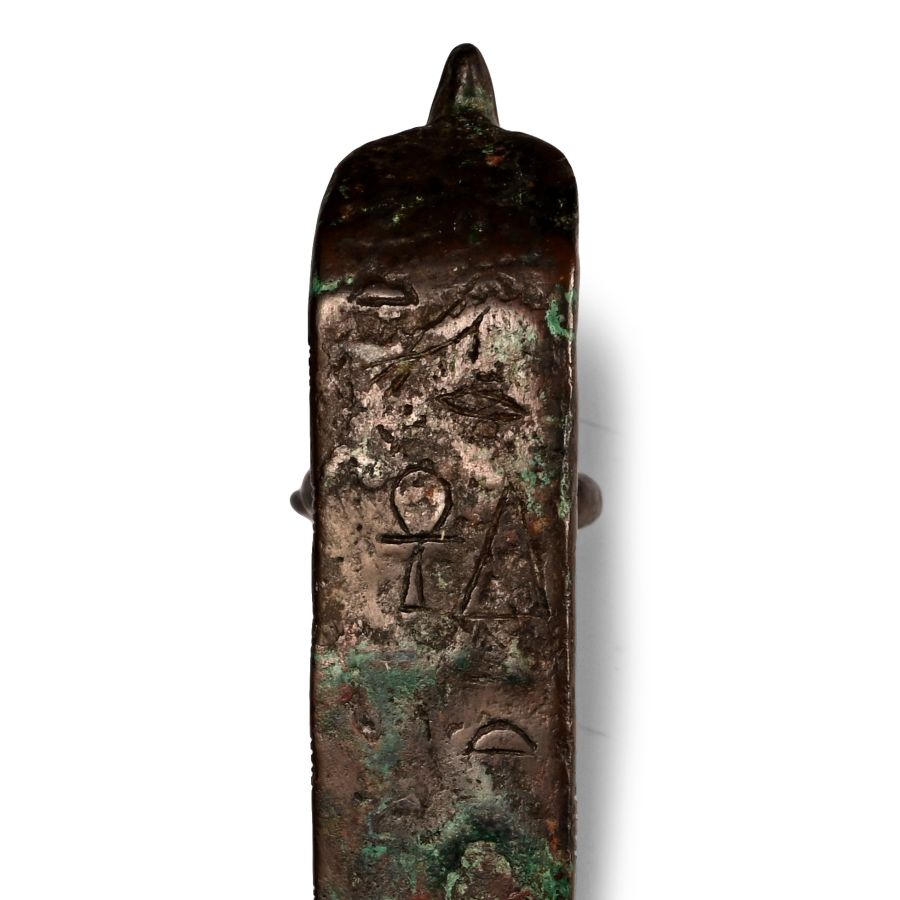
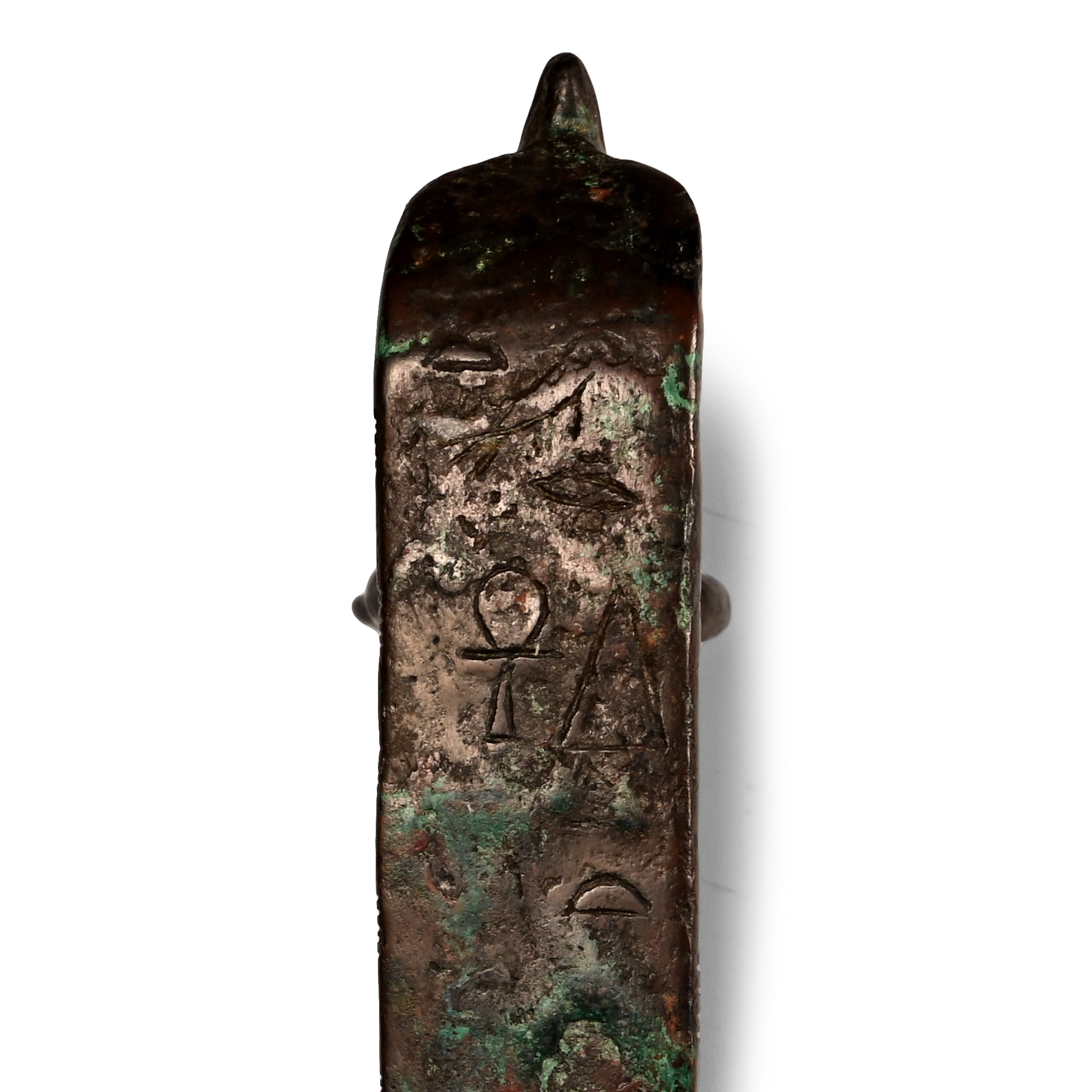
Modelled in the round on a sledge attached by ventral and pectoral fins, a forked tail, a dorsal ridge, and a tapering nose, featuring recessed circular eyes filled with enamel, a horned sun disc headdress fronted by a uraeus, and a suspension loop behind; a few hieroglyphs of a dedication remain visible on the underside of the sledge, which may be interpreted as part of a name ‘….Ta-ir-di-ankhet…’ (…tꜢ di͗ Ꜥnḫ t….).
ProvenanceAcquired from Gallery Reiner, Paris, France, 1981.
Private collection, Europe.
Accompanied by a copy of French passport no.150583 dated 29 November 2013.
This lot has been checked against the Interpol Database of stolen works of art and is accompanied by a search certificate no.12375-226676.
Cf. Kozloff, A.P., Animals in Ancient Art from the Leo Mildenberg Collection, Mainz am Rhein, 1981, fig. 60, for a similar example; Tiribilli, E., The bronze figurines of the Petrie Museum from 2000 BC to AD 400, London, 2018, p.229, for discussion.
FootnotesThe Medjed, a type of elephant-snout fish (Mormyrus kannume), was revered in ancient Egyptian religion, particularly in Per-Medjed, better known by its Greek name, Oxyrhynchus Polis. This version of the name, meaning "city of the sharp-nosed," reflects the fish's distinctive appearance as depicted in Egyptian art. These fish were believed to have consumed the penis of Osiris, the god who was dismembered and scattered by his brother Seth. As sacred creatures, figurines of the Medjed were often adorned with a horned sun-disc headdress worn by the goddesses Hathor and Isis, suggesting a close association with both. Some figurines, like this example, featured suspension loops, allowing them to be worn as pendant amulets.
CONDITIONTimeLine Auctions follows a vetting process to ensure the authenticity and legality of all items, reinforcing our commitment to integrity and responsible trading. Each antiquity, antique, and coin lot undergoes thorough examination by a vetting committee of at least ten external specialists, professional trade association members, scientists, and archaeologists: Our Vetting Process
AUCTIONS:
TimeLine is a leading auction house specialising in antiquities, ancient art, collectables, natural history, coins, medals, and books. Our auctions offer museums, collectors, historians, and enthusiasts the opportunity to acquire unique and historically significant pieces.
LOT 0616
Large Egyptian Bronze Oxyrhynchus Fish of Per-Medjed with Hieroglyphic Inscription
Estimate £4,000 - 6,000€4,640 - 6,960 (for guidance only)$5,400 - 8,100 (for guidance only)
Opening Bid
£2,100 (EUR 2,436; USD 2,835) ‡+BP*
-
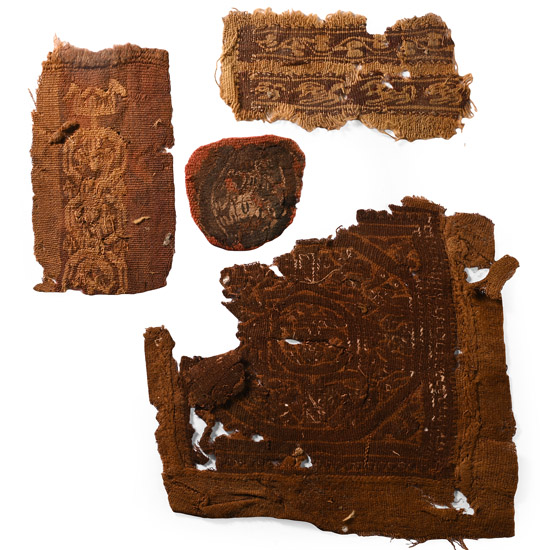
Egyptian Coptic Tunics Textile Fragments of Orbiculus, Segmenta and Tablion with Animals and Geometric Decoration
Circa 6th-7th century A.D.Estimate: £70 - 90 (+bp*)
Opening Bid: £5
Comprising: a double decorative tunic stripe (clavus) in purple wool over coarse linen, S-twist tapestry, embroidered with stylised plants, from the cuff of a tunic; a large tablion, with floral ornamentation, borders decorated with meanders; a small orbiculus, with a flying putto and a horse; a large part of another clavus, ornamented with a succession of medallions filled with birds. 18 grams total, 6.9-19.5 cm
Acquired 1970s-1996. Property of a North American collector. London collection, 2016.
The fragments are decorative parts of tunics. These are fabrics of great decorative finesse, with some elements displaying an unusual and extremely well-preserved colour palette. The plant designs are related to the so-called Nilotic decorative pattern. The motif of the winged putto is common in Coptic textiles. -
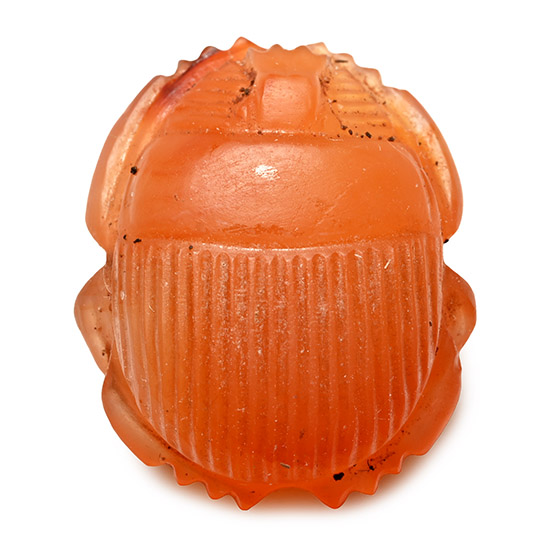
Egyptian Carnelian Heart Scarab
Late Period, 664-332 B.C.Estimate: £800 - 1,000 (+bp*)
Opening Bid: £400
With fine anatomical detailing on the body and striated wingcase, legs folded beneath the body and flanked by a ribbed suspension loop. 2.55 grams, 17 mm
From a mid 20th century collection.
The scarab amulet was one of ancient Egypt’s most widespread symbols, signifying rebirth, transformation, and protection. Modelled on the dung beetle associated with the sun god Khepri—believed to roll the sun across the sky—it embodied the cycle of life and renewal. Widely used from the early Middle Kingdom onwards, scarabs served as funerary amulets, personal charms, and seals, often inscribed with prayers or names. They reflect both spiritual beliefs and daily life in ancient Egypt. Naturalistic scarabs made of semi-precious stones, such as this example, are a characteristic feature of Late Period burials. -
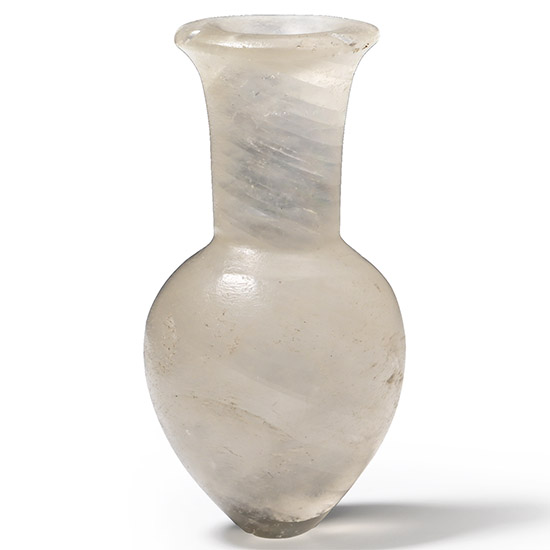
Egyptian Rock Crystal Dummy Vessel
Old Kingdom, 5th-6th Dynasty, circa 2500-2200 B.C.Estimate: £2,000 - 3,000 (+bp*)
Opening Bid: £1,000
Model amphora with a piriform body, a long, flaring, trumpet-like neck and rim, and a shallow depression at the top. 55 grams, 59 mm
with Archaeologia, Switzerland, before 1983. Ex private North American collection. London private collection, 2016. This lot has been checked against the Interpol Database of stolen works of art and is accompanied by a search certificate no.13231-249997.
This was one of the model vessels in a set associated with the 'Opening of the Mouth' ritual, which revived the deceased.
