
Loading, please wait...
LOT 0064
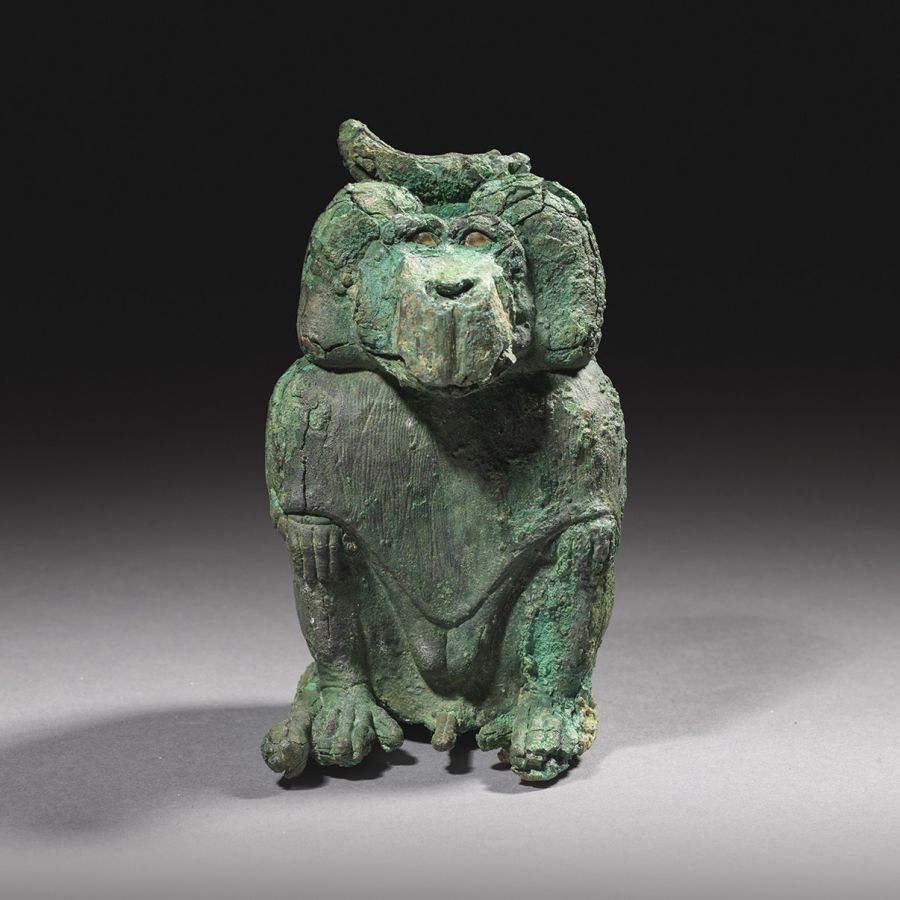
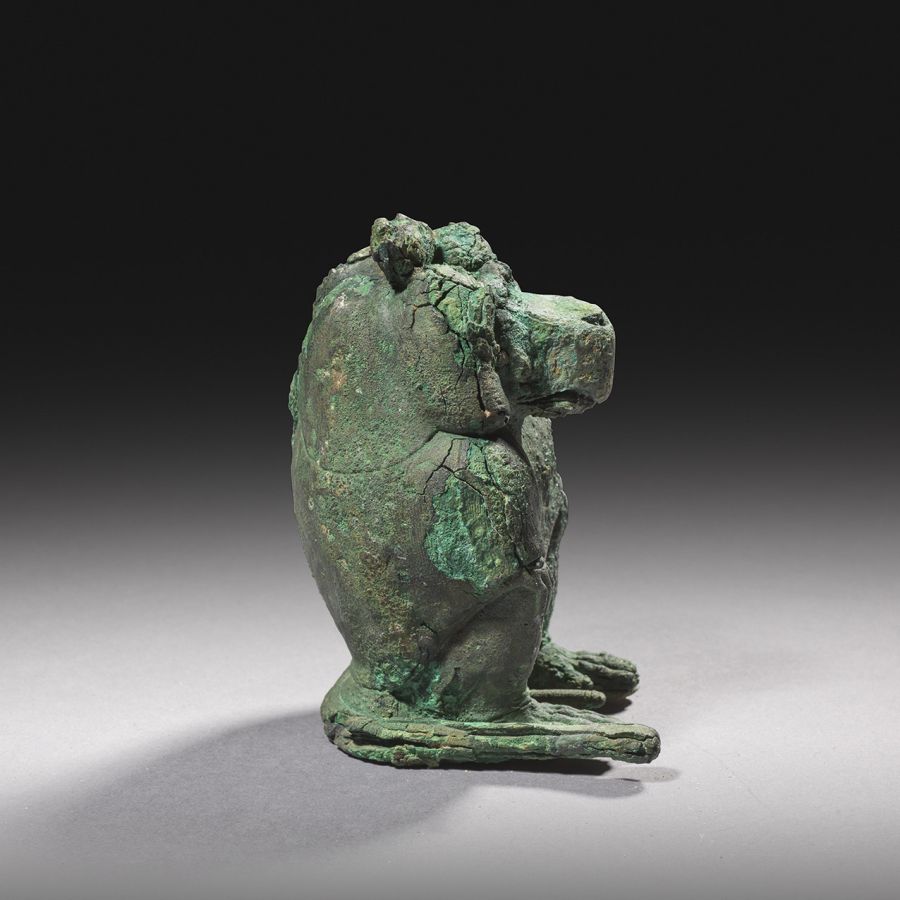
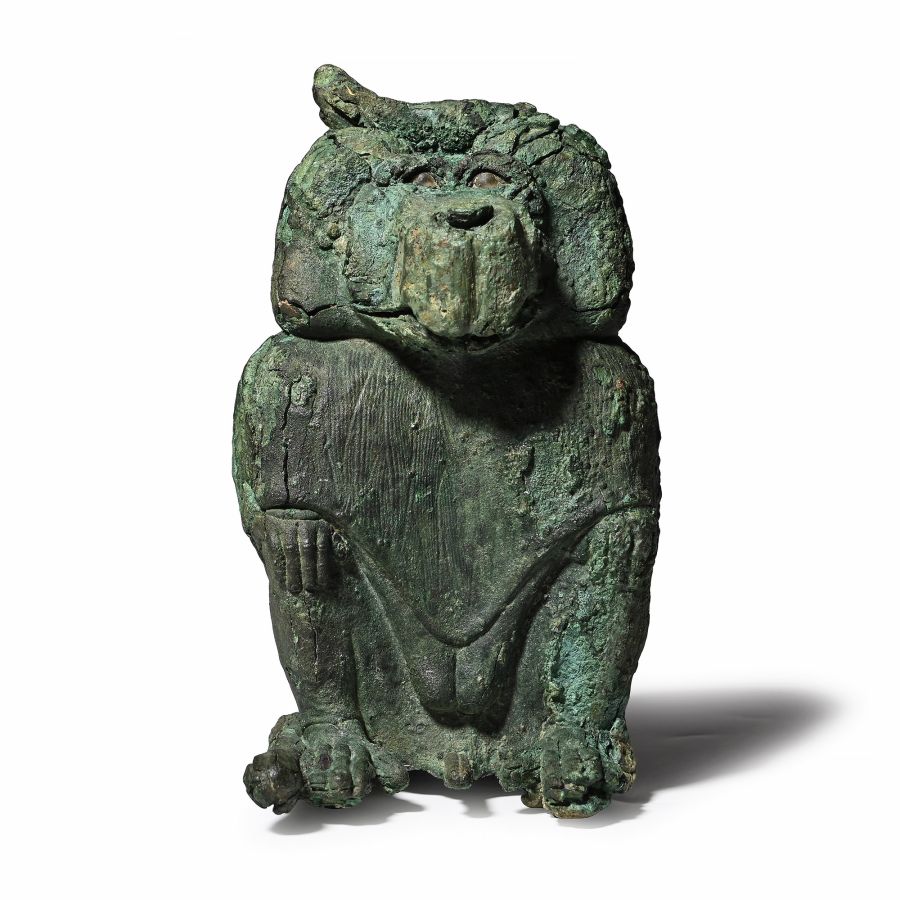
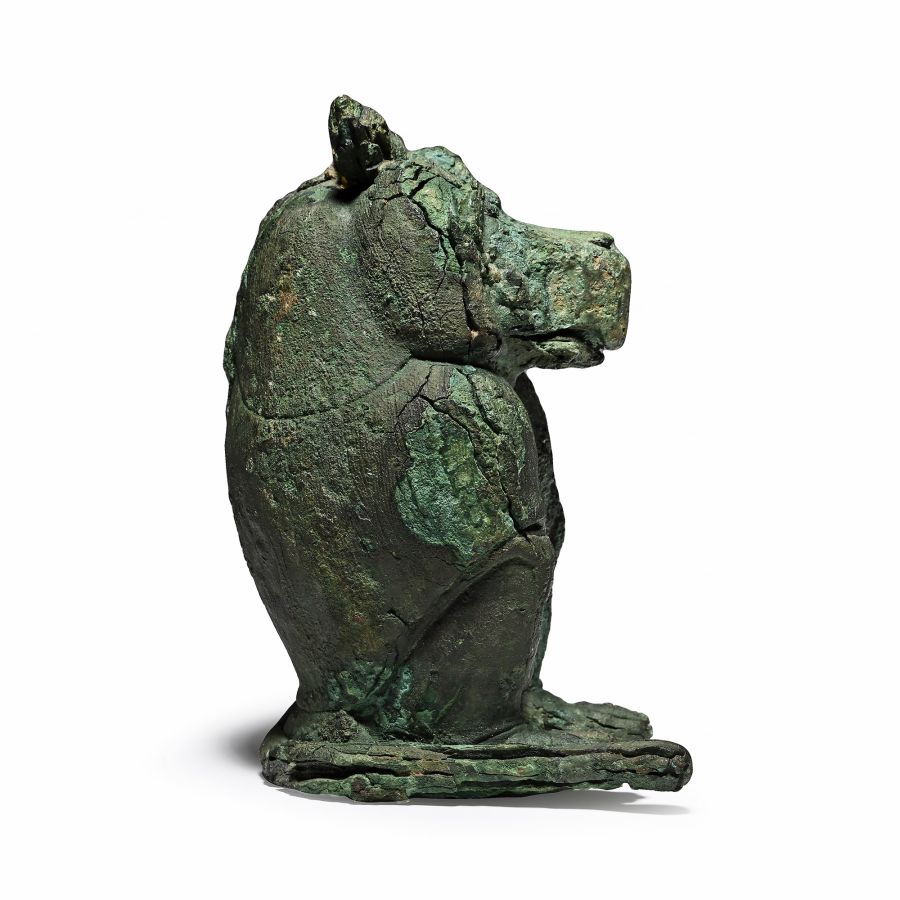
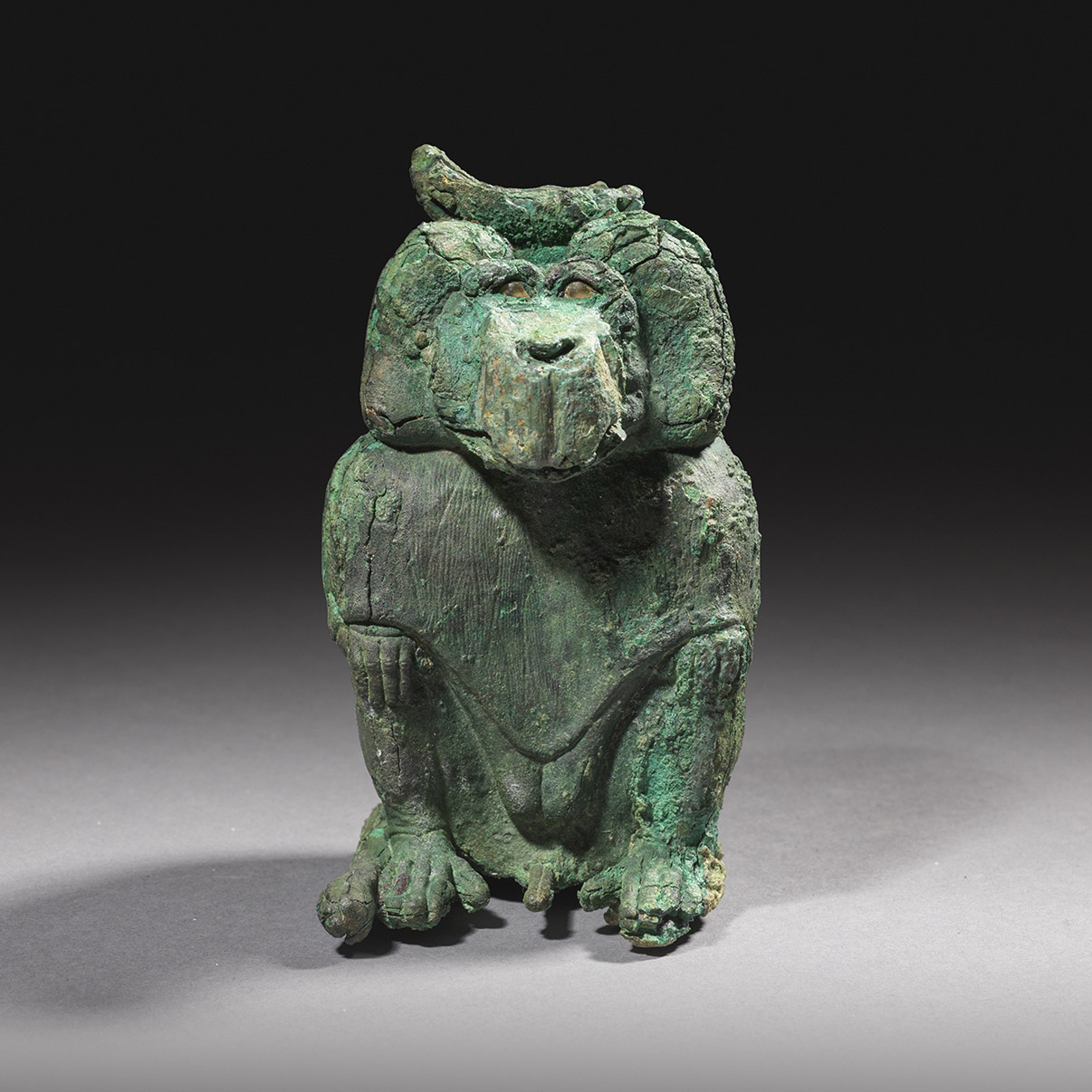
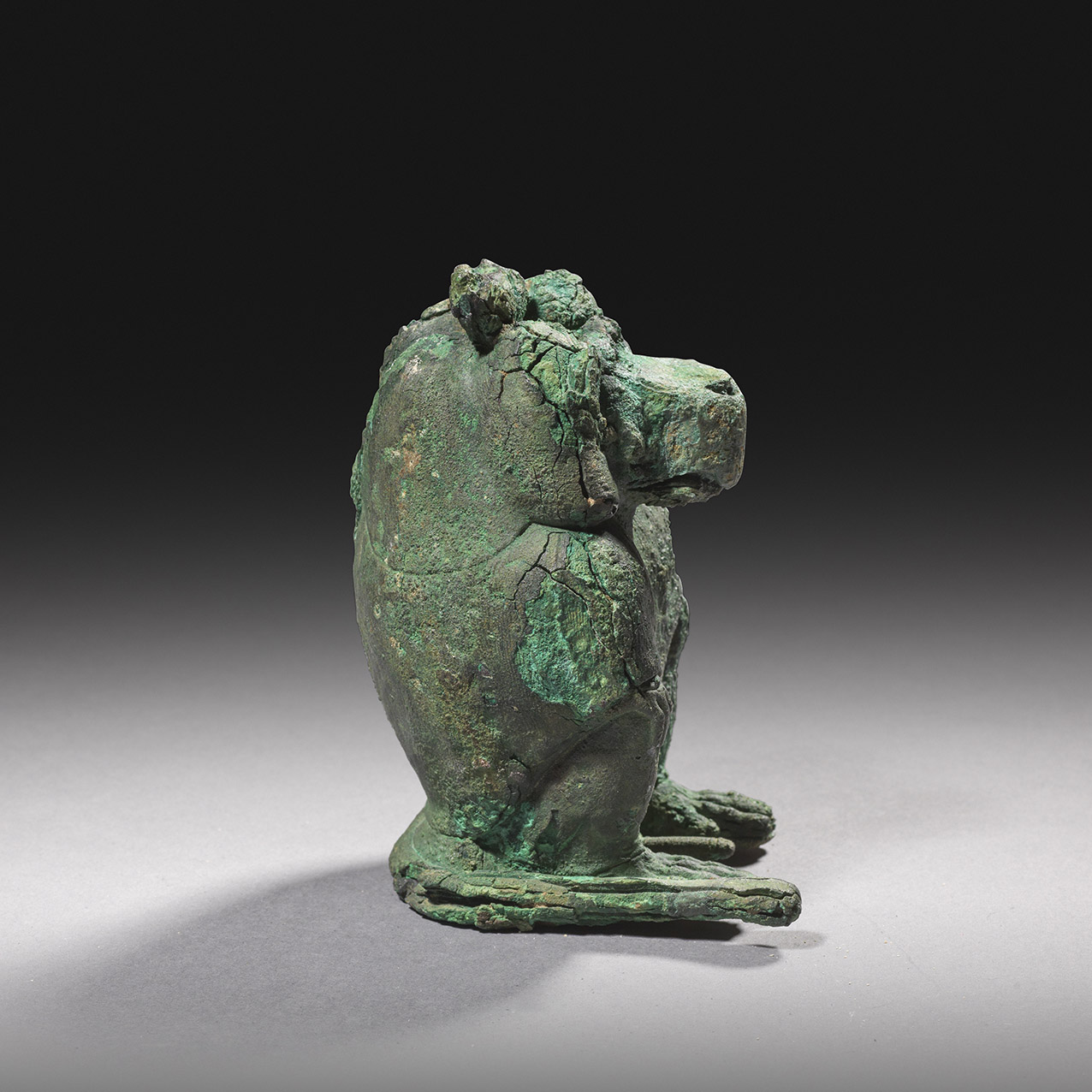
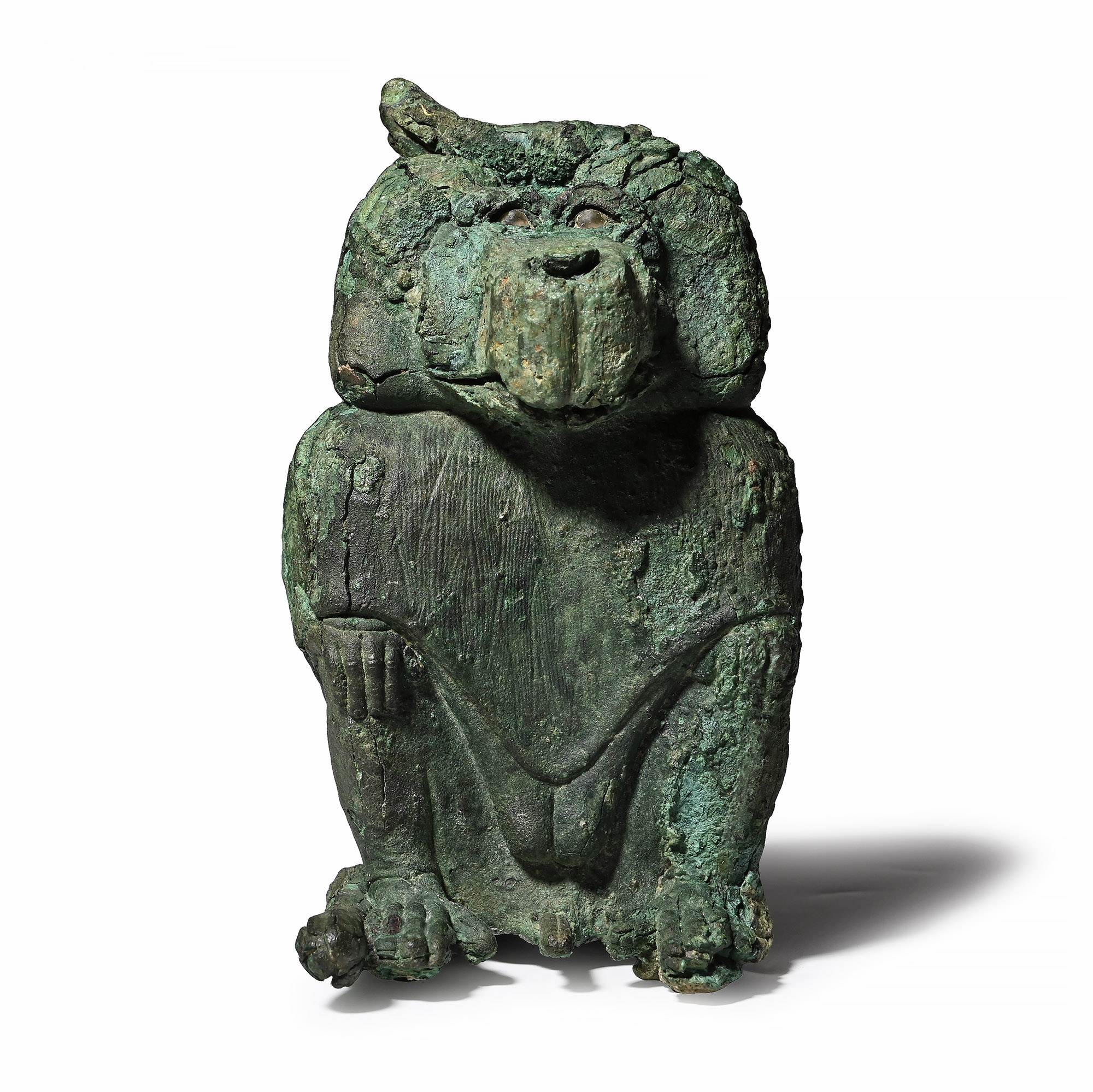
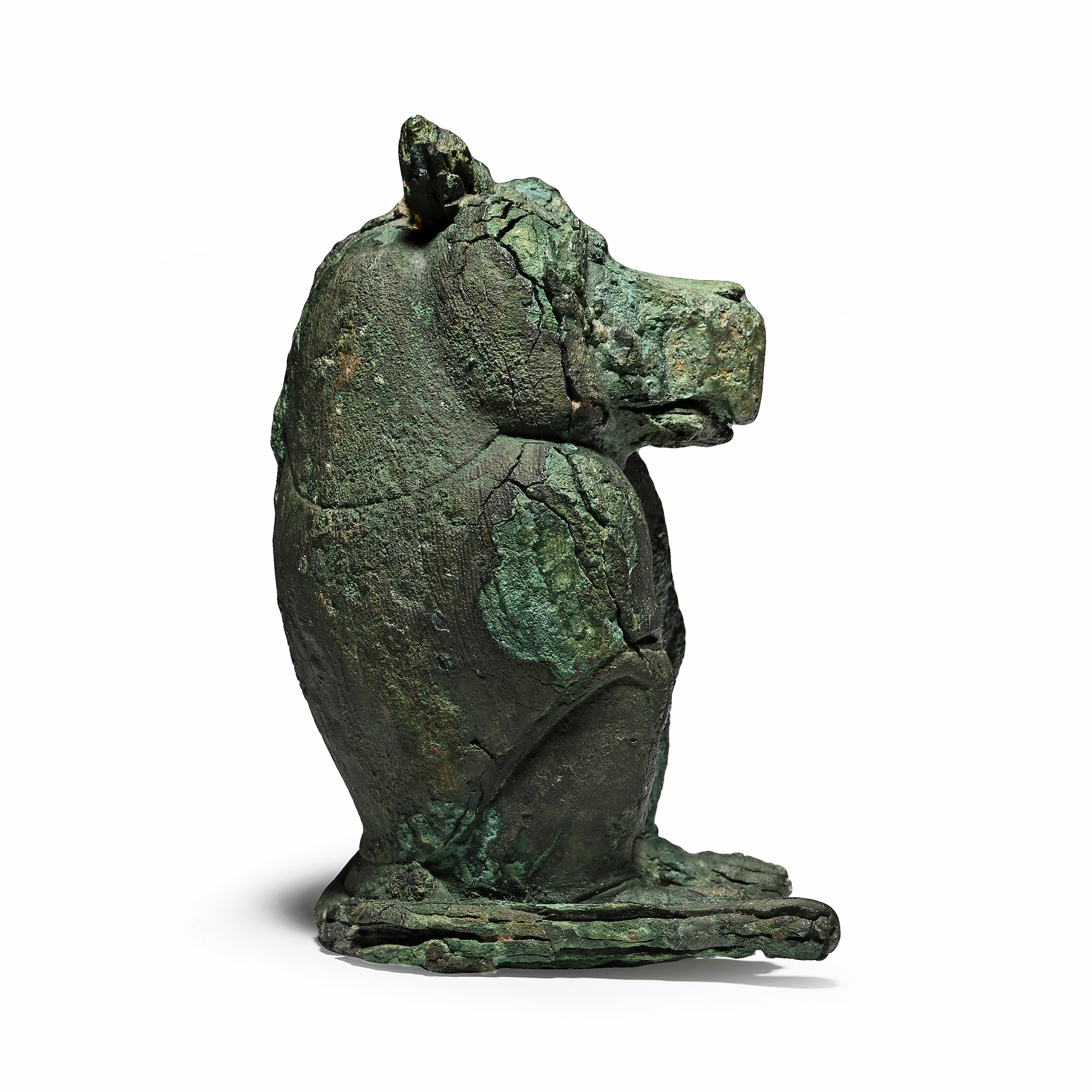
Large Egyptian Bronze Figure of Thoth
LATE PERIOD, 26TH-30TH DYNASTY, 664-343 B.C.
4 5/8 in. (8 3/4 in.) (810 grams, 11.8 cm (1.59 kg total, 22.1 cm high including stand)).
Hollow-cast depiction of the baboon manifestation of the god Thoth, seated on its haunches, front paws resting on the knees of its back legs, genitalia exposed, a thick cowl of fur around its shoulders, and a long tail curling from the back; remains of a crescent moon sit on the crown of its head, preserving traces of gilding (this may originally have been surmounted by a full moon disc); the animal’s coat is rendered naturalistically with fine incised detailing, and the hands and feet are delicately portrayed, with knuckles and nails accurately defined; facial features are strongly modelled; the eye inlays, most likely glass or quartz, survive, with pupil and white differentiated; stabilised.
ProvenanceCollection of Max Willborg (1933-2001), Stockholm, Sweden, acquired 1981.
Accompanied by an Art Loss Register certificate, no.S00133604
This lot has been checked against the Interpol Database of stolen works of art and is accompanied by search certificate no.13521-263440.
Cf. Jørgensen, M., NY Carlsberg Glyptotek Catalogue Egypt V, 2009, nos.76.1-4. 76.2 and 76.3, for two examples showing the complete crown of the full and crescent moon.
FootnotesBecause of its curious behaviour at dawn, when it sits upright on its hind legs, waves its front paws in the air, and screeches, the baboon was regarded as a creature of the sun god, as if it had foreknowledge of the sun’s arrival. More commonly, however, it was associated with the moon, under whose light this performance takes place. As a result, the baboon (both Papio cynocephalus, the dog-headed baboon, and P. hamadryas) was the form adopted by the Egyptian lunar gods Khonsu of Thebes and Thoth of Hermopolis in Middle Egypt. Images such as this are assumed to represent Thoth unless an inscription specifically names Khonsu. Thoth was Lord of Time, inventor of writing, and patron of scribes. The original animal manifestation associated with Thoth may have been the ibis, and his baboon form may have been adopted only when the cult of the god was extended to Hermopolis, where a baboon known as the Great White was already adored.
CONDITIONTimeLine Auctions follows a vetting process to ensure the authenticity and legality of all items, reinforcing our commitment to integrity and responsible trading. Each antiquity, antique, and coin lot undergoes thorough examination by a vetting committee of at least ten external specialists, professional trade association members, scientists, and archaeologists: Our Vetting Process
AUCTIONS:
TimeLine is a leading auction house specialising in antiquities, ancient art, collectables, natural history, coins, medals, and books. Our auctions offer museums, collectors, historians, and enthusiasts the opportunity to acquire unique and historically significant pieces.
LOT 0064
Large Egyptian Bronze Figure of Thoth
Estimate £8,000 - 10,000€9,280 - 11,600 (for guidance only)$10,800 - 13,500 (for guidance only)
Opening Bid
£4,000 (EUR 4,640; USD 5,400) +BP*
-
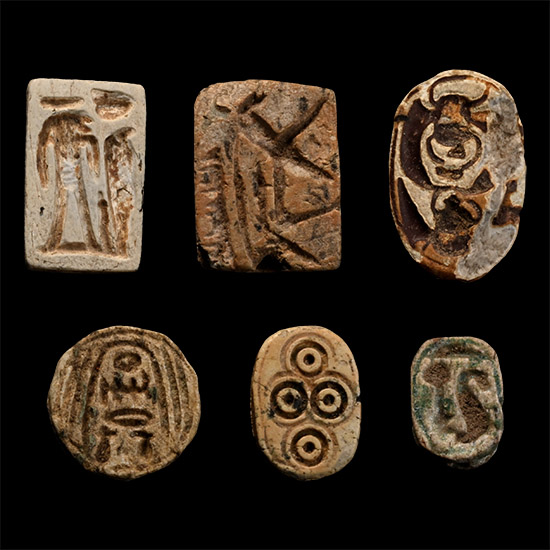
Egyptian Steatite Scarab and Plaque Group
Late Period-Ptolemaic Period, circa 664-30 B.C.Estimate: £200 - 300 (+bp*)
Opening Bid: £100
Including scarab, scaraboid and other types with incised hieroglyphs and other symbols. 6.3 grams total, 9-14 mm
Ex 1990s collection. -
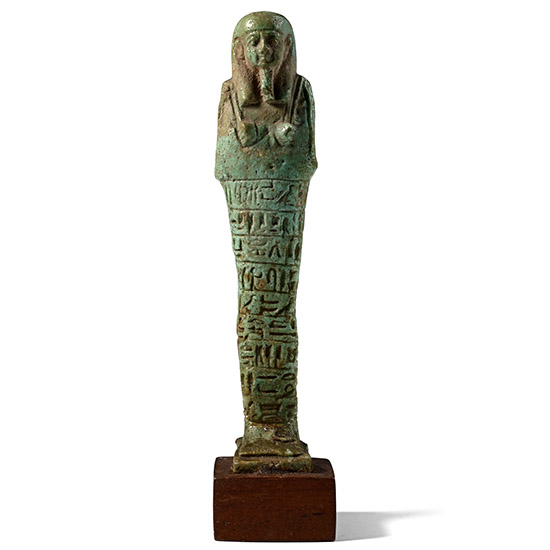
Egyptian Blue-Glazed Faience Shabti for Hornakht, Born of Nefertyti
Late Period, 664-332 B.C.Estimate: £600 - 800 (+bp*)
Bids: 7 | Current Bid: £55
Slender olive-green mummiform shabti wearing a lappet wig and a false beard, with arms crossed, the left hand holding a pick and the right a hoe and the cord of a seed bag, which hangs from the back shoulder; with nine horizontal bands of deeply incised hieroglyphs on the lower body, giving the Book of the Dead spell and the names of the owner, Hornakht, and his mother, Nefertyti; mounted on a custom-made stand with an old 'Ancient Egyptian B.C.900' label. 80.9 grams total, 16 cm high including stand
From the estate of a deceased Sussex private collector since the early 20th century. Accompanied by a copy of an illustrated academic report with translation by Simone Musso. -
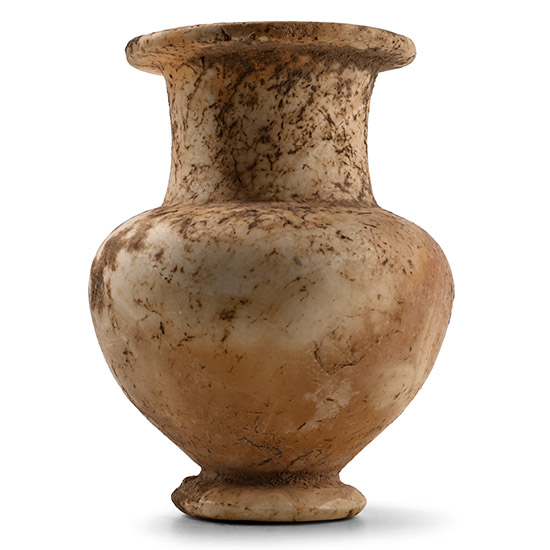
Early Phoenician Alabaster Vase
1st millennium B.C.Estimate: £3,000 - 4,000 (‡+bp*)
Opening Bid: £1,667
With bulbous body, broad flared neck, flange rim, dimple to underside of base. 769 grams, 13.1 cm
Private collection, USA and Switzerland, acquired in the late 1980s-early 1990s; by descent to the current owner. This lot has been checked against the Interpol Database of stolen works of art and is accompanied by search certificate no.13222-249180.
Jars like this vase certainly were part of the funerary equipment and destined to contain makeup, unguents and oils. The vase can find a good parallel with a similar specimen in the Egyptian Museum of Turin, belonging to the outfit of the 18th Dynasty princess Nbw-m-tḫ, probably a daughter of Amenhotep III.
