
Loading, please wait...

LOT 0039
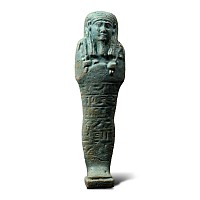
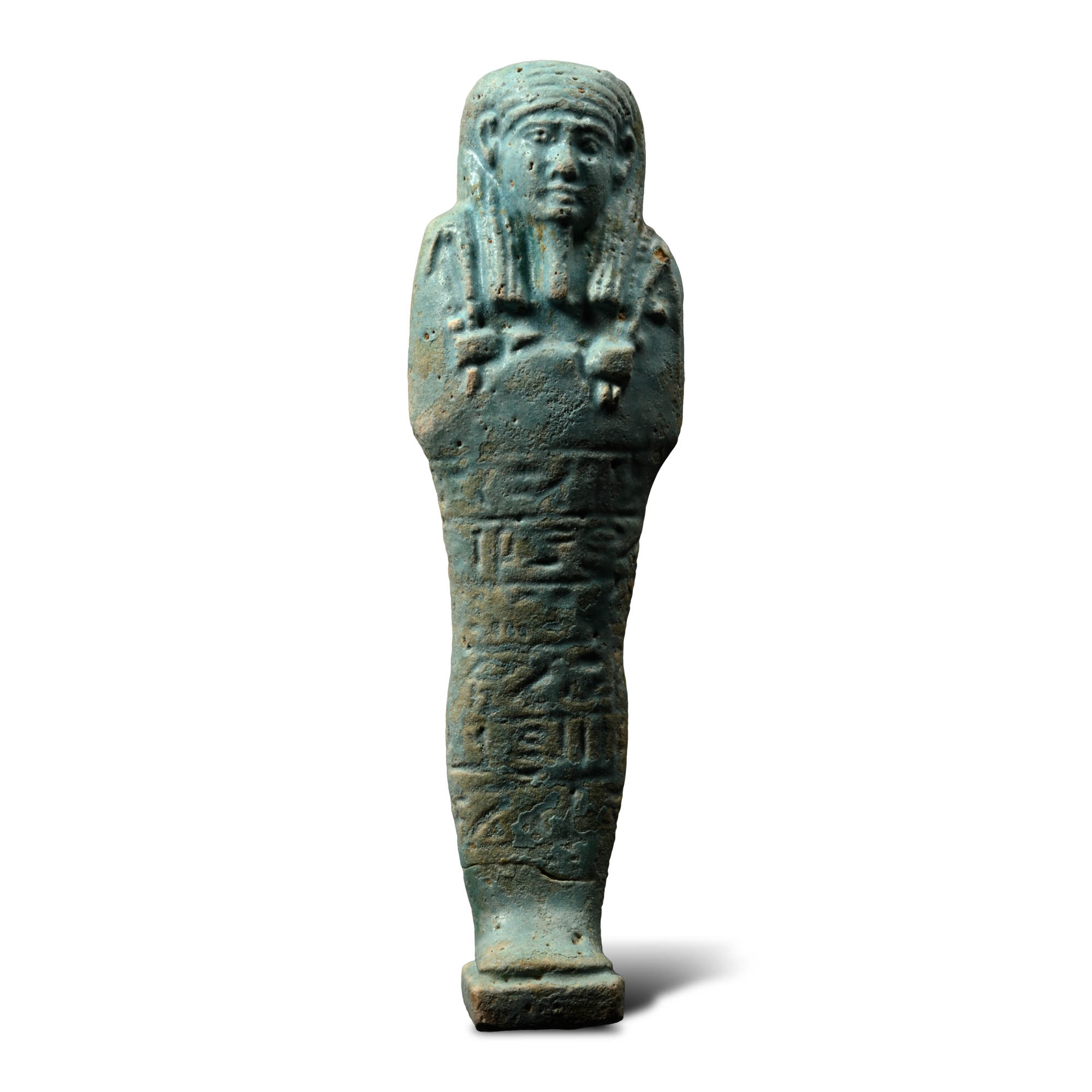
Large Egyptian Blue Glazed Hieroglyphic Shabti
26TH DYNASTY, 664-525 B.C.
7 1/4 in. (248 grams, 18.5 cm).
Of mummiform type, wearing a tripartite wig and long plaited divine beard, with arms crossed and the left hand holding a pick, the right hand holding a hoe and the cord of a seed bag hanging over his left shoulder, with carefully rendered cosmetic lines around the eyes, narrow eyebrows, and slightly smiling lips giving it a serene expression characteristic of the finest ushabtis of the period; standing on an integral plinth from which a plain back pillar terminating at the base of the wig extends; six horizontal rows of hieroglyphic inscription, the Sixth Chapter of the Book of the Dead; water worn and repaired.
ProvenanceAcquired on the German art market, 1989-1995.
with The Museum Gallery, 19 Bury Place, London, WC1, UK, 1998-2003.
Property of a London based academic, 2003-present.
Cf. Janes, G., The Shabti Collections 6: A Selection from the World Museum, Liverpool, Lymm, 2016, pp.494-495, no. 258, for a similar example.
CONDITIONTimeLine Auctions follows a vetting process to ensure the authenticity and legality of all items, reinforcing our commitment to integrity and responsible trading. Each antiquity, antique, and coin lot undergoes thorough examination by a vetting committee of at least ten external specialists, professional trade association members, scientists, and archaeologists: Our Vetting Process
AUCTIONS:
TimeLine is a leading auction house specialising in antiquities, ancient art, collectables, natural history, coins, medals, and books. Our auctions offer museums, collectors, historians, and enthusiasts the opportunity to acquire unique and historically significant pieces.
LOT 0039
Large Egyptian Blue Glazed Hieroglyphic Shabti
Estimate £1,200 - 1,700€1,390 - 1,970 (for guidance only)$1,620 - 2,300 (for guidance only)
-
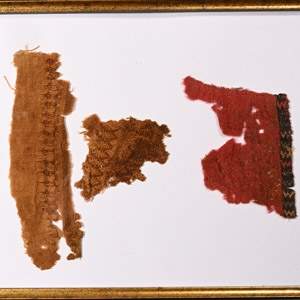
Egyptian Framed Coptic Fabric Collection
Circa 5th-7th century A.D.Sold for (Inc. bp): £85
Three fragments of tabby-weave linen fabric, two with embroidered ornament, one with a woven polychrome border; mounted in a glazed wooden frame with gilt inner border. 578 grams total, fragments: 6.5-15.5 cm (frame: 26 x 31 cm)
From the private collection of H. Norry, 1980s-1990s. -
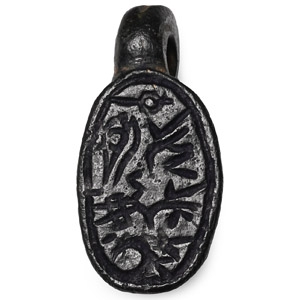
Phoenician Bronze Black Scaraboid Pendant
1st millennium B.C.Sold for (Inc. bp): £208
Smooth-fronted with a sturdy suspension loop at the top, the back incised with various signs, comprising a nefer hieroglyph, an eye, a quadruped, a standing figure with a headdress, and a sun disc. 7.7 grams, 25 mm
From the collection of a gentleman, acquired on the London art market in the 1990s. -
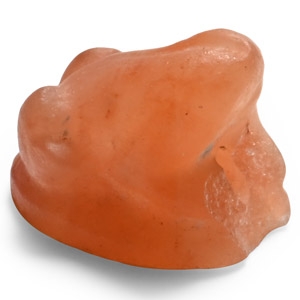
Egyptian Carnelian Frog Amulet
New Kingdom, circa 1550-1070 B.C.Sold for (Inc. bp): £117
Seated frog on an oval base, with longitudinal suspension hole between legs; damaged. 1.2 grams, 12 mm
From an early 20th century collection.
