
Loading, please wait...


LOT 0041
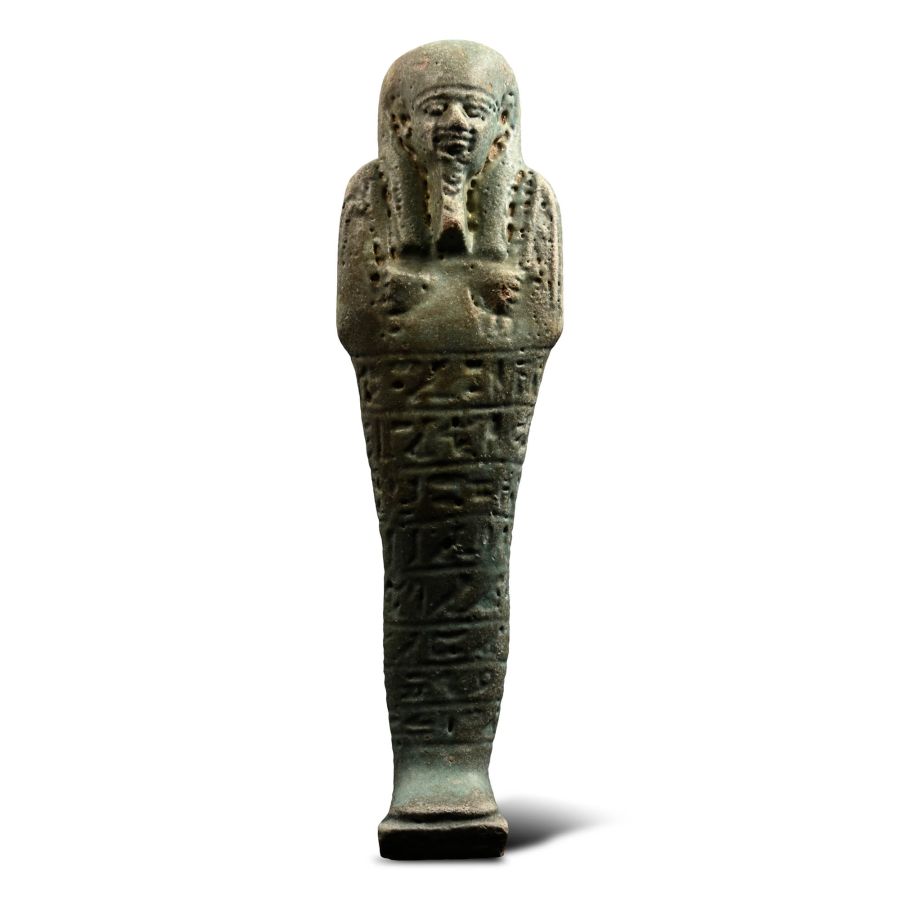
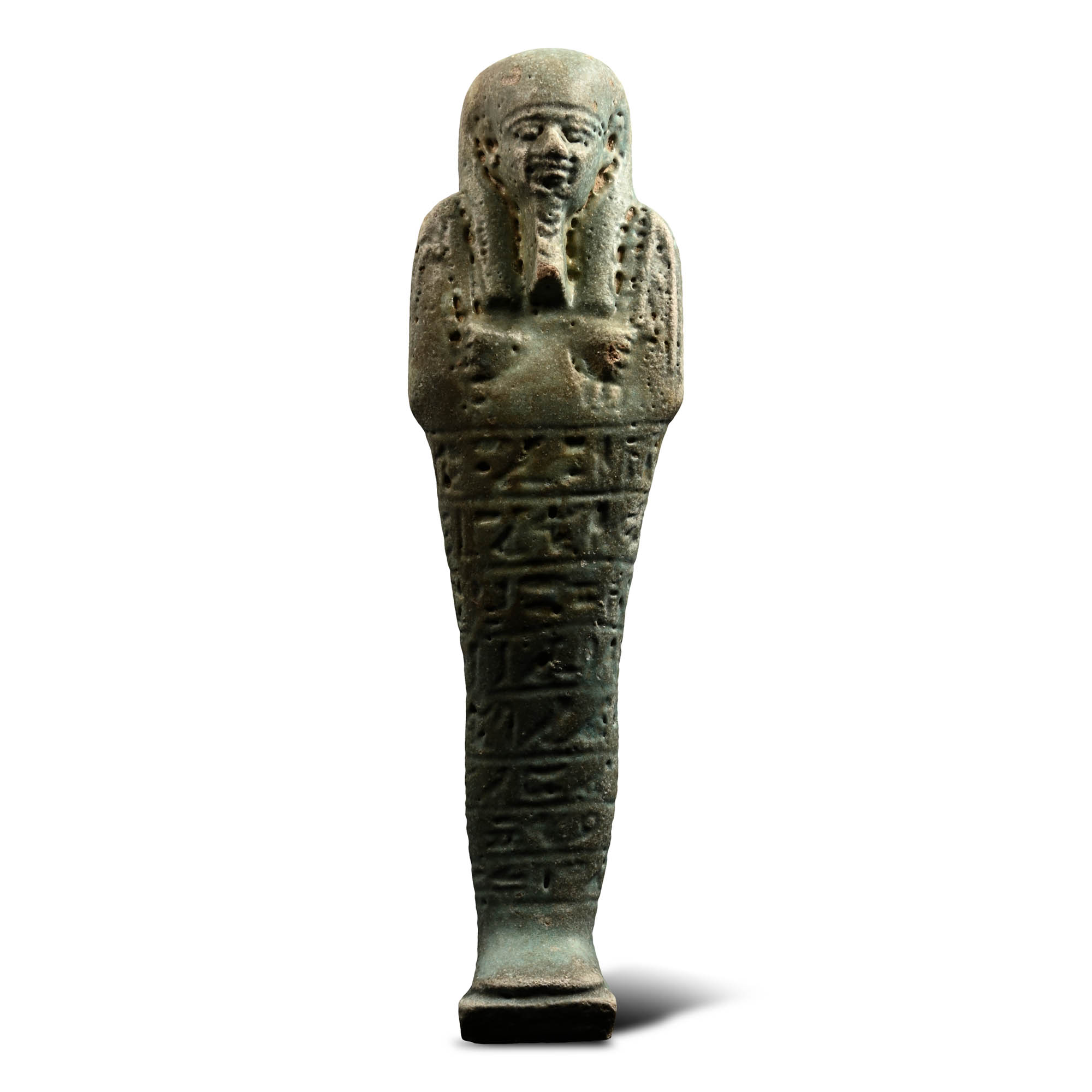
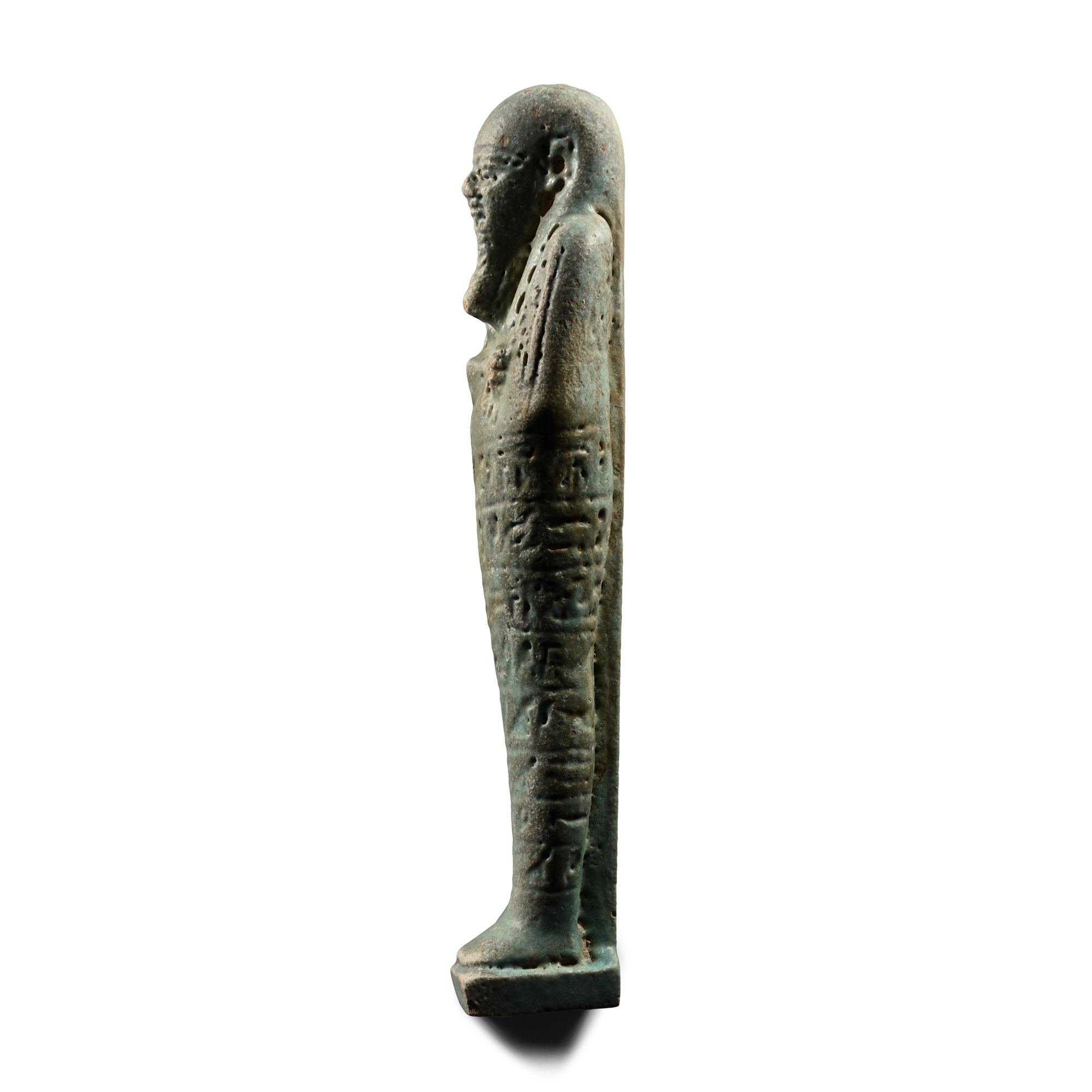
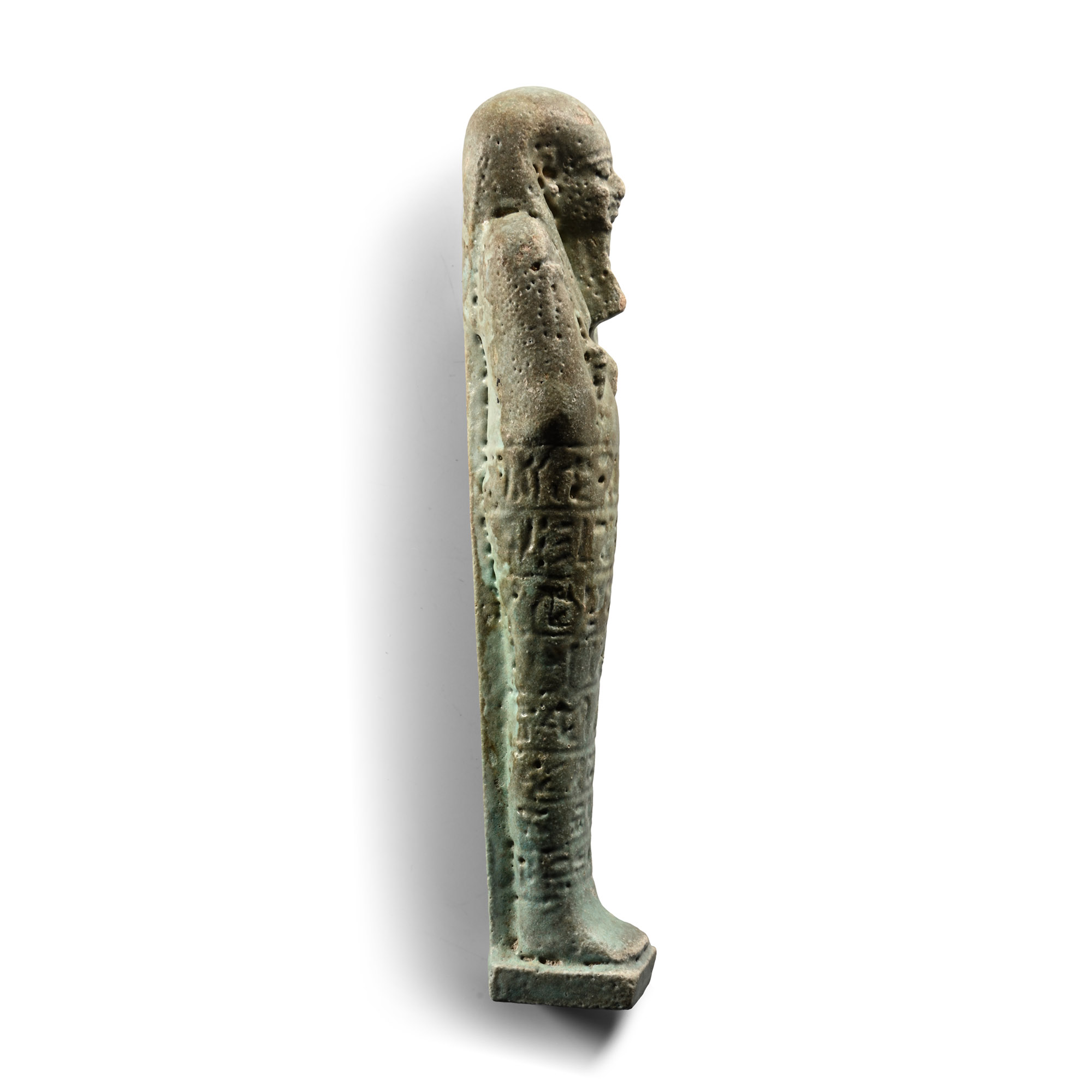
Large Egyptian Blue Glazed Hieroglyphic Shabti
26TH DYNASTY, 664-525 B.C.
7 1/4 in. (235 grams, 18.6 cm).
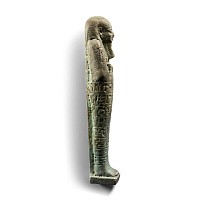
Of mummiform type, wearing a tripartite wig and long plaited divine beard, with arms crossed and the left hand holding a pick, the right hand holding a hoe and the cord of a seed bag hanging over his left shoulder, with carefully rendered cosmetic lines around the eyes, narrow eyebrows, and slightly smiling lips giving it a serene expression characteristic of the finest ushabtis of the period; standing on an integral plinth from which a plain back pillar terminating at the base of the wig extends; eight horizontal rows of hieroglyphic inscription, the Sixth Chapter of the Book of the Dead; water worn.
ProvenanceAcquired on the German art market, 1989-1995.
with The Museum Gallery, 19 Bury Place, London, WC1, UK, 1998-2003.
Property of a London based academic, 2003-present.
Cf. von Droste zu Hülsdorf, V. and Schlick-Nolte, B., Ägyptische Bildwerke II: Statuetten, Gefässe und Geräte, Melsungen, 1990, pp.181-182, Cat. no. 85, for a similar example.
CONDITIONTimeLine Auctions follows a vetting process to ensure the authenticity and legality of all items, reinforcing our commitment to integrity and responsible trading. Each antiquity, antique, and coin lot undergoes thorough examination by a vetting committee of at least ten external specialists, professional trade association members, scientists, and archaeologists: Our Vetting Process
AUCTIONS:
TimeLine is a leading auction house specialising in antiquities, ancient art, collectables, natural history, coins, medals, and books. Our auctions offer museums, collectors, historians, and enthusiasts the opportunity to acquire unique and historically significant pieces.
LOT 0041
Large Egyptian Blue Glazed Hieroglyphic Shabti
Estimate £1,500 - 2,000€1,740 - 2,320 (for guidance only)$2,030 - 2,700 (for guidance only)
-
.jpg)
Egyptian Bronze Sistrum with Bes and Hathor
Roman Period, 30 B.C.-323 A.D.Sold for (Inc. bp): £14,950
The large liturgical rattle with a columnar handle composed of a bifacial figure of Bes standing on a lotus capital, flanked by seated sphinxes, his feathered crown supporting the bust of goddess Hathor wearing a broad collar and a curling wig, two rearing uraei emerging from the sides to support the base of the rattle, both wearing the pschent crown, above the cobras a standing figure of the goddess Hathor in cow form, wearing a tripartite wig and a sun disc between the horns; the rattle with a looped body with flared outer rims and set with three metal rods to accept metal discs, a pair of reclining lions to the base and the top with three felines surrounding a cockerel, and resting one of their front paws on the bird. 1.52 kg, 39.5 cm
German art market. European private collection, 1970s-early 2000s. Acquired from the above; thence by descent. Private collection, London, UK. Accompanied by an academic report by Dr Raffaele D’Amato. This lot has been checked against the Interpol Database of stolen works of art and is accompanied by search certificate number no.12348-225588.
The sistrum (seshesh in ancient Egyptian) was a rattle-like musical instrument, played exclusively by women in religious ceremonies. It was often decorated with the bust of the goddess Hathor to whom the sistrum was sacred. Their use continued into the Roman period in ceremonies associated with the cult of Isis. -
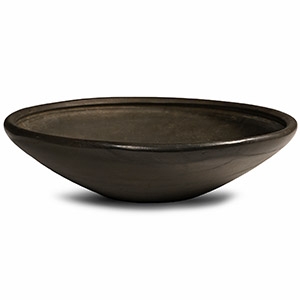
Egyptian Black Stone Lipped Bowl
2nd-3rd Dynasty, 2860-2640 B.C.Sold for (Inc. bp): £2,860
Shallow and broad in profile with carinated rim. 627 grams, 20 cm
From the private collection of Mr K.A., acquired in the 1990s-early 2000s. This lot has been checked against the Interpol Database of stolen works of art and is accompanied by a search certificate number no.12367-225768.
Stone vessels, made from various styles and types of stone, were commonly found in Early Dynastic and Old Kingdom tombs as funerary equipment. One of the most significant discoveries was the recovery of over 30,000 stone vessels in King Djoser's Step Pyramid complex. -
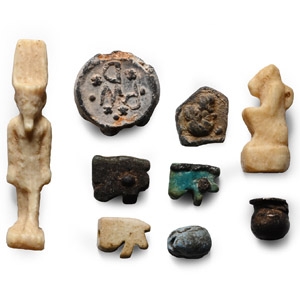
Egyptian Mixed Amulet Group
Mainly Late Period, 664-332 B.C.Sold for (Inc. bp): £241
Various amulets, including a seated lion-headed deity and a striding figure of Amun, three faience wedjat eyes, a diminutive faience scarab, and other items. 9.6 grams total, 6-34 mm
From the private collection of the late Mrs Belinda Ellison, a long time member of the Egyptian Exploration Society, c.1940-2020.
