
Loading, please wait...



LOT 0042
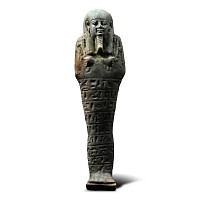
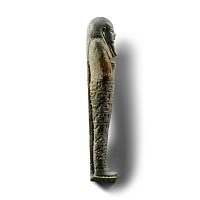
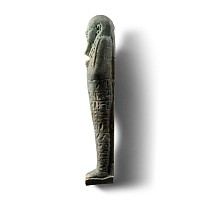
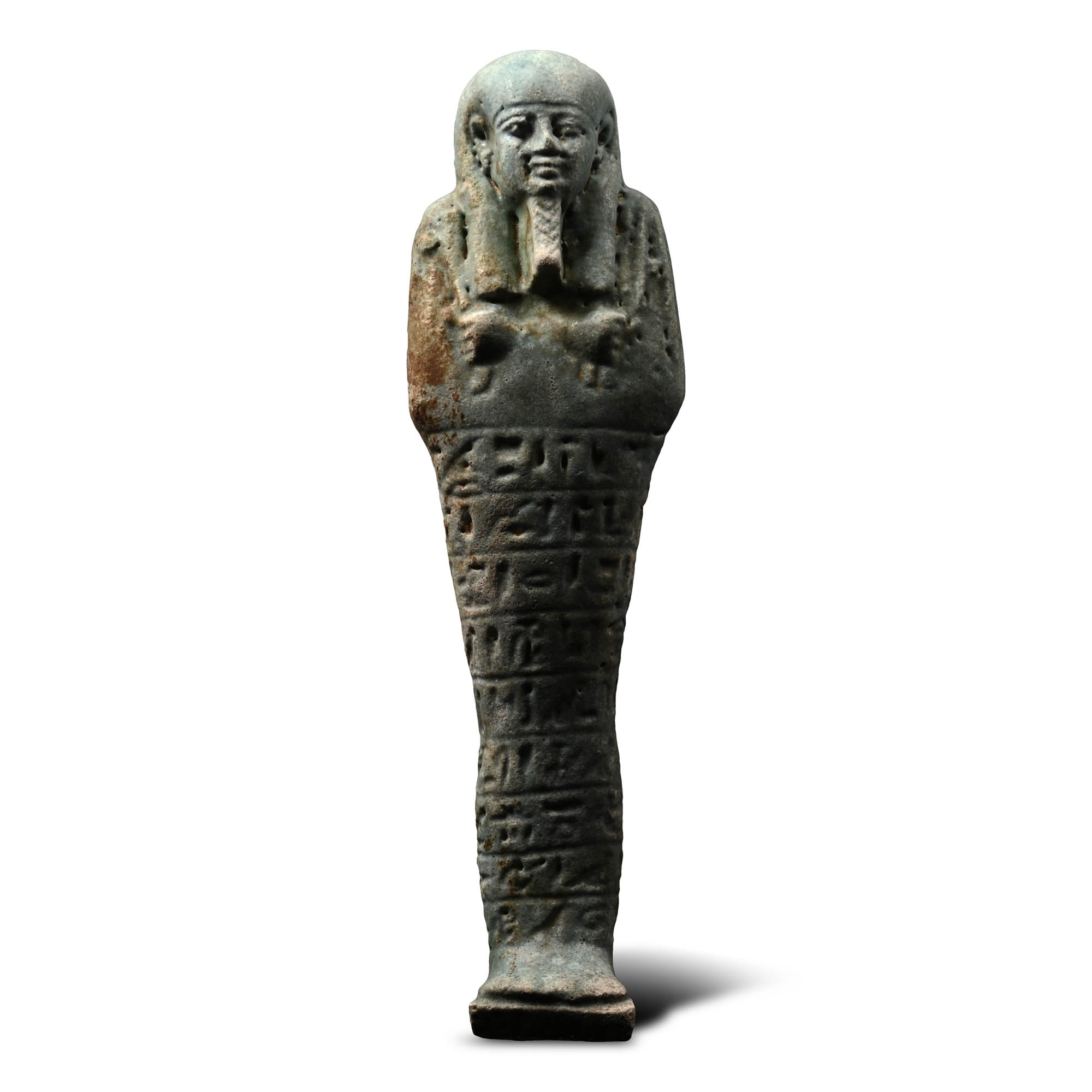
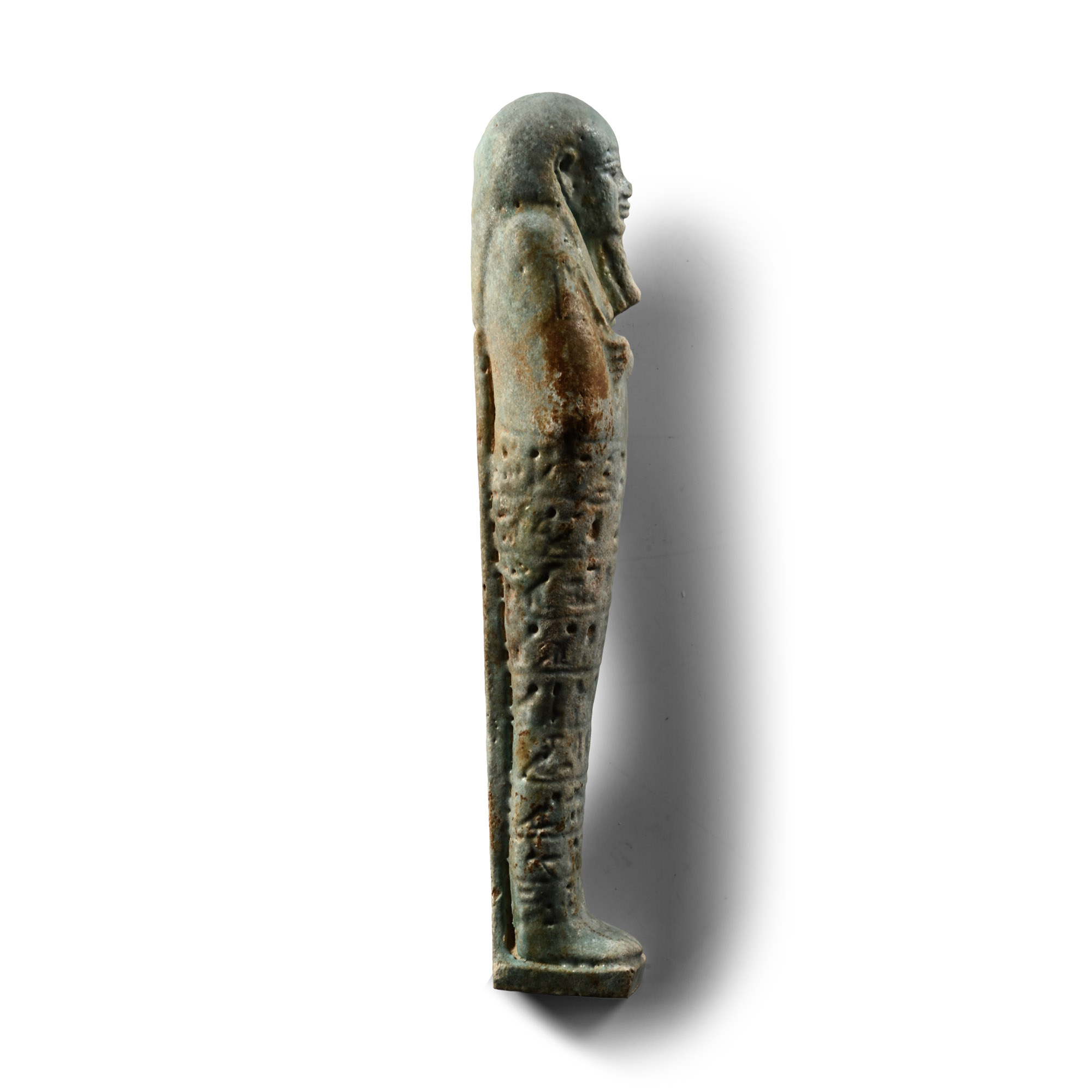
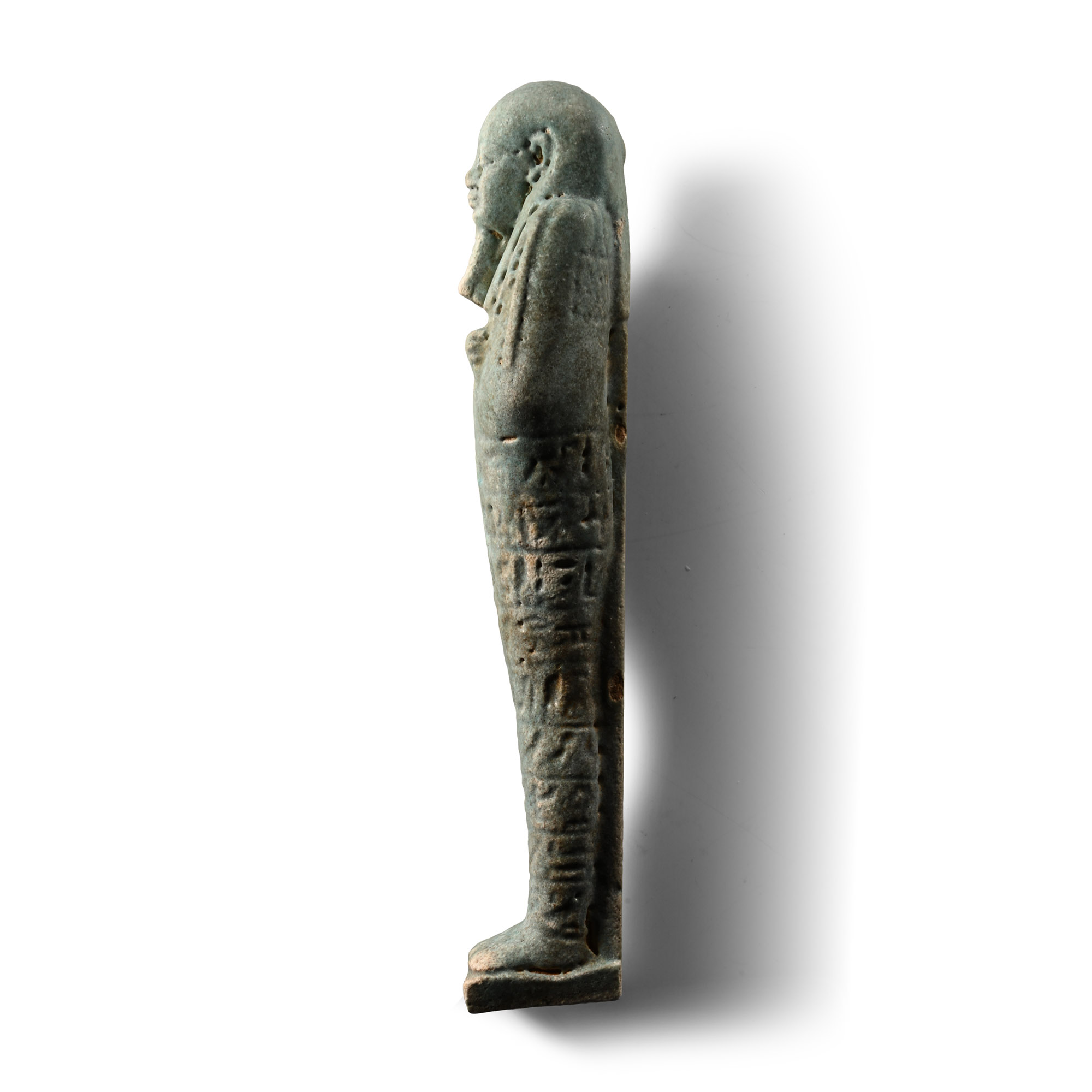
Large Egyptian Blue Glazed Hieroglyphic Shabti
26TH DYNASTY, 664-525 B.C.
7 1/2 in. (246 grams, 19 cm).
Of mummiform type, wearing a tripartite wig and long plaited divine beard, with arms crossed and the left hand holding a pick, the right hand holding a hoe and the cord of a seed bag hanging over his left shoulder; with carefully rendered cosmetic lines around the eyes, narrow eyebrows, and slightly smiling lips giving it a serene expression characteristic of the finest ushabtis of the period; standing on an integral plinth from which a plain back pillar terminating at the base of the wig extends; nine horizontal rows of hieroglyphic inscription, the Sixth Chapter of the Book of the Dead; water worn.
ProvenanceAcquired on the German art market, 1989-1995.
with The Museum Gallery, 19 Bury Place, London, WC1, UK, 1998-2003.
Property of a London based academic, 2003-present.
Cf. Janes, G., The Shabti Collections 6: A Selection from the World Museum, Liverpool, Lymm, 2016, pp.494-495, no. 258, for a similar example.
FootnotesShabti figures could serve as a representation of the deceased and paradoxically also as their servant to carry out arduous manual tasks in the afterlife on behalf of their master. Late Period shabtis were most frequently made of faience, such as this example. The body of a shabti was usually in the form of a mummy from the neck down, depicted with agricultural tools in their hands, such as picks, hoes, and baskets. Chapter 6 from the Book of the Dead, lists the tasks expected of the magical figure. By the Late Period, hundreds of shabtis were often provided for the burial.
CONDITIONTimeLine Auctions follows a vetting process to ensure the authenticity and legality of all items, reinforcing our commitment to integrity and responsible trading. Each antiquity, antique, and coin lot undergoes thorough examination by a vetting committee of at least ten external specialists, professional trade association members, scientists, and archaeologists: Our Vetting Process
AUCTIONS:
TimeLine is a leading auction house specialising in antiquities, ancient art, collectables, natural history, coins, medals, and books. Our auctions offer museums, collectors, historians, and enthusiasts the opportunity to acquire unique and historically significant pieces.
LOT 0042
Large Egyptian Blue Glazed Hieroglyphic Shabti
Estimate £1,500 - 2,000€1,740 - 2,320 (for guidance only)$2,030 - 2,700 (for guidance only)
-
Egyptian Rock Crystal Heart Amulet
6th century B.C.Sold for (Inc. bp): £3,640
Carved with lateral triangular lugs and ribbed bale, gold wire suspension loop. 1.54 grams, 21 mm
Private collection. Acquired in 2009. Private collection, Europe. -
Egypto-Phoenician Hardstone Scaraboid Set in Bronze Pendant
Late 1st millennium B.C.Estimate: £200 - 300 (+bp*)
Opening Bid: £111
Comprising a carnelian scaraboid with a stylised bird with open wings to the underside, pellets to the field; set in an openwork bronze pendant frame with tubular loop. 3.84 grams, 18 mm
From an early 20th century Home Counties, UK, collection. -
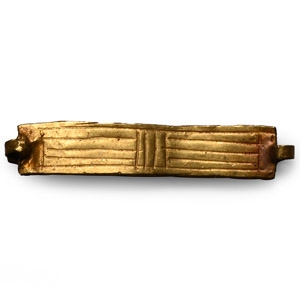
Egyptian Gold Panel
Late Period, 664-332 B.C.Sold for (Inc. bp): £85
Long rectangle with incised detailing, a suspension loop at either narrow end. 0.33 grams, 21 mm
From the private collection of the late Mrs Belinda Ellison, a long time member of the Egyptian Exploration Society, c.1940-2020.
