
Loading, please wait...
LOT 0605
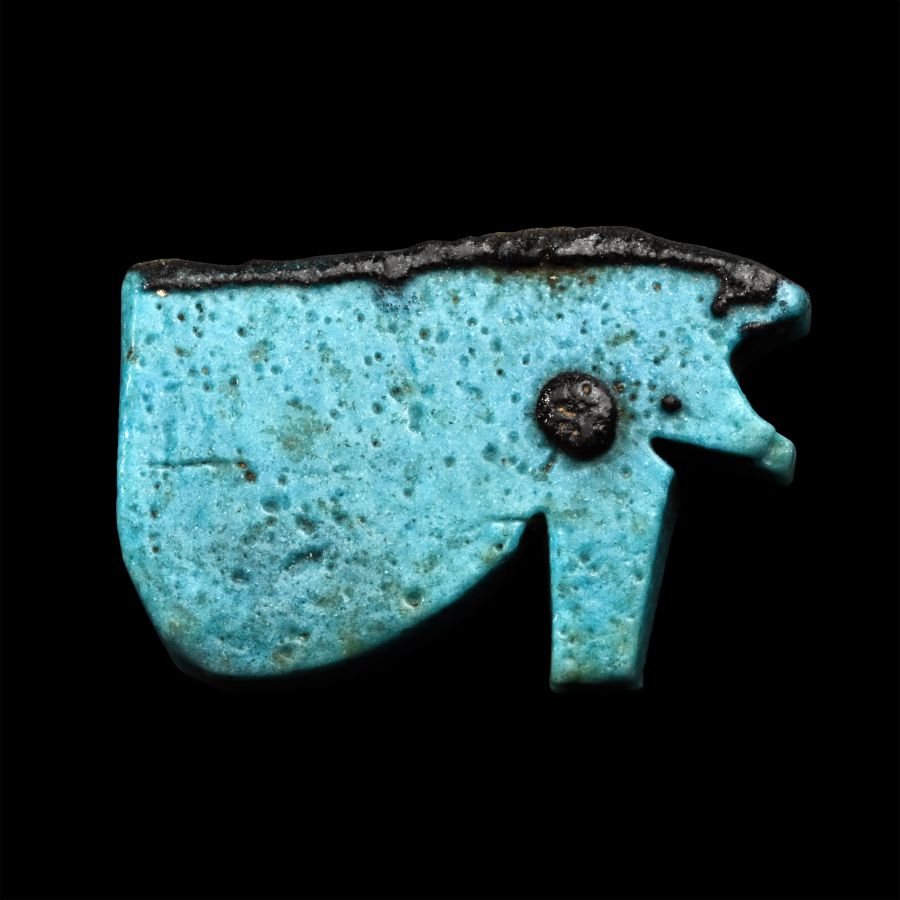
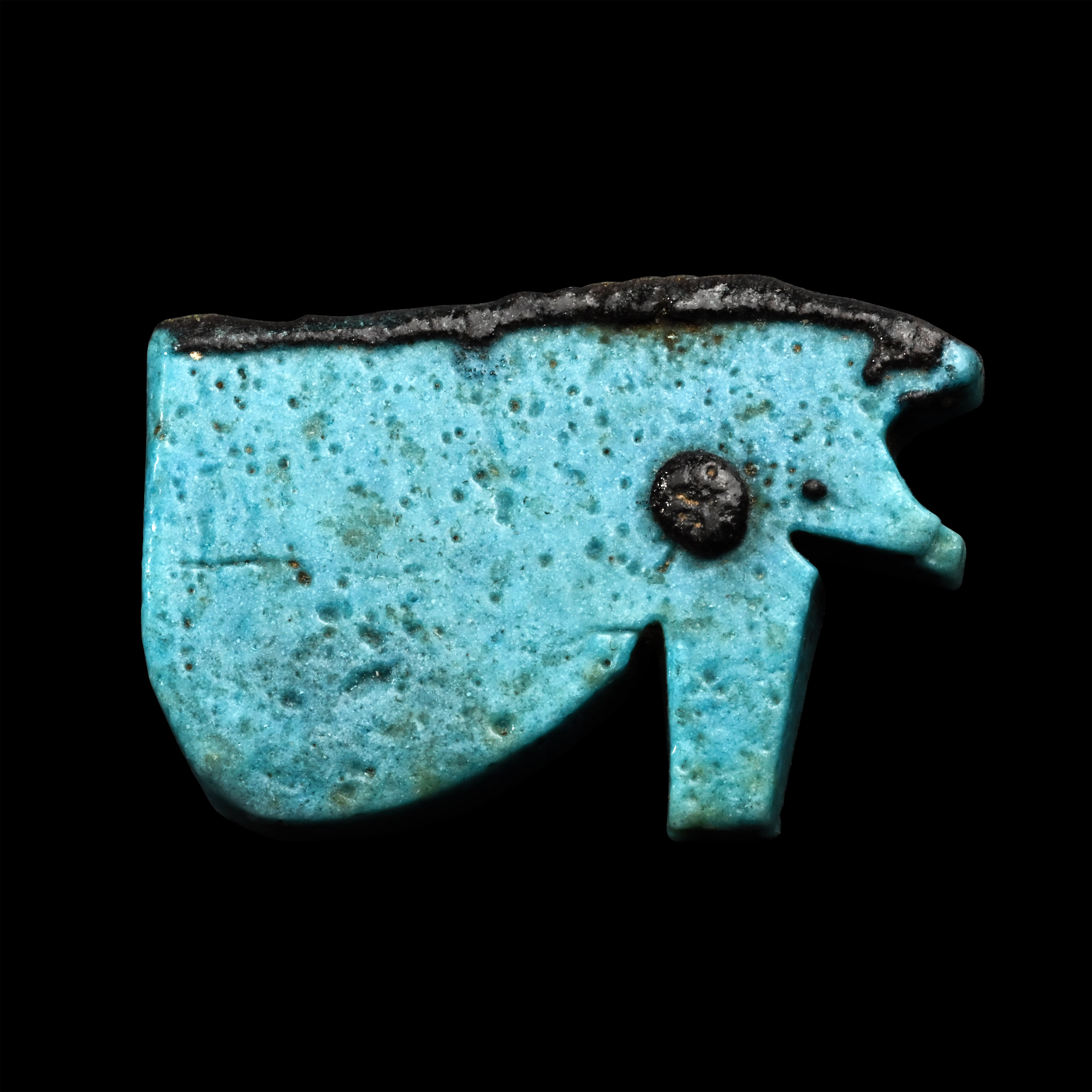
Large Egyptian Blue Glazed Faience Eye of Horus Amulet
NEW KINGDOM-LATE PERIOD, CIRCA 1550-332 B.C.
1 5/8 in. (8.34 grams, 41 mm).
The body displaying the characteristic shape combining human and falcon ocular imagery, the brow and pupil detailed in black faience, pierced longitudinally for suspension.
ProvenanceEarly 20th century UK collection.
Accompanied by a previous catalogue information page.
Cf. Andrews, C., Amulets of Ancient Egypt, London, 1994, fig. 46b, for a similar wedjat amulet in the British Museum.
FootnotesThe wedjat-eye amulet depicts Horus’s healed eye, blending human and falconine features. Its ancient Egyptian name means ‘the one that is sound’. According to myth, Seth wounded or took the eye, and Thoth later restored it. Believed to offer protection, healing, and regeneration, the popular amulet was worn by the living and the dead.
CONDITIONTimeLine Auctions follows a vetting process to ensure the authenticity and legality of all items, reinforcing our commitment to integrity and responsible trading. Each antiquity, antique, and coin lot undergoes thorough examination by a vetting committee of at least ten external specialists, professional trade association members, scientists, and archaeologists: Our Vetting Process
AUCTIONS:
TimeLine is a leading auction house specialising in antiquities, ancient art, collectables, natural history, coins, medals, and books. Our auctions offer museums, collectors, historians, and enthusiasts the opportunity to acquire unique and historically significant pieces.
LOT 0605
Large Egyptian Blue Glazed Faience Eye of Horus Amulet
Estimate £500 - 700€580 - 810 (for guidance only)$680 - 950 (for guidance only)
Opening Bid
£250 (EUR 290; USD 338) +BP*
-
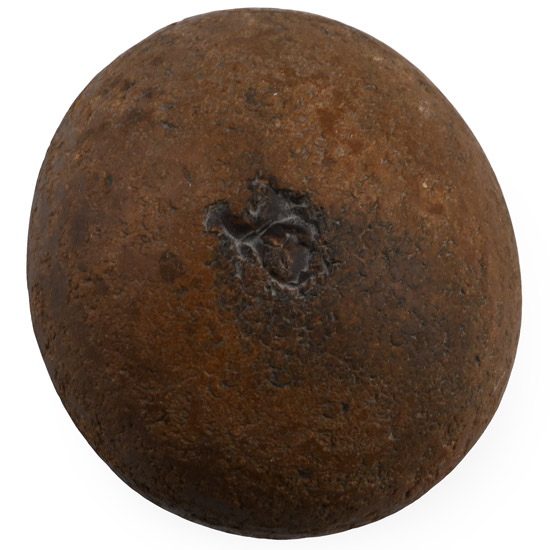
Egyptian Stone Smoothing Tool
3rd-late 1st millennium B.C.Estimate: £40 - 60 (+bp*)
Opening Bid: £5
Spherical pounder with a smooth surface. 625 grams, 86 mm
From the private collection of Peter Clayton, FCILIP, Dip, Arch, FSA, FRNS, Hemel Hempstead, Hertfordshire, UK; formed since the late 1950s. Accompanied by an old handwritten information card by Peter Clayton, collection no.134.
Stone pounders were used to shape and harden metal, as well as to pound stone architectural elements and statues. -
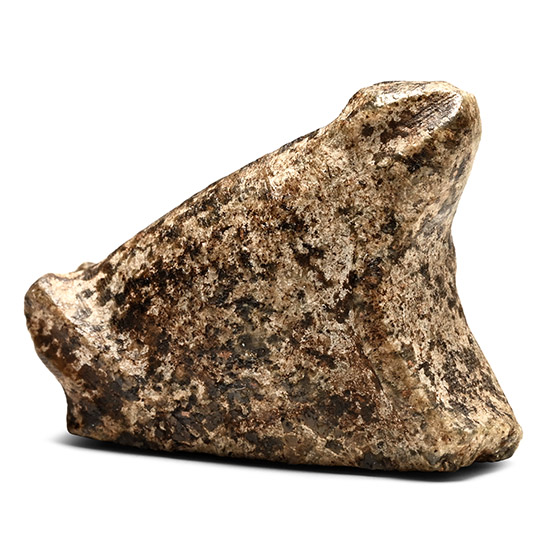
Egyptian Amulet in the Shape of a Squatting Frog
Late Period, 664-332 B.C.Estimate: £500 - 700 (‡+bp*)
Opening Bid: £275
Carved in the round in a squatting pose, with rear legs poised to leap. 9.2 grams, 27 mm
Ex Herbert A. Cahn, Basel, 1970s; thence by descent.
Frog amulets in ancient Egypt symbolised fertility, rebirth, and renewal. Associated with the goddess Heqet, who was linked to childbirth and life-giving forces, they were especially popular for fertility and for protection during pregnancy and labour. Their association with the annual Nile flood, which brought new life to the land, further emphasised their symbolism of revival and abundance. -
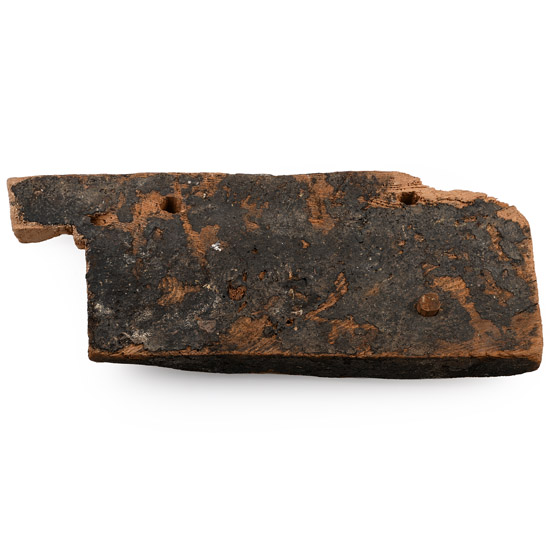
Egyptian Wooden Sarcophagus Panel
Late-Ptolemaic Period, circa 664-30 B.C.Estimate: £60 - 80 (+bp*)
Bids: 1 | Current Bid: £5
Rectangular fragment with dowel and dowel holes, with a black bitumen-like varnish. 157 grams, 25 cm
With a privately curated collection, 1980s-early 2000s. From the private collection and estate of Christine Simons (1943-2025), West Midlands, UK.
