
Loading, please wait...
LOT 0047
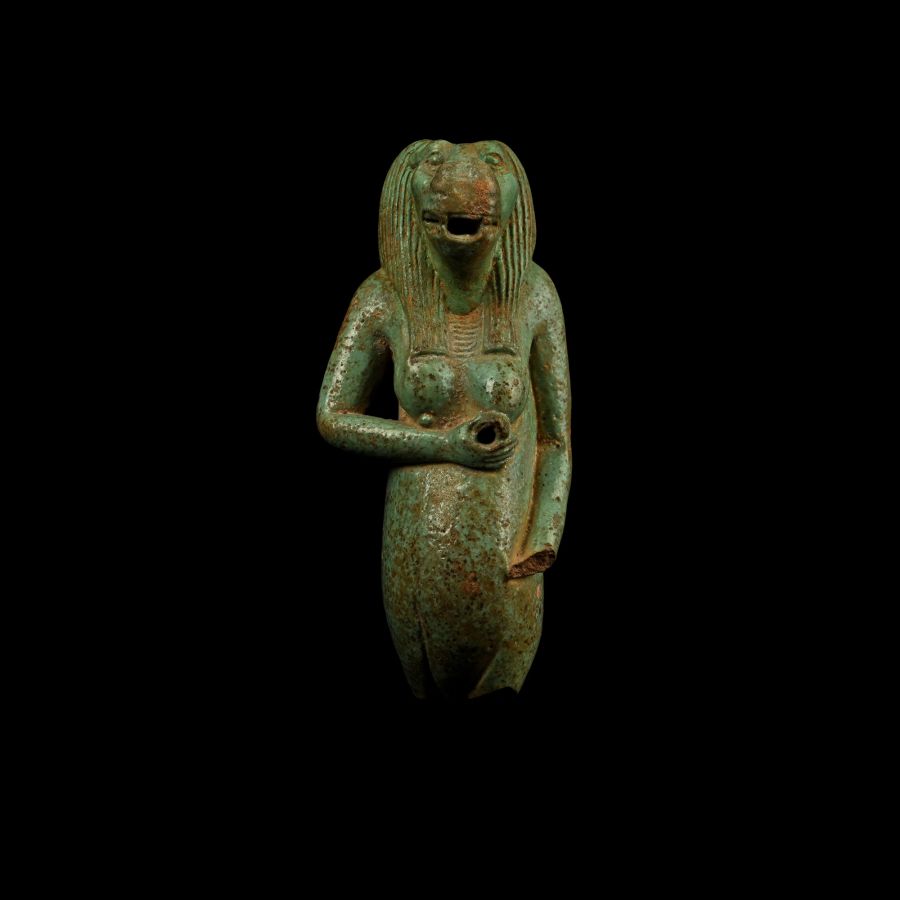
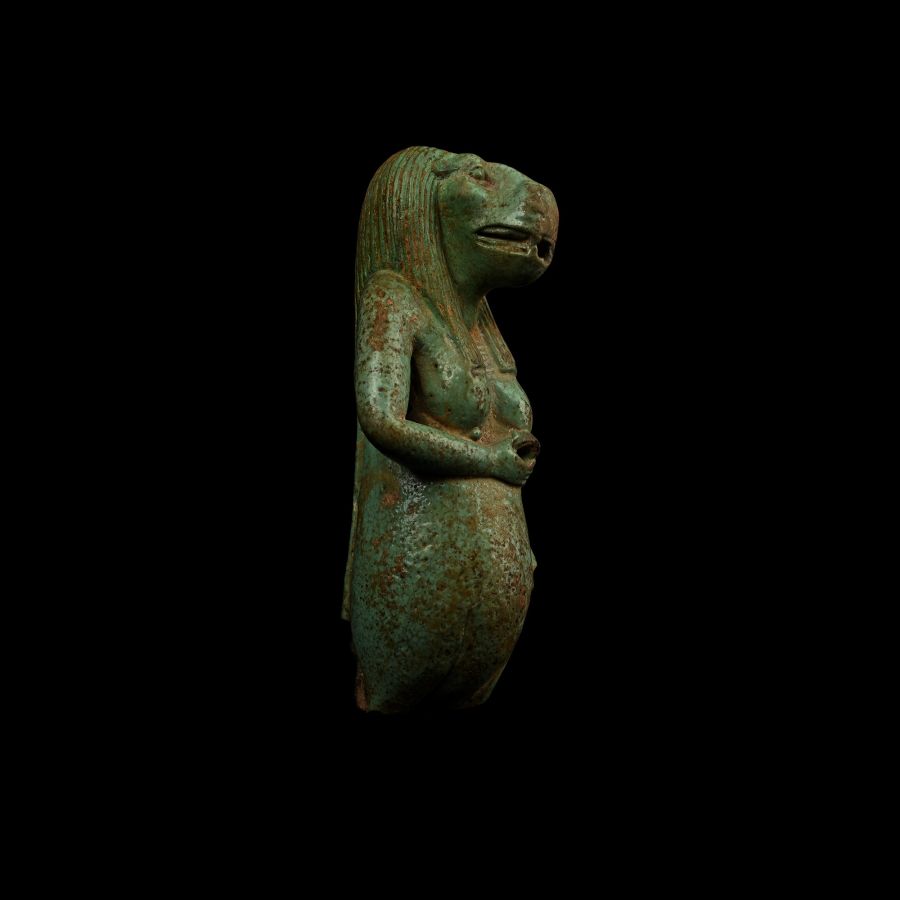
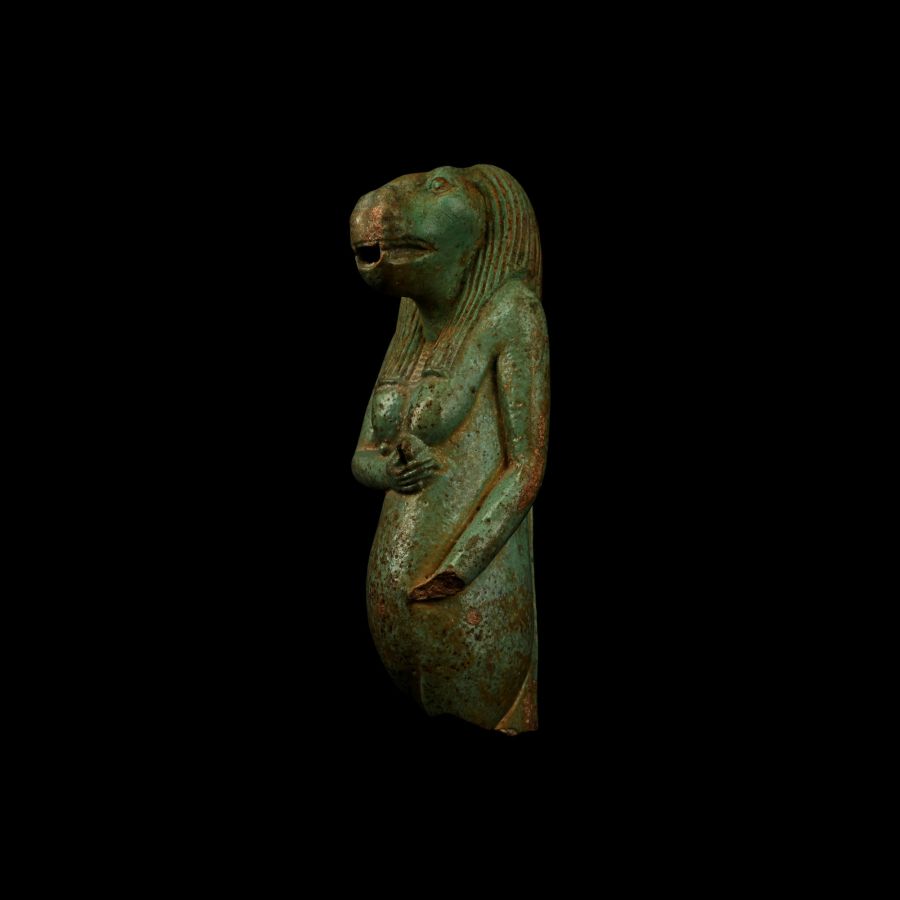
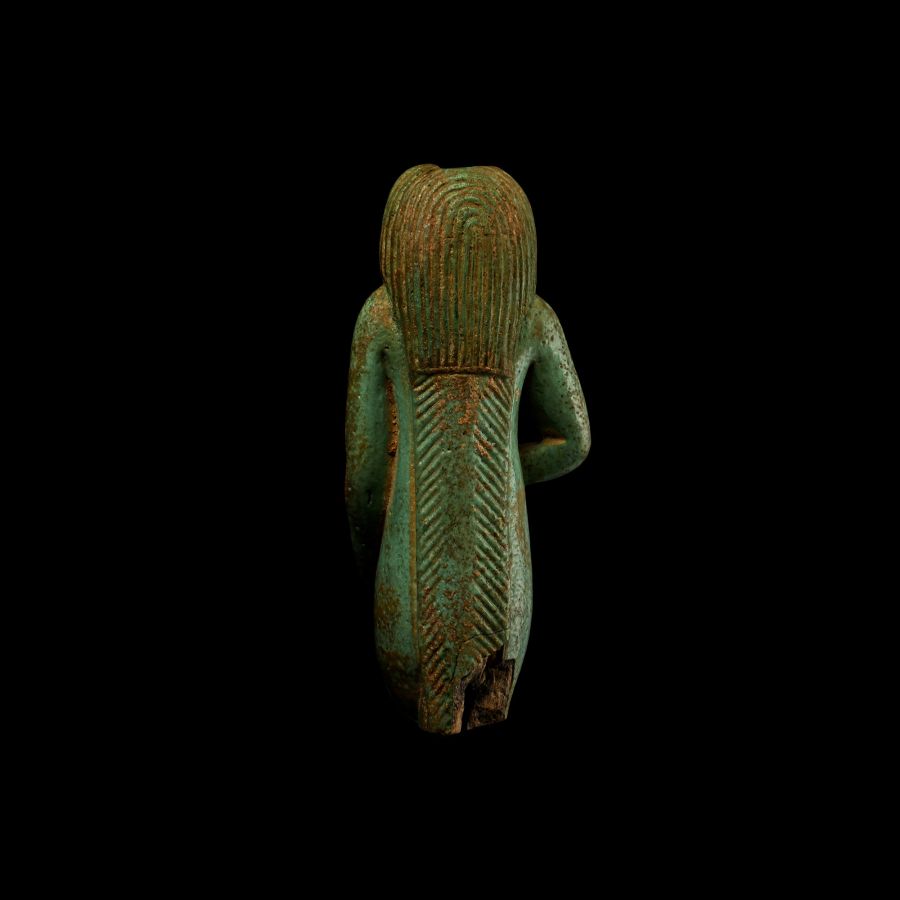
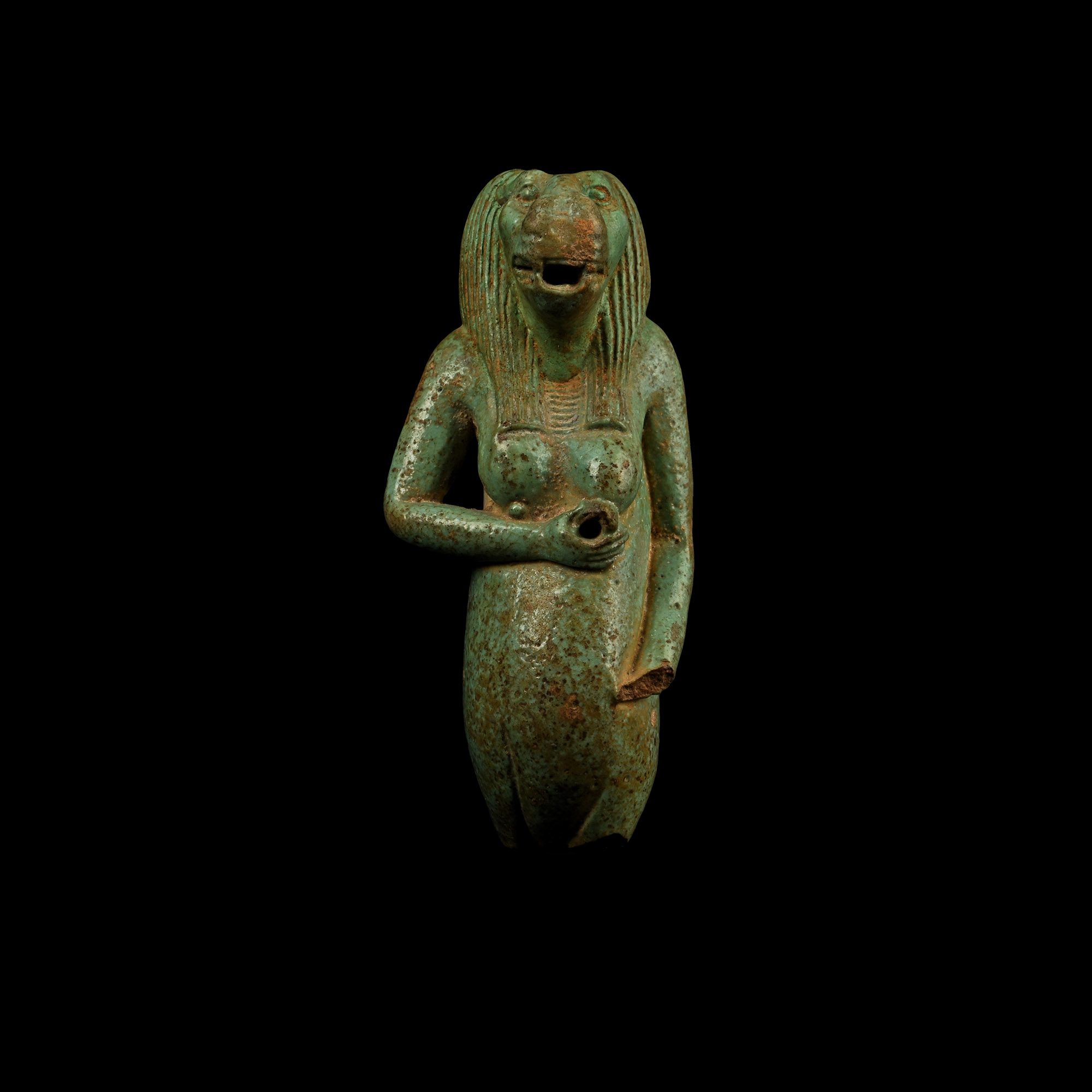
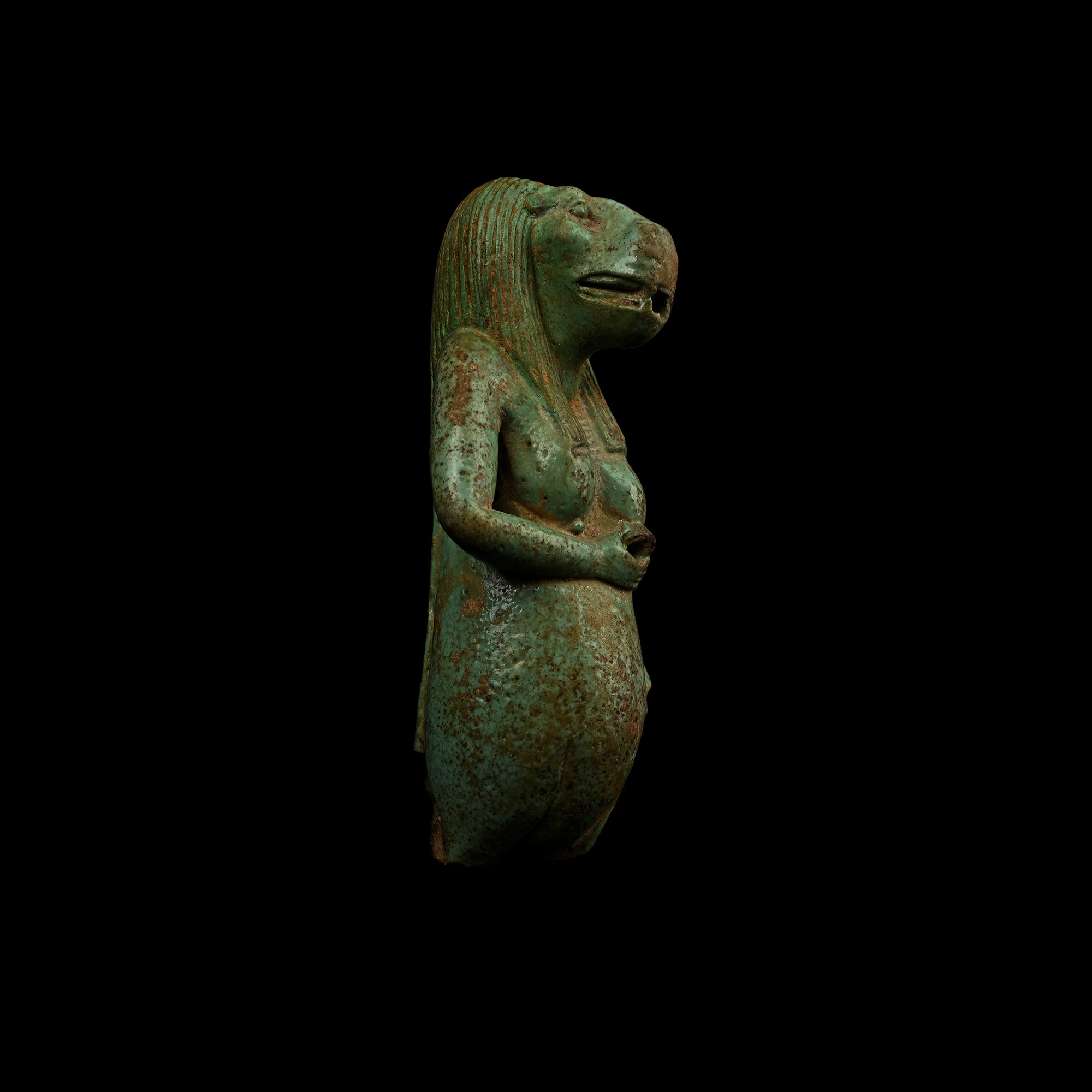
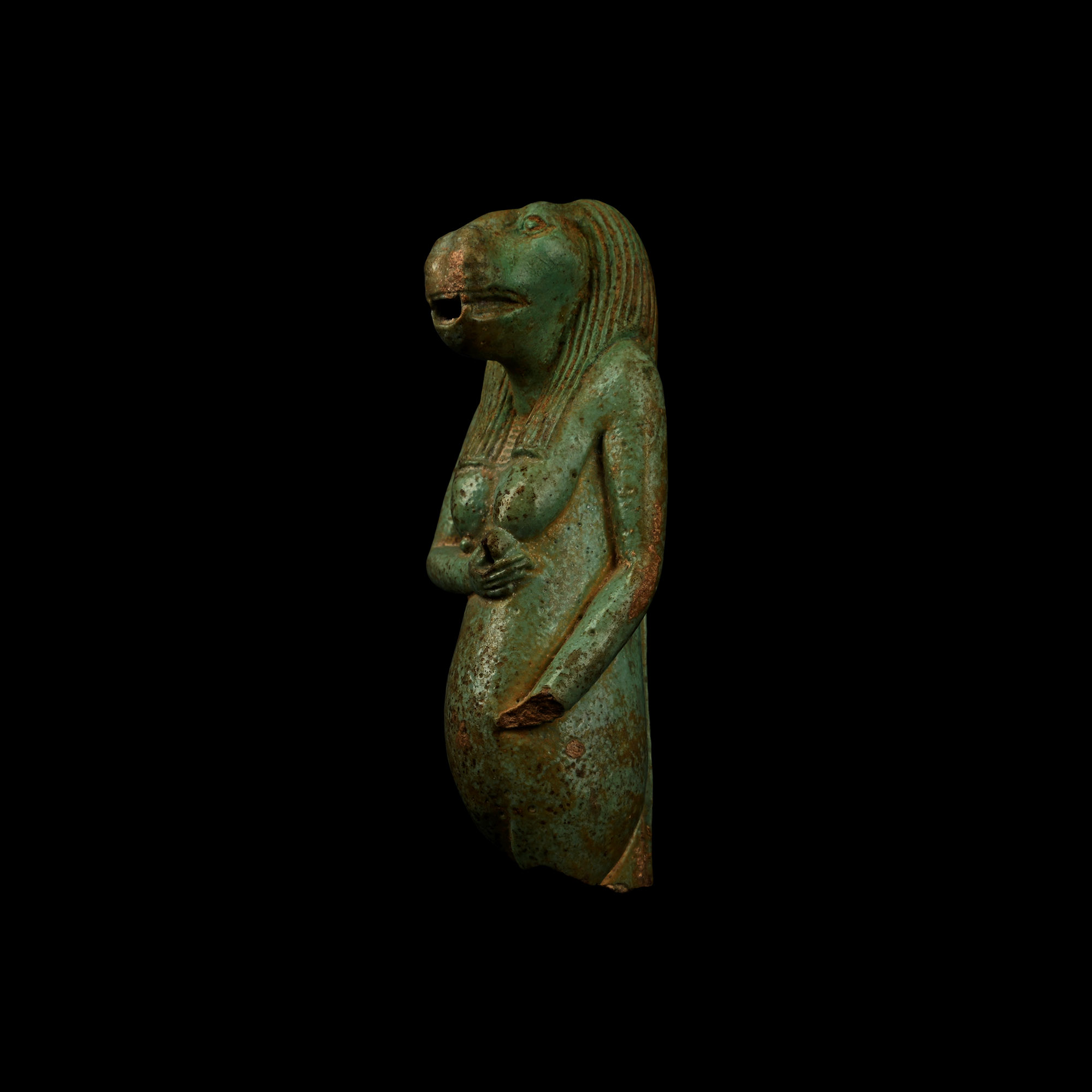
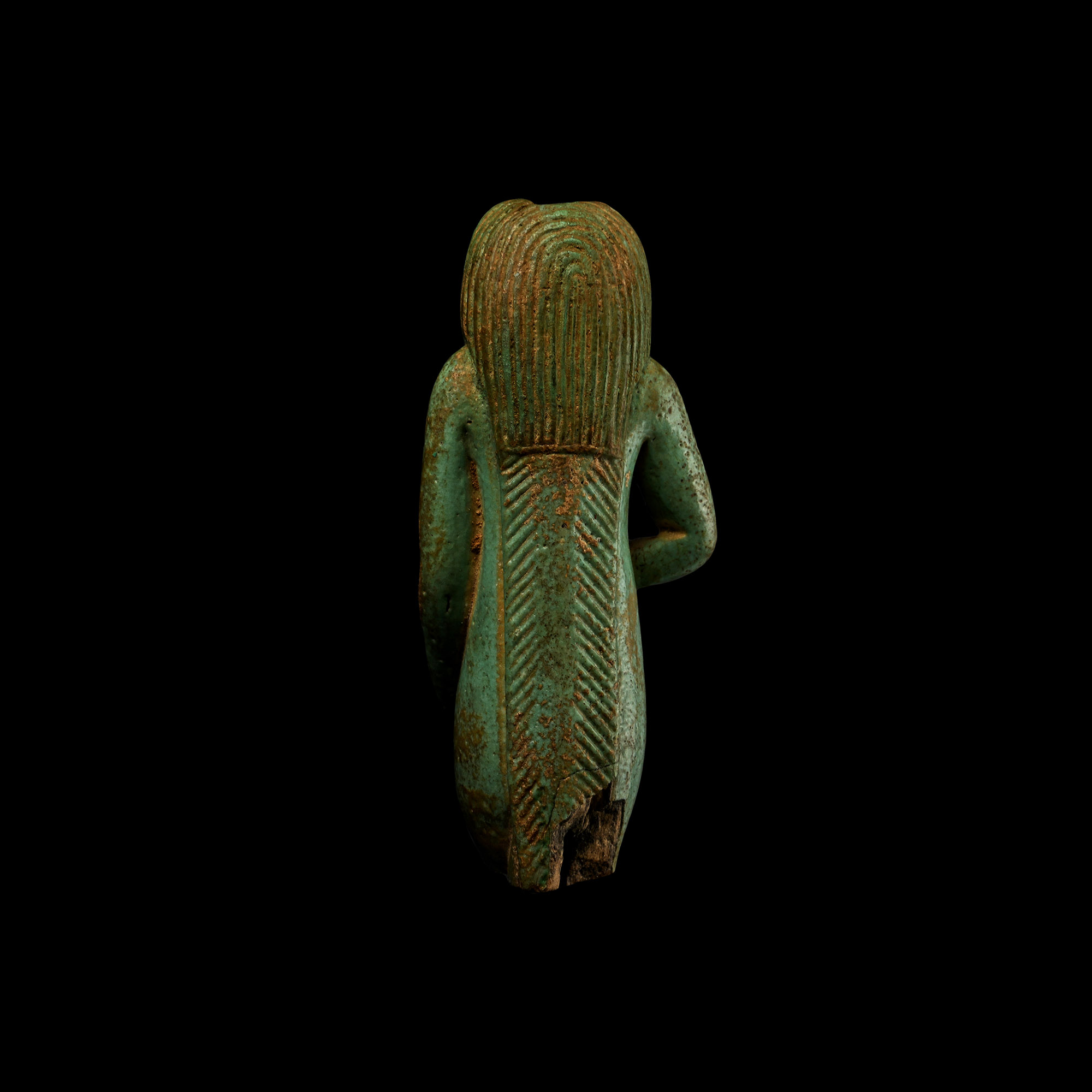
Large Egyptian Blue Faience Taweret Vessel
LATE PERIOD, 26TH DYNASTY, 664-525 B.C.
6 3/4 in. (160 grams total, 17.3 cm including stand).
Composite animal figure with a hippopotamus's head and body, a crocodile's tail, and a human torso with arms, topped with a finely striated tripartite wig; the right hand, positioned beneath the left nipple, encloses a drilled hole connecting to the hollow body; a hole at the top of the head; mounted on a custom-made stand.
ProvenanceEx private French collection, since the early 1990s.
Acquired from Galerie Reiner, rue Bonaparte, Paris.
Artcurial, Paris, 6 November 2013, no.55.
Accompanied by an academic report by Egyptologist Paul Whelan.
Accompanied by a copy of French passport no.150578.
This lot has been checked against the Interpol Database of stolen works of art and is accompanied by search certificate number no.13189-249212.
Cf. Guichard, H. (dir.), Des animaux et des pharaons, le règne animal dans l'Égypte ancienne, Paris, 2014, p. 194, ill. p.
194, no. 165, for a similar vessel in the Louvre (inv. no. E 14232).
The vessel’s shape indicates it was likely used in magical and libationary rituals meant to invoke Taweret’s protective powers during childbirth and maternity. Usually depicted as a female hippopotamus with lion-like arms and legs and a crocodile’s back and tail, Taweret remains one of the most distinctive and recognisable deities in the Egyptian pantheon. Her name comes from the Egyptian word for "great" or "large" (tꜣwꜣrt), emphasising her powerful and protective nature.
CONDITIONTimeLine Auctions follows a vetting process to ensure the authenticity and legality of all items, reinforcing our commitment to integrity and responsible trading. Each antiquity, antique, and coin lot undergoes thorough examination by a vetting committee of at least ten external specialists, professional trade association members, scientists, and archaeologists: Our Vetting Process
AUCTIONS:
TimeLine is a leading auction house specialising in antiquities, ancient art, collectables, natural history, coins, medals, and books. Our auctions offer museums, collectors, historians, and enthusiasts the opportunity to acquire unique and historically significant pieces.
LOT 0047
Large Egyptian Blue Faience Taweret Vessel
Estimate £6,000 - 8,000€6,960 - 9,280 (for guidance only)$8,100 - 10,800 (for guidance only)
Opening Bid
£3,000 (EUR 3,480; USD 4,050) ‡+BP*
-
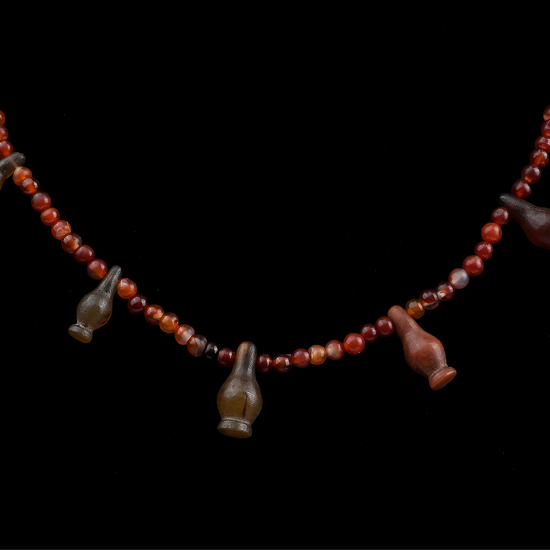
Egyptian Carnelian Bead and Poppy Amulet Necklace
Late Period, 664-332 B.C. and laterEstimate: £200 - 300 (+bp*)
Opening Bid: £100
Poppy-head amulet necklace restrung with later spherical beads. 21.9 grams, 45 cm long
From the collection of a gentleman, acquired on the London art market in the 1990s. -
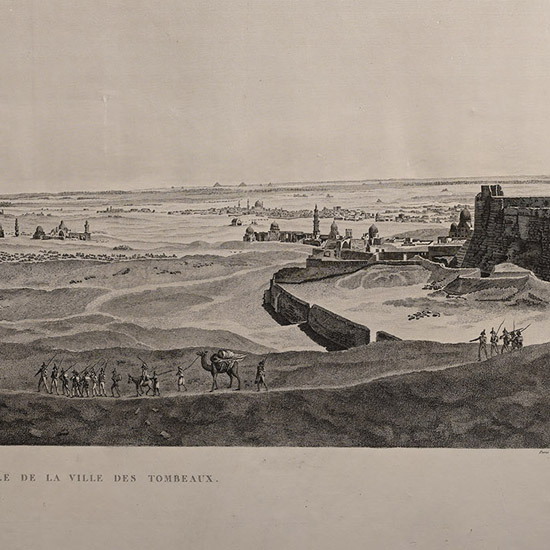
Very Large Egyptian Expedition Lithograph of Kaire
Early 19th century A.D.Estimate: £80 - 100 (+bp*)
Opening Bid: £40
Proof etching on laid paper of plate 61 from Vol .I of Description de l'Égypte : ou, Recueil des observations et des recherches qui ont été faites en Égypte pendant l'expédition de l'armée française. entitled Le Kaire. Vue générale de la ville des tombeaux. 259 grams, 104 x 67 cm
From the collection of a North American priest. Acquired between 1981-1996. Property of a North American collector.
Produced between February 1802 and 1830 on the orders of Napoleon Bonaparte; published between 1809 and 1828. Just 1,000 copies were distributed to various institutions, printed on laid paper with an 'Égypte ancienne et moderne' watermark. The book is subtitled Recueil des observations et des recherches qui ont été faites en Égypte pendant l’expédition de l’Armée française, publié par les ordres de Sa Majesté l’Empereur Napoléon le Grand (Gathering of observations and discoveries which were made in Egypt during the expedition of the French army, published on the orders of His Majesty the Emperor Napoleon the Great). It was the world's first encyclopedia devoted exclusively to the remains of ancient Egypt. The plates of this book are the first to present the archaeological sites of Thebes (Luxor). -
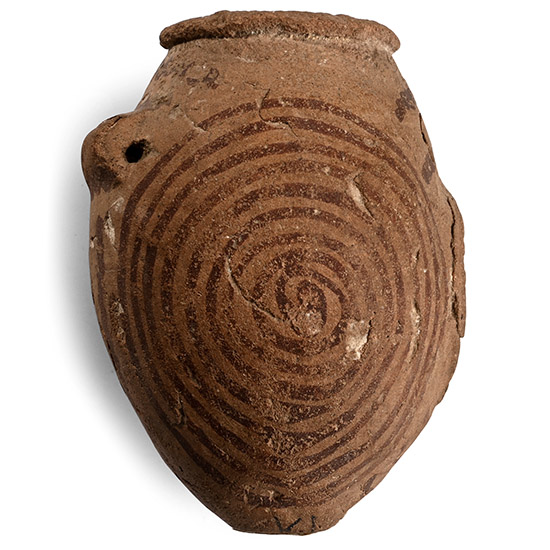
Egyptian Terracotta Pot with Painted Decoration
Predynastic Period, circa 3,500-3000 B.C.Estimate: £300 - 400 (+bp*)
Opening Bid: £5
One half of a buff-coloured double-ovoid vessel, originally joined on one side to another identical pot, with a single pierced lug handle and a bold design of radiating circles. 68.4 grams, 75 mm
Ex Puys-Aubert collection in Alexandria, March 1963, paid 18 shillings. From the private collection of Peter Clayton, FCILIP, Dip, Arch, FSA, FRNS, Hemel Hempstead, Hertfordshire, UK; formed since the late 1950s. Accompanied by an old handwritten information card by Peter Clayton, collection no.99.
This small pot was originally attached to an identical vessel. Intact examples of which were found by the famous archaeologist Flinders Petrie during his excavations at the predynastic cemetery at Naqada, the site that gave its name to the chronology of the periods before Egyptian dynastic history.
