
Loading, please wait...


LOT 0397
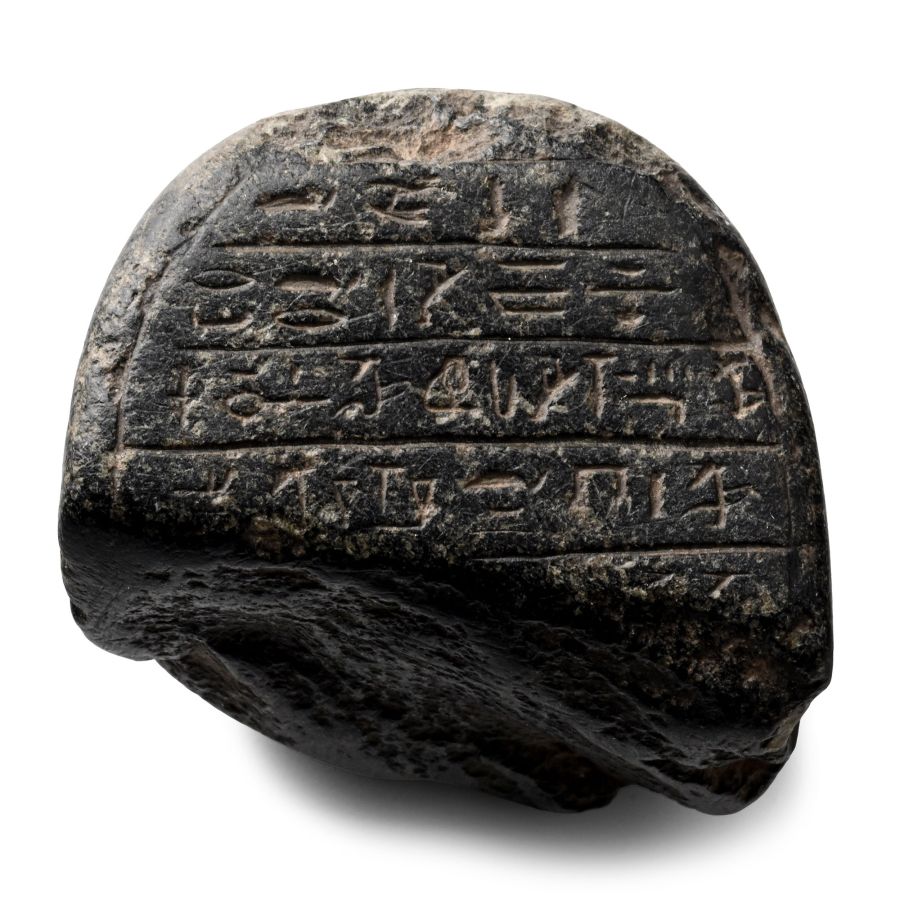
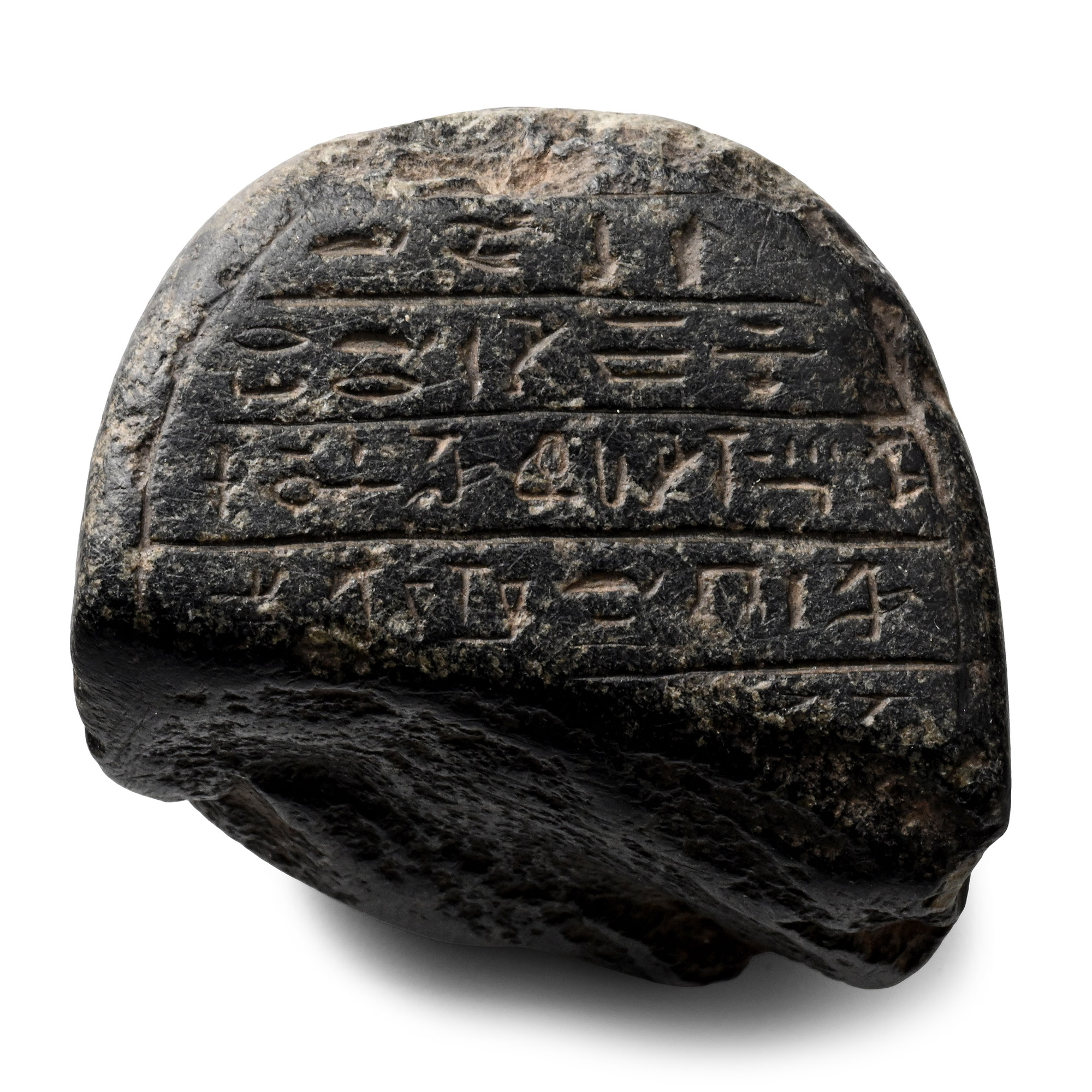
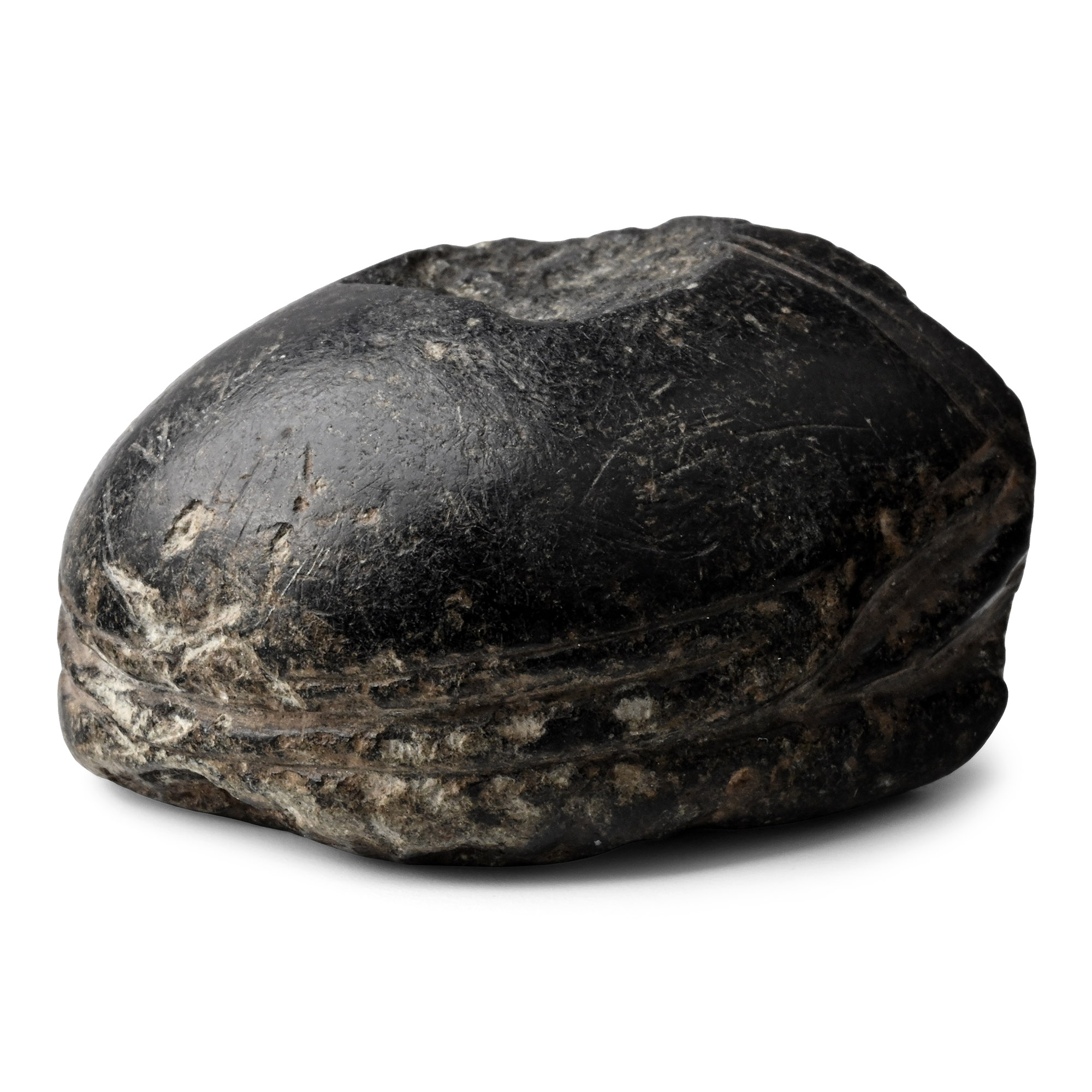
Large Egyptian Black Stone Heart Scarab Fragment
NEW KINGDOM, 1580-1077 B.C.
1 3/4 in. (70 grams, 45 mm).
Upper half modelled as a scarab beetle with midlegs and hindlegs, and plain elytra separated from the prothorax by double border lines; the underside bearing five lines of hieroglyphic inscription. [No Reserve]
ProvenanceFrom the private collection of Peter Clayton, FCILIP, Dip, Arch, FSA, FRNS, Hemel Hempstead, Hertfordshire, UK; formed since the late 1950s.
FootnotesThe hieroglyphic text presents the final part of Chapter 30b of the Book of the Dead, a spell designed to prevent the deceased's heart from betraying them during the Weighing of the Heart judgment before Osiris.
CONDITIONTimeLine Auctions follows a vetting process to ensure the authenticity and legality of all items, reinforcing our commitment to integrity and responsible trading. Each antiquity, antique, and coin lot undergoes thorough examination by a vetting committee of at least ten external specialists, professional trade association members, scientists, and archaeologists: Our Vetting Process
AUCTIONS:
TimeLine is a leading auction house specialising in antiquities, ancient art, collectables, natural history, coins, medals, and books. Our auctions offer museums, collectors, historians, and enthusiasts the opportunity to acquire unique and historically significant pieces.
LOT 0397
Large Egyptian Black Stone Heart Scarab Fragment
Estimate £300 - 400€350 - 460 (for guidance only)$410 - 540 (for guidance only)
Opening Bid
£5 (EUR 6; USD 7) +BP*
-
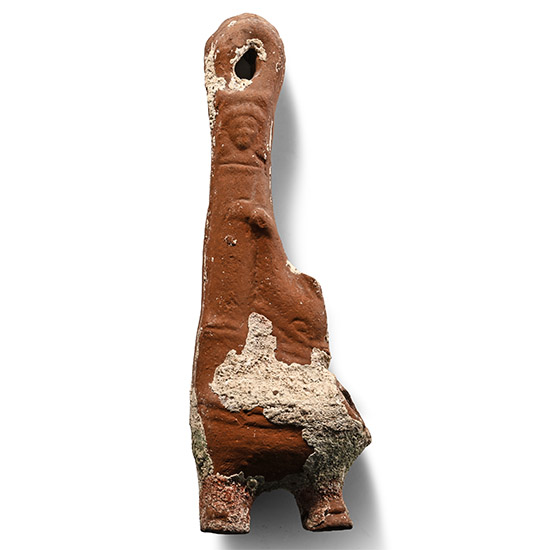
Egyptian Terracotta Alexandrian Figure
Roman Period, 30 B.C.-323 A.D.Estimate: £120 - 170 (+bp*)
Opening Bid: £5
Hollow-formed vessel with bulbous body and two flared feet below, vertical handle with loop finial and moulded mummy and dolphin motif; marine accretion; inked to underside 'Ex M. Suzanne / Alexandria / 1903-1920'. 178 grams, 19.5 cm
From the collection of David Donlan (1947-2025), a dedicated and lifelong collector with a passion for the ancient world and the natural sciences, forming his collection from 1960s onwards, using many reputable dealers across the United Kingdom, including the well-regarded Coincraft and The Parthenon Gallery. -
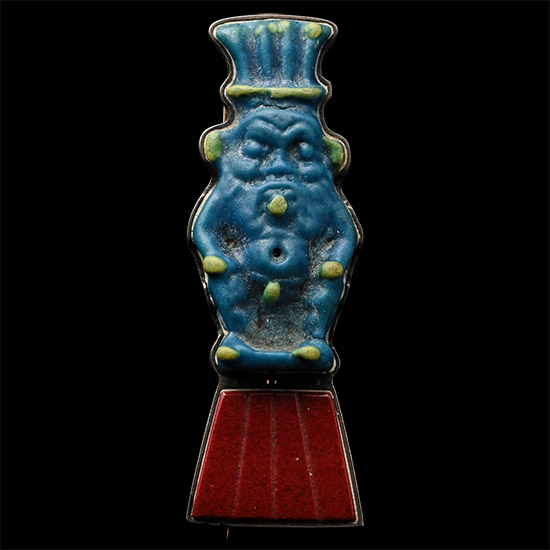
Egyptian Polychrome Faience Amulet of the God Bes Fashioned as a Dress Pin
Late-Ptolemaic Period, circa 664-30 B.C.Estimate: £300 - 400 (+bp*)
Opening Bid: £167
The dwarf god depicted in a characteristic bandy-legged stance, with his hands on his hips and a fearsome expression, wearing a plumed headdress; the deep blue glaze highlighted in yellow; set in a metal casing with hinged pins on the reverse and a red jasper insert depicting four plumes beneath his feet. 13.7 grams, 52 mm
Early 20th century UK collection. Ex A.H. collection, London, UK. Accompanied by a previous catalogue information page with provenance.
From the New Kingdom onwards, Bes became one of ancient Egypt's most popular apotropaic deities. Despite his somewhat fearsome appearance, Bes served as the patron and protector of pregnant women and children and was believed to shield them from snakes. The role of Bes as a guardian of women persisted at least until the third or fourth century A.D. -
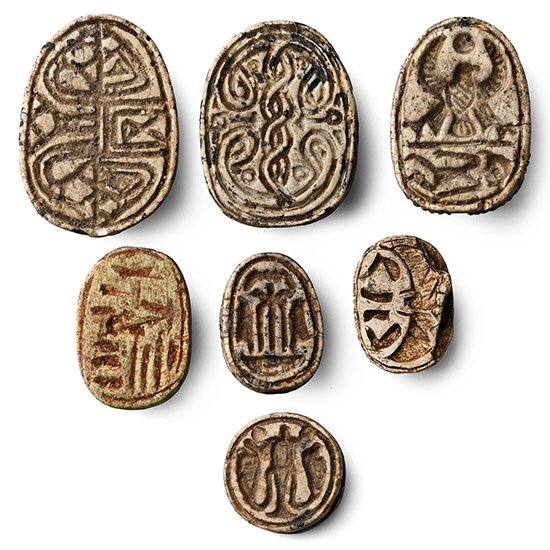
Egyptian Steatite Scarab Collection
Mostly Late Middle Kingdom, Second Intermediate Period, 1780-1500 B.C.Estimate: £600 - 800 (+bp*)
Opening Bid: £300
Mixed group of scarabs and scaraboids, including: stylised foliate motif with a sa sign; central entwined cords with curled tops and tails, and nefer signs; a falcon with outspread wings and sun disc above, surmounting a fallen enemy; a group of hieroglyphs: a central mes flanked by reed leaves, with a water sign n above, and a neb sign below; a falcon with outspread wings, with two maat feathers and stylised cobras above; a central hes vase flanked by rearing cobras. 32.6 grams total, 15-28 mm
From the collection of a gentleman, acquired on the London art market in the 1990s.
