
Loading, please wait...
LOT 0056
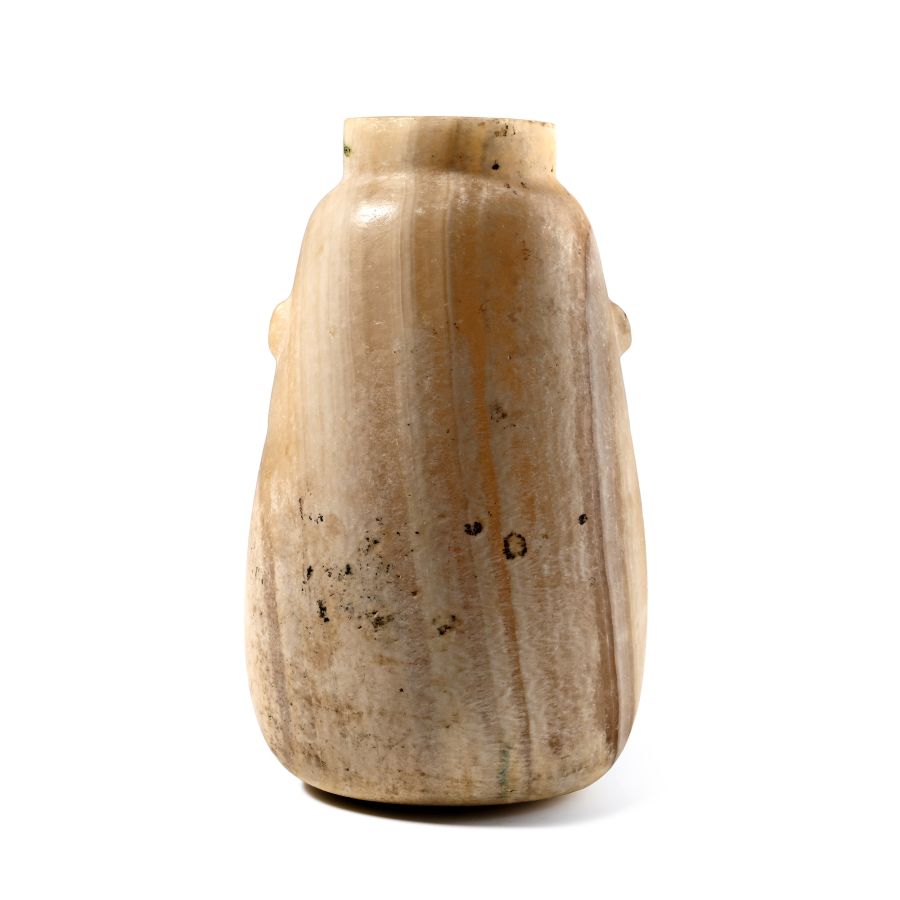
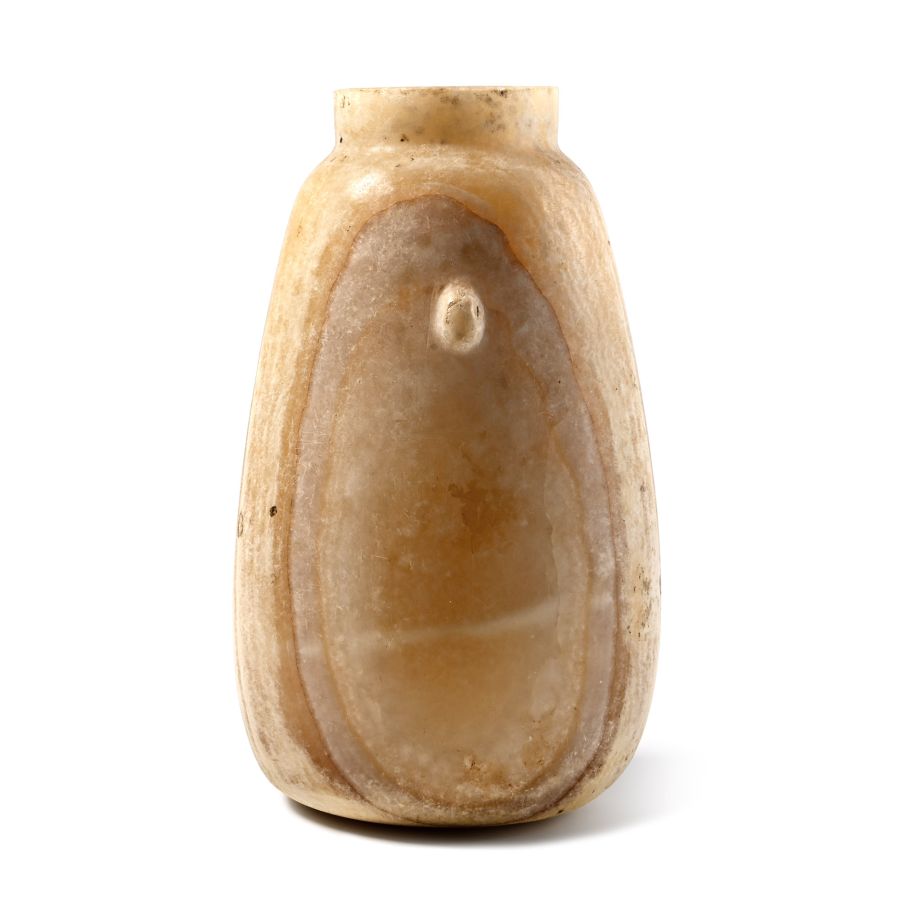
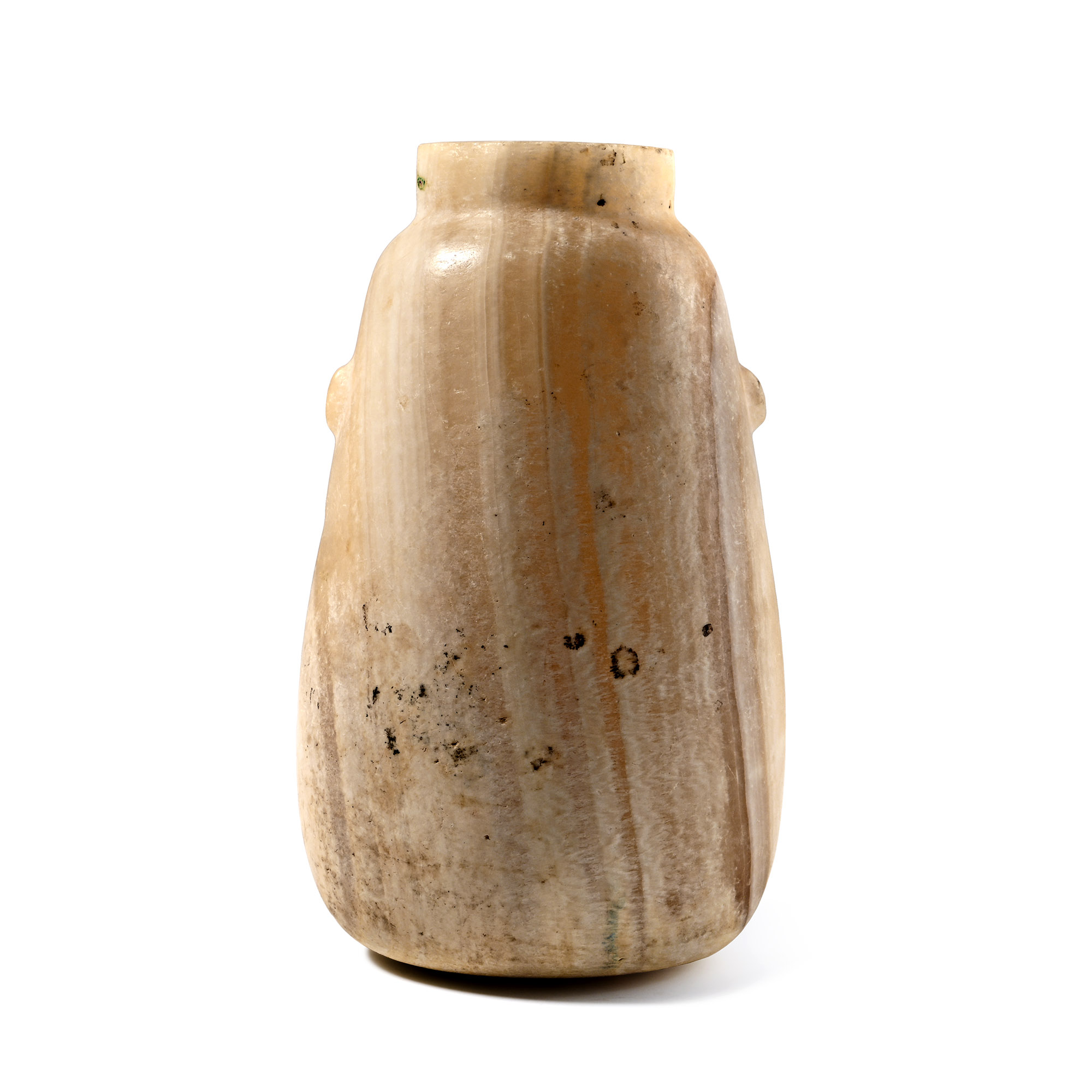
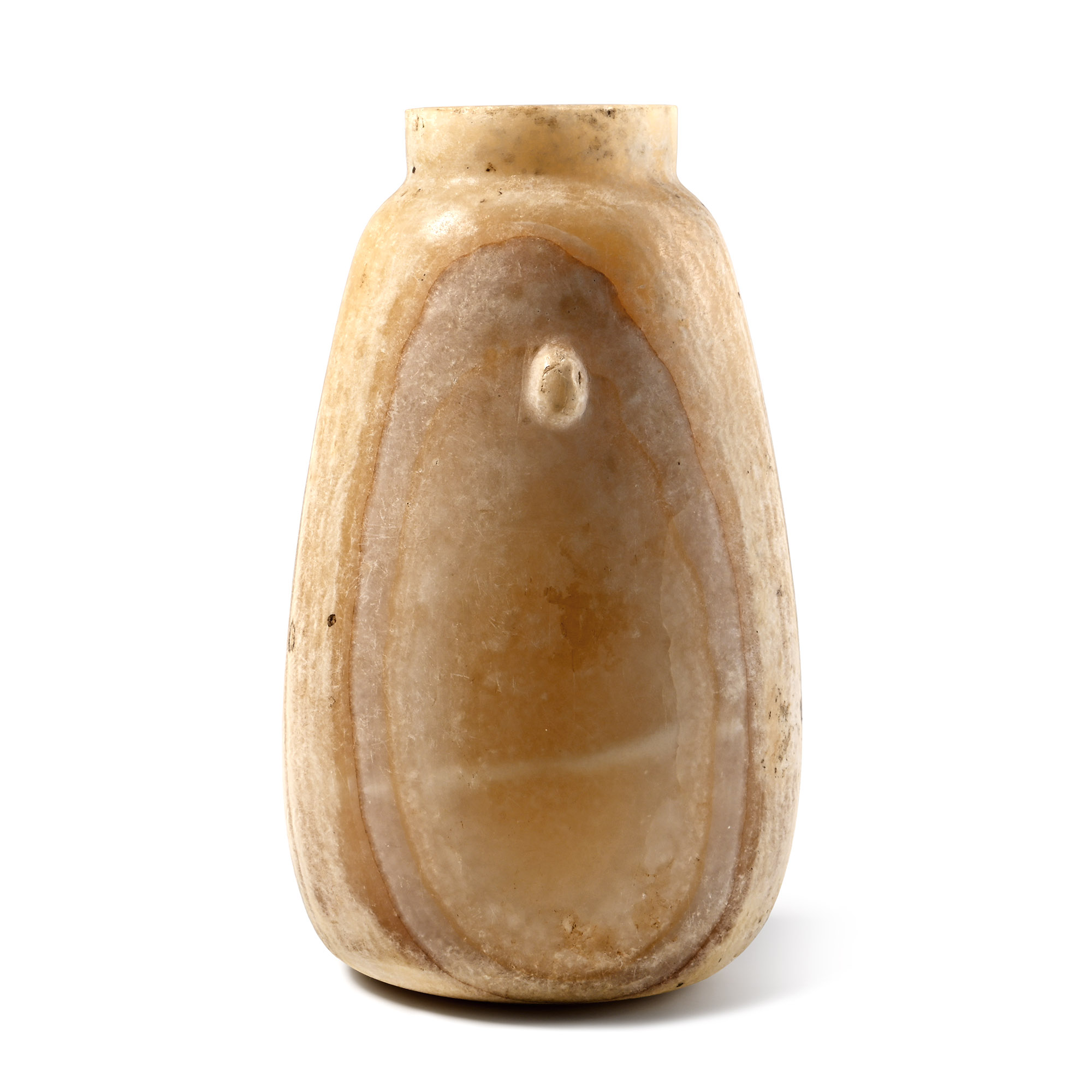
Large Egyptian Alabaster Alabastron
LATE PERIOD, 664-332 B.C.
6 1/8 in. (867 grams, 15.5 cm).
Elongated vessel widening slightly towards the flat base with broad, cylindrical neck; vertical rim to the mouth, probably slightly reground; two lateral knob handles.
ProvenanceAcquired from Galerie Arete, Zurich, 15 April 1988.
Ex private collection, Therwil, Switzerland.
The veining of the finely polished alabaster underscores the vessel’s form; the interior is smoothed, but the base lacks the same polish as the wall and was either reground or not polished in the first place.
CONDITIONTimeLine Auctions follows a vetting process to ensure the authenticity and legality of all items, reinforcing our commitment to integrity and responsible trading. Each antiquity, antique, and coin lot undergoes thorough examination by a vetting committee of at least ten external specialists, professional trade association members, scientists, and archaeologists: Our Vetting Process
AUCTIONS:
TimeLine is a leading auction house specialising in antiquities, ancient art, collectables, natural history, coins, medals, and books. Our auctions offer museums, collectors, historians, and enthusiasts the opportunity to acquire unique and historically significant pieces.
LOT 0056
Large Egyptian Alabaster Alabastron
Estimate £1,200 - 1,700€1,390 - 1,970 (for guidance only)$1,620 - 2,300 (for guidance only)
Opening Bid
£650 (EUR 754; USD 878) ‡+BP*
-
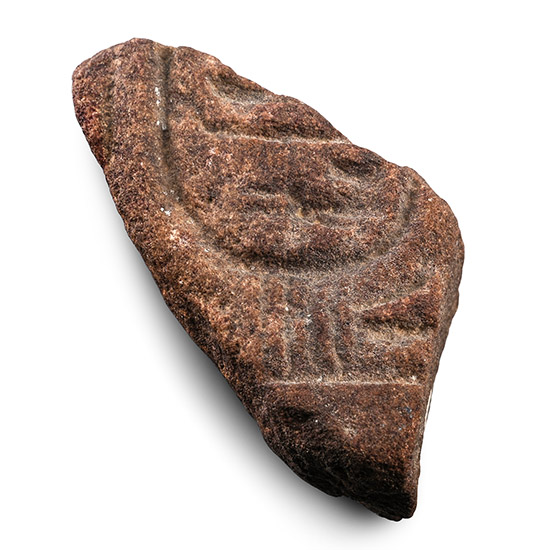
Egyptian Red Quartzite Granite Hieroglyphic Fragment with Remains of a Cartouche
New Kingdom, 18th Dynasty, Amarna Period, 1379-1362 B.C.Estimate: £60 - 80 (+bp*)
Opening Bid: £5
Dressed stone fragment preserving the lower part of an incised cartouche. 102 grams, 67 mm
Acquired in February 1978. From the private collection of Peter Clayton, FCILIP, Dip, Arch, FSA, FRNS, Hemel Hempstead, Hertfordshire, UK; formed since the late 1950s. Accompanied by an old handwritten information card by Peter Clayton, collection no.139.
The cartouche appears to contain two narrow horizontal hieroglyphs and the lower part of a circle, suggesting it is the throne name of Akhenaten, Neferkheperure. -
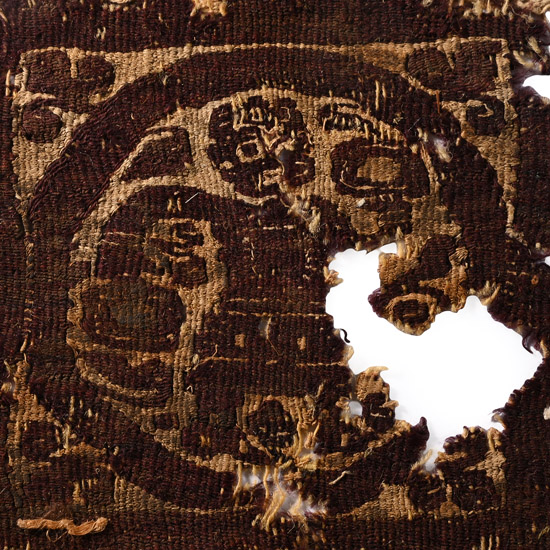
Egyptian Coptic Tunic Tablion Textile Fragment with Image of a Servant
Circa 4th century A.D.Estimate: £40 - 60 (+bp*)
Bids: 1 | Current Bid: £5
Comprising a tablion in linen and wool, showing a figure of a man clad in tunica paragaudata inside a roundel, carrying hunting cages, lily flowers in each corner. 3.05 grams, 95 x 95 mm
Acquired 1970s-1996. Property of a North American collector. London collection, 2016.
The scene may depict a servant of some patrician engaged in hunting activities. Of particular note is the man's tunic, decorated with clavi, orbiculi, and segmenta. -
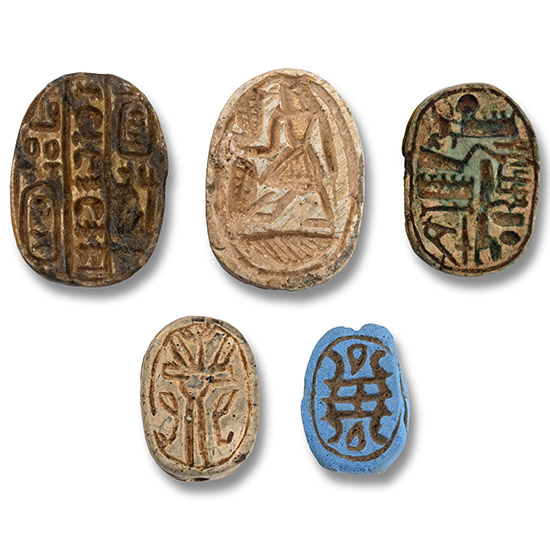
Egyptian Steatite and Faience Scarab Group
Mainly Second Intermediate Period–New Kingdom, circa 1660-1069 B.C.Estimate: £150 - 200 (‡+bp*)
Opening Bid: £75
Designs include: a tripartite design with ankh, water, nwb, and men signs, with indistinct cartouches possibly of Thutmose III, and signs spelling the phrase 'powerful is the justice of Re' (user-Maat-Re); a line border enclosing the stylised depiction of a striding figure grasping a crocodile, with a neb sign below; a line border enclosing a multitude of signs, including Thutmose III’s throne name (men-kheper-Re), and that of Amun; a line border enclosing central Hathoric sistrum; a line border enclosing a symmetrical motif in contrasting black glaze. 10.6 grams total, 13-19 mm
Acquired on the European art market in the early 2000s. With Galerie Rhéa, Zurich, Switzerland.
