
Loading, please wait...
LOT 0586
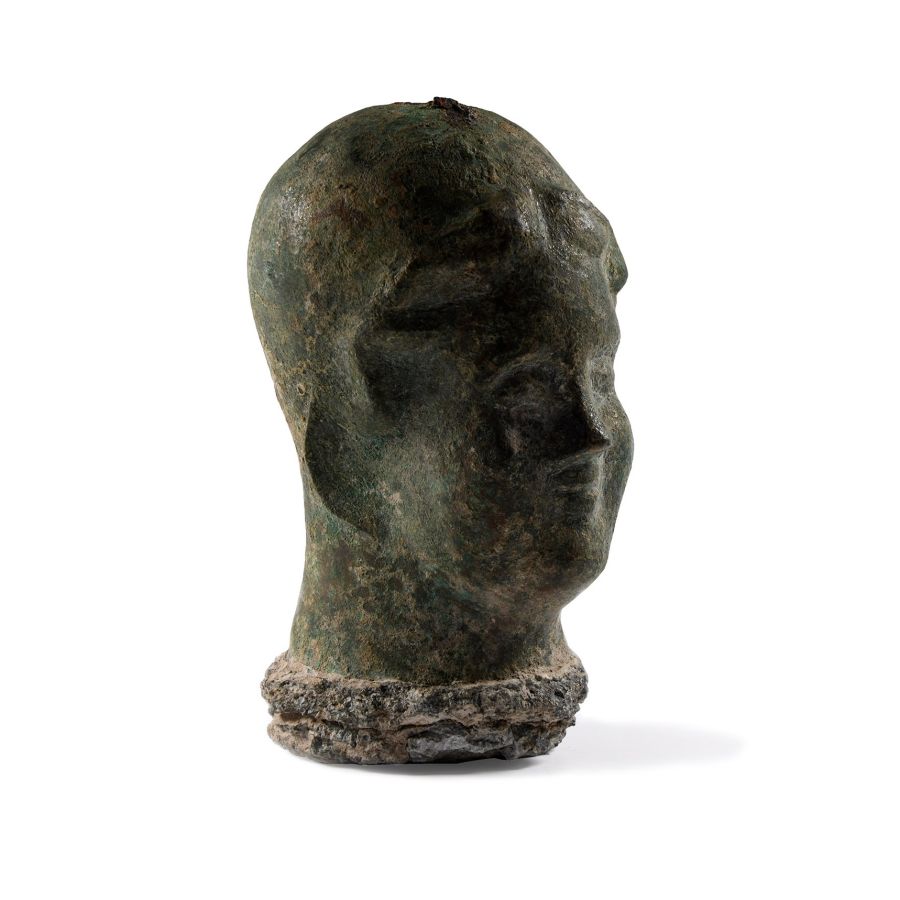
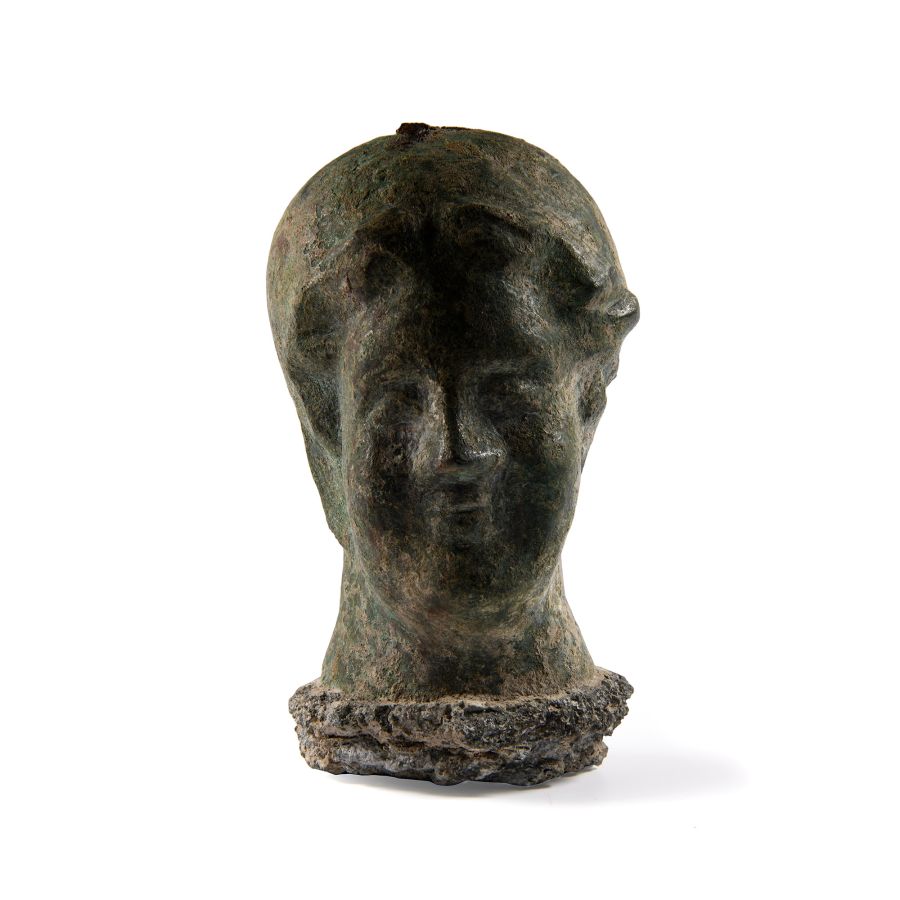
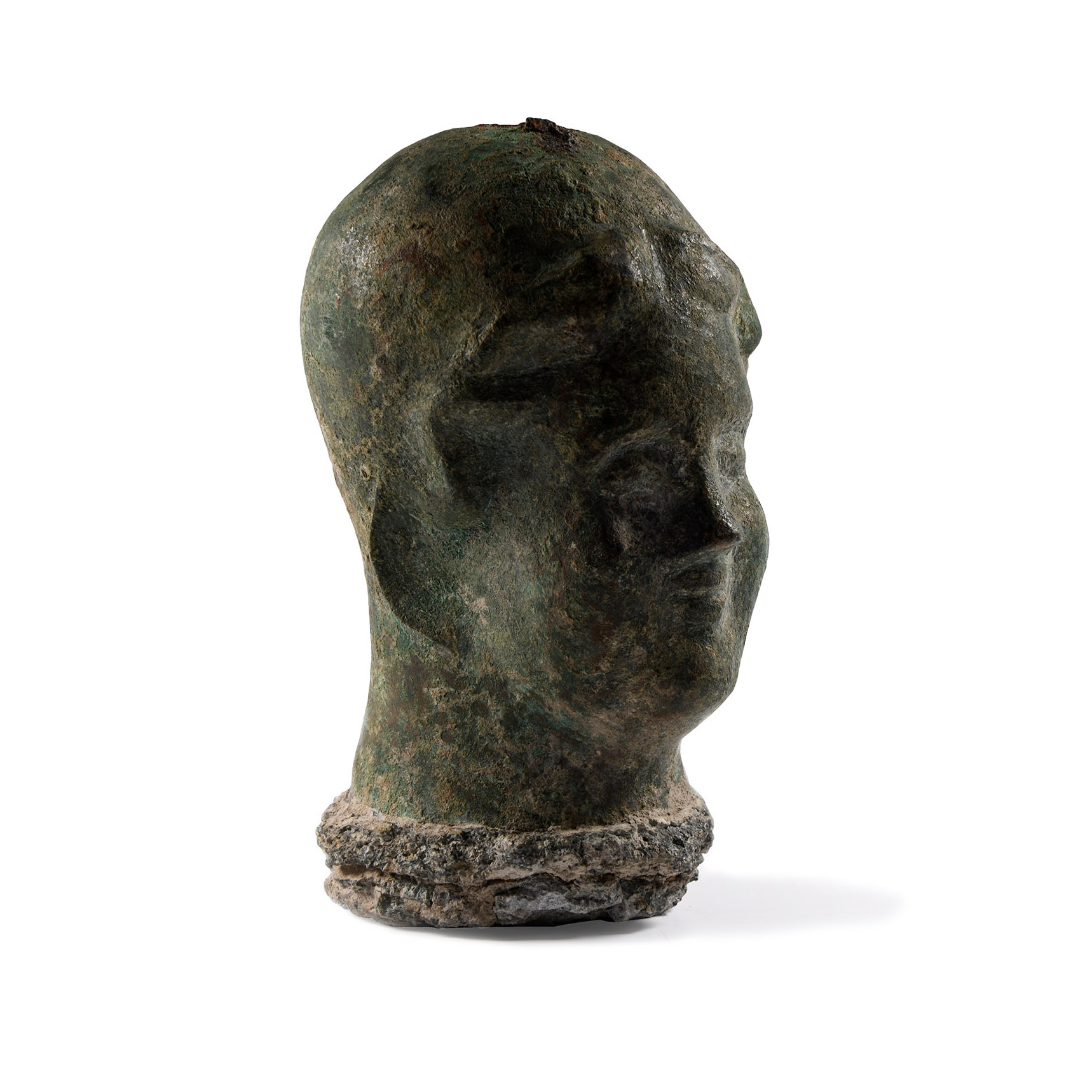
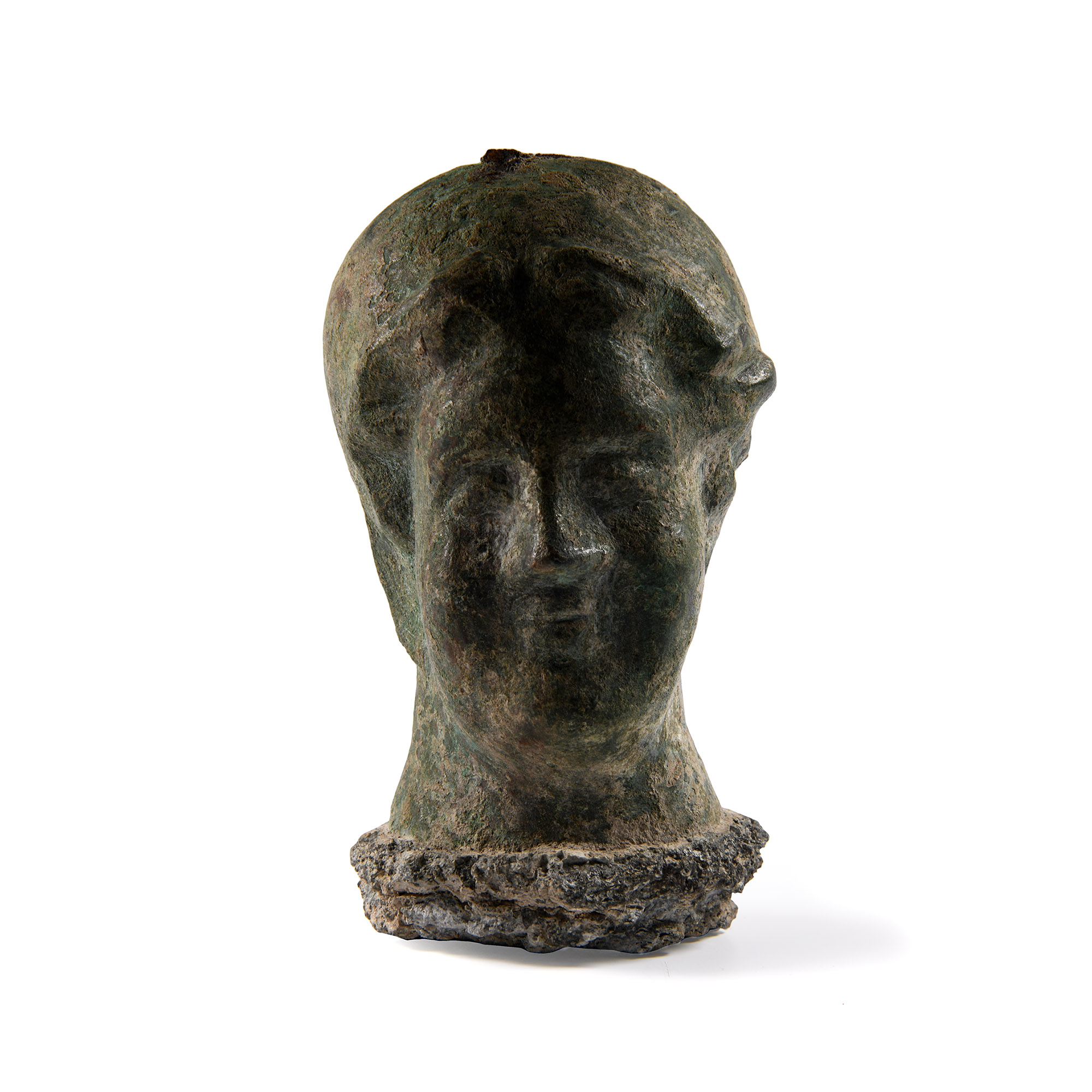
Large Eastern Roman Bronze Bust-Shaped Steelyard Weight
CIRCA 3RD-4TH CENTURY A.D. OR LATER
5 1/4 in. (4.2 kg, 13.5 cm high).
Modelled in the round as a facing female with head turned slightly right, with semi-naturalistic facial detailing and dressed hair; lead-filled.
ProvenanceAcquired 1990s-early 2000s.
East Anglian private collection.
See Biddle, M. & Henig, M., A Jupiter temple (?) outside the west gate of Venta Belgarum and the development of Winchester’s western suburb, London, 2018; Allason-Jones, L. & Miket, R., Catalogue of Small Finds from South Shields Roman Fort, Gloucester, 1984.
FootnotesSteelyard weights in the form of human or deities faces were not uncommon in the Roman period (see SWYOR-DA4426, OXON-4391B5, HAMP-BD4D67 and NARC-7A7B81 on the PAS). These were generally filled with lead and had iron or copper suspension loops projecting from the top of the head.
CONDITIONTimeLine Auctions follows a vetting process to ensure the authenticity and legality of all items, reinforcing our commitment to integrity and responsible trading. Each antiquity, antique, and coin lot undergoes thorough examination by a vetting committee of at least ten external specialists, professional trade association members, scientists, and archaeologists: Our Vetting Process
AUCTIONS:
TimeLine is a leading auction house specialising in antiquities, ancient art, collectables, natural history, coins, medals, and books. Our auctions offer museums, collectors, historians, and enthusiasts the opportunity to acquire unique and historically significant pieces.
LOT 0586
Large Eastern Roman Bronze Bust-Shaped Steelyard Weight
Estimate £800 - 1,000€930 - 1,160 (for guidance only)$1,080 - 1,350 (for guidance only)
-
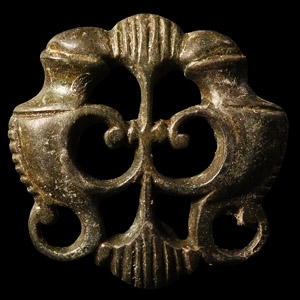
Roman Bronze Military Belt Mount
2nd-3rd century A.D.Sold for (Inc. bp): £72
Composing two opposed dragonesque figures with tail and lowered head, sitting on a peltate style cut out. 19.7 grams, 35 mm
Acquired on the UK art market. Property of a Ruislip, UK, gentleman, by inheritance.
Belt appliques and decorations change notably during the centuries of the Roman Empire. In around 2nd-3rd centuries A.D., particularly in Pannonia and in Britain, show many very Celtic orientated fittings, maybe as the result of provincial influences within the army or production systems. -
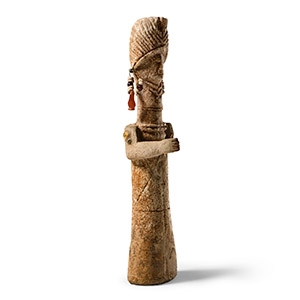
Roman Bone Child's Doll
1st century B.C.-1st century A.D.Sold for (Inc. bp): £364
The free-standing human figure carved with a long neck and voluminous hairstyle, with a stylised face and suggestions of necklaces; remains of a previously articulate arm held at a right angle to the body, hoop earrings with bead ornament to both ears. 133 grams, 18.5 cm
London, UK, gallery, 1971-early 2000s. -
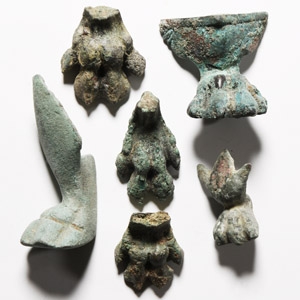
Roman Bronze Lion Paw Casket Mount Group
Mainly 1st-2nd century A.D.Sold for (Inc. bp): £85
Six paws in naturalistic and stylised forms, including examples with support brackets. 163 grams total, 26-51 mm
From an East London collection; previously in a collection formed between 1990-2000. Property of a Ruislip, UK, gentleman, by inheritance.
