
Loading, please wait...
_900x900.jpg "Large Eastern Roman Amethyst Gemstone with Male Bust in Gold Ring")
_200x200.jpg "Large Eastern Roman Amethyst Gemstone with Male Bust in Gold Ring")
.jpg "Large Eastern Roman Amethyst Gemstone with Male Bust in Gold Ring")
LOT 0880
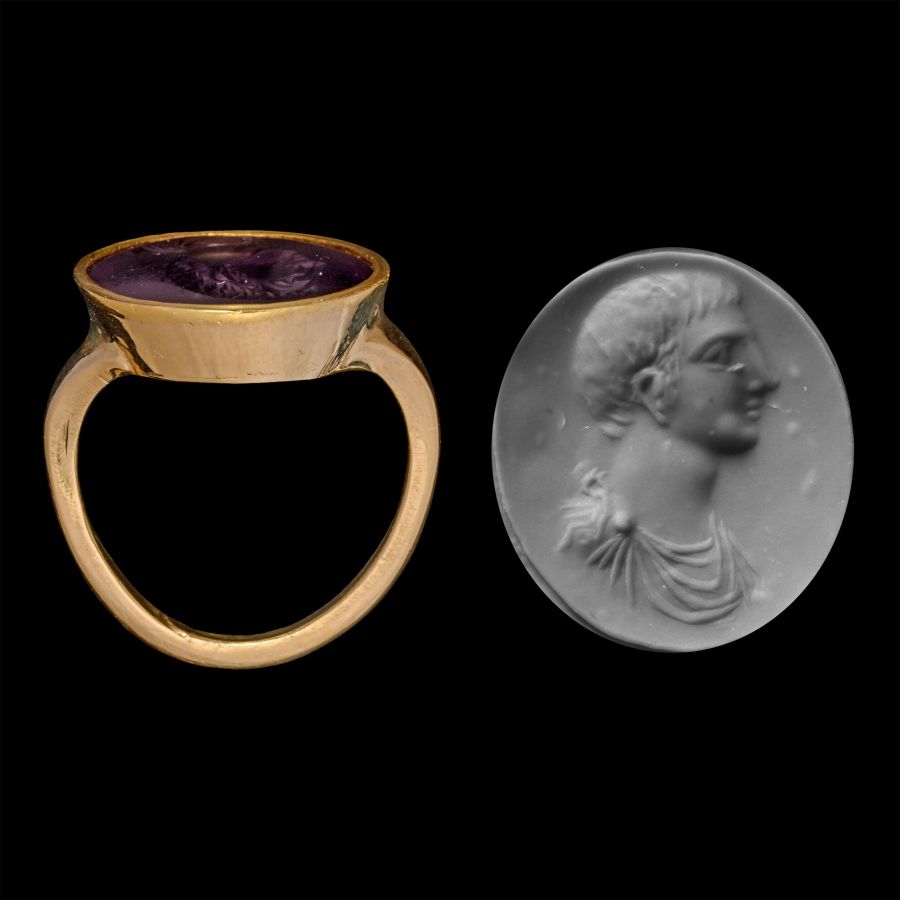
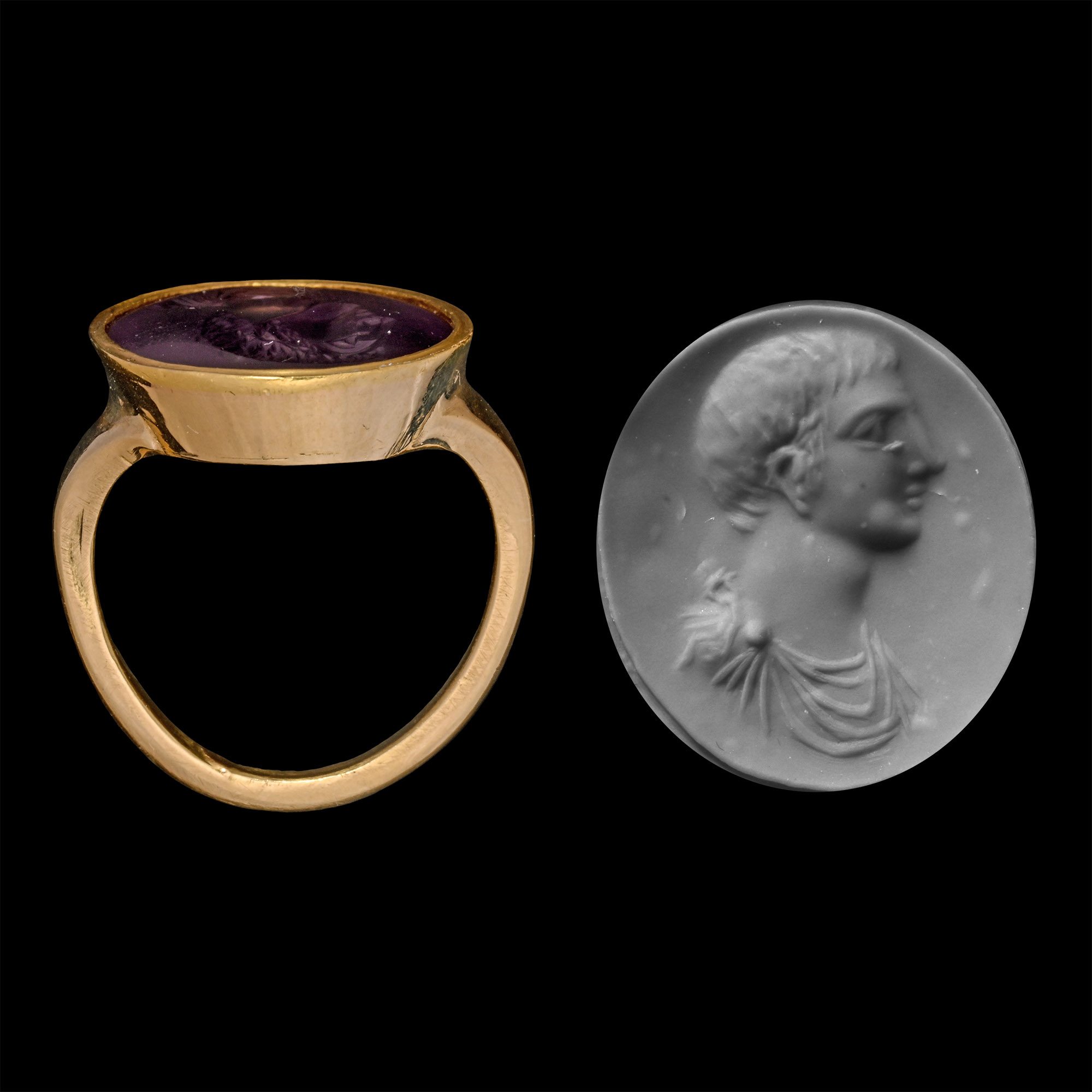
Large Eastern Roman Amethyst Gemstone with Male Bust in Gold Ring
2ND-3RD CENTURY A.D.
1 in. (13.25 grams, 26.80 mm overall, 20.08 mm internal diameter (approximate size British R, USA 8 1/2, Europe 18 3/4, Japan 18)).
Ellipsoid cloison with incuse profile bust of a youthful male wearing a pallium secured at his shoulder with a disc brooch; in later gold ring; supplied with a museum-quality impression.
ProvenancePrivate collection, England.
This lot has been checked against the Interpol Database of stolen works of art and is accompanied by search certificate number no.13167-249501.
TimeLine Auctions follows a vetting process to ensure the authenticity and legality of all items, reinforcing our commitment to integrity and responsible trading. Each antiquity, antique, and coin lot undergoes thorough examination by a vetting committee of at least ten external specialists, professional trade association members, scientists, and archaeologists: Our Vetting Process
AUCTIONS:
TimeLine is a leading auction house specialising in antiquities, ancient art, collectables, natural history, coins, medals, and books. Our auctions offer museums, collectors, historians, and enthusiasts the opportunity to acquire unique and historically significant pieces.
LOT 0880
Large Eastern Roman Amethyst Gemstone with Male Bust in Gold Ring
Estimate £2,500 - 3,500€2,900 - 4,060 (for guidance only)$3,380 - 4,730 (for guidance only)
-
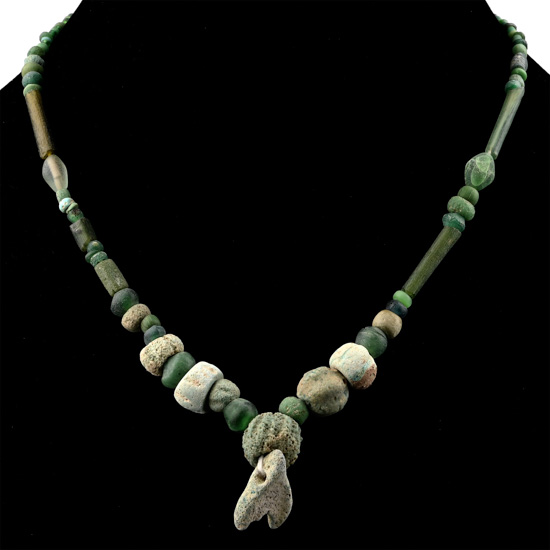
Roman and Other Green Glass Bead Necklace String
1st-4th century A.D. and laterSold for (Inc. bp): £98
Composed of graduated mixed beads, the central feature composed of melon beads and a fly-shaped pendant; restrung. 20.2 grams, 36.5 cm
From London, UK, gallery collection, 1990s. -
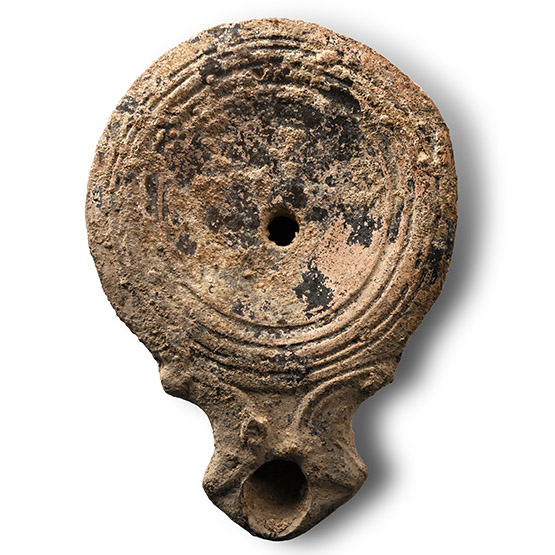
Roman Volute Black-Slip Ware Oil Lamp
1st-2nd century A.D.Sold for (Inc. bp): £52
Short nozzle with lateral volute scrolls, broad discus with raised concentric circles, and central filler hole. 62.6 grams, 91 mm
From the Lloyd and Jeanne Raport collection, Washington, D.C. and Florida, USA, formed between 1972-2000. Acquired through Bonhams, London, UK. -
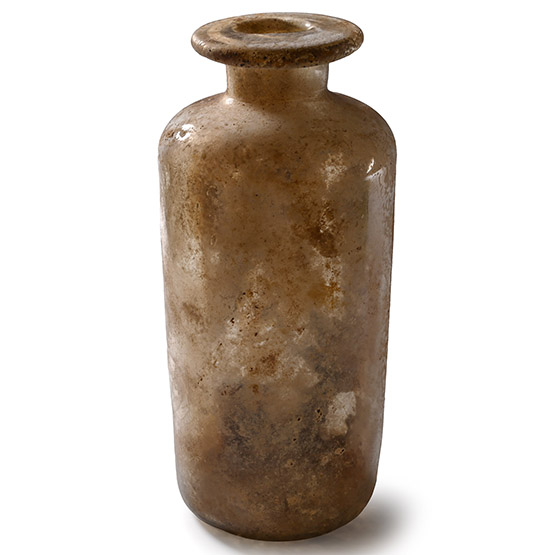
Roman Glass Bottle
3rd-4th century A.D.Estimate: £180 - 240 (+bp*)
Opening Bid: £100
Mould-blown bottle comprising a flat-based tubular body and short neck with returned flange rim. 94.2 grams, 14 cm
From an important London collection of glass, 1990s.
Most of similar examples of Roman bottles have been found in the Eastern Mediterranean. Earliest examples have been found in Roman Lusitania (Pombalinho-Santarem). The type lasted until the 4th century A.D. (Samaria-Sebaste, Israel).
