
Loading, please wait...
LOT 0244
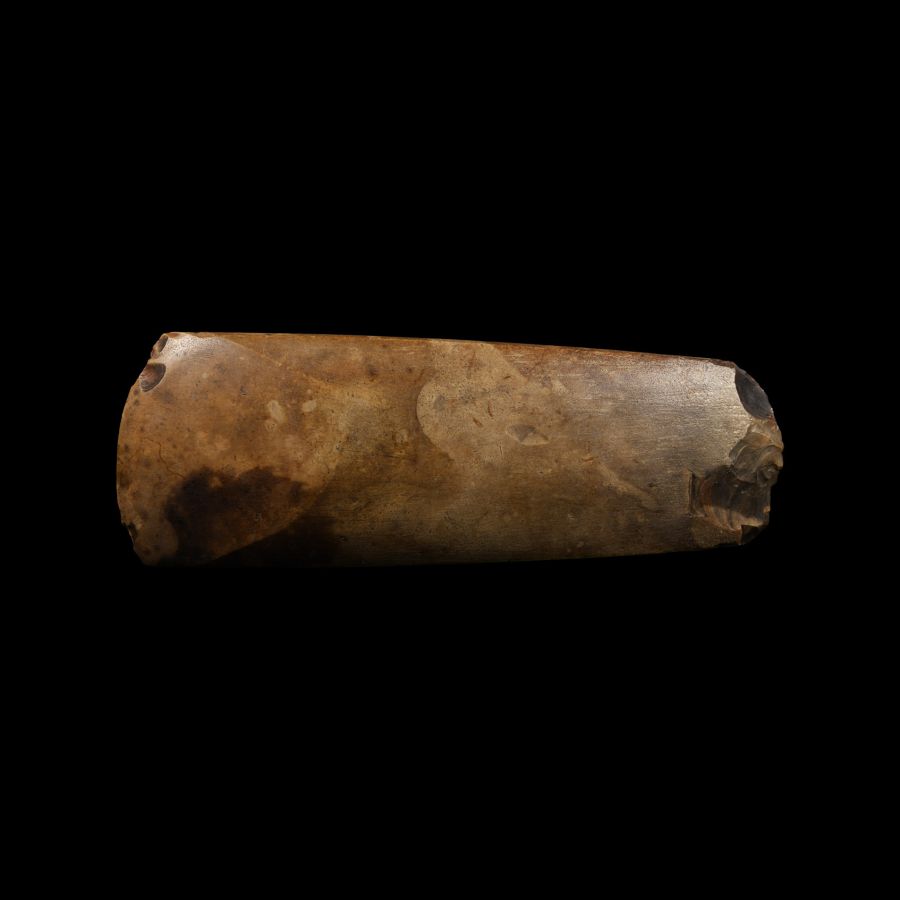
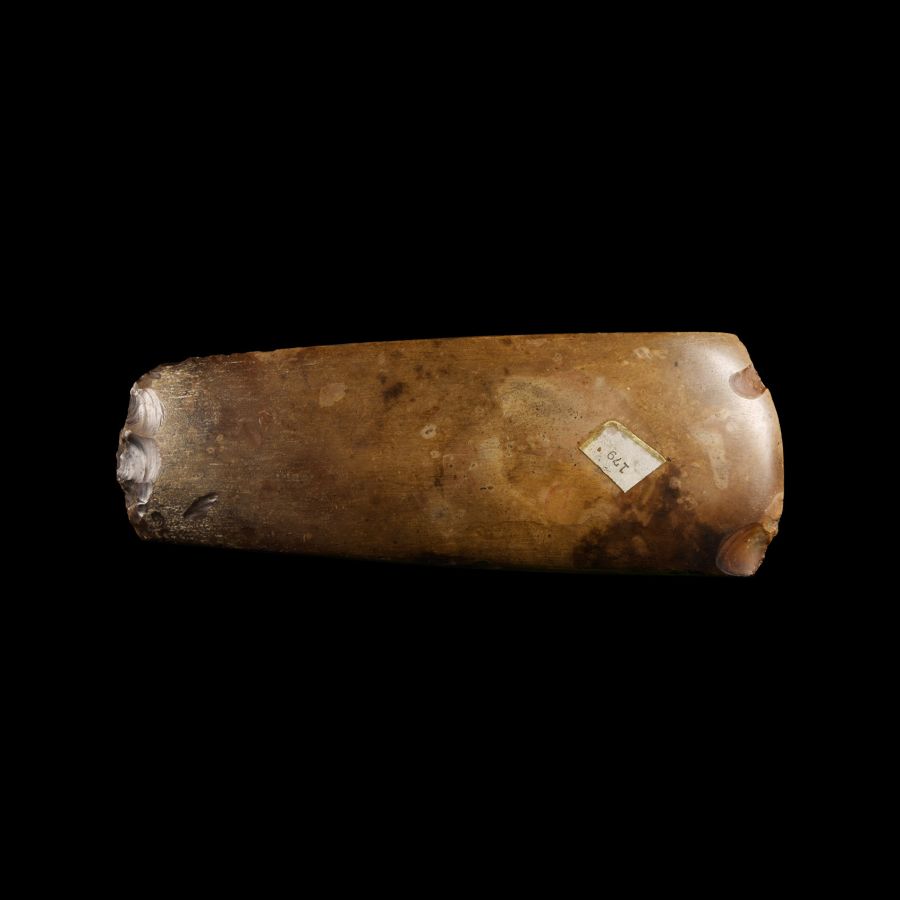
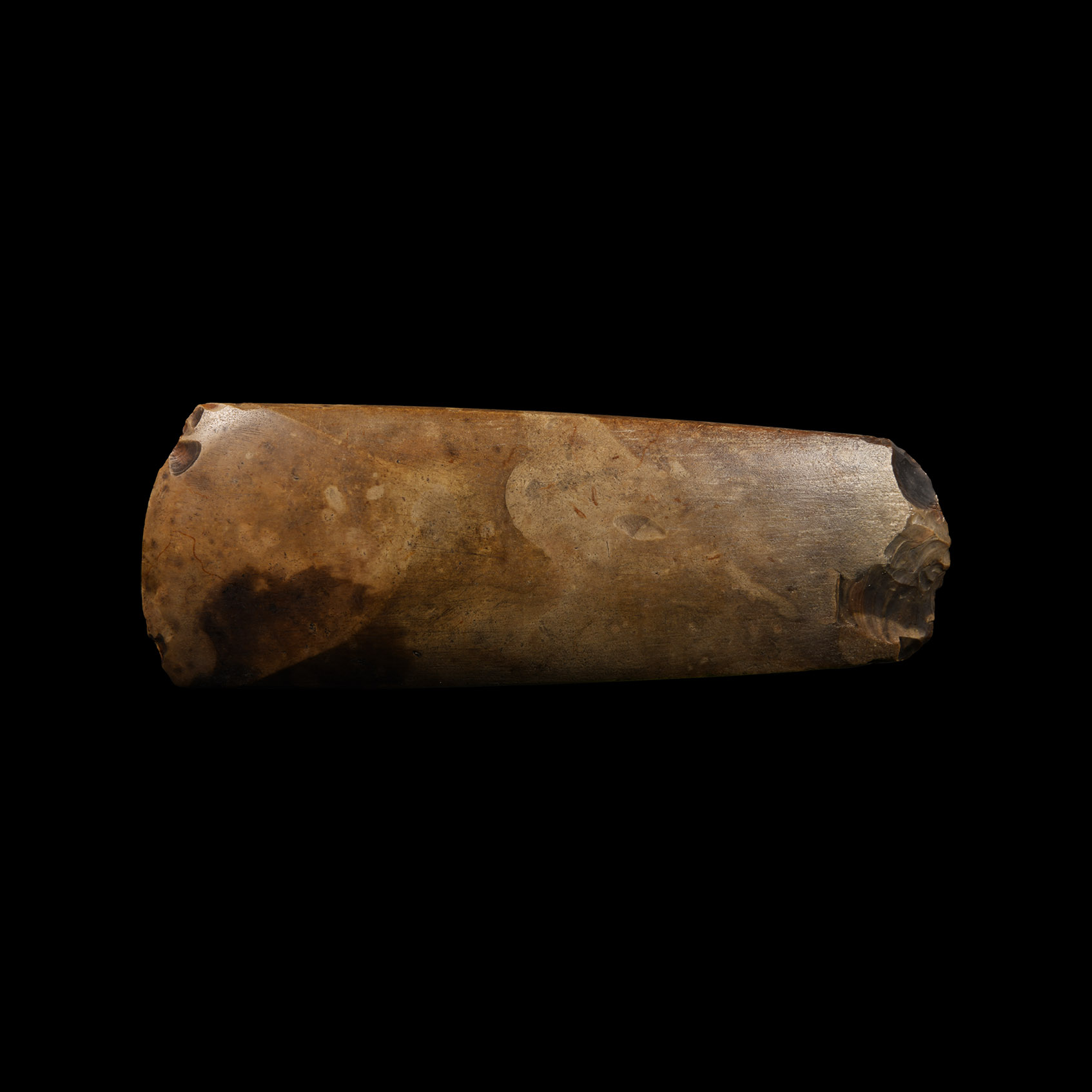
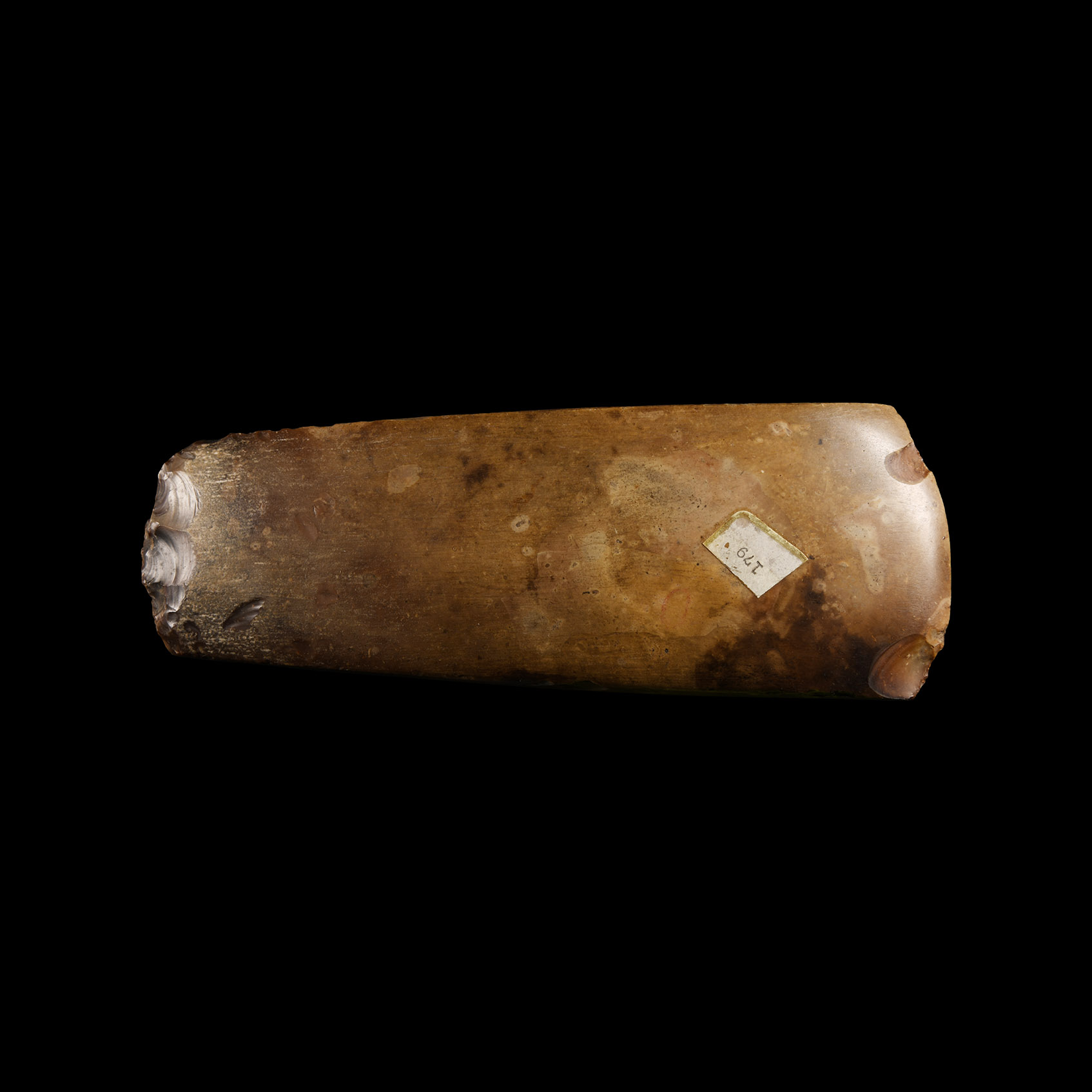
Large Danish Stone Age Neolithic Thin Butted Axe
DOLMAN PERIOD, 3700-3300 B.C.
8 in. (758 grams, 20.5 cm).
A very finely polished axe with square edges and convex cutting edge, in yellow-brown flint with evidence of use as a 'strike-a-light' to the butt; with old collector label '179' to face.
ProvenanceAcquired 1990s.
French private collection before 2020.
Property of a Sussex, UK, teacher.
Cf. Glob, P. V., Danske Oldsager II, Yngre Stenalder, Copenhagen, 1952, no.228, for type.
CONDITIONTimeLine Auctions follows a vetting process to ensure the authenticity and legality of all items, reinforcing our commitment to integrity and responsible trading. Each antiquity, antique, and coin lot undergoes thorough examination by a vetting committee of at least ten external specialists, professional trade association members, scientists, and archaeologists: Our Vetting Process
AUCTIONS:
TimeLine is a leading auction house specialising in antiquities, ancient art, collectables, natural history, coins, medals, and books. Our auctions offer museums, collectors, historians, and enthusiasts the opportunity to acquire unique and historically significant pieces.
-
Stone Age Knapped Flint Knife Blade Collection
Neolithic Period, 8th-5th millennium B.P.Sold for (Inc. bp): £40
A group of fifty knapped flint blades. 156 grams total, 24-55 mm
Fine condition.
UK gallery, acquired in the 2000s. Property of an English gentleman. -
Stone Age Boat-Shaped Axehead
Neolithic Period, circa 3rd millennium B.C.Sold for (Inc. bp): £208
A stone axehead with central cylindrical socket, oblong butt and tapering cheeks with vertical convex cutting edge. 334 grams, 11.4 cm
Acquired 1971-1972. From the collection of the vendor's father. Property of a London, UK, collector. -
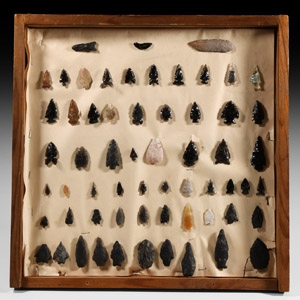
Stone Age Arrowhead Display
3rd millennium B.C. and laterSold for (Inc. bp): £468
A collection of 61 stone arrowheads of various types, sizes, material and dates, many possibly of central American origin; mounted on a paper backing within a wooden display frame. 1.3 kg total, 38 x 38.5 cm including case
Previously in a private collection since the 1960s. Property of a Sussex, UK, teacher.
