
Loading, please wait...
LOT 0050
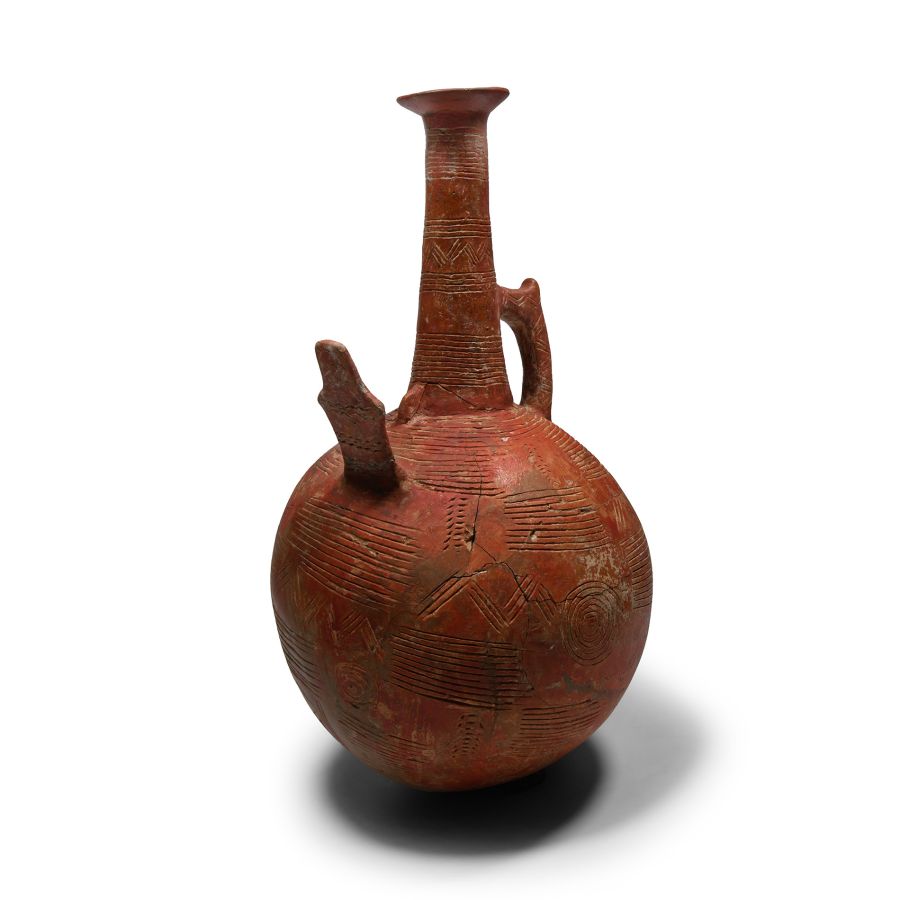
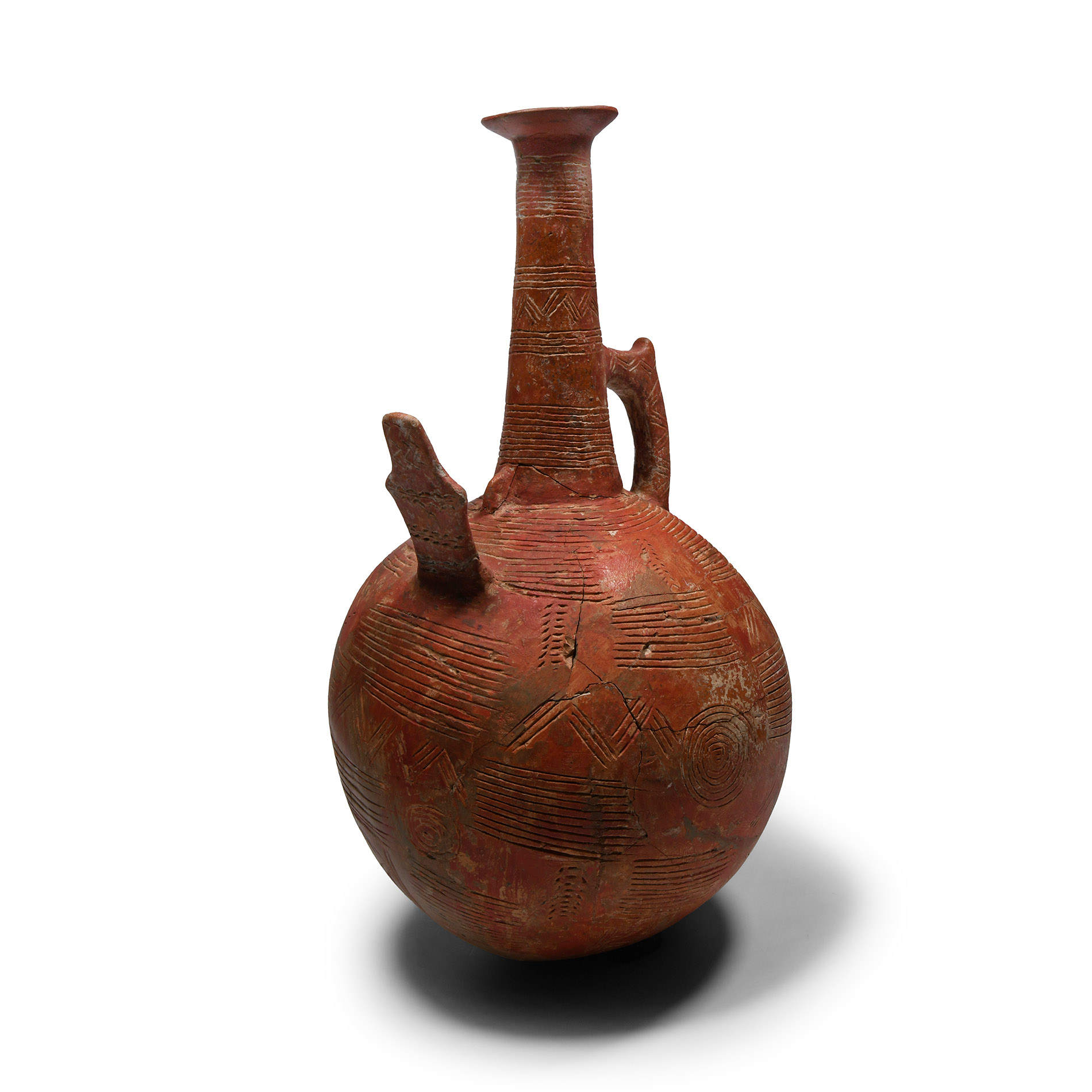
Large Cypriot Red Burnished Ware Jug with Plank Idol
EARLY BRONZE AGE III-MIDDLE BRONZE AGE I, CIRCA 2100-1850 B.C.
14 1/2 in. (1.68 kg, 37 cm high).
With globular body, tall tubular neck and flared mouth; circumferential bands of hatching, concentric rings and chevrons; loop handle with thumb-pad spur to the reverse of the neck; plank idol to the shoulder with anthropomorphic detailing to both faces; supplied with a display stand; repaired. [No Reserve]
ProvenanceFrom a collection acquired on the UK art market from various auction houses and collections mostly before 2000.
From an important Cambridgeshire estate; thence by descent.
Cf. Morris, D., The Art of Ancient Cyprus, Oxford, 1985, pls.44-45, for the type.
FootnotesRed polished ware was the dominant ware of the Early Bronze Age. The clay was covered with red slip which was then burnished to produce a high point. The Philia red polished ware was characterised by incised multi-zigzag and open herring-bone bands, and also batches of multi-lines on base.
CONDITIONTimeLine Auctions follows a vetting process to ensure the authenticity and legality of all items, reinforcing our commitment to integrity and responsible trading. Each antiquity, antique, and coin lot undergoes thorough examination by a vetting committee of at least ten external specialists, professional trade association members, scientists, and archaeologists: Our Vetting Process
AUCTIONS:
TimeLine is a leading auction house specialising in antiquities, ancient art, collectables, natural history, coins, medals, and books. Our auctions offer museums, collectors, historians, and enthusiasts the opportunity to acquire unique and historically significant pieces.
-
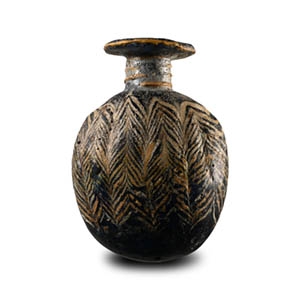
Greek Core-Formed Glass Aryballos
4th-3rd century B.C.Sold for (Inc. bp): £910
Lentoid in plan with rounded base, ribbed sides, short neck with flared and folded rim; dragged and marbered trails to the body, applied trails to the neck. 67.7 grams, 80 mm
Ex Mr Maurice Mathieu, acquired from Asfar, Lebanon, 1960s. with Art Auction, Rémy Le Fur & Associés, 10 October 2012, no.130. Private collection, London. -
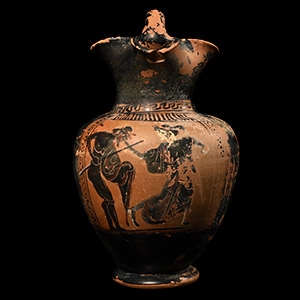
Greek Black-Figure Oinochoe
6th century B.C.Sold for (Inc. bp): £1,690
With pinched three-lobe mouth and strap handle; threads and details highlighted in purple; decorated scene in square metope comprising two dancing figures, one male and the other female, probably symposiasts; the male naked, holding a stick in his right hand and with the other arm carrying his coat; the female, a hetaera, dancing and running to the right, wearing a long chiton and a coat. 423 grams, 20.3 cm
Acquired in the mid 1980s-1990s. From the family collection of Mr S.A., Switzerland, thence by descent. Private collection since the late 1990s. This lot has been checked against the Interpol Database of stolen works of art and is accompanied by a search certificate number no.12089-218152. -
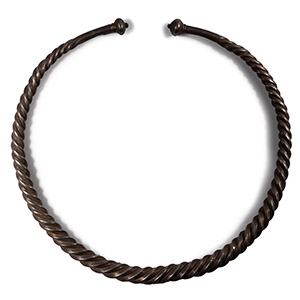
Thracian Twisted Silver Torc
4th-2nd century B.C.Estimate: £2,000 - 3,000 (‡+bp*)
Opening Bid: £1,000
Formed of twisted rods, each square in section, tapering towards the hammered finials, each with an onion-knop terminal. 157 grams, 15 cm
with Christie's, New York, 5 June 1998, no.209. Private collection, Europe. Accompanied by an academic report by Dr Raffaele D'Amato. Accompanied by copies of the relevant Christie's catalogue pages. This lot has been checked against the Interpol Database of stolen works of art and is accompanied by a search certificate number no.12381-226710.
