
Loading, please wait...
LOT 0051
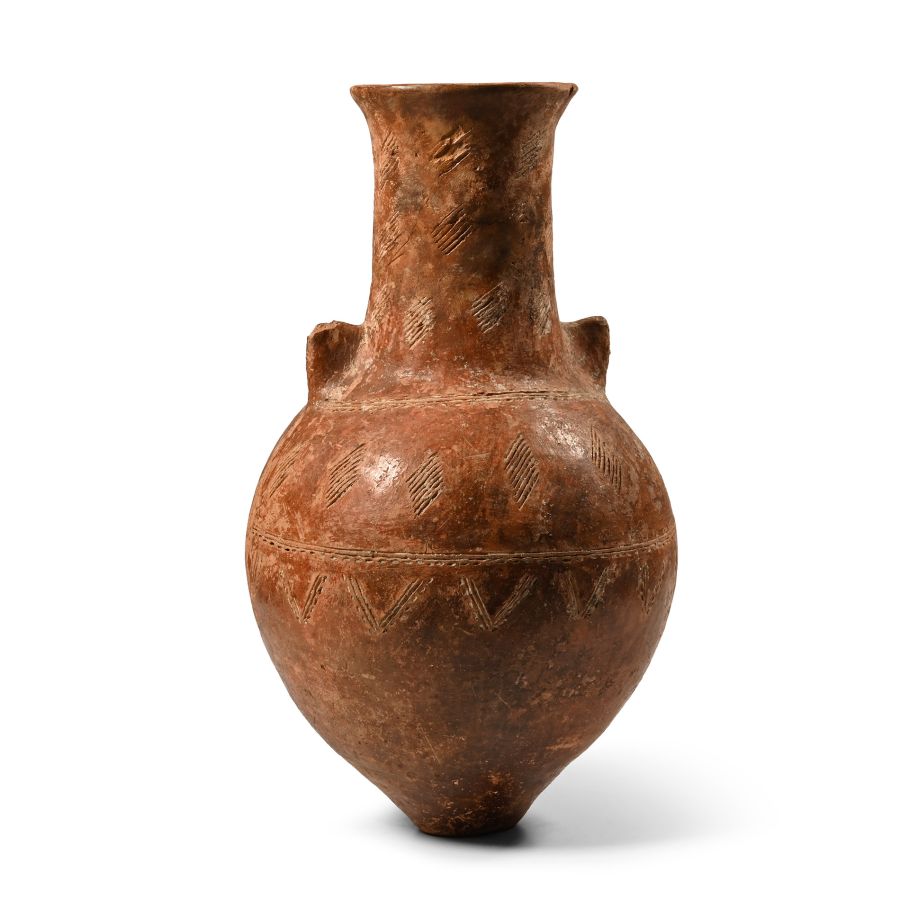
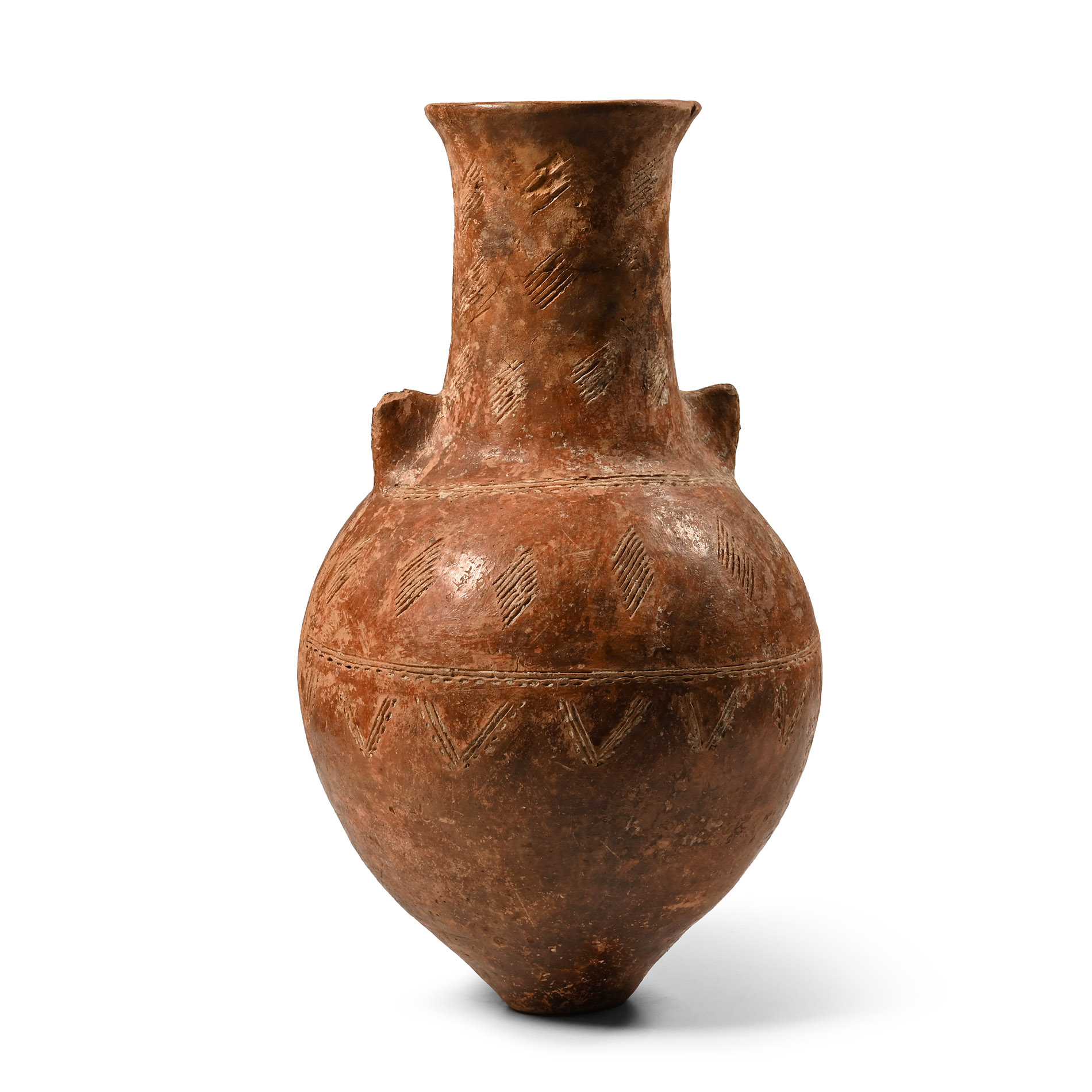
Large Cypriot Red Burnished Ware Amphora-Shaped Vessel
EARLY BRONZE AGE, 2300-2150 B.C.
12 in. (1.7 kg, 30.5 cm).
The ovoid body and trumpet-shaped neck decorated with bands of hatched lozenges, shoulder with encircling broken bands above and below with inverted chevrons beneath; lateral flange handles. [No Reserve]
ProvenanceFrom a collection acquired on the UK art market from various auction houses and collections mostly before 2000.
From an important Cambridgeshire estate; thence by descent.
TimeLine Auctions follows a vetting process to ensure the authenticity and legality of all items, reinforcing our commitment to integrity and responsible trading. Each antiquity, antique, and coin lot undergoes thorough examination by a vetting committee of at least ten external specialists, professional trade association members, scientists, and archaeologists: Our Vetting Process
AUCTIONS:
TimeLine is a leading auction house specialising in antiquities, ancient art, collectables, natural history, coins, medals, and books. Our auctions offer museums, collectors, historians, and enthusiasts the opportunity to acquire unique and historically significant pieces.
-
.jpg)
Hellenistic Gold Mount Pair
2nd-1st century B.C.Sold for (Inc. bp): £163
Comprising discoid cells each with shallow sidewall and flange rim, granule collar with radiating clusters. 1.62 grams total, 19 mm each
From a late Japanese specialist collector, 1970-2000s. -
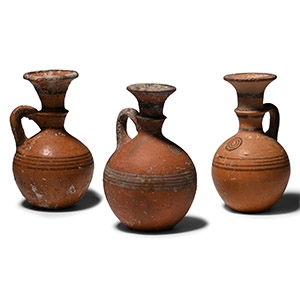
Cypriot Terracotta Miniature Jug Group
800-600 B.C.Sold for (Inc. bp): £520
Comprising three vessels with bulbous bodies decorated with painted circumferential bands and concentric circles; single loop handle to the rear; tall neck with a central ridge and painted bands, wide trumpet mouth. 174 grams total, 83-87 mm
Acquired in 2000. Private collection, Europe. -
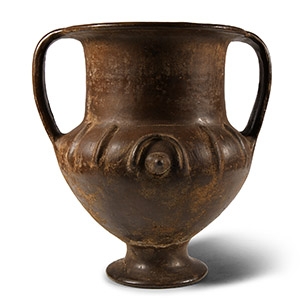
Villanovan Impasto Handled Amphora
Circa 750-700 B.C.Sold for (Inc. bp): £494
Comprising a wide foot beneath a squat stem with a bulbous body, a sloped shoulder beneath a columnar neck, a flared rim, and a pair of applied strap handles arching between rim and shoulder; body decorated with eight slender, vertical ribs surrounded by pecked stippling; two lateral bosses beneath a parabolic arch; surface burnished throughout; foot restored. 1.29 kg, 22.1 cm
From the collection of Eleanor Hilowitz (1913-2007), an abstract expressionist painter and sculptor, New York, USA; acquired between 1956 and 1975. Acquired by Randall Hixenbaugh of Hixenbaugh Ancient Art, New York, USA, in 2007. with Artemis Gallery, 26 September 2019, lot 54 (US$2,000-3,000). Property of a South Australian private collector, with collection reference 20.03. Accompanied by detailed collector's catalogue pages including description and photograph.
