
Loading, please wait...
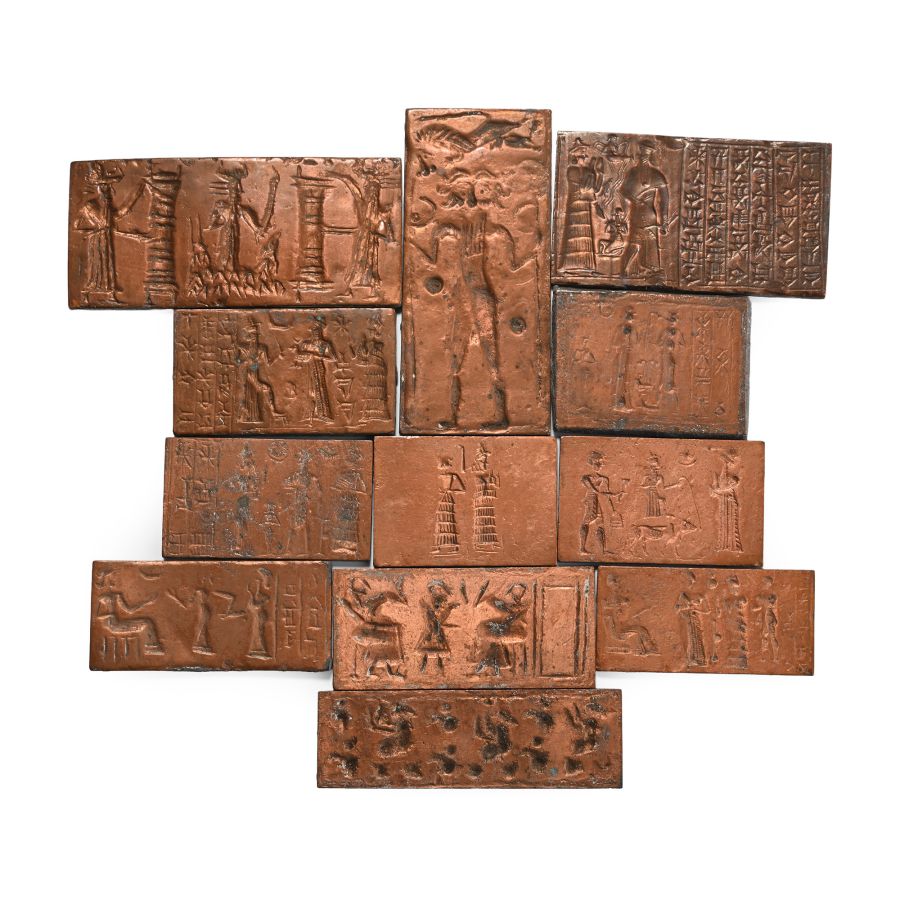
LOT 2018
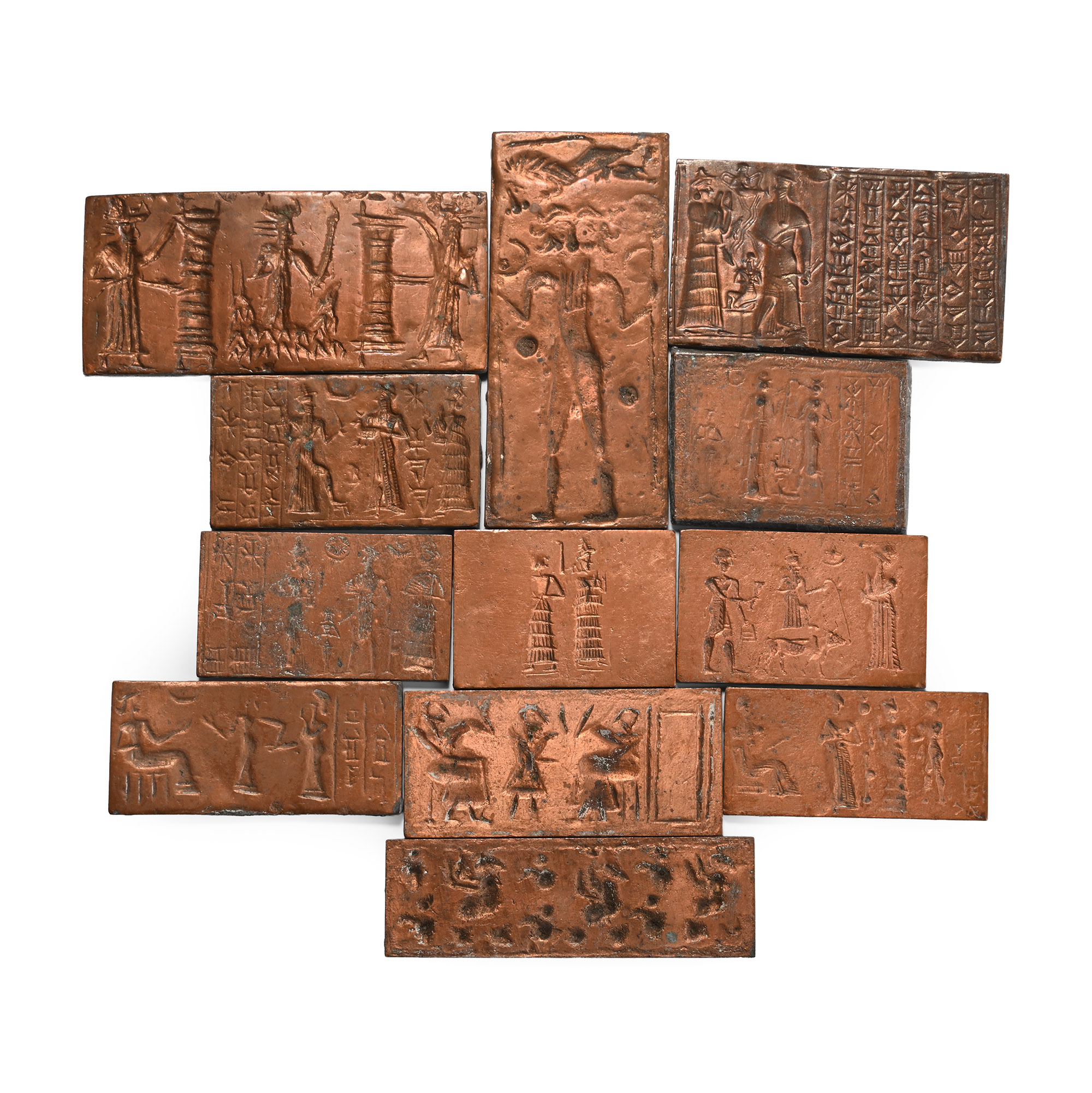
Large Cylinder Seal Electrotype Group
LATE 19TH-EARLY 20TH CENTURY A.D.
1 1/2 - 2 7/8 in. (433 grams total, 39-72 mm).
Of academic interest, copper-coated lead seal impressions including presentation scenes, court scenes, bull-headed man in a frame; some with cuneiform text. [12, No Reserve]
ProvenancePossibly made by the British Museum.
From a West Country, UK, private collection.
TimeLine Auctions follows a vetting process to ensure the authenticity and legality of all items, reinforcing our commitment to integrity and responsible trading. Each antiquity, antique, and coin lot undergoes thorough examination by a vetting committee of at least ten external specialists, professional trade association members, scientists, and archaeologists: Our Vetting Process
AUCTIONS:
TimeLine is a leading auction house specialising in antiquities, ancient art, collectables, natural history, coins, medals, and books. Our auctions offer museums, collectors, historians, and enthusiasts the opportunity to acquire unique and historically significant pieces.
-
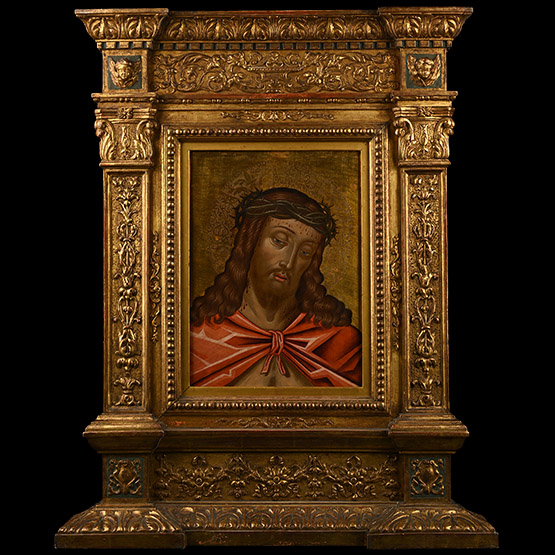
Large Veneto-Cretan Icon of 'Ecce Homo' in Gilt Wooden Frame
17th century A.D.Sold for (Inc. bp): £10,400
With the portrait of Christ in tempera and gold on wood panel, with mounting slots to reverse; gessoed board with gilt surface, reserved portrait bust in three-quarters view on a textured field with tendrils, scrolls and other ornament within the nimbus; Christ shown with shoulder-length auburn hair and short beard wearing a scarlet cloak fastened at the centre of the neck and crown of thorns on his head; facial expression of suffering and pain, with drops of blood on his forehead; the icon set in a carved gilded wooden frame with a beaded edge, flanked by two small pillars with rich vegetal decoration and angel heads in the upper part. 7.75 kg, 79 x 58.5 cm
Acquired on the European art market. Private collection, London, UK. Accompanied by an academic report by Dr Raffaele D’Amato. This lot has been checked against the Interpol Database of stolen works of art and is accompanied by search certificate number no.13061-249291.
This splendid specimen represents Christ as ‘Ecce Homo’, when Pilate, in the desperate attempt to save Jesus from Crucifixion, presented him to the people of Jerusalem dressed in a red cloak and wearing the crown of thorns (John, XIX,5). -
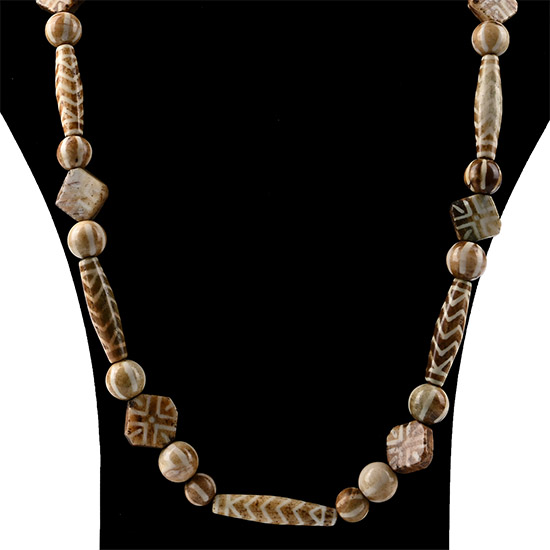
Hymalayan Hill Tribe 'Pumtek' Bead Necklace
20th century A.D.Sold for (Inc. bp): £59
Including fusiform, spherical and other types with etched patterns on petrified wood. 118 grams, 84.5 cm
Private collection, UK. -
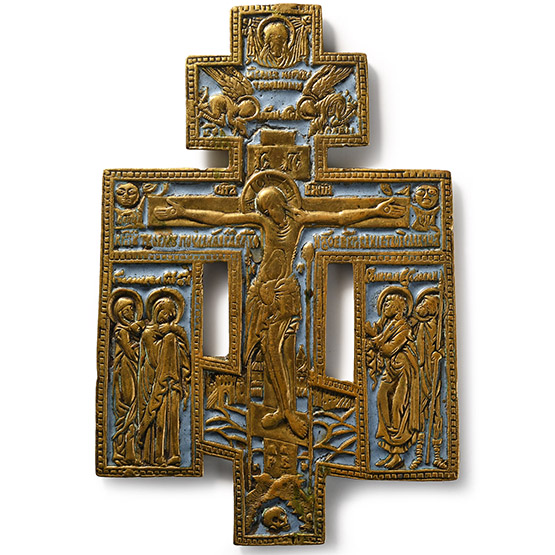
Russian Orthodox Enamelled Bronze Travel Icon with Christ Flanked by Mary, Maria, and Saint John
19th century A.D.Estimate: £250 - 350 (+bp*)
Opening Bid: £135
Representing the Saviour on the cross, the titulum inscribed with the letters 'ΙC ΧΡ' (Jesus Christ); Cyrillic inscriptions over the sun (Солнце) and the moon (Луна), flanking Jesus and above the heads of the figures: Mary of Magdala (Мария Магдала), the Mother of God ('ΜΡ ϴΥ'), Saint John the Theologian (Св Иоанн) and Saint Longinus (Св Лонгин); on the background the symbols of the Passion (sponge on reed, spear and a skull set on stones marking the site as Golgotha, twisted cords or wire, skan) and the city of Jerusalem; on the upper part of the cross the Archangels Michael and Gabriel with cloth-covered hands, the Mandylion above them. 270 grams, 16.6 cm
Acquired from Chris Martin-Zakheim, Iconastas, 5 Piccadilly Arcade, London SW1. From the private collection of a West London, UK, gentleman, formed since the early 2000s.
Orthodox travel icons were used by the faithful to carry a sacred representation with them during their journeys, offering protection and a constant spiritual connection. The icon features meticulous craftsmanship with intricate details of the Passion and Death of the Saviour, according to the Byzantine iconography.
