
Loading, please wait...
LOT 1524
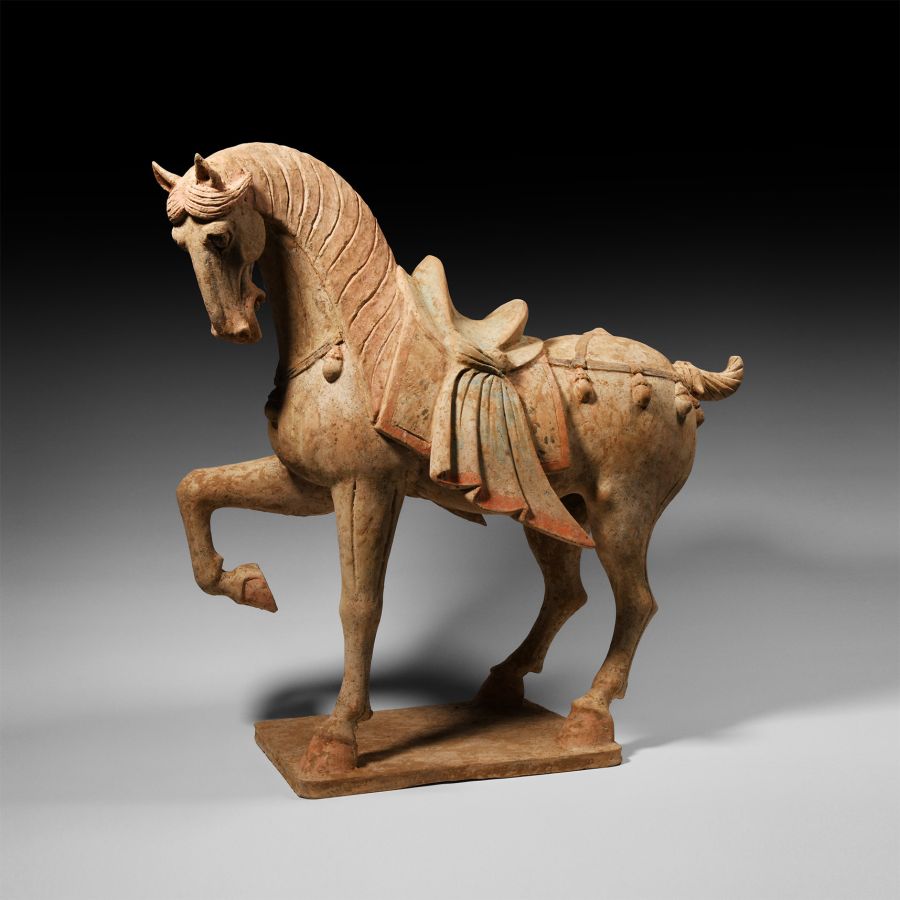
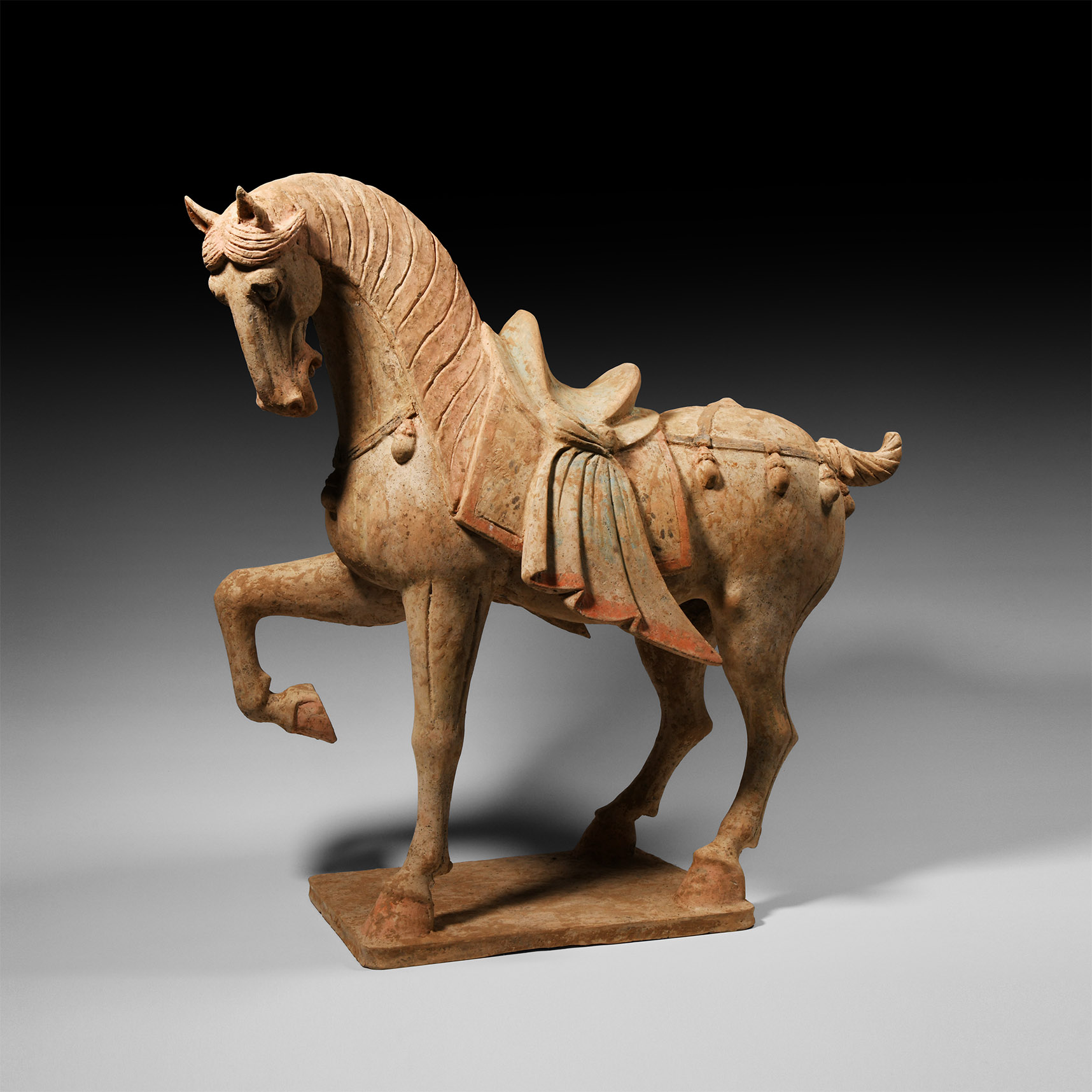
Large Chinese Tang Prancing Horse
TANG DYNASTY, 618-907 A.D.
22 7/8 in. (13.2 kg, 58 cm wide).
A large ceramic horse modelled prancing on an integral rectangular base; naturalistic execution with head facing downwards and slightly to the animal's left, expressive eyes and mouth held open exposing two rows of teeth; ornately caparisoned, saddle and saddle cloth with delicate foliate motif; remains of polychrome pigmentation.
ProvenanceAcquired 1970-1990s.
From a private West Country collection.
Accompanied by an original thermoluminescence analysis report no.C122g62 from Oxford Authentication.
This lot has been checked against the Interpol Database of stolen works of art and is accompanied by search certificate no.11519-195277.
Cf. The Metropolitan Museum, accession number 67.62.2, for similar.
CONDITIONTimeLine Auctions follows a vetting process to ensure the authenticity and legality of all items, reinforcing our commitment to integrity and responsible trading. Each antiquity, antique, and coin lot undergoes thorough examination by a vetting committee of at least ten external specialists, professional trade association members, scientists, and archaeologists: Our Vetting Process
AUCTIONS:
TimeLine is a leading auction house specialising in antiquities, ancient art, collectables, natural history, coins, medals, and books. Our auctions offer museums, collectors, historians, and enthusiasts the opportunity to acquire unique and historically significant pieces.
LOT 1524
Large Chinese Tang Prancing Horse
Estimate £3,000 - 4,000€3,480 - 4,640 (for guidance only)$4,050 - 5,400 (for guidance only)
-
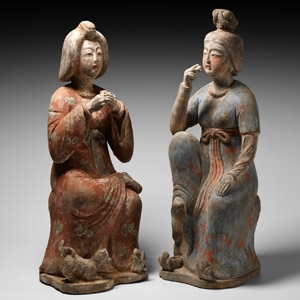
Chinese Tang Pair of Courtly Ladies
Tang Dynasty, 618-907 A.D.Estimate: £3,000 - 4,000 (+bp*)
Opening Bid: £1,600
A group of two hollow-formed ceramic figures: one a courtly lady sitting on a stool with right foot crossed over the left knee, holding a small goblet in both hands, cat beside her right foot; the other sitting with right foot raised to the seat of the stool, grape held between the fingers being raised to the mouth. 2.98 kg total, 29-30.2 cm high
Ex Hong Kong collection. London Mayfair gallery, UK. Accompanied by thermoluminescence analysis report no.C122k22, for one of the figures. This lot has been checked against the Interpol Database of stolen works of art and is accompanied by search certificate number no.11698-199215. -
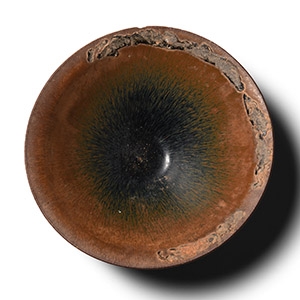
Chinese Jianyao Hare's Fur Tea Bowl
Song Dynasty, 960-1279 A.D.Estimate: £800 - 1,000 (+bp*)
Opening Bid: £400
A hare's fur tea bowl of conical form, with everted rim and discoid foot, the interior decorated with a lustrous blackish glaze shot through with streaks of blue-silver 'hare's fur' markings, the exterior displaying russet and silver markings, the brown ware visible towards the foot. 173 grams, 13 cm wide
Acquired in Hong Kong, 1980s. UK private collection. -
.jpg)
Chinese Glazed Bowl
12th-13th century A.D.Sold for (Inc. bp): £39
A Tang or Song period style provincial conical ceramic bowl. 140 grams, 11.5 cm diameter
Fine condition.
Acquired 1990s. West Country, UK, collection.
