
Loading, please wait...
LOT 1646
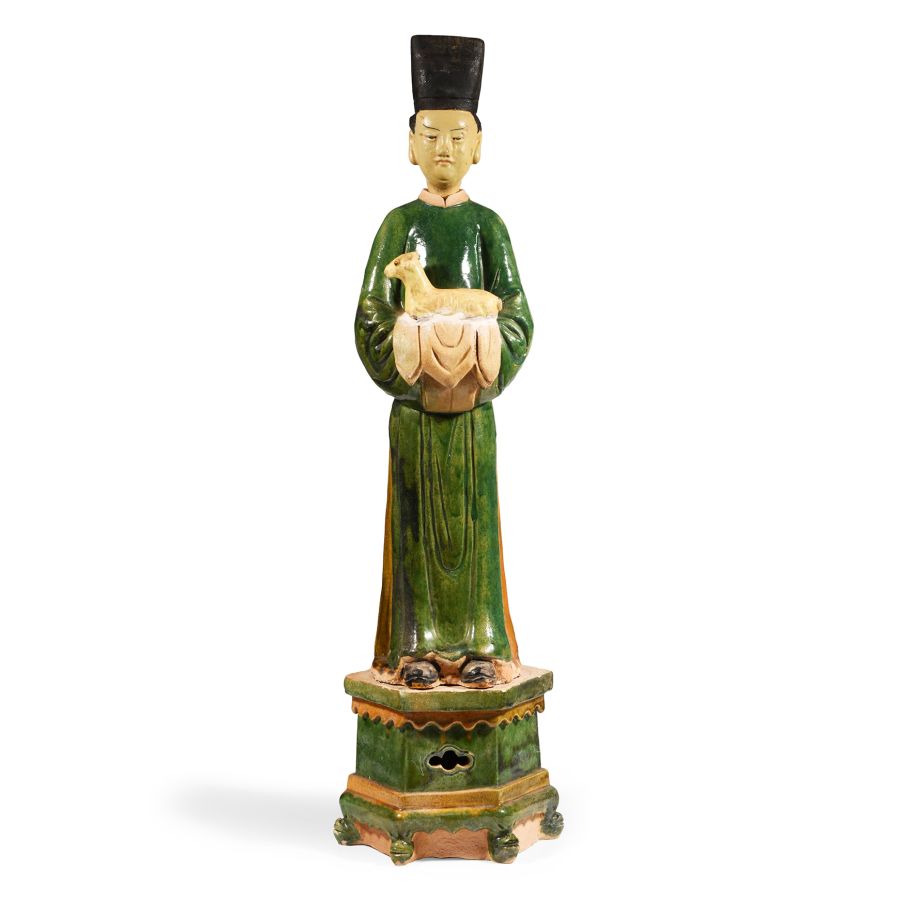
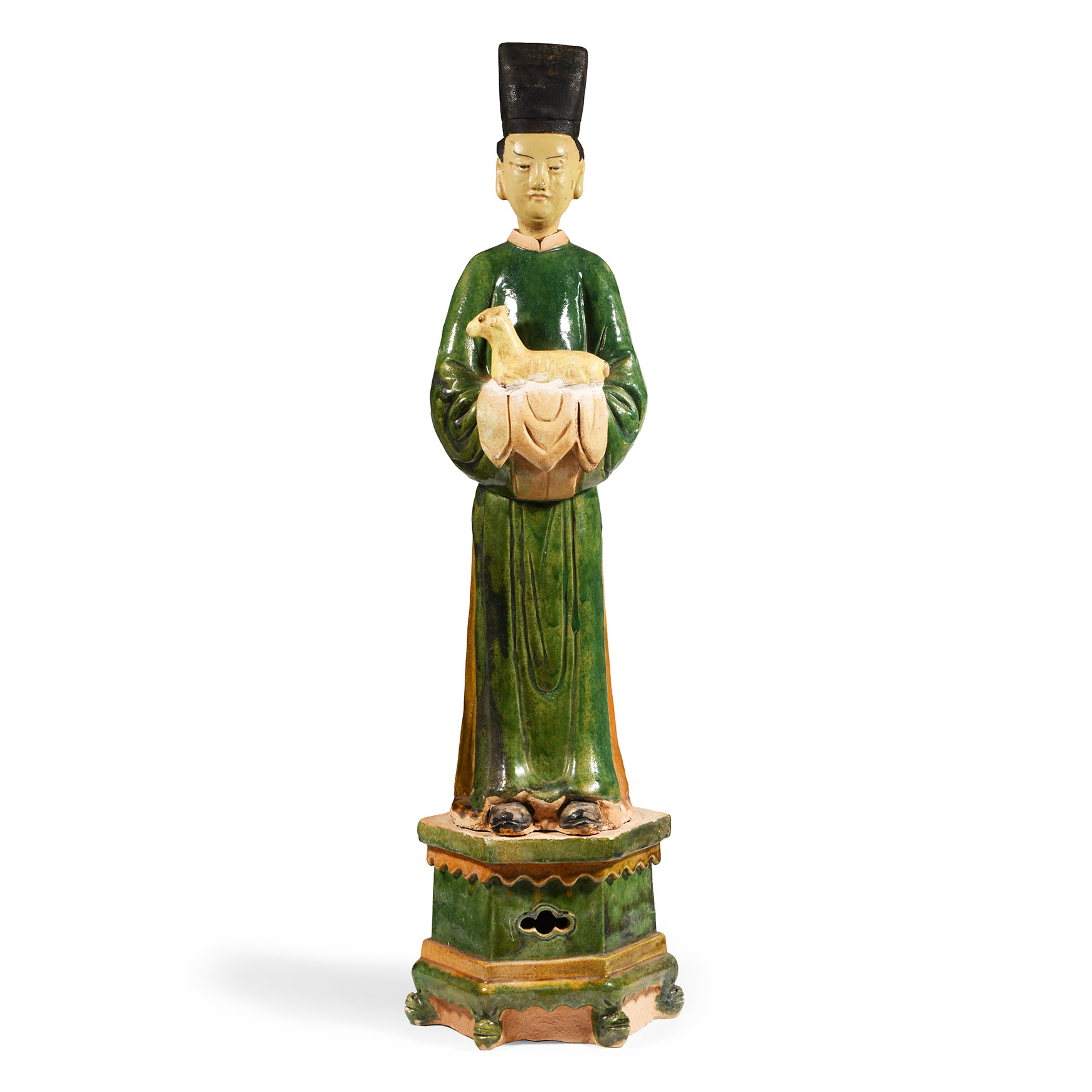
Large Chinese Ming Green-Glazed Terracotta Figure
MING DYNASTY, 1368-1644 A.D. OR LATER
30 1/2 in. (7.8 kg, 77.5 cm high).
Ceramic figure comprising three elements: part-glazed head with painted detailing, tall square-section cap; green- and olive-glazed body in floor-length robe, hands raised to the chest holding a lamb; hexagonal-section hollow-formed base.
ProvenanceEx West Country collection, Bath, 1990s.
CONDITIONTimeLine Auctions follows a vetting process to ensure the authenticity and legality of all items, reinforcing our commitment to integrity and responsible trading. Each antiquity, antique, and coin lot undergoes thorough examination by a vetting committee of at least ten external specialists, professional trade association members, scientists, and archaeologists: Our Vetting Process
AUCTIONS:
TimeLine is a leading auction house specialising in antiquities, ancient art, collectables, natural history, coins, medals, and books. Our auctions offer museums, collectors, historians, and enthusiasts the opportunity to acquire unique and historically significant pieces.
-
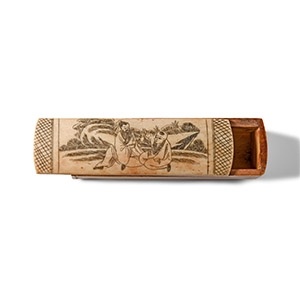
Chinese Carved Bone Snuff Box
19th-early 20th century A.D.Sold for (Inc. bp): £13
Comprising a rectangular box with sliding lid engraved with a tea drinking scene; both men seated on the ground and the younger man pouring tea to the older man holding a cup in his right hand. 83 grams, 98 mm
London, UK gallery, 1971-early 2000s. -
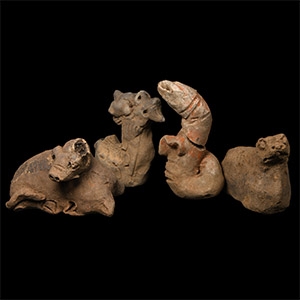
Chinese Han Ceramic Animal Figure Group
Han Dynasty, 206 B.C.-220 A.D. or laterSold for (Inc. bp): £169
Including a dragon, cattle and coiled serpent, all with stylised anatomical detailing. 1 kg total, 9.5-12 cm
Acquired 1990s-early 2000s. East Anglian private collection. -
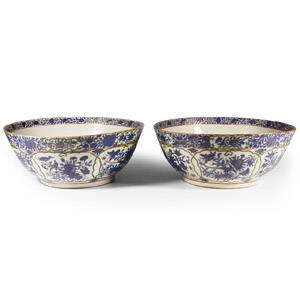
Large Chinese Decorated Porcelain Bowl Pair
Early 19th century A.D.Estimate: £800 - 1,000 (+bp*)
Opening Bid: £400
Decorated with a polychrome frieze of scalloped cartouches displaying birds perched amongst fruiting vegetation, insects in the field, repeated around the neck with flowering plants alternating with cartouches depicting birds amongst vegetation; interior with gilt roundel to base with floral spray, three plants around. 4.9 kg total, 35.5 cm wide
From a UK private collection. This lot has been checked against the Interpol Database of stolen works of art and is accompanied by search certificate number no.11717-198623.
