
Loading, please wait...
LOT 2128
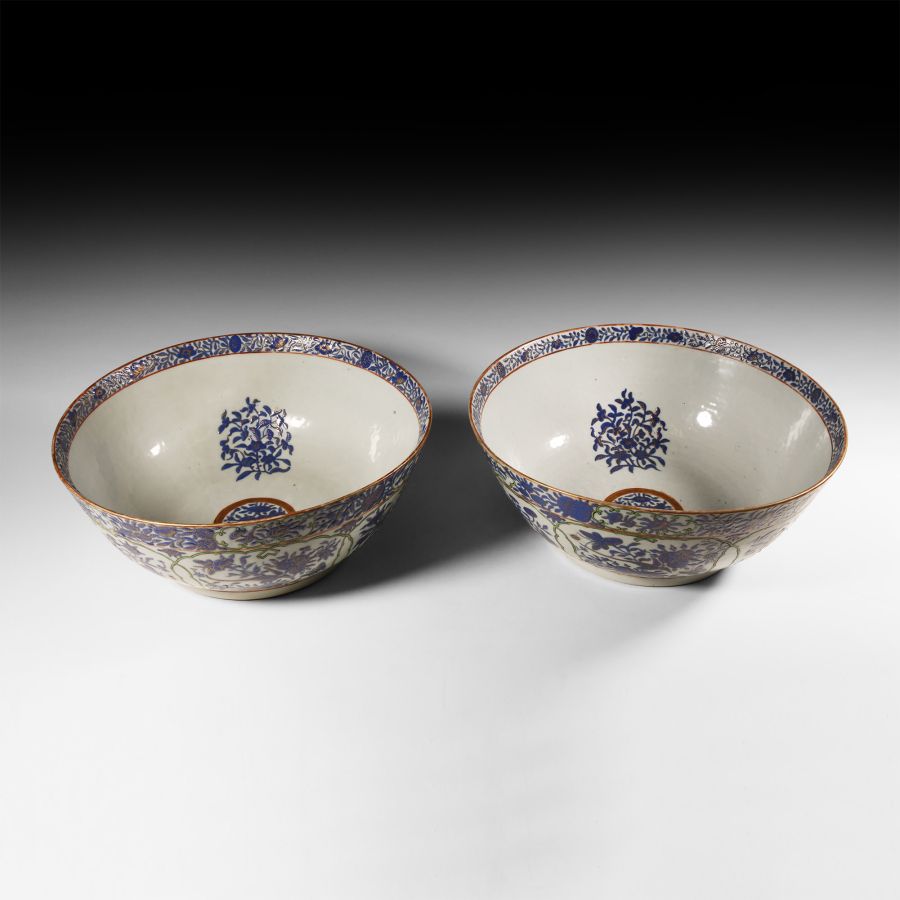
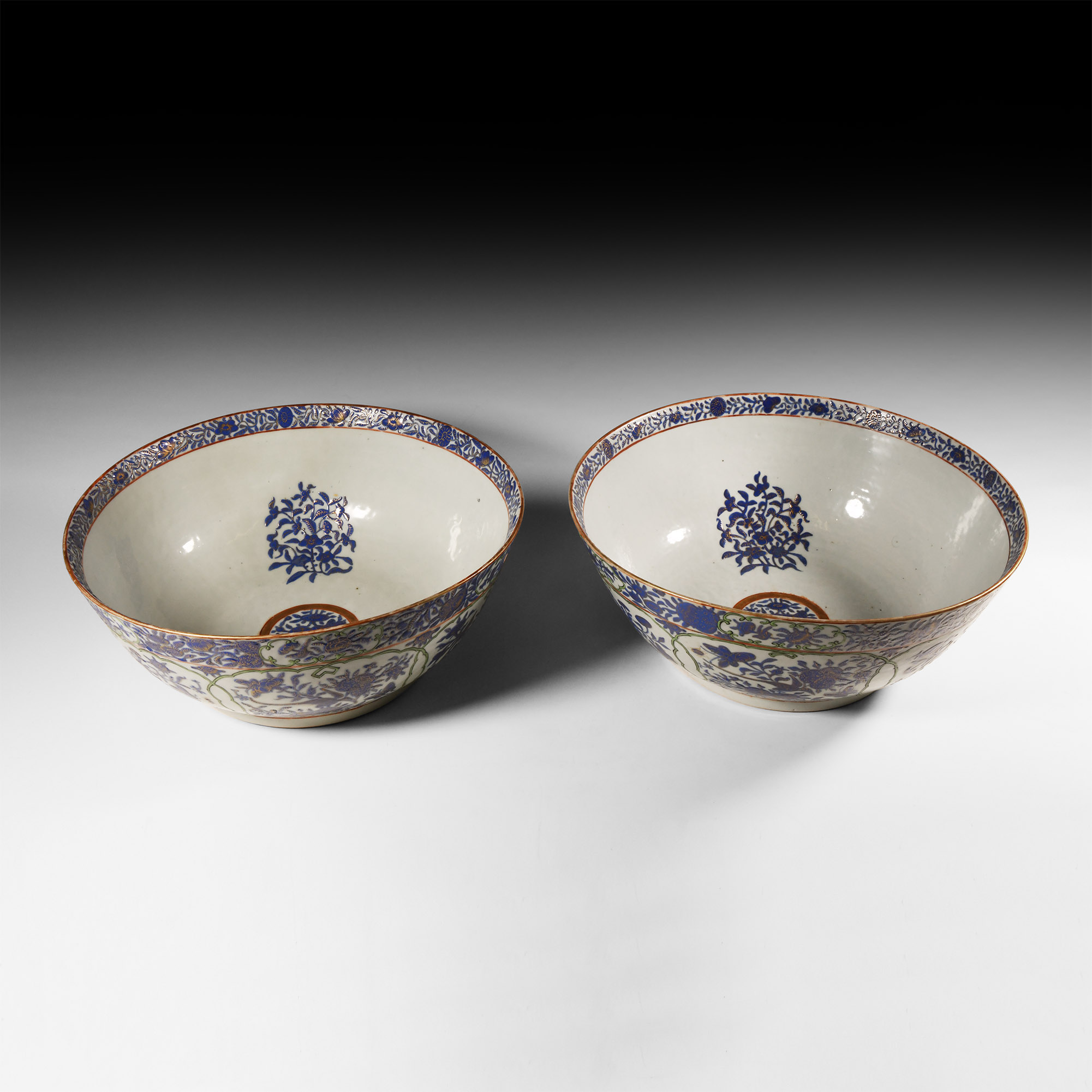
Large Chinese Decorated Porcelain Bowl Pair
EARLY 19TH CENTURY A.D.
14 in. (4.9 kg total, 35.5 cm wide).
Decorated with a polychrome frieze of scalloped cartouches displaying birds perched amongst fruiting vegetation, insects in the field, repeated around the neck with flowering plants alternating with cartouches depicting birds amongst vegetation; interior with gilt roundel to base with floral spray, three plants around. [2]
ProvenanceFrom a UK private collection.
This lot has been checked against the Interpol Database of stolen works of art and is accompanied by search certificate number no.11717-198623.
TimeLine Auctions follows a vetting process to ensure the authenticity and legality of all items, reinforcing our commitment to integrity and responsible trading. Each antiquity, antique, and coin lot undergoes thorough examination by a vetting committee of at least ten external specialists, professional trade association members, scientists, and archaeologists: Our Vetting Process
AUCTIONS:
TimeLine is a leading auction house specialising in antiquities, ancient art, collectables, natural history, coins, medals, and books. Our auctions offer museums, collectors, historians, and enthusiasts the opportunity to acquire unique and historically significant pieces.
LOT 2128
Large Chinese Decorated Porcelain Bowl Pair
Estimate £1,500 - 2,000€1,740 - 2,320 (for guidance only)$2,030 - 2,700 (for guidance only)
-
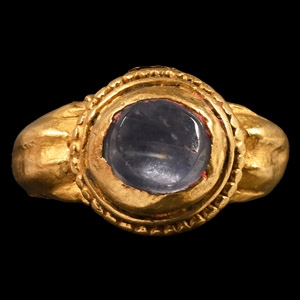
South East Asian Gold and Topaz Ring
17th century A.D.Sold for (Inc. bp): £1,560
With expanding ribbed shoulders, domed bezel with beaded wire collar, inset irregular pale blue topaz cabochon. 5.22 grams, 23.59 mm overall, 15.44 mm internal diameter (approximate size British J, USA 4 3/4, Europe 8.69, Japan 8)
From a late Japanese specialist collector, 1970-2000s. -
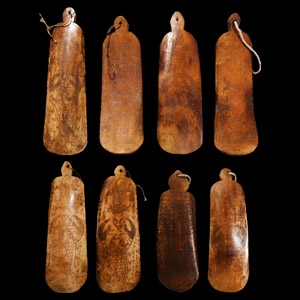
Northern Sumatran Bone Calendar Collection
Batak, mid 20th century A.D.Sold for (Inc. bp): £85
Group of eight plaques, seven with incised calendrical grid to the obverse and aquatic scene to the reverse with a lobster and reptile and symbols in the field; one with scene of two millipedes to the obverse and reptiles to the reverse. 287 grams total, 12.2-14 cm
Ex central London gallery. -
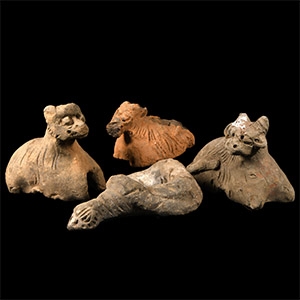
Chinese Han Ceramic Animal Figure Group
Han Dynasty, 206 B.C.-220 A.D. or laterSold for (Inc. bp): £117
Including couchant cattle animals with stylised anatomical and coat detailing and a possible serpent. 850 grams total, 10-12 cm
Acquired 1990s-early 2000s. East Anglian private collection.
This animal group is typical of mingqi or 'spirit utensils' that accompanied the deceased of the Eastern Han Dynasty (25–220 A.D.). Miniatures of farm animals, utilitarian objects, and entertainers were believed to provide nourishment and amusement for the soul of the tomb occupant.
