
Loading, please wait...
LOT 1258
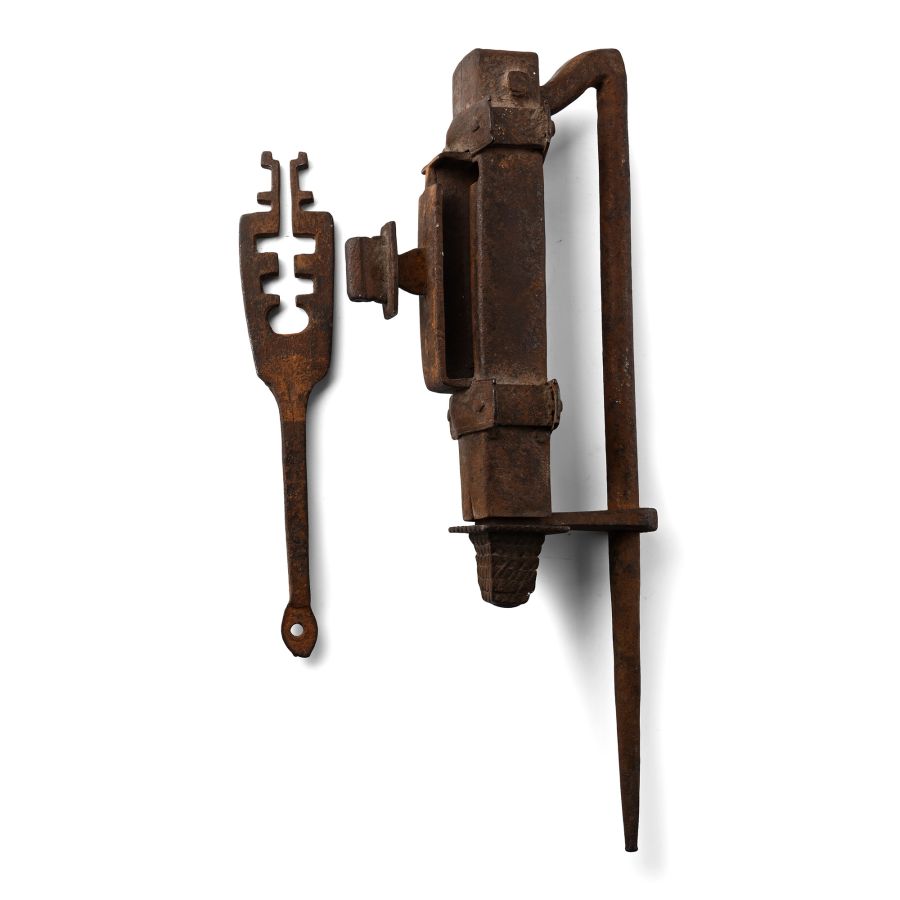
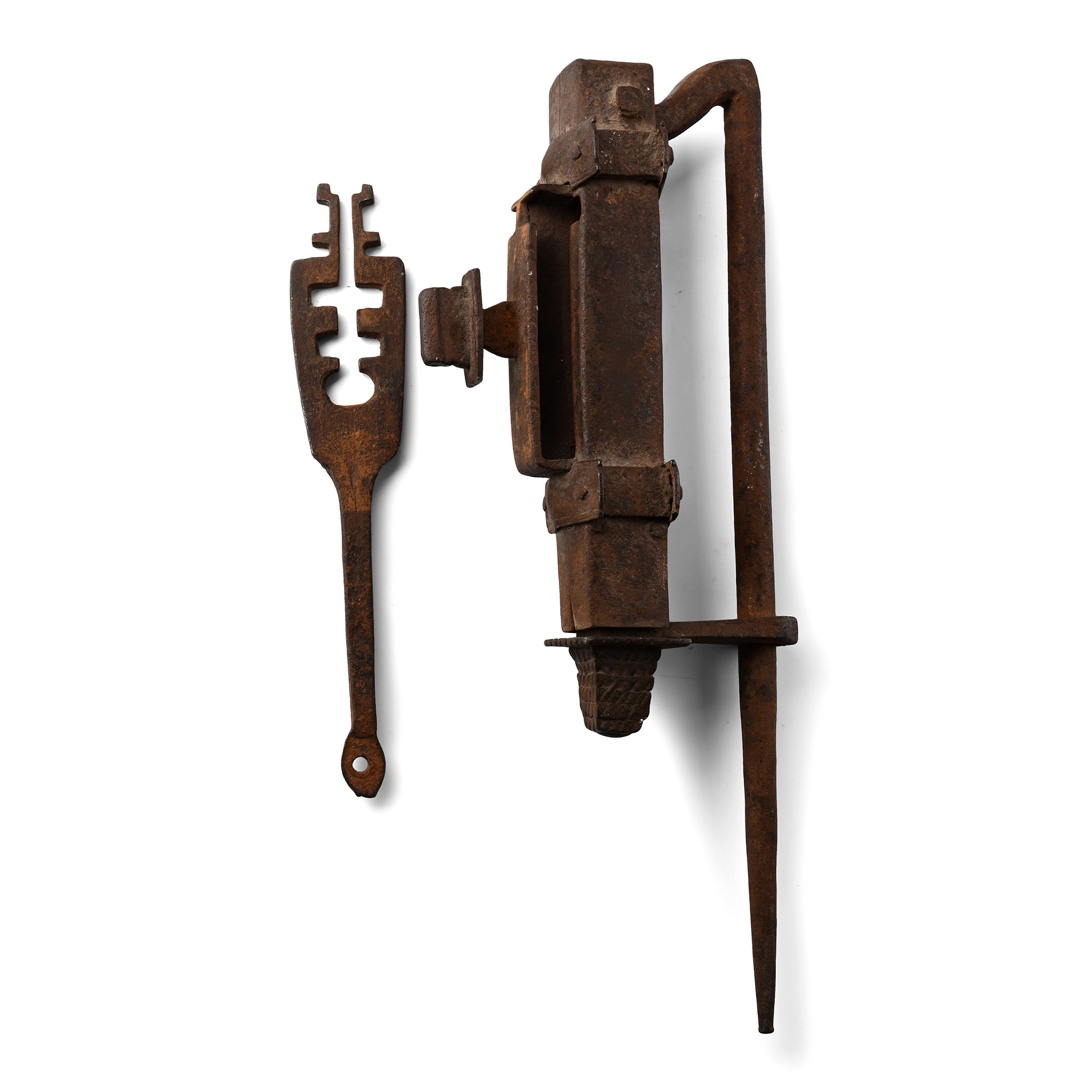
Large Ceremonial Iron Lock and Key
LATE 19TH-EARLY 20TH CENTURY A.D.
8 1/2 - 13 1/4 in. (1.42 kg, 21.7-33.5 cm).
Substantial lock with spiked locking bar and mechanism; separate flat-section key with voided shank.
ProvenancePrivate collection, UK.
CONDITIONTimeLine Auctions follows a vetting process to ensure the authenticity and legality of all items, reinforcing our commitment to integrity and responsible trading. Each antiquity, antique, and coin lot undergoes thorough examination by a vetting committee of at least ten external specialists, professional trade association members, scientists, and archaeologists: Our Vetting Process
AUCTIONS:
TimeLine is a leading auction house specialising in antiquities, ancient art, collectables, natural history, coins, medals, and books. Our auctions offer museums, collectors, historians, and enthusiasts the opportunity to acquire unique and historically significant pieces.
LOT 1258
Large Ceremonial Iron Lock and Key
Estimate £120 - 170€140 - 200 (for guidance only)$160 - 230 (for guidance only)
-
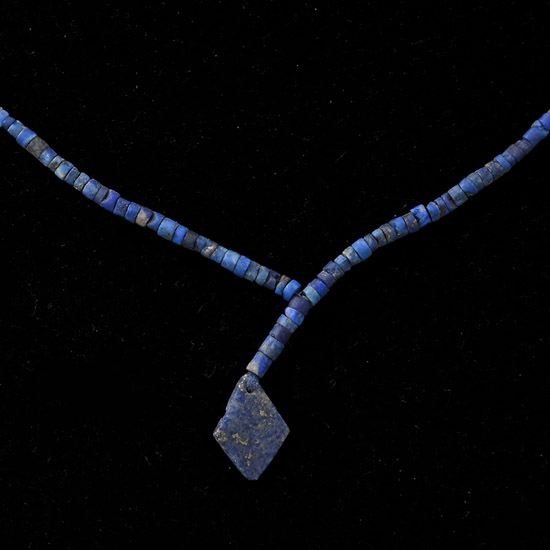
Western Asiatic Lapis Lazuli Bead Necklace String
Circa 1st millennium B.C.Sold for (Inc. bp): £117
Composed of small cylindrical beads with a lozenge-shaped pendant, restrung. 3.19 grams, 31 cm
Ex late Japanese gentleman's private collection, 1970-2010. Accompanied by a previously illustrated catalogue card with provenance. -
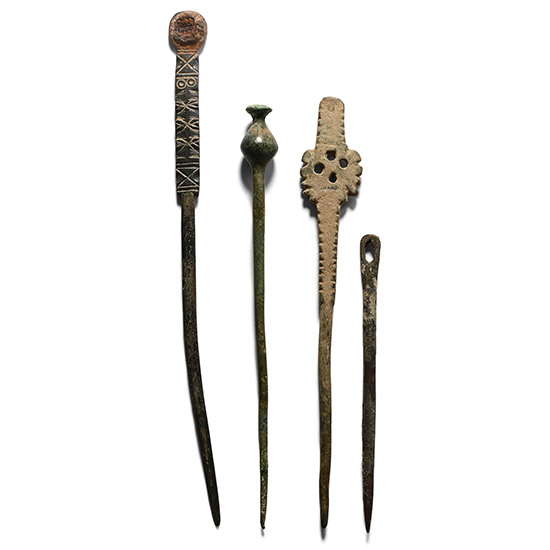
Western Asiatic Bronze Pin Collection
1st millennium B.C.Sold for (Inc. bp): £91
Including thistle-head finial, openwork cross finial and other types. 64.5 grams total, 9.4-16.4 cm
From the private collection of Mr Brian Edwards, New Malden, Surrey, UK, formed from the late 1970s-early 1980s; thence by descent. -
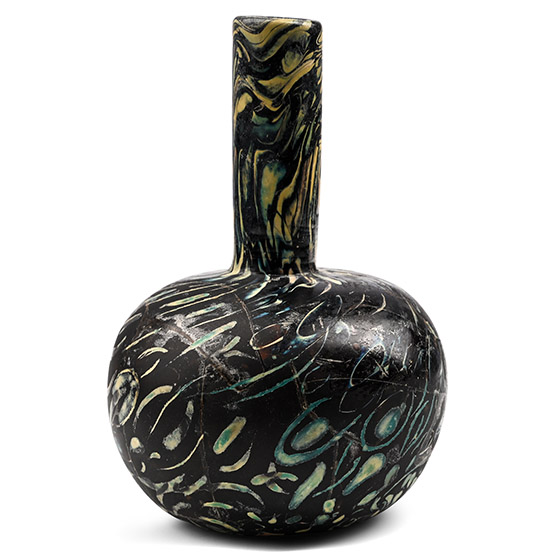
Fatimid Opaque Mosaic Glass Vase
Circa 10th-12th century A.D. or laterEstimate: £600 - 800 (+bp*)
Opening Bid: £320
Comprising a squat, rounded body and tubular neck with a rounded rim, pontil base; dragged swirl motifs in white on a navy blue field; repaired. 242 grams, 15.5 cm
Private collection, UK.
These vessels were core-formed in opaque green manganese, with a flattened spherical body and tall, thin, tapering neck. Such categories of vessels were especially produced in the region of the Fayoum.
