
Loading, please wait...
LOT 2000
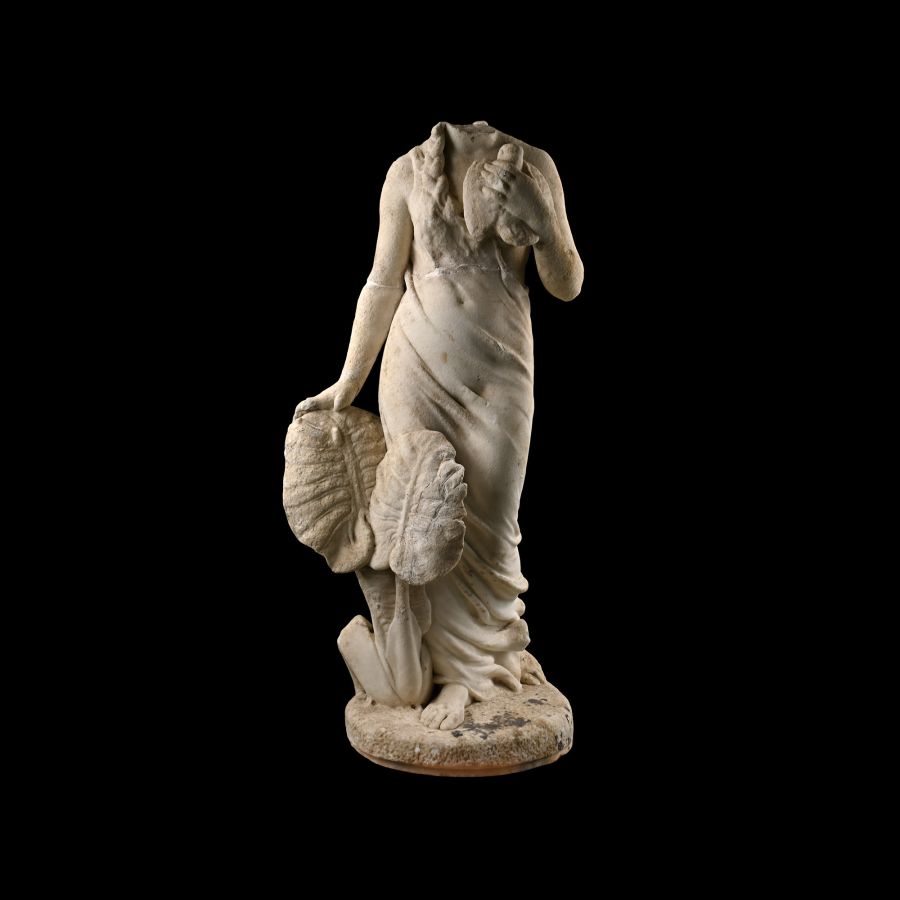
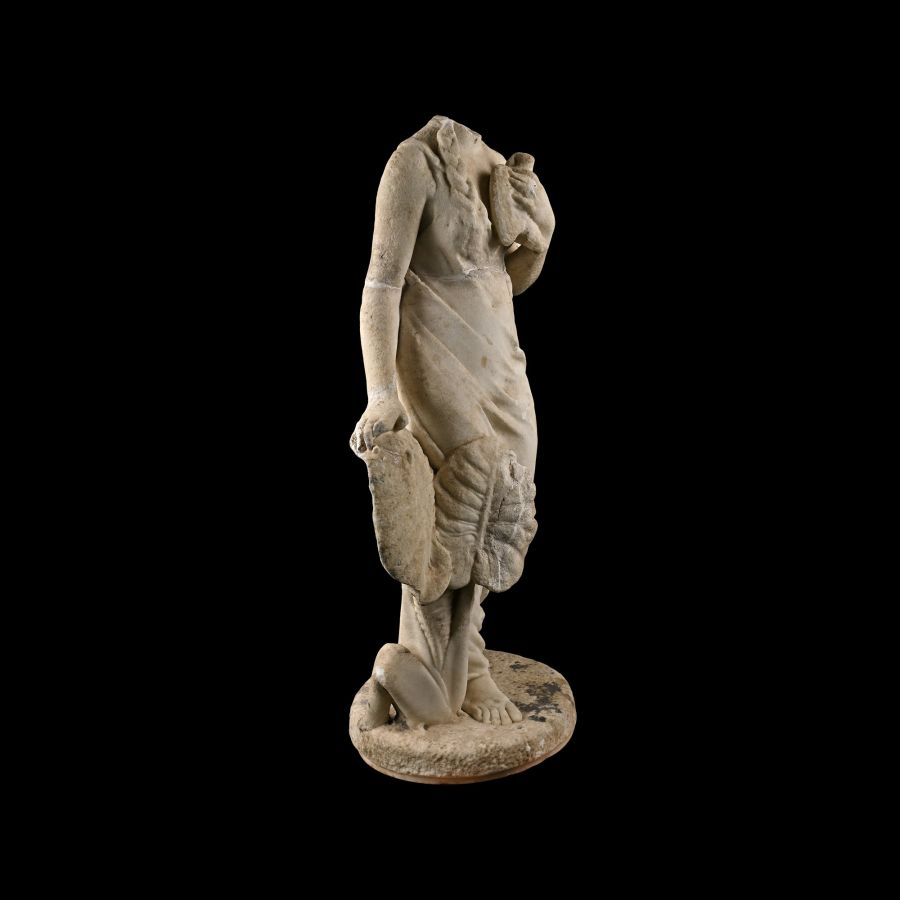
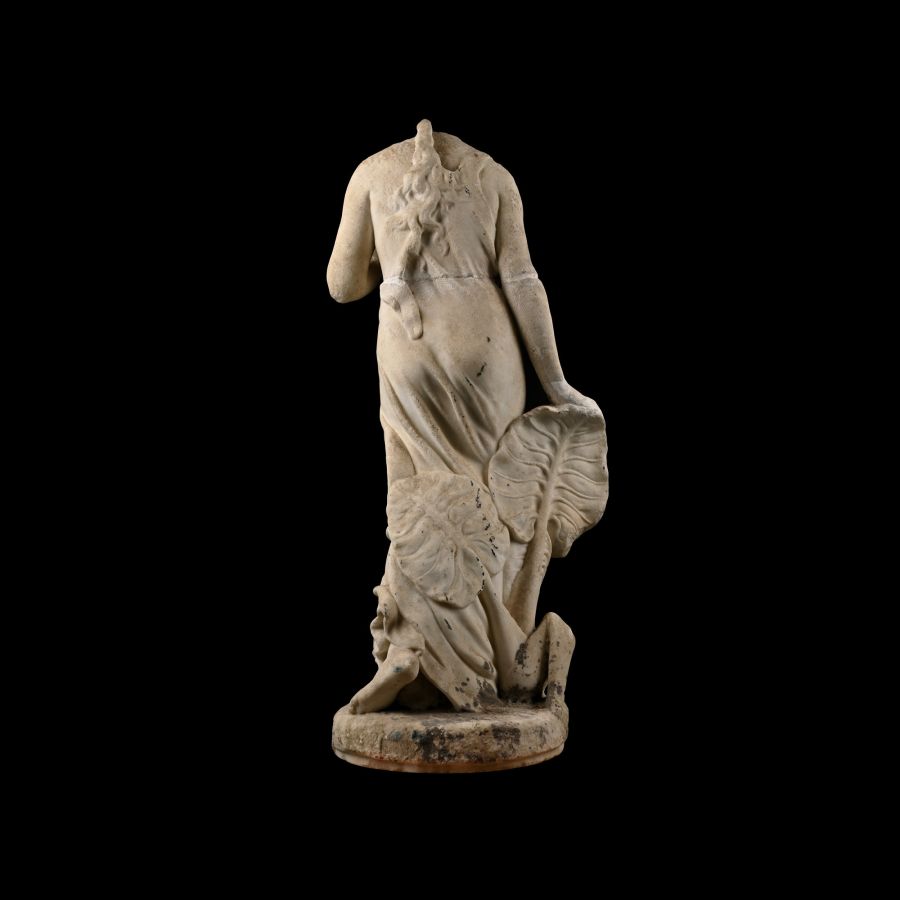
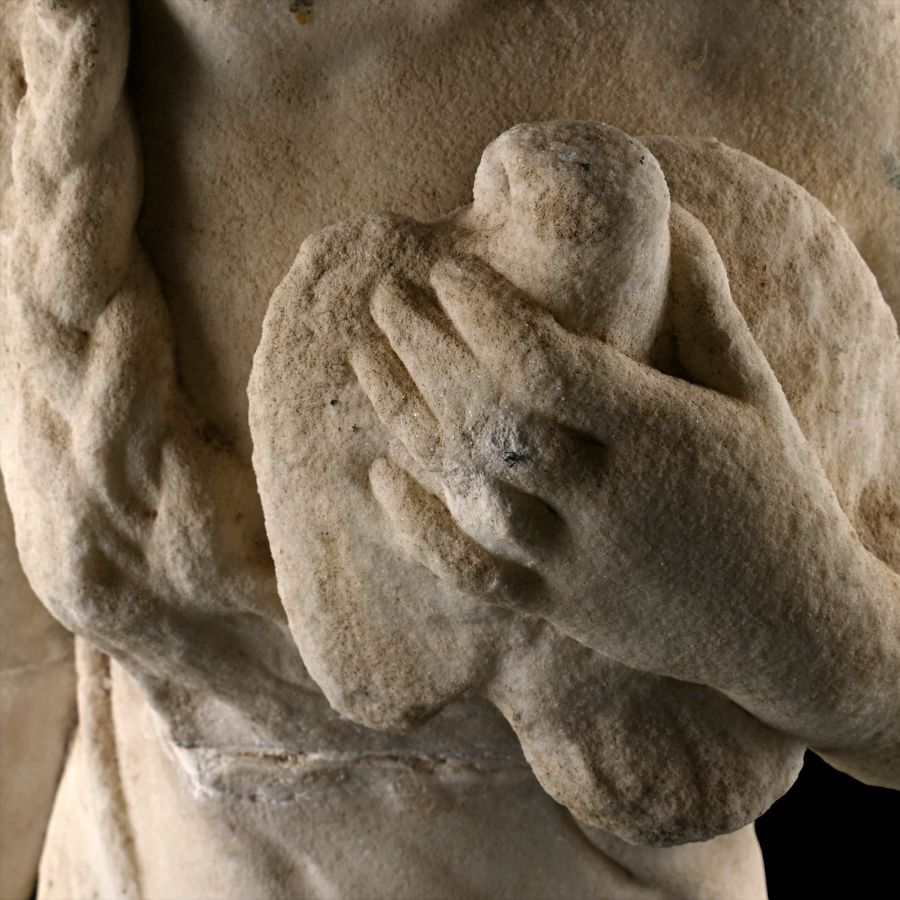
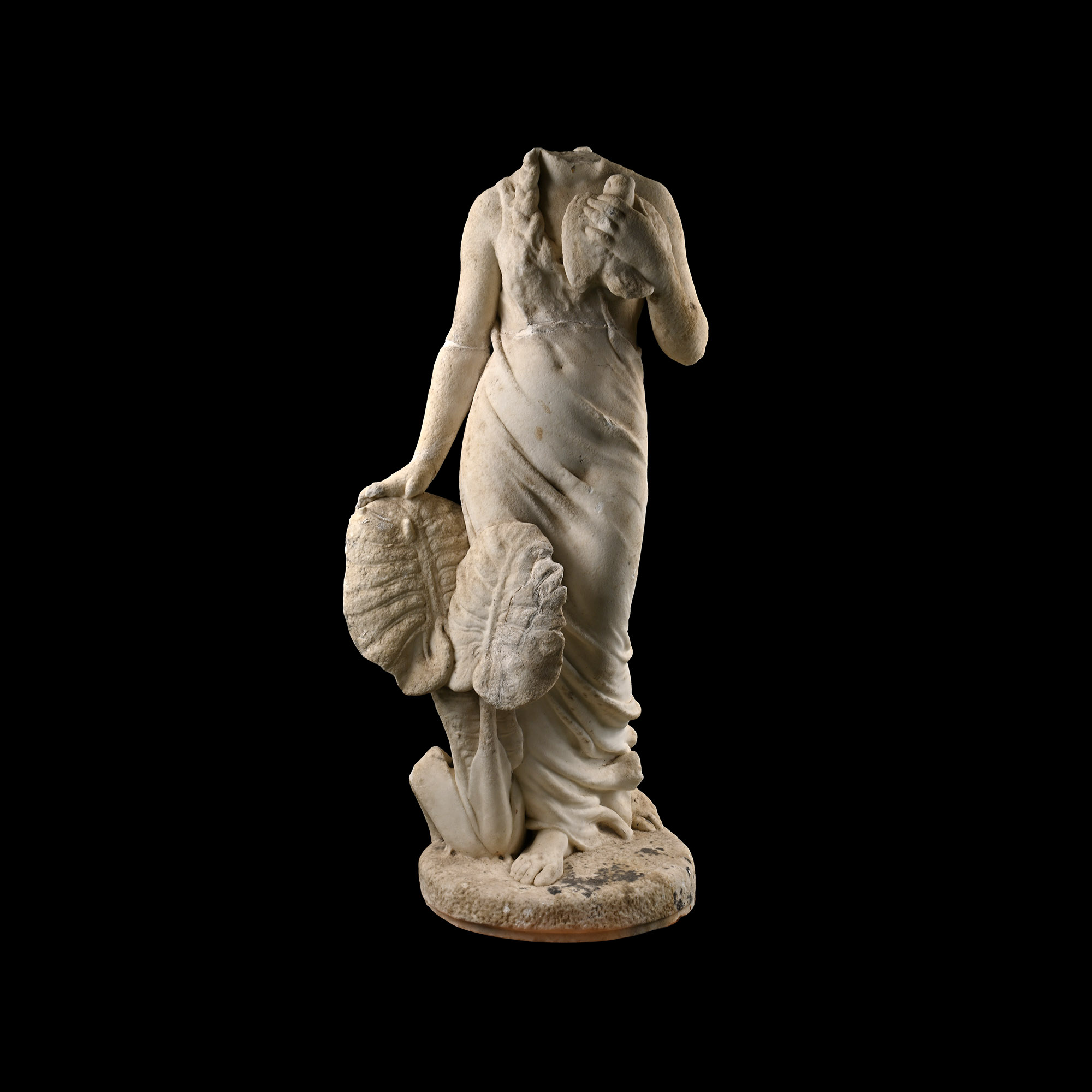
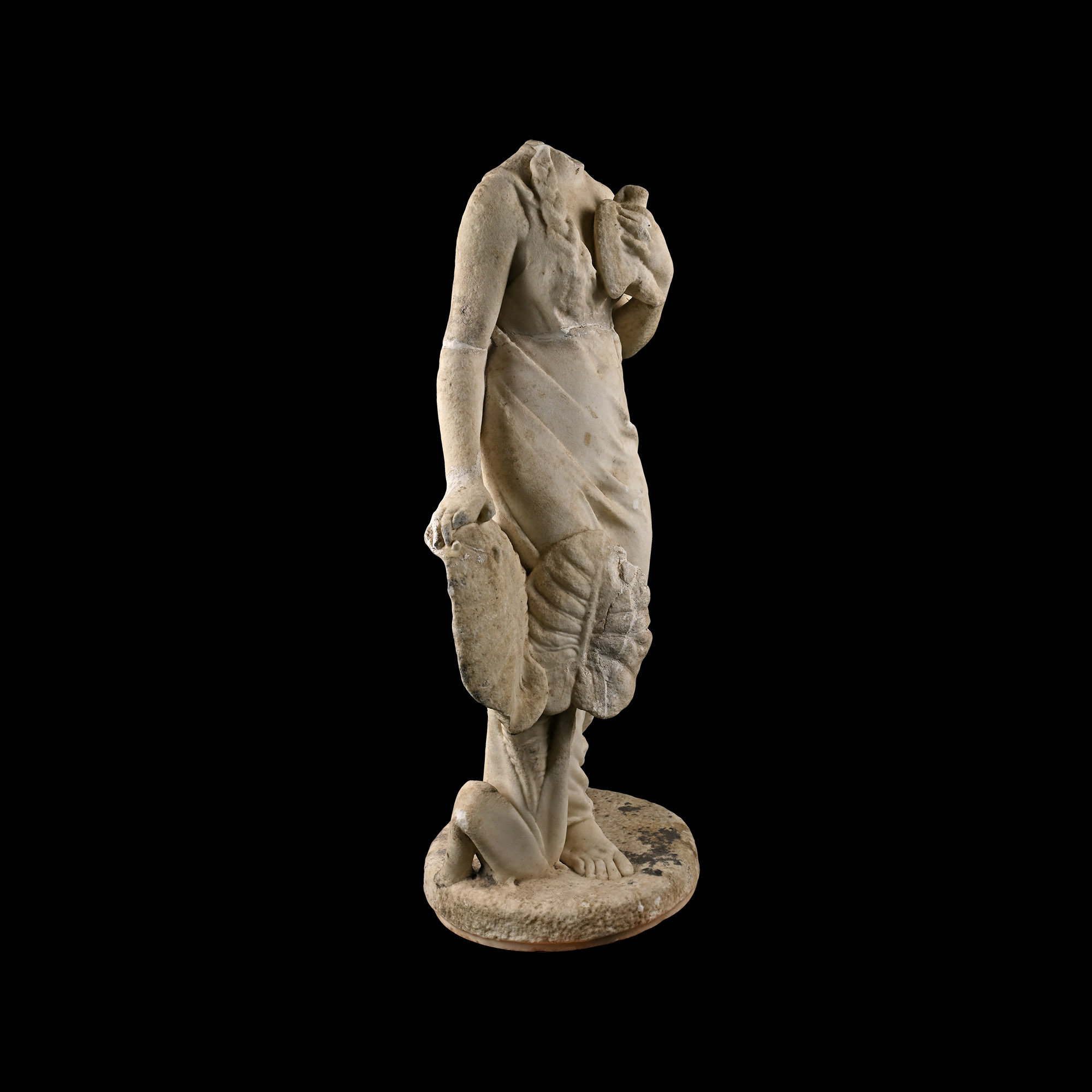
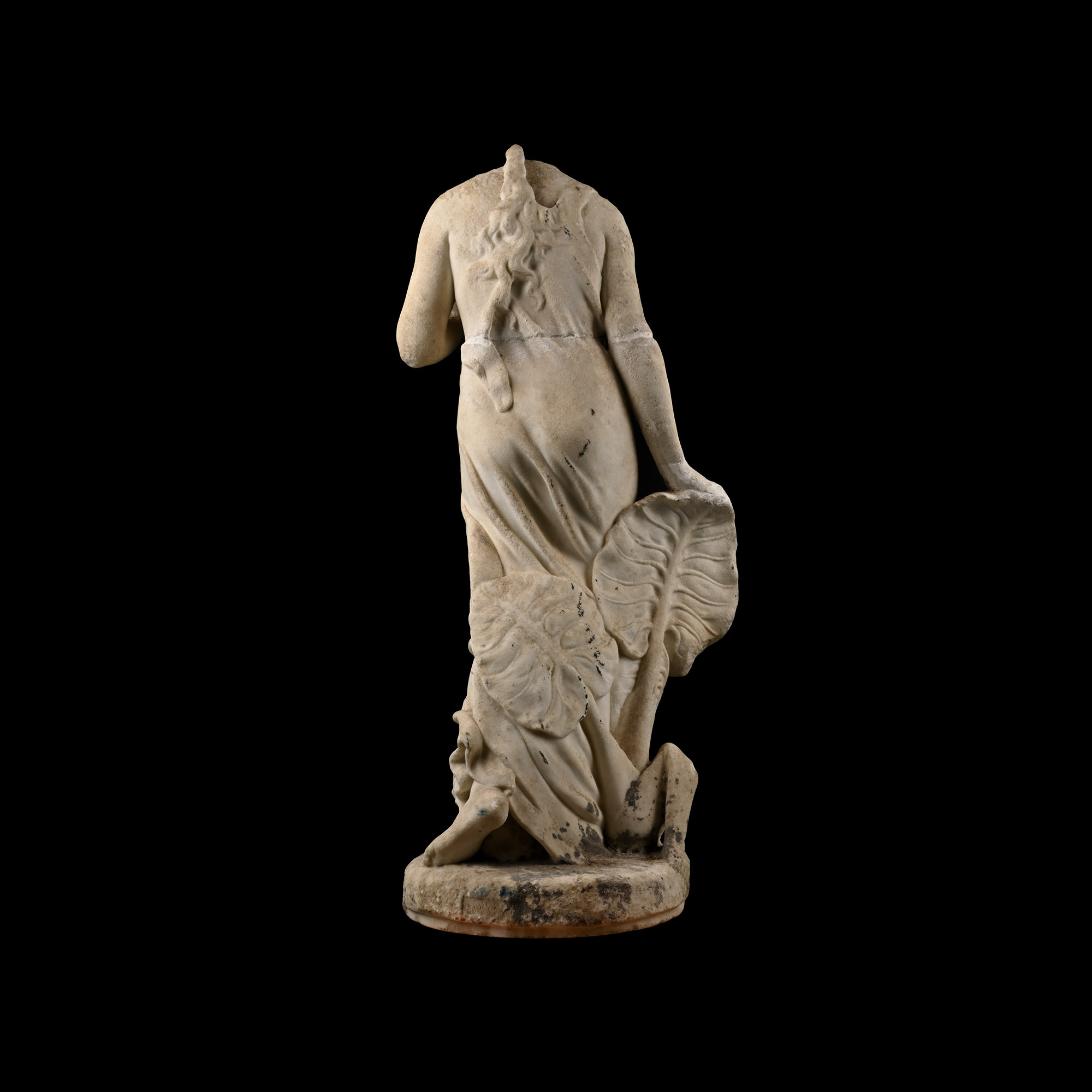
Large Carved Marble Statue of a Headless Maiden Holding a Dove
19TH CENTURY A.D.
31 1/2 in. (51.5 kg, 80 cm high).
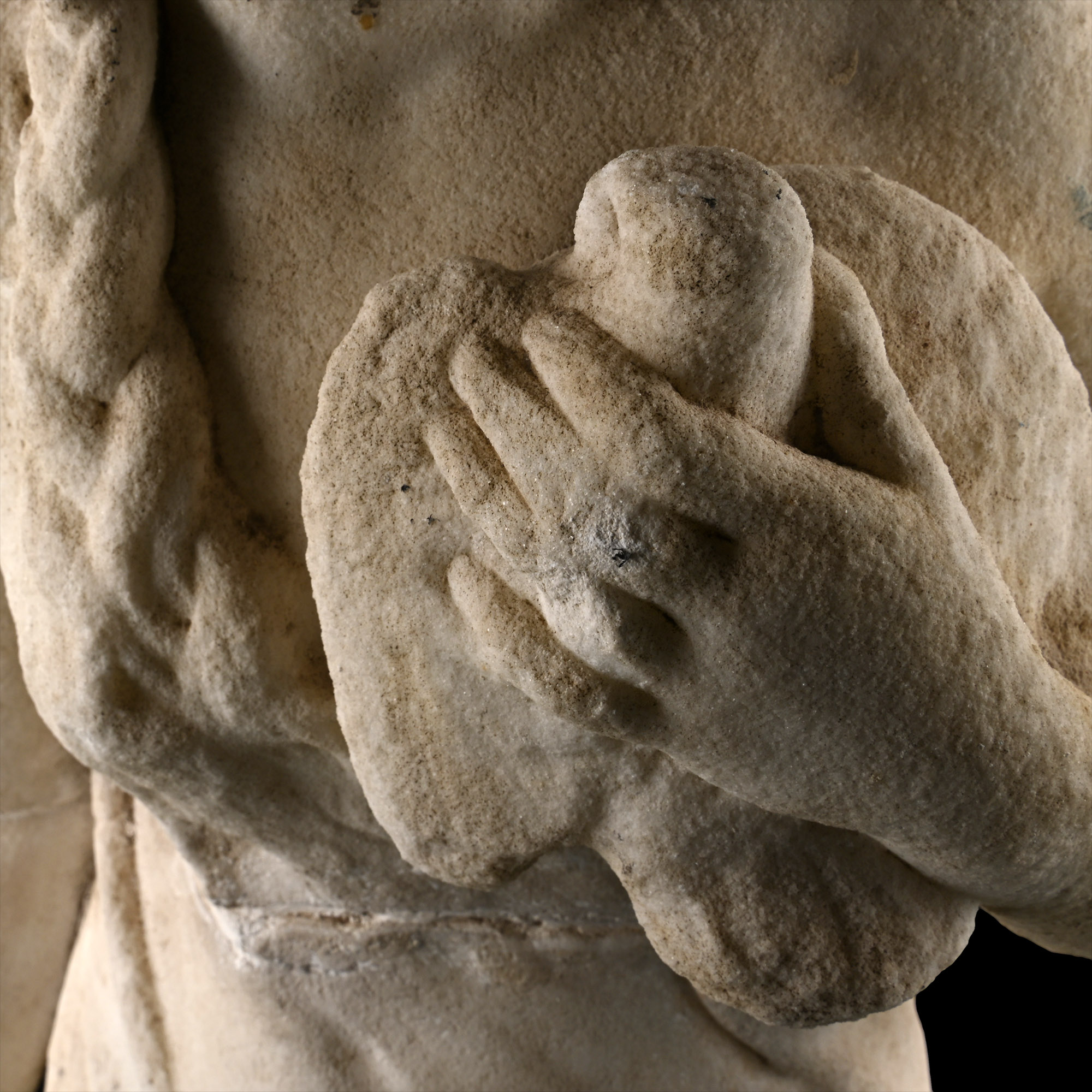
Her body depicted in a contrapposto pose with the weight on her right leg, resting her right hand on large plant leaves that surround her; a sheer garment wrapped around her body and plaited over her right shoulder; holding a dove against her chest with her left hand.
ProvenancePrivate collection, London.
CONDITIONTimeLine Auctions follows a vetting process to ensure the authenticity and legality of all items, reinforcing our commitment to integrity and responsible trading. Each antiquity, antique, and coin lot undergoes thorough examination by a vetting committee of at least ten external specialists, professional trade association members, scientists, and archaeologists: Our Vetting Process
AUCTIONS:
TimeLine is a leading auction house specialising in antiquities, ancient art, collectables, natural history, coins, medals, and books. Our auctions offer museums, collectors, historians, and enthusiasts the opportunity to acquire unique and historically significant pieces.
LOT 2000
Large Carved Marble Statue of a Headless Maiden Holding a Dove
Estimate £1,000 - 1,400€1,160 - 1,620 (for guidance only)$1,350 - 1,890 (for guidance only)
-
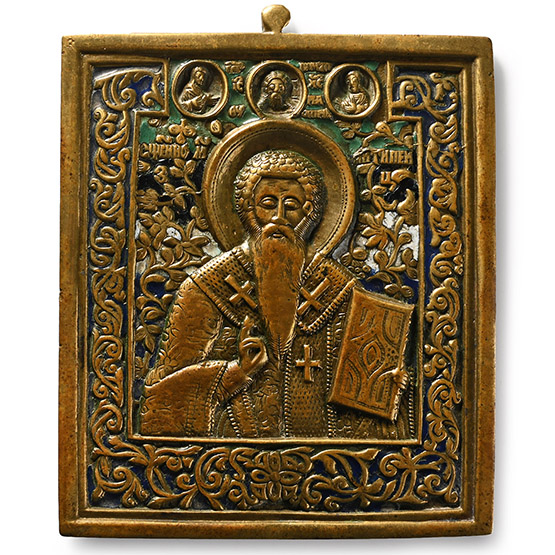
Russian Orthodox Enamelled Bronze Travel Icon with Saint Antipas of Pergamum
19th century A.D.Estimate: £250 - 350 (+bp*)
Opening Bid: £135
Representing Saint Antipas with a Gospel in his left hand and making the gesture of blessing with his right, dressed as a bishop, with sticharion, covered by omophorion, and surmounted by an epitrachelion; the Mandylion at the centre above the saint, Saint Mary on the left panel and Jesus on the right; Old Slavic inscription around the figures: 'ΙC ΧΡ' (Jesus Christ); 'ΜΡ ϴΥ'(Mother of God); Saint Antipas of Pergamum (Св Анти́па Перга́мский). 238 grams, 11.3 cm
Acquired from Chris Martin-Zakheim, Iconastas, 5 Piccadilly Arcade, London SW1. From the private collection of a West London, UK, gentleman, formed since the early 2000s.
The icon features meticulous craftsmanship typical of Orthodox iconography. Saint Antipas was popularly held to be a healer of tooth problems. He was martyred by burning in a brazen bull-shaped altar under the Emperors Nero or Domitian. -
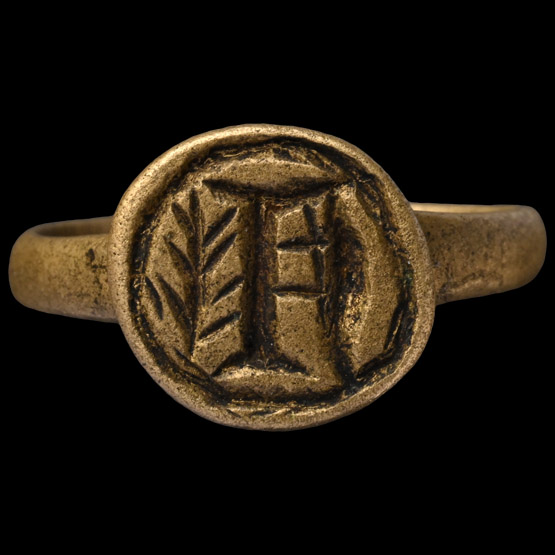
Large Stuart Period Bronze Signet Glove Ring with I for James between Branches
Early 17th century A.D.Sold for (Inc. bp): £59
D-section hoop and disc bezel with 'I' (or 'H') between fronds. 6.69 grams, 27.09 mm overall, 21.77 mm internal diameter (approximate size British X, USA 11 1/2, Europe 26.29, Japan 25)
From the collection of Dame Joan Evans (1893-1977), thence gifted during her lifetime to a gentleman collector friend from South East England.
Dame Joan Evans, DBE, FSA, FRHistS, enjoyed a long and distinguished career as an author and historian. She was appointed the president of the Society of Antiquaries in 1959, the first woman to hold this position, serving until 1964. From 1948 to 1951, Joan Evans served as President of the Royal Archaeological Institute. She received the Society’s gold medal in 1973. Joan Evans was honoured with a host of honorary degrees and fellowships, as well as fellowships of the Royal Historical Society and the Royal Society of Literature. She was a Chevalier of the Légion d’Honneur, and was appointed a Dame of the British Empire in 1976. She served as a trustee of both the London and the British museums, and as a member of the advisory council of the Victoria and Albert Museum. -
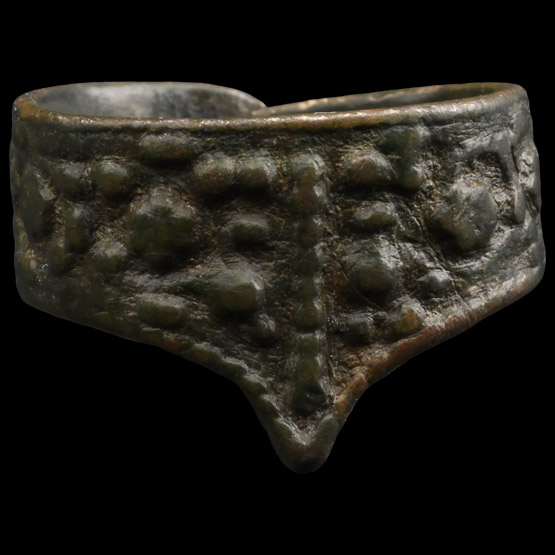
Post Medieval Bronze Archer's Thumb Ring
16th-17th century A.D.Sold for (Inc. bp): £46
With broad triangular flange, low-relief raised pellets and bands. 7.66 grams, 25.12 mm overall, 21.8 mm internal diameter (approximate size British V, USA 10 1/2, Europe 23.77, Japan 22)
From an old English collection, 1980s.
