
Loading, please wait...
LOT 2552
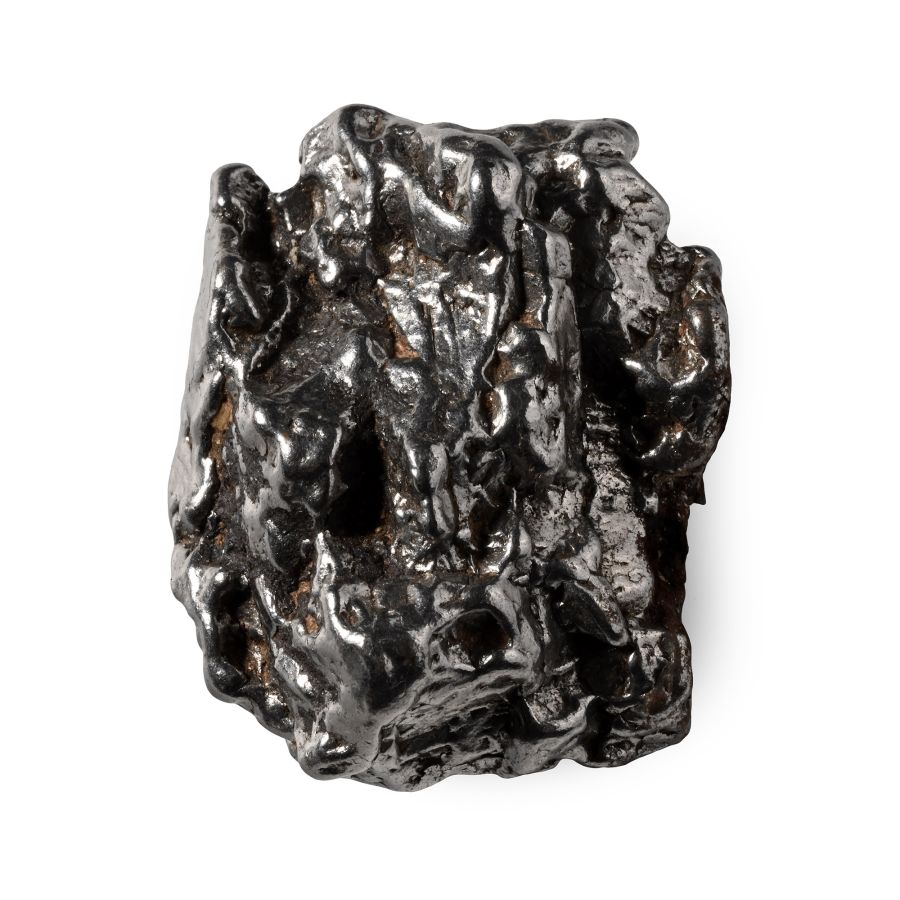
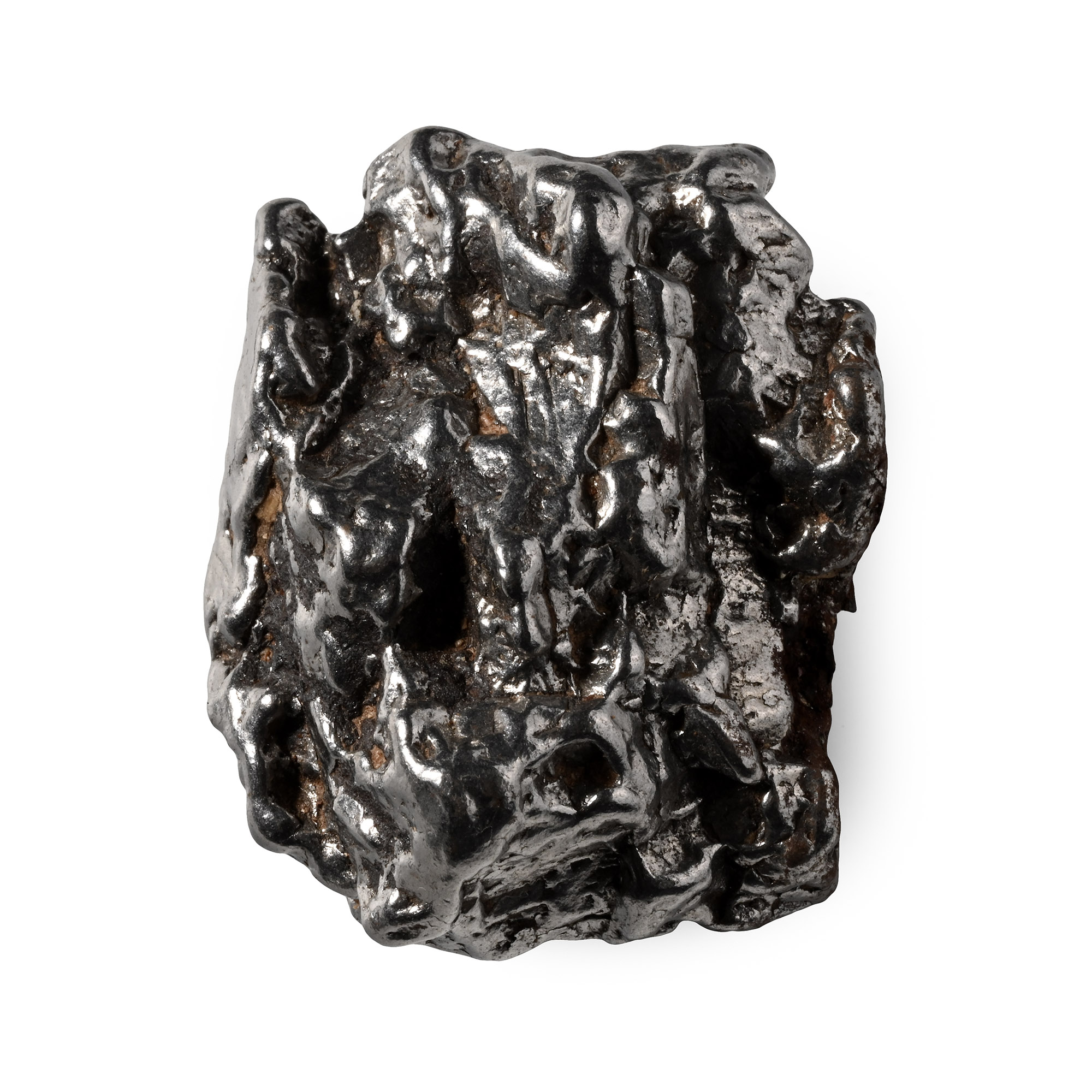
Large Campo Del Cielo Meteorite
FELL 6000-5000 YEARS B.P.
1 5/8 in. (91 grams, 40 mm).
A nickel-iron meteorite (IAB). [No Reserve]
ProvenanceFrom a Lincolnshire, UK, collection.
FootnotesA crater field of roughly 26 craters was found in the vicinity of this crater, which is estimated to date to 4-5 thousand years BP. The age of the meteorite itself is thought to be c.4.5 billion years, formed as part of the development of this solar system. The largest two fragments, the 30.8-ton Gancedo and 28.8-ton El Chaco, are among the heaviest meteorite masses ever recovered on Earth. In 1576, the governor of a province in Northern Argentina commissioned the military to search for a large mass of iron, which it was believed the local people claimed had fallen from the sky and which they used for their weapon production. The expedition discovered a large mass of metal, which was assumed to be an iron mine, and brought back a few samples, which were described as being of unusual purity. Following the legends, in 1774, Don Bartolomé Francisco de Maguna rediscovered the iron mass. He himself did not believe that the stone had fallen from the sky and assumed that it had formed by a volcanic eruption. However, he sent the samples to the Royal Society of London. In 1990, it became protected by law.
CONDITIONTimeLine Auctions follows a vetting process to ensure the authenticity and legality of all items, reinforcing our commitment to integrity and responsible trading. Each antiquity, antique, and coin lot undergoes thorough examination by a vetting committee of at least ten external specialists, professional trade association members, scientists, and archaeologists: Our Vetting Process
AUCTIONS:
TimeLine is a leading auction house specialising in antiquities, ancient art, collectables, natural history, coins, medals, and books. Our auctions offer museums, collectors, historians, and enthusiasts the opportunity to acquire unique and historically significant pieces.
-
Seymchan Meteorite Cross-Section
Circa 4.5 billion years B.P.Sold for (Inc. bp): £8,450
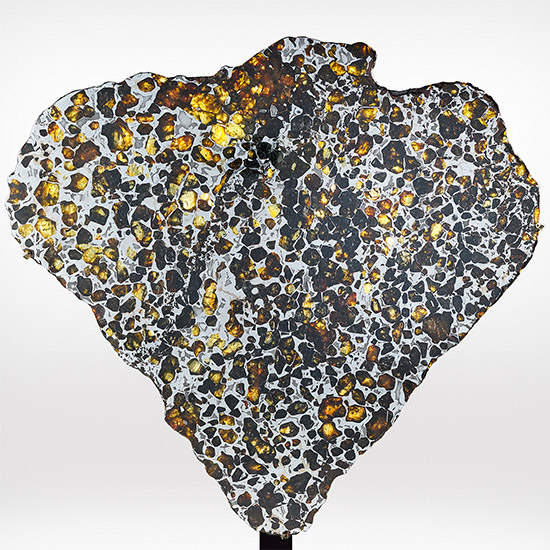
A magnificent polished cross-section from the Seymchan pallasite meteorite, revealing the honeycomb-like structure characteristic of pallasites, with translucent olivine crystals embedded within iron-nickel crystals; accompanied by a custom-made display stand. 356 grams, 23.2 cm
Discovered in 1967, recovered from the bed of the river Hekandue in the Magadan District, Russia (62° 54’ N, 152° 26’ E).
The main mass of 272.3 kilograms was found during a survey in June 1967 by geologist F. A. Mednikov. The mass was a triangular-shaped thumb-printed meteorite lying among the stones of the brook bed. A second specimen of 51 kilograms was found with a mine detector at a distance of 20 meters from the first in October 1967 by I. H. Markov. During a new expedition in 2004, Dmitri Kachalin recovered about 50 kilograms of new material. Remarkably, about 20% of the new specimens were found to contain olivine crystals, and so revealed the silicate nature of the meteorite. The pallasitic structure was not previously discovered during studies on small metal-only sections of the original mass. The distortion of the Widmanstatten patterns is interpreted as shearing of the superheated meteorite as it broke up in the Earth's atmosphere. -
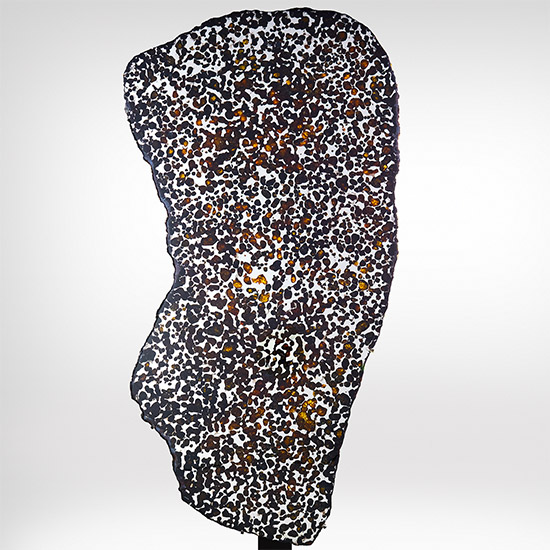
Sericho Meteorite Cross-Section
Circa 4.5 billion years B.P.Sold for (Inc. bp): £11,050
A spectacular polished slice displaying the characteristic crystalline structure of pallasites, with translucent amber-coloured olivine crystals suspended in a shimmering metallic iron-nickel matrix; accompanied by a custom-made display stand. 1.3 kg, 48.5 cm
Discovered in Isiolo County, Eastern Kenya, 2016. Private collection, USA.
Comprising 0.2% of all meteorites, pallasites are the rarest and most aesthetic examples and are highly sought after by collectors and museums. This cross-section reveals their mesmerising internal structure, consisting of translucent amber-coloured olivine crystals suspended in a shimmering iron-nickel matrix which has been polished to a mirror finish. Of all known pallasites, Sericho is especially renowned for its high concentration of olivine, often displaying hues of orange, yellow and green when spotlit or in direct sunlight. Cross-sections of this scale and integrity are particularly rare. While prized for their beauty, Sericho meteorites are also notoriously prone to oxidation if not treated correctly. This piece has been carefully prepared, resulting in a stable specimen that retains both its visual clarity and structural integrity. -
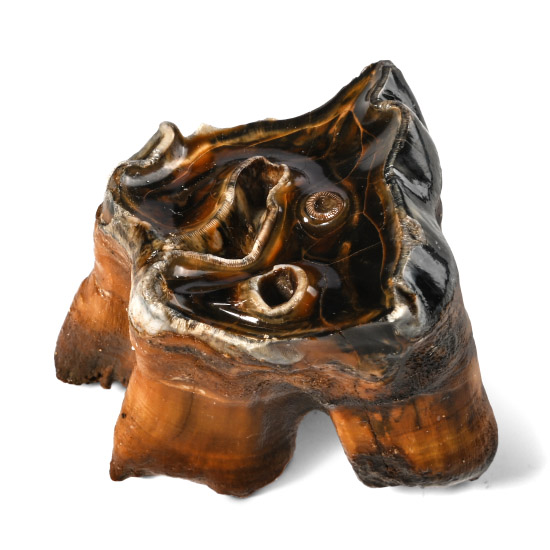
Woolly Rhinoceros Juvenile Milk Tooth
Devensian Period, circa 110,000-12,000 years B.P.Sold for (Inc. bp): £33
Displaying roots and folded enamel. 43.6 grams, 48 mm
Perma frost of Siberia. From a Netherlands collector in the 2020s. From a private collection.
