
Loading, please wait...


LOT 1109
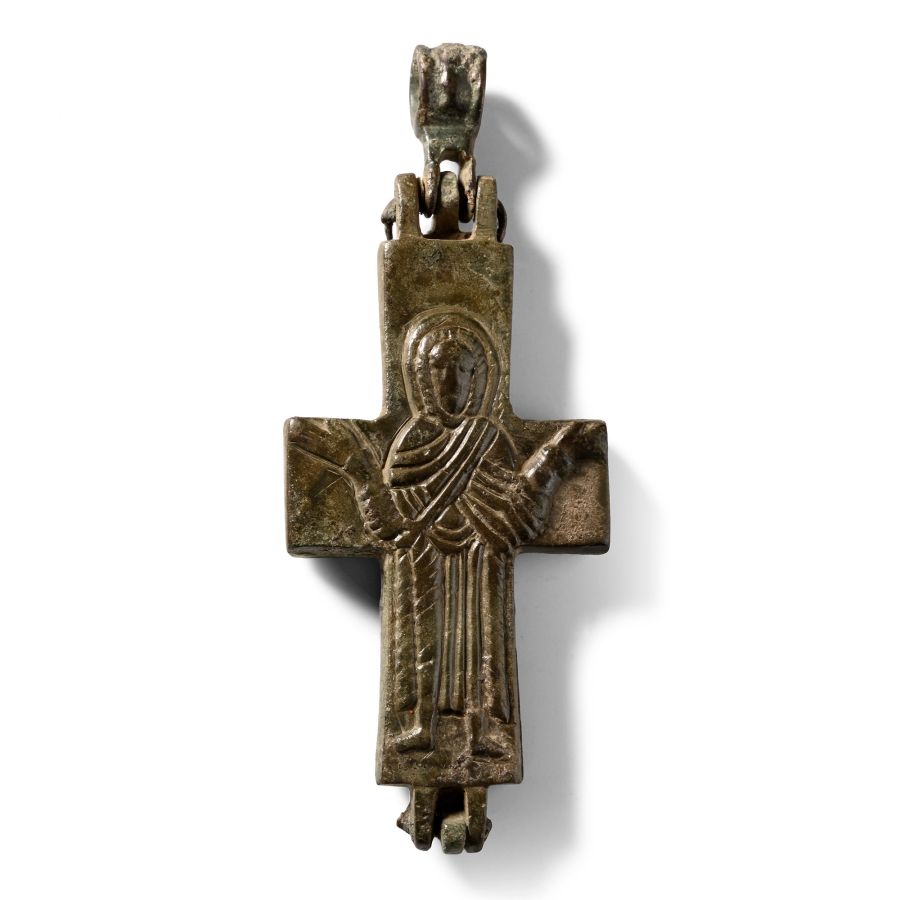
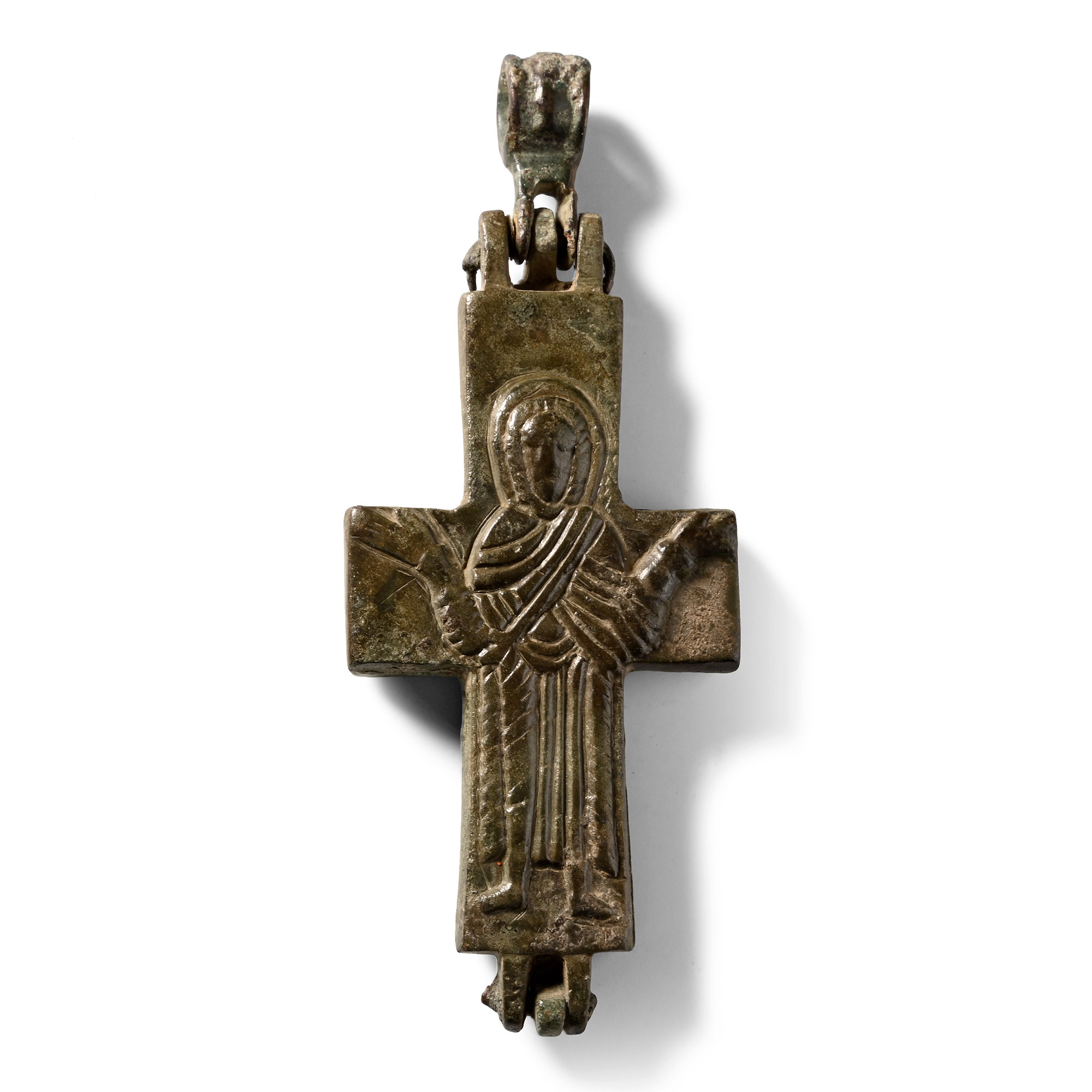
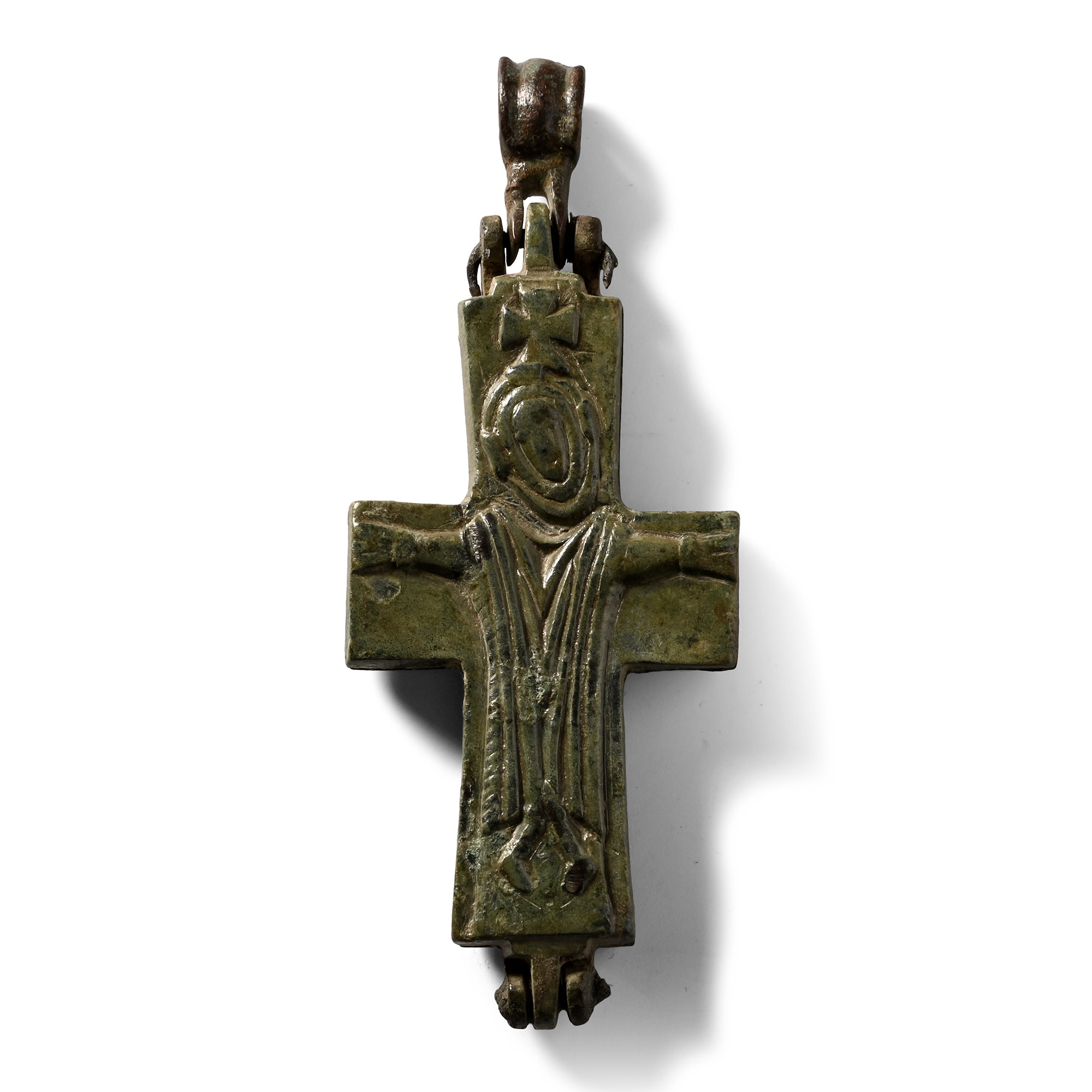
Large Byzantine Bronze Reliquary Cross Pendant with Christ and Saint
CIRCA 10TH-12TH CENTURY A.D.
3 1/4 in. (36.9 grams, 82 mm).
Enkolpion with hinged and ribbed loop; low-relief nimbate figure in orans pose to reverse wearing draped robes; robed Corpus Christi to reverse with cross above. [No Reserve]
ProvenanceFrom the private coin collection of a West London, UK, gentleman, formed since the mid 1980s.
LiteratureCf. Wamser, L., Die Welt von Byzanz - Europas Östliches Erbe, München, 2004, item 258, for type.
CONDITIONTimeLine Auctions follows a vetting process to ensure the authenticity and legality of all items, reinforcing our commitment to integrity and responsible trading. Each antiquity, antique, and coin lot undergoes thorough examination by a vetting committee of at least ten external specialists, professional trade association members, scientists, and archaeologists: Our Vetting Process
AUCTIONS:
TimeLine is a leading auction house specialising in antiquities, ancient art, collectables, natural history, coins, medals, and books. Our auctions offer museums, collectors, historians, and enthusiasts the opportunity to acquire unique and historically significant pieces.
LOT 1109
Large Byzantine Bronze Reliquary Cross Pendant with Christ and Saint
Sold for (Inc. bp): £377
-
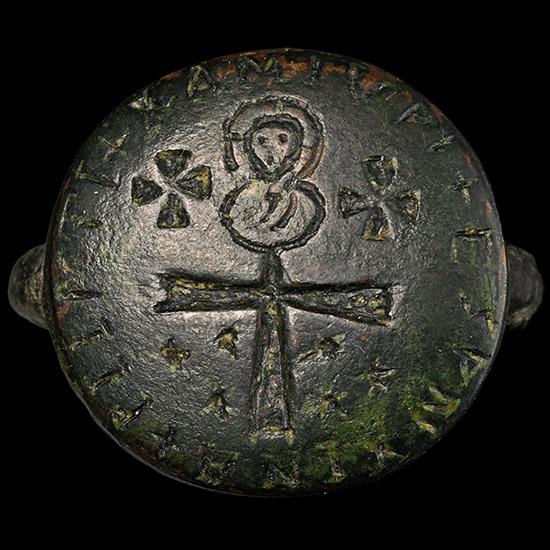
Large Byzantine Bronze Ring with Cross and Saint
Circa 6th-7th century A.D.Sold for (Inc. bp): £117
Comprising a thick round-section hoop and integral disc bezel; incuse cross with nimbate bust above flanked by two equal-arm crosses, enigmatic legend to the rim. 18.62 grams, 30.50 mm overall, 23.22 mm internal diameter (approximate size British U 1/2, USA 10 1/4, Europe 23.15, Japan 22)
Acquired circa 1980. Property of a Middlesex gentleman. -
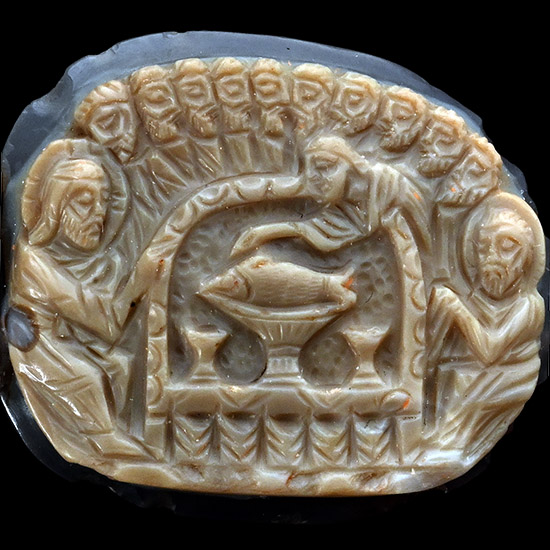
Byzantine Carved Agate Cameo of The Holy Banquet
6th-8th century A.D.Sold for (Inc. bp): £4,420
Plano-convex in section with low-relief carving: scene with a meal at a so-called sigma table surrounded by Christ, Peter, John and the other disciples; Christ and Peter attending and beardless Saint John the Evangelist preparing the fish. 9.95 grams, 32 mm
From a North American gentleman's collection, 1990s. This lot has been checked against the Interpol Database of stolen works of art and is accompanied by search certificate number no.13368-259040.
In early Byzantine art, Saint Peter is often depicted as the only figure apart from Christ to be shown with a nimbus, to emphasise his pre-eminent position as a church father and the 'rock' of the church. -
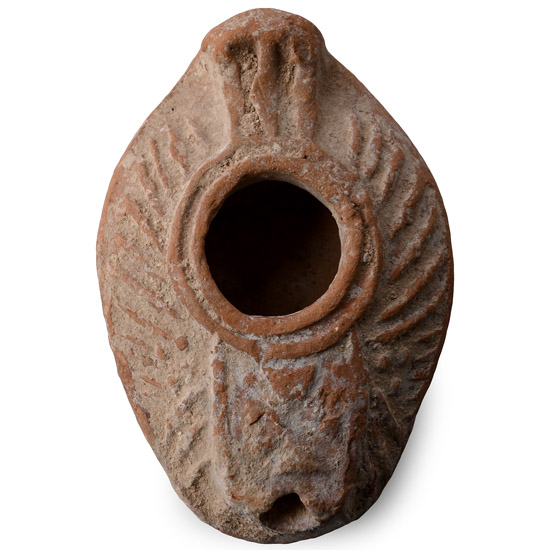
Byzantine Terracotta Oil Lamp with Linear Decoration
Circa 5th-7th century A.D.Sold for (Inc. bp): £52
Linear decoration radiating from the large filler hole, with a small handle to the rear. 76 grams, 92 mm
From the collection of a Cambridge, UK, gentleman, by direct descent from his father, who acquired the items in London in circa 1960.
