
Loading, please wait...
LOT 1126
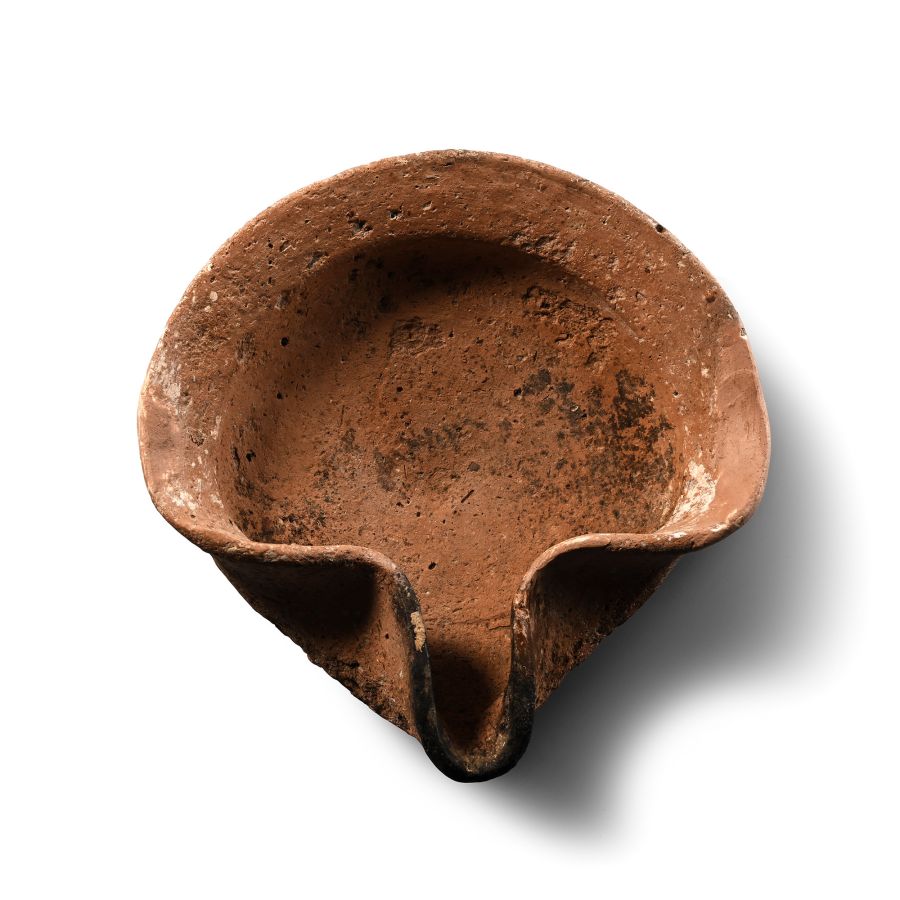
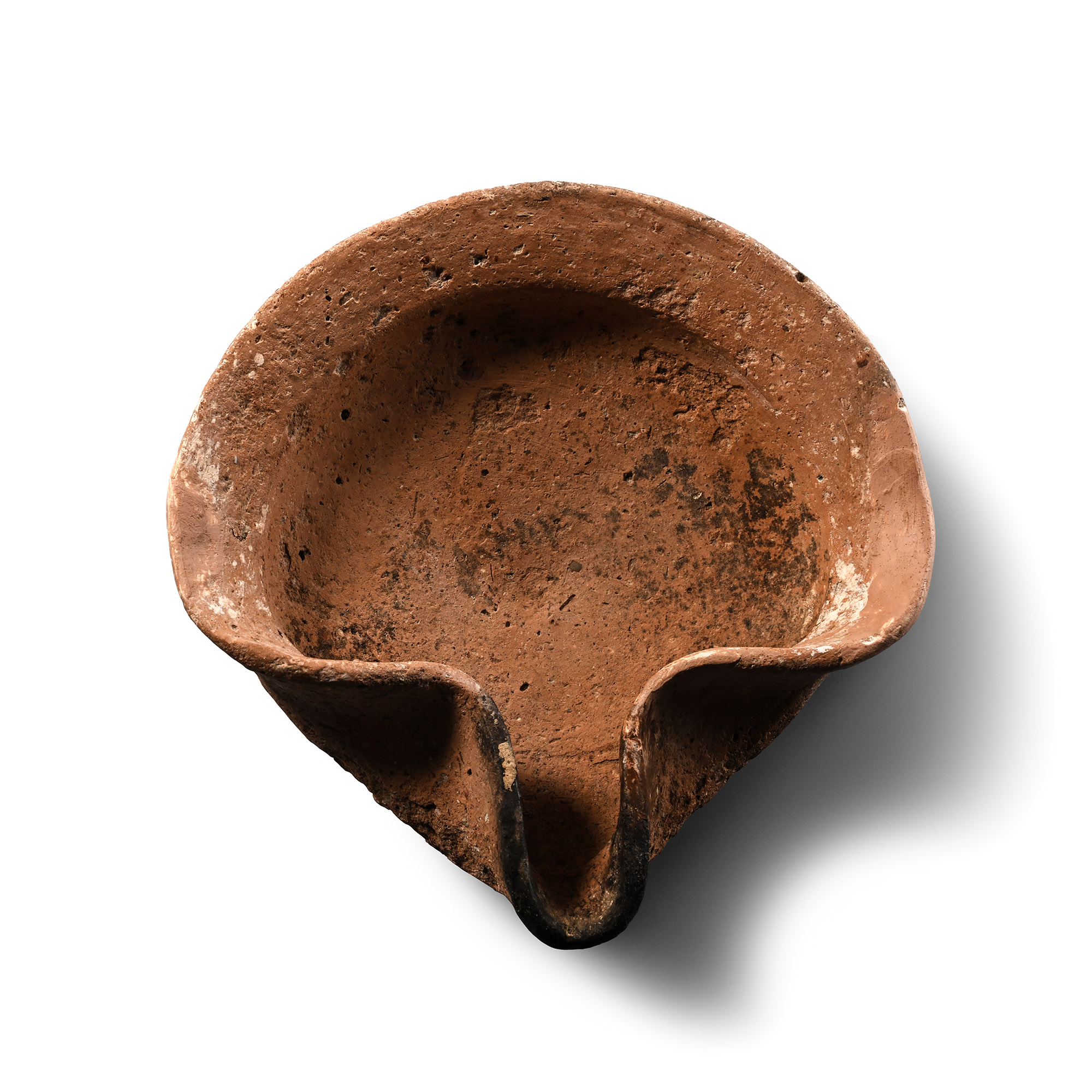
Large Bronze Age Holy Land Terracotta Pinched Rim Oil Lamp
KINGDOM OF JUDAH, CIRCA 930-700 B.C.
4 5/8 in. (128 grams, 11.7 cm).
Discoid in plan with carinated rim pinched to form a nozzle. [No Reserve]
ProvenanceFrom the Lloyd and Jeanne Raport collection, Washington, D.C. and Florida, USA, formed between 1972-2000.
Acquired through Bonhams, London, UK.
TimeLine Auctions follows a vetting process to ensure the authenticity and legality of all items, reinforcing our commitment to integrity and responsible trading. Each antiquity, antique, and coin lot undergoes thorough examination by a vetting committee of at least ten external specialists, professional trade association members, scientists, and archaeologists: Our Vetting Process
AUCTIONS:
TimeLine is a leading auction house specialising in antiquities, ancient art, collectables, natural history, coins, medals, and books. Our auctions offer museums, collectors, historians, and enthusiasts the opportunity to acquire unique and historically significant pieces.
LOT 1126
Large Bronze Age Holy Land Terracotta Pinched Rim Oil Lamp
Sold for (Inc. bp): £143
-
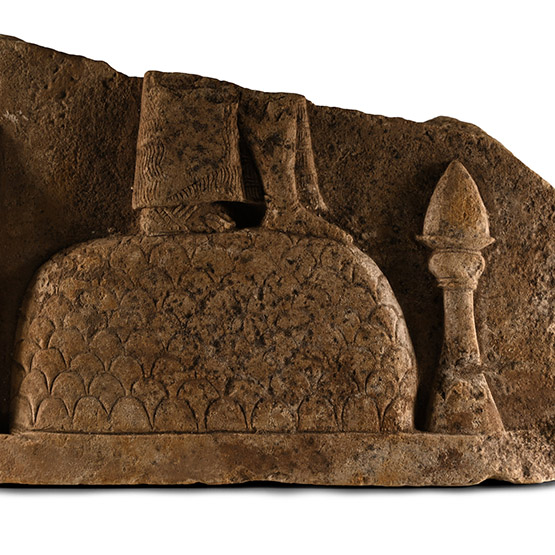
Neo-Assyrian Stone Relief with Standing Figure
9th-8th century B.C.Sold for (Inc. bp): £3,900
Corner fragment from a high-relief pictorial panel with raised border; domed dais with low-relief scaled detailing; lower legs and sandaled feet in advancing pose with ankle-length open-fronted robe, horizontal woven texture and curled fleece; high-relief stele with flared base, bulbous upper and sugar-loaf finial; pitted surface, with tooling to reverse. 2.81 kg, 24.3 cm
Ex German collection, c.1980. with Toufic Arakji, Hamburg, 1997. Private collection, Europe. Accompanied by an academic report by Dr Raffaele D'Amato. This lot has been checked against the Interpol Database of stolen works of art and is accompanied by search certificate no.12579-232134.
Stylistically, the figure seems to be linked to the kingdom of Ashurnasirpal II (883-859 B.C.) or his son Shalmaneser III (858-824 B.C.). The exposed lower leg with exaggerated musculature is seen in many Assyrian and Babylonian depictions of divine and heroic figures. The position of the figure, corresponding to some reliefs kept in the Louvre, where a spirit is worshipping a poppy flower (Houston, 1954, pl.V.1), and the high-relief carving, strongly refer to a cult scene. -
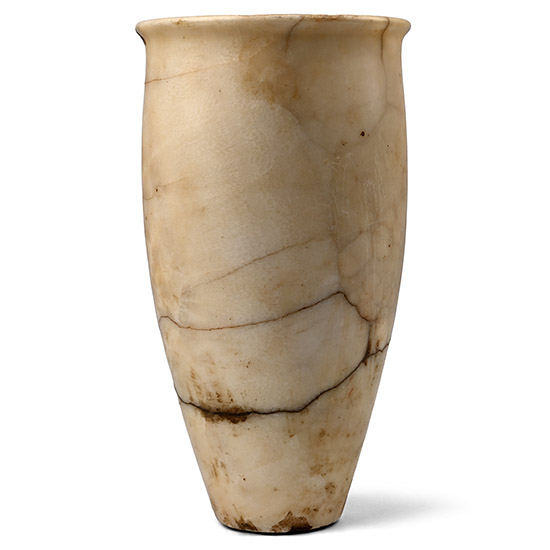
Large Western Asiatic Banded Alabaster Vase
2nd-1st millennium B.C.Sold for (Inc. bp): £416
Carved with narrow foot, broad body and everted rim to the mouth. 2.5 kg, 26.2 cm
Private collection, UK. -

Syrian Haematite Cylinder Seal with Goddess and Drinking Scene
Circa 1900-1700 B.C.Sold for (Inc. bp): £1,690
With two rows of human and animal figures; accompanied by a copy of an old scholarly note, typed and signed by W.G. Lambert, late Professor of Assyriology, University of Birmingham, 1970-1993, which states: 'Description of Cylinder Seal of Hematite, 20 x 11 mm. Main scene, upper register: goddess exposing herself and holding up plant to far right, before her a human in garment with thick edges, facing these two, three Lammas with both hands raised and a star above their raised hands. Main scene, lower register: nude female between two lions, same nude female between two frontally depicted beardless figures. Minor scene: two seated drinkers, pot of beer with two straws between them; a row of four walking humans; spiral pattern between. Horizontal rules separate some of the groups. Syria, c. 1900-1700 B.C. Condition: some wear and a little chipping at the bottom, but mostly in good condition.'; accompanied by a museum quality impression and a pair of red stone beads. 5.75 grams, 19.80 mm
Private collection, London, UK. Accompanied by a copy of an old scholarly note, typed and signed by W.G. Lambert, late Professor of Assyriology, University of Birmingham, 1970-1993.
