
Loading, please wait...
LOT 1267
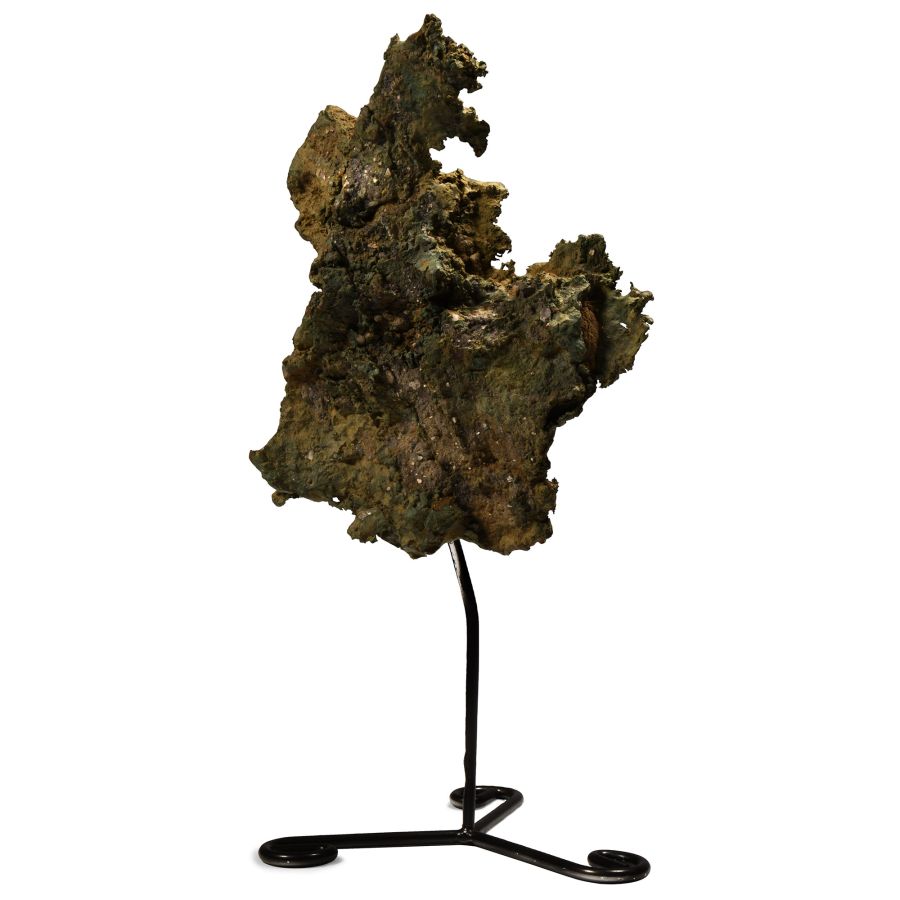
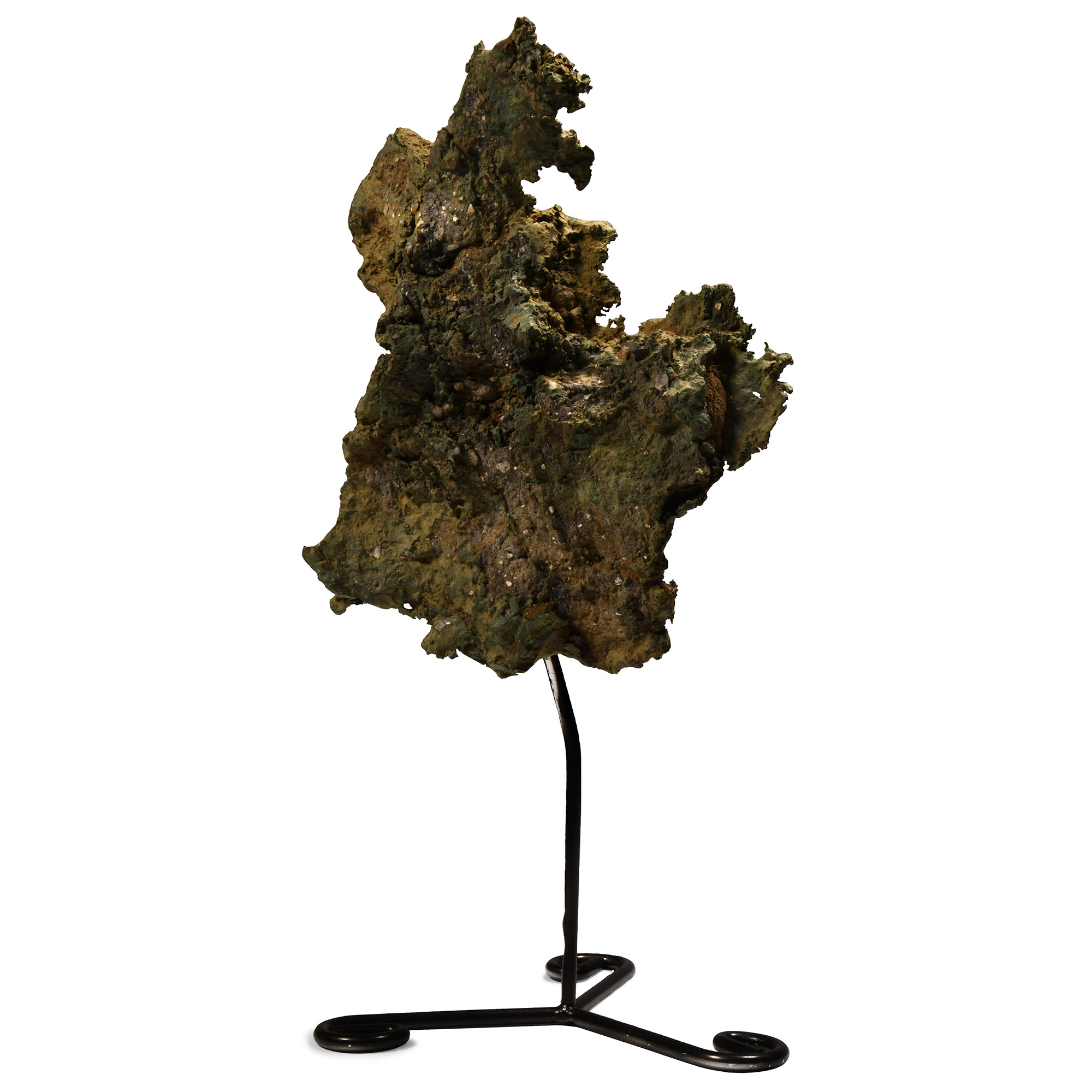
Large Bronze Age Freeform 'Pancake' Founder's Ingot
2ND MILLENNIUM B.C.
13 5/8 in. (2 kg total, 34.5 cm high including stand).
Of amorphous form with inclusions to both surfaces; accompanied by a custom-made display stand. [No Reserve]
ProvenanceFound Cotham, Newark, Nottinghamshire, UK.
FootnotesThese ingots were cast in shallow scoops carved into boulders or stones at places where the ore was mined and smelted; they were then traded across the Bronze Age world as raw material.
CONDITIONTimeLine Auctions follows a vetting process to ensure the authenticity and legality of all items, reinforcing our commitment to integrity and responsible trading. Each antiquity, antique, and coin lot undergoes thorough examination by a vetting committee of at least ten external specialists, professional trade association members, scientists, and archaeologists: Our Vetting Process
AUCTIONS:
TimeLine is a leading auction house specialising in antiquities, ancient art, collectables, natural history, coins, medals, and books. Our auctions offer museums, collectors, historians, and enthusiasts the opportunity to acquire unique and historically significant pieces.
-
.jpg)
Bronze Age Socketted Axehead Fragment
2nd-1st millennium B.C.Sold for (Inc. bp): £13
Comprising the mid-section and partial socket of an axehead with loop to one edge. 193 grams, 67 mm
UK gallery, early 2000s. -
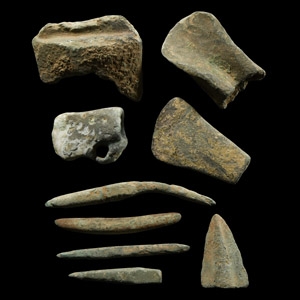
Bronze Age Artefact Collection
1st millennium B.C.Sold for (Inc. bp): £59
Including a votive axehead; a broadly wedge-shaped axe head; tip of an arrowhead; together with other miscellaneous items. 81 grams total, 22-42 mm
Found from various sites in Berkshire, UK. -
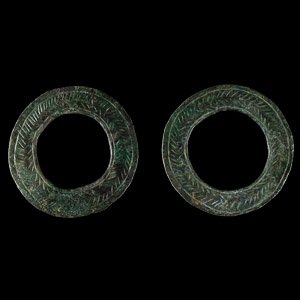
Bronze Age Decorated Horse Harness Loop Pair
10th-6th century B.C.Sold for (Inc. bp): £78
Each with laurel wreath design between two concentric circles. 149 grams total, 79 mm wide
Ex old English collection. London art market, 1980s.
