
Loading, please wait...
LOT 1280
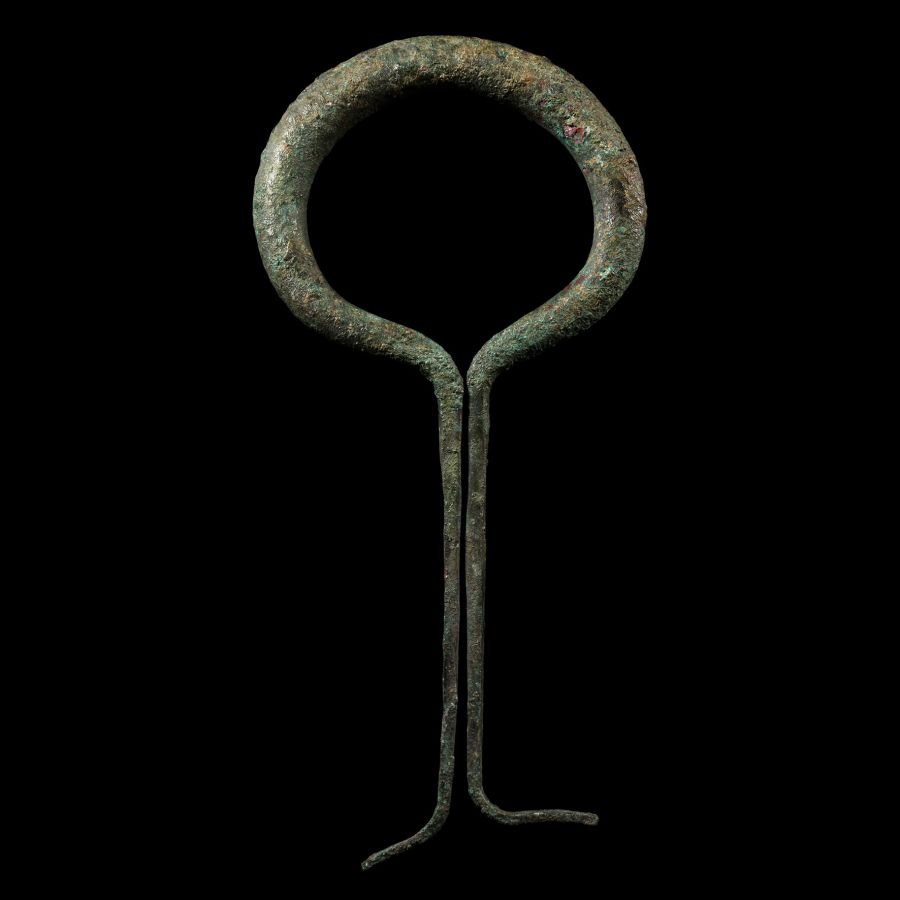
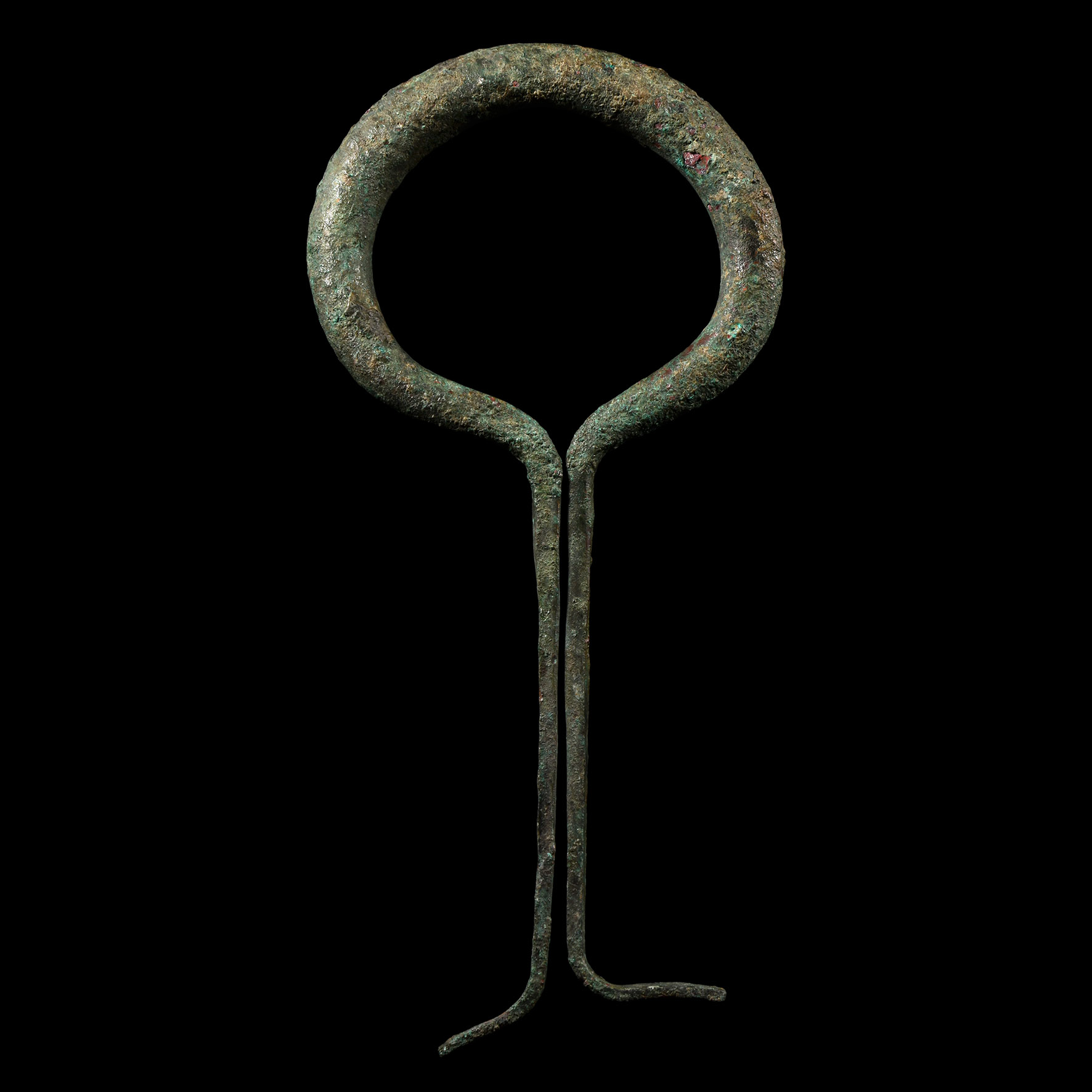
Large Bronze Age Chariot Terret Ring
10TH-6TH CENTURY B.C.
8 1/4 in. (354 grams, 21 cm).
A heavy duty oval-shaped ring the ends tapering either side into fixing spikes. [No Reserve]
ProvenanceEx old English collection.
London art market, 1980s.
TimeLine Auctions follows a vetting process to ensure the authenticity and legality of all items, reinforcing our commitment to integrity and responsible trading. Each antiquity, antique, and coin lot undergoes thorough examination by a vetting committee of at least ten external specialists, professional trade association members, scientists, and archaeologists: Our Vetting Process
AUCTIONS:
TimeLine is a leading auction house specialising in antiquities, ancient art, collectables, natural history, coins, medals, and books. Our auctions offer museums, collectors, historians, and enthusiasts the opportunity to acquire unique and historically significant pieces.
-
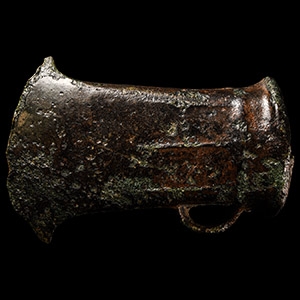
Bronze Age British Socketted Axehead
Late Bronze Age, 1200-800 B.C.Sold for (Inc. bp): £156
The outer faces decorated with three parallel lines, single side loop and convex cutting edge; socket chipped at one side. 160 grams, 79 mm
Found in Norfolk before 1990. Acquired on the UK market, 1990s. Property of a retired academic. -
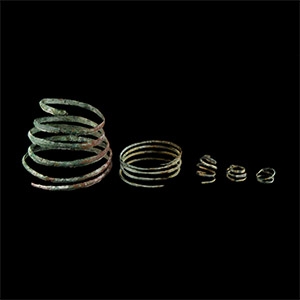
Bronze Age Coiled Bracelet and Ring Group
2nd-1st millennium B.C.Sold for (Inc. bp): £85
Two coiled bracelets with D-section and round-section bodies; three differently sized coiled rings. 62.3 grams total, 13-70 mm
Acquired on the UK art market. Property of a Ruislip, UK, gentleman, by inheritance. -
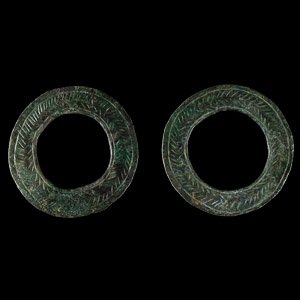
Bronze Age Decorated Horse Harness Loop Pair
10th-6th century B.C.Sold for (Inc. bp): £78
Each with laurel wreath design between two concentric circles. 149 grams total, 79 mm wide
Ex old English collection. London art market, 1980s.
