
Loading, please wait...
LOT 1235
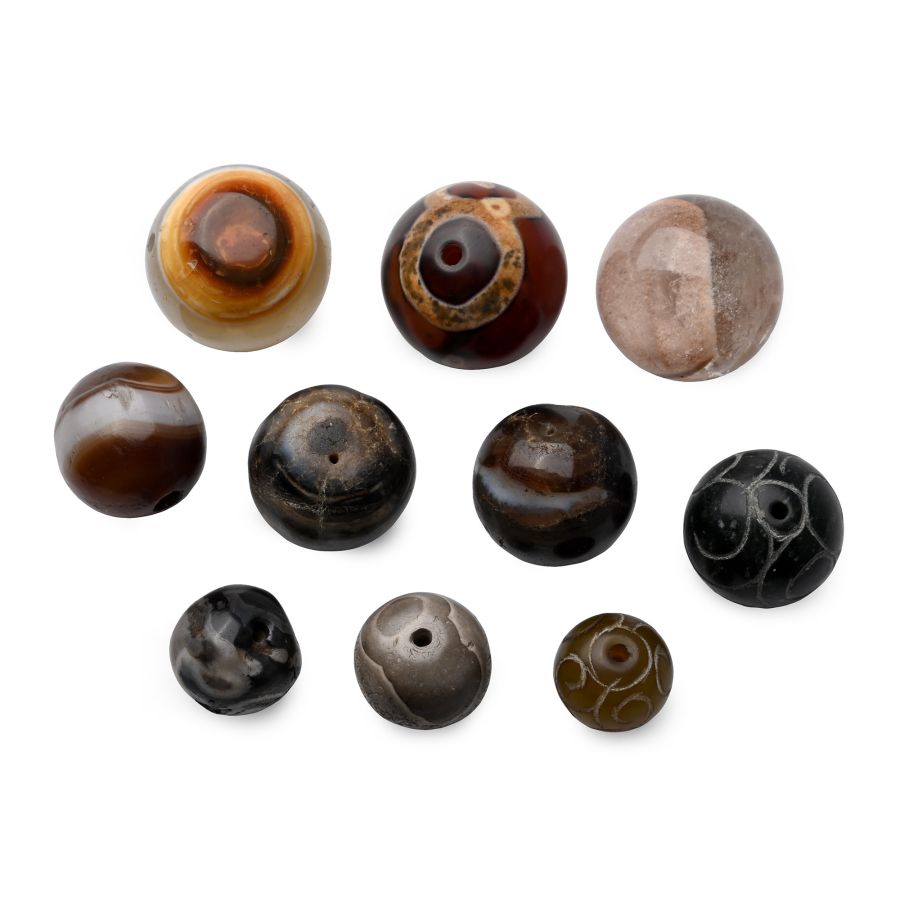
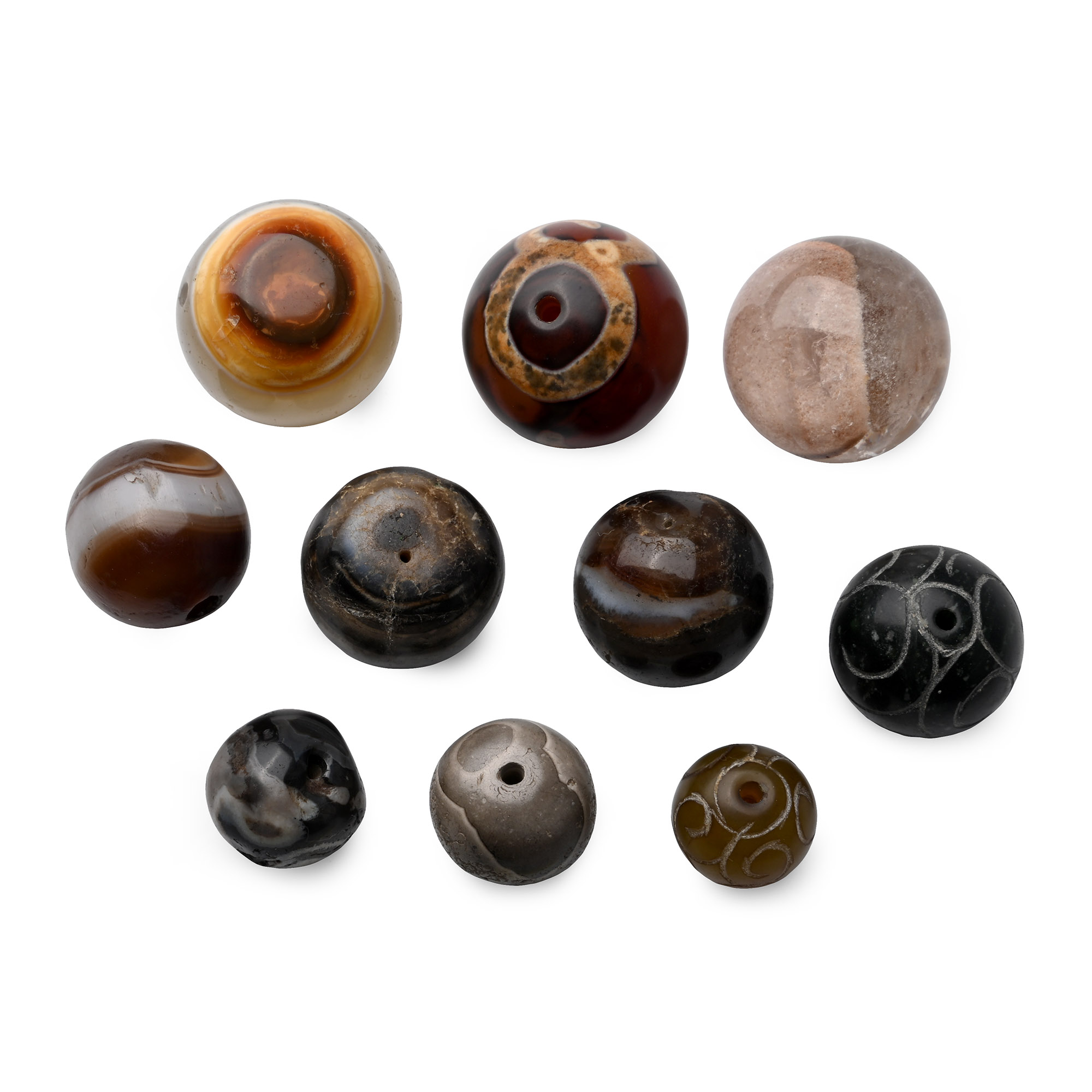
Large Bactrian Mixed Agate Bead Group
CIRCA 1ST MILLENNIUM B.C.-EARLY 1ST MILLENNIUM A.D. AND LATER
5/8 - 1 in. (118 grams total, 15-24 mm).
Comprising of spherical and other beads including two with incised decoration, one not pierced. [10]
ProvenanceAcquired on the UK art market.
Private collection, England.
TimeLine Auctions follows a vetting process to ensure the authenticity and legality of all items, reinforcing our commitment to integrity and responsible trading. Each antiquity, antique, and coin lot undergoes thorough examination by a vetting committee of at least ten external specialists, professional trade association members, scientists, and archaeologists: Our Vetting Process
AUCTIONS:
TimeLine is a leading auction house specialising in antiquities, ancient art, collectables, natural history, coins, medals, and books. Our auctions offer museums, collectors, historians, and enthusiasts the opportunity to acquire unique and historically significant pieces.
LOT 1235
Large Bactrian Mixed Agate Bead Group
Estimate £500 - 700€580 - 810 (for guidance only)$680 - 950 (for guidance only)
-
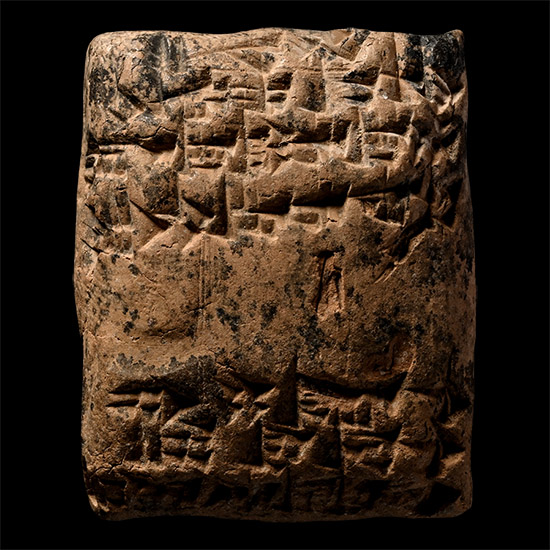
Old Babylonian Terracotta Cuneiform Tablet For an Interest Free Loan From the Moon God Nanna
1834-1823 B.C.Sold for (Inc. bp): £1,755
A pillow-shaped tablet, with cuneiform text to the broad faces and an edge, reading: '12 shekels of interest-free silver, from (the moon-god) Nanna, debt of Bitanum. Before Qišti-Enlil Before Dadiya Before Sîn-šemi In the month of Innana, the 5th. The year (the king) built the temple of Ninug... inside (the city of) Maškan-šapir.' 55 grams, 47 mm
Ex private collection. with Bonhams, Antiquities, London, 21 October 1999, no.260 (Part). Private central European collection. Accompanied by copies of the relevant Bonhams catalogue pages. This lot has been checked against the Interpol Database of stolen works of art and is accompanied by search certificate number no.12244-219769. -
.jpg)
Mesopotamian Cuneiform Tablet Fragment
Ur III, circa 21st century B.C.Sold for (Inc. bp): £416
A large fragment showing columns of neatly impressed cuneiform text; restored. 71 grams, 70 mm
London, UK, art market, 1980s. Private collection, London, UK. -
.jpg)
Mesopotamian Haematite Cylinder Seal with Standing Figures
1900-1600 B.C.Sold for (Inc. bp): £546
Cylinder with standing figures and animals, with red stone bead; accompanied by a copy of an old scholarly note, typed and signed by W.G. Lambert, late Professor of Assyriology, University of Birmingham, 1970-1993, which states: 'Cylinder Seal of Hematite, 16 x 8.5 mm. The scene consists of four standing figures. Two face each other: a god in a short kilt and holding a mace at his waist while wearing a Gudea-type hat. Facing him is another god in a long robe raising one hand and extending the other. The other two figures both have frontal faces. The one, nude save for a double-stranded belt, holds both hands at the waist. The other wears a loin-cloth with hanging-down end and grasps a stick in one hand. There are three fillers: monkey, human head, and bird. This seal is from North-Western Mesopotamia, c. 1900-1600 B.C., and is a rare type. The state of preservation is good.'; accompanied by a museum quality impression. 3.30 grams, 16 mm
Anonymous French sale. Private collection, London, UK. Accompanied by a copy of an old scholarly note, typed and signed by W.G. Lambert, late Professor of Assyriology, University of Birmingham, 1970-1993.
