
Loading, please wait...
LOT 0225
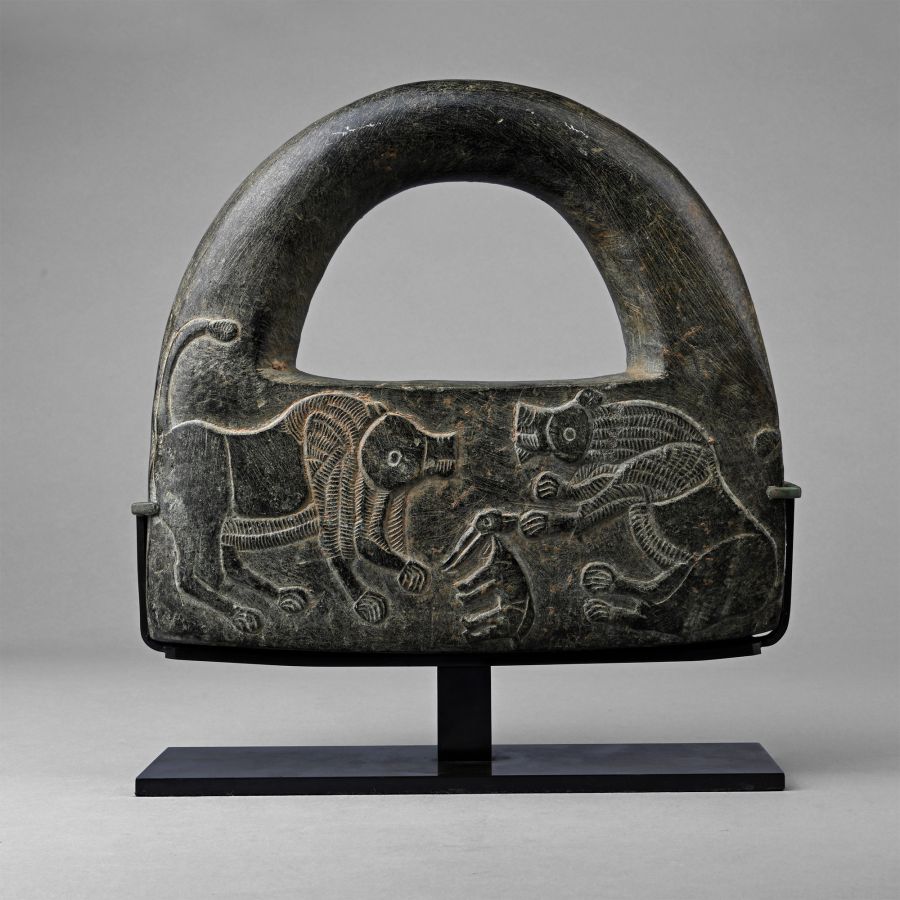
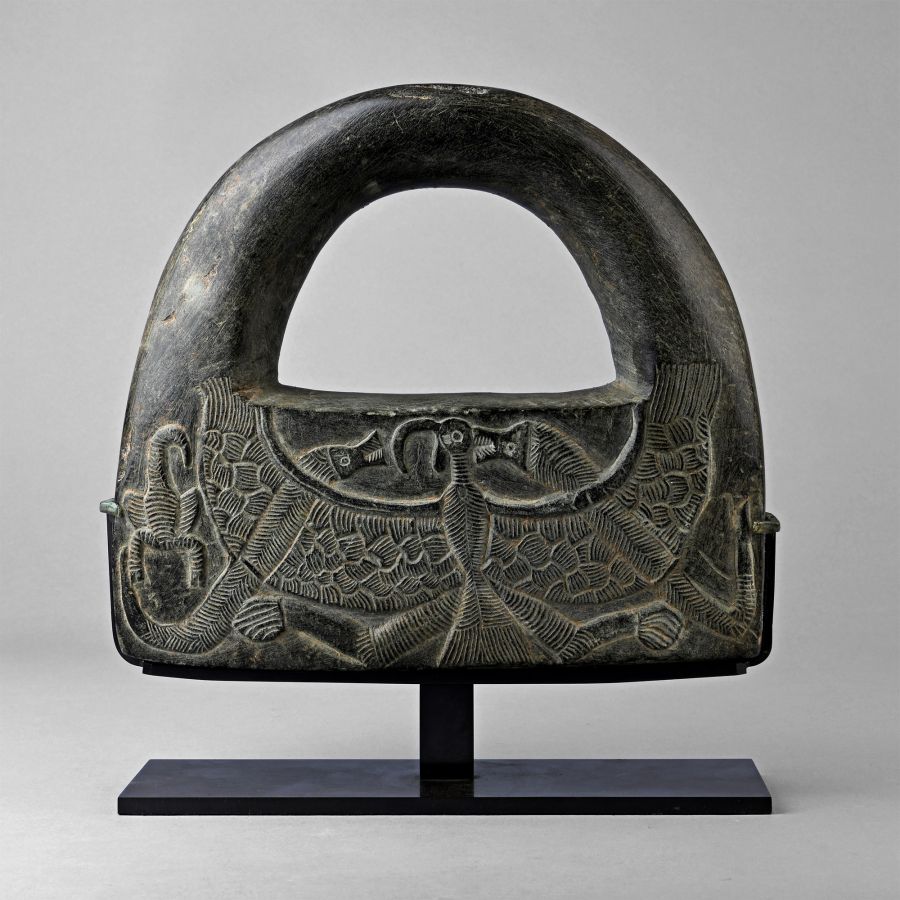
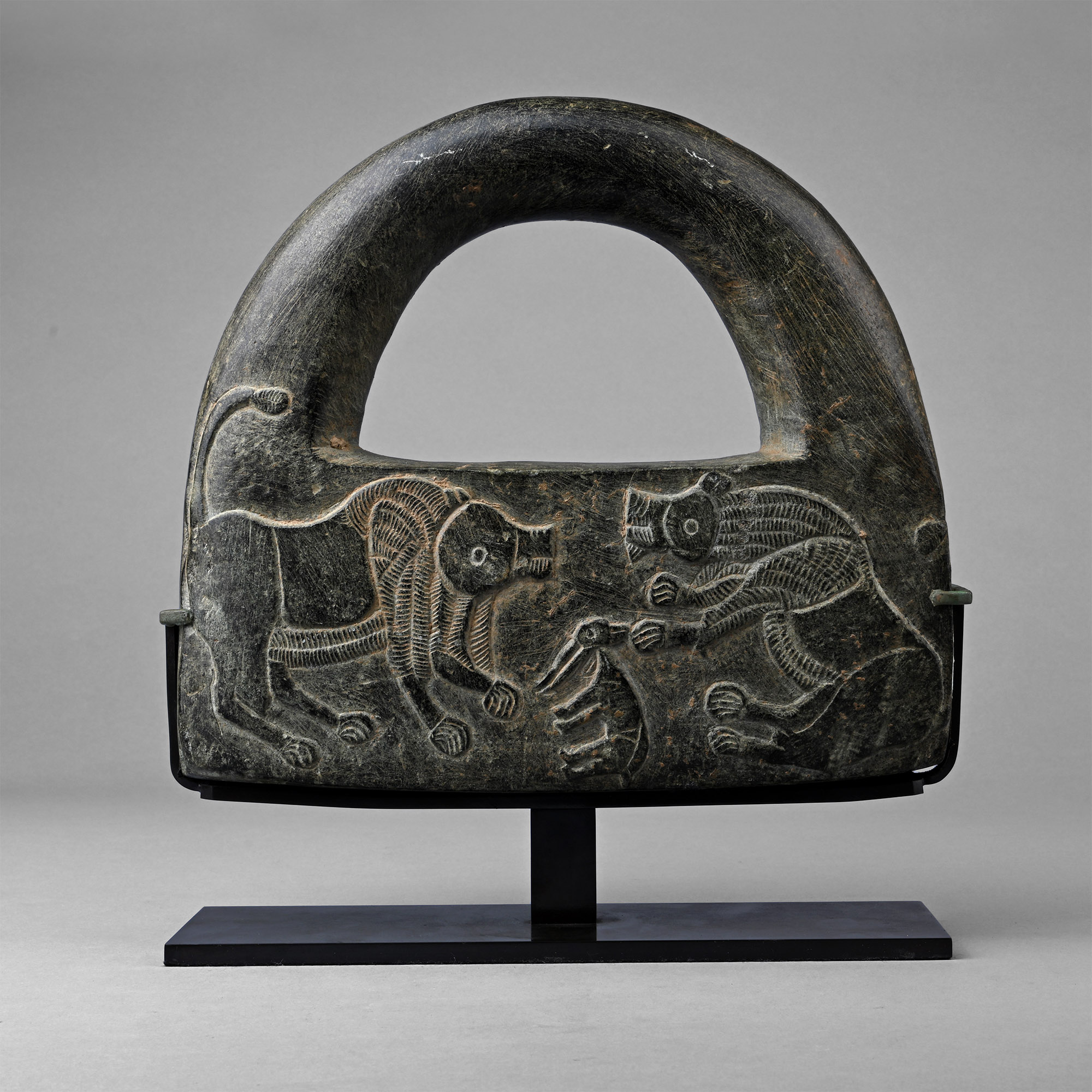
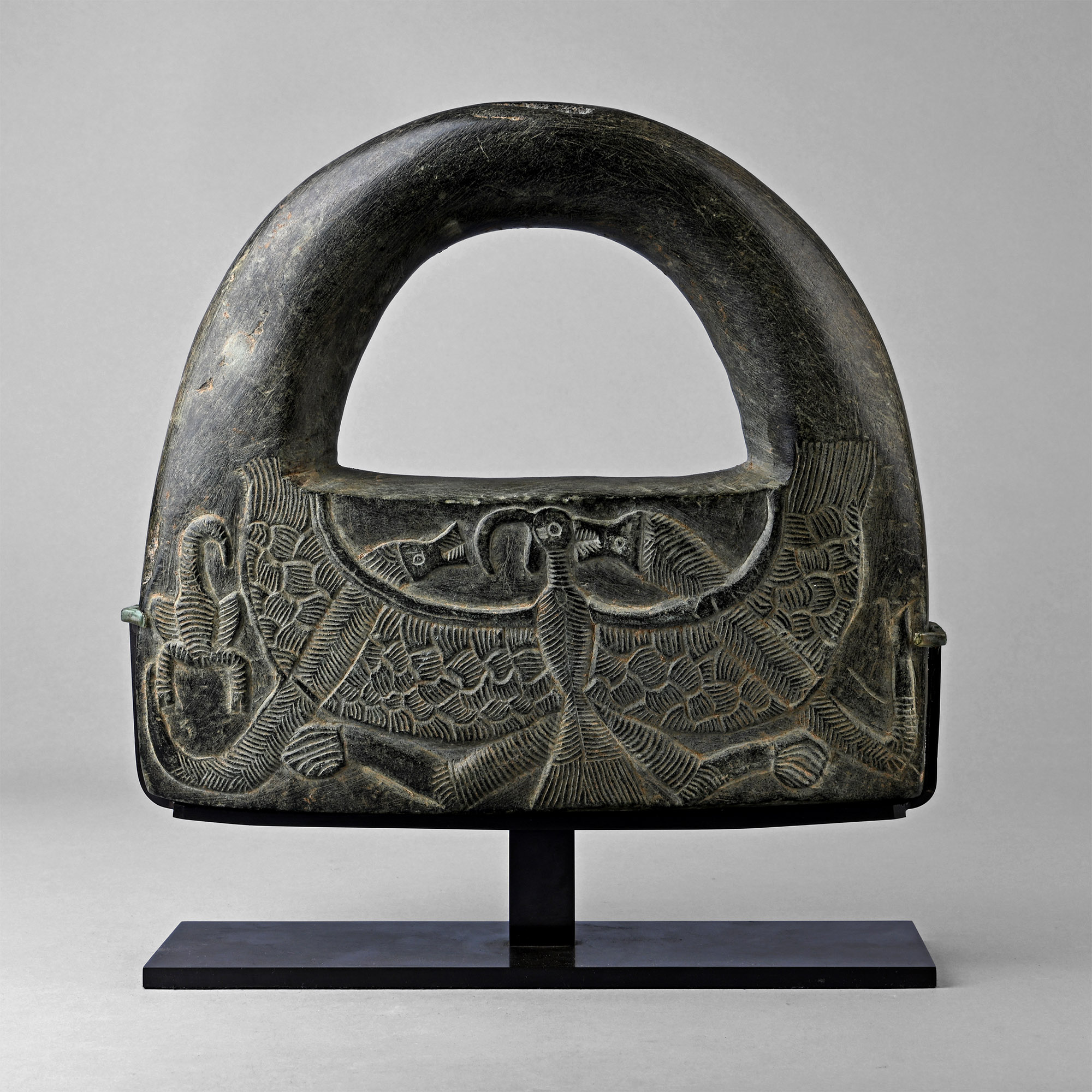
Large Bactrian Black Chlorite 'Hand Bag' Ceremonial Weight
3RD MILLENNIUM B.C.
11 1/8 in. (6.25 kg total, 28.3 cm high including stand).
D-shaped in profile with a round-section loop; obverse with a reserved scene of two lions with hatched detailing to the fur advancing towards a small quadruped placed perpendicular to them; reverse with a median eagle with wings extended and feather detailing, flanked by rearing serpents and a scorpion; mounted on a custom-made stand.
Provenancewith Gallery Rosen Ancient Art, Tel Aviv, 10 November 1969.
Ex London, UK, gallery, 1971-early 2000s.
London, UK, collection.
Accompanied by a copy of an original invoice from Gallery Rosen Ancient Art, 10 November 1969.
Accompanied by an academic report by Dr Raffaele D’Amato.
This lot has been checked against the Interpol Database of stolen works of art and is accompanied by search certificate number no.13246-252973.
Cf. Various, 7000 Years of Iranian Art, Exhibition catalogue, Smithsonian Institute, 1964, p.54 & p.118, illustration no.11; and see Vidale, M., ‘The Function of a Chlorite Hand-Bag of the Halil Rud Civilization as inferred from its Wear Traces’ in Iranian Journal of Archaeological Studies, 2, 2012, pp.1-11, fig.1; Vidale, M., Treasures from the Oxus: The Art and Civilisation of Central Asia, London, 2017, pp.44-51, figs.41-45, for a variety of stones and shapes.
FootnotesAmong the most iconic intercultural style objects are the so-called 'lock' or 'handbag' weights. They have been found in a variety of different colourful stones, such as breccia, chlorite, fossiliferous limestone, calcite and onyx. At the beginning, these objects were probably not weights at all, but were likely badges of high office, carried to indicate authority. Similar objects have been found throughout Mesopotamia, the islands of the Persian Gulf, on the Iranian steppe, and in the Indus Valley.
CONDITIONTimeLine Auctions follows a vetting process to ensure the authenticity and legality of all items, reinforcing our commitment to integrity and responsible trading. Each antiquity, antique, and coin lot undergoes thorough examination by a vetting committee of at least ten external specialists, professional trade association members, scientists, and archaeologists: Our Vetting Process
AUCTIONS:
TimeLine is a leading auction house specialising in antiquities, ancient art, collectables, natural history, coins, medals, and books. Our auctions offer museums, collectors, historians, and enthusiasts the opportunity to acquire unique and historically significant pieces.
LOT 0225
Large Bactrian Black Chlorite 'Hand Bag' Ceremonial Weight
Sold for (Inc. bp): £13,000
-
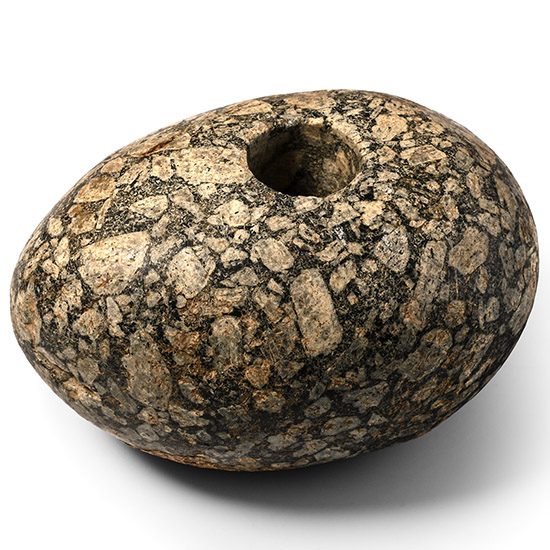
Western Asiatic Stone Macehead
4th millennium B.C.Estimate: £400 - 600 (‡+bp*)
Opening Bid: £200
Oval in plan with a tapering drilled central socket. 360 grams, 81 mm
Ex private collection, Contessa L.G., since the 1980s. Private collection, acquired in 1999.
The mace was a close-combat weapon consisting of a short handle and a massive striking element—the head, a striking weapon capable of inflicting severe contusions and internal fractures. Although a very archaic and rather primitive weapon, the mace was nevertheless widely used in the ancient East. Its sacred and representative role was particularly significant. Due to its shape, it symbolised the owner's masculinity and was therefore one of the primary insignia of power, symbolising the inseparability of its civil, military, and sacred-magical essences—ensuring the functioning and reproduction of the collective and the conditions for its existence. This is why we so often encounter ‘ceremonial’ maces, especially those made of stone—in this case, undoubtedly a ritual material. However, it must be said that stone, as a material for a mace head, was in no way inferior to metal in terms of combat qualities, while being much more labour-intensive to manufacture, which was precisely what appealed to the ritual, symbolic role of this weapon. -
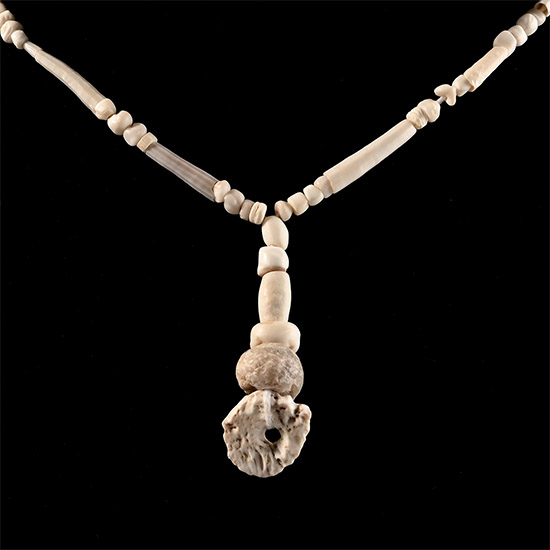
Western Asiatic Cream Glass and Other Bead Necklace String
1st millennium B.C. and laterSold for (Inc. bp): £20
Composed of mainly oblate and tubular beads with larger beads as the central feature, restrung. 12.5 grams, 30.6 cm
Acquired in the 1990s. Ex London, UK, collection. -
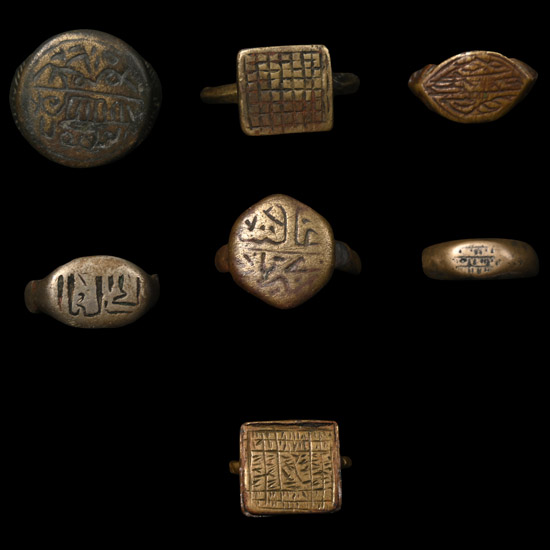
Western Asiatic Bronze Ring Collection
Circa 16th-18th century A.D.Sold for (Inc. bp): £111
Comprising seven rings, each with a decorative bezel, one fragmentary. 43.3 grams total, 18-27 mm
Acquired in the late 1980s-early 1990s. Private collection, London, UK
