
Loading, please wait...
LOT 1190
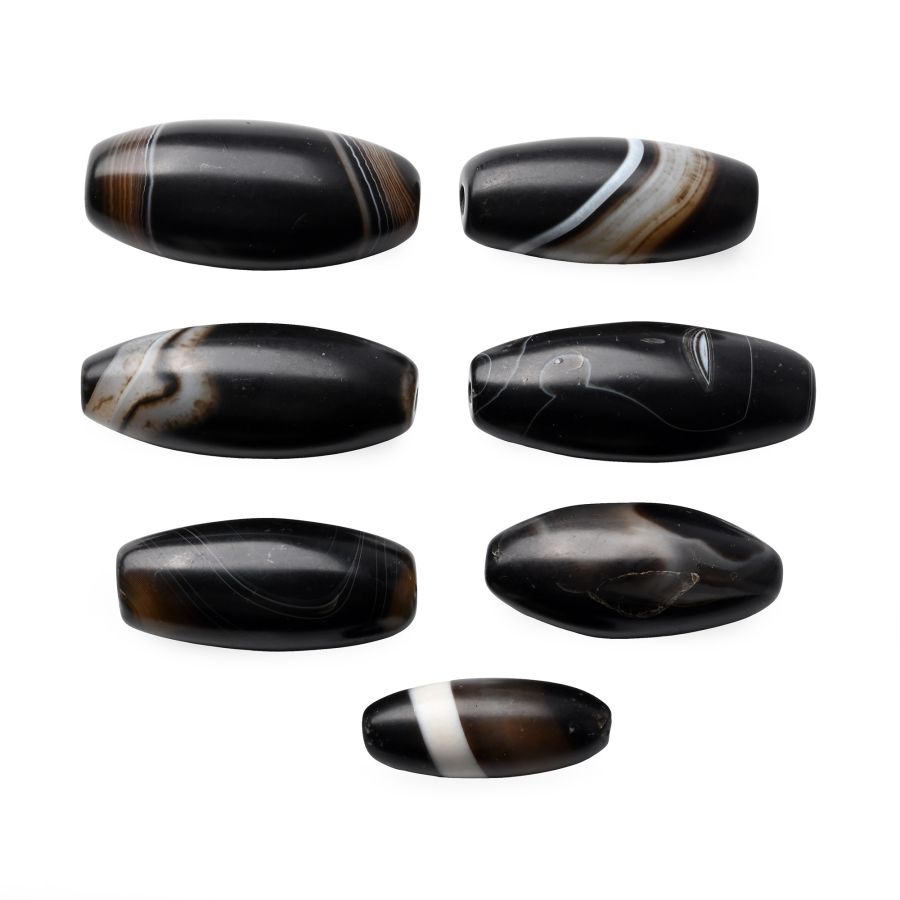
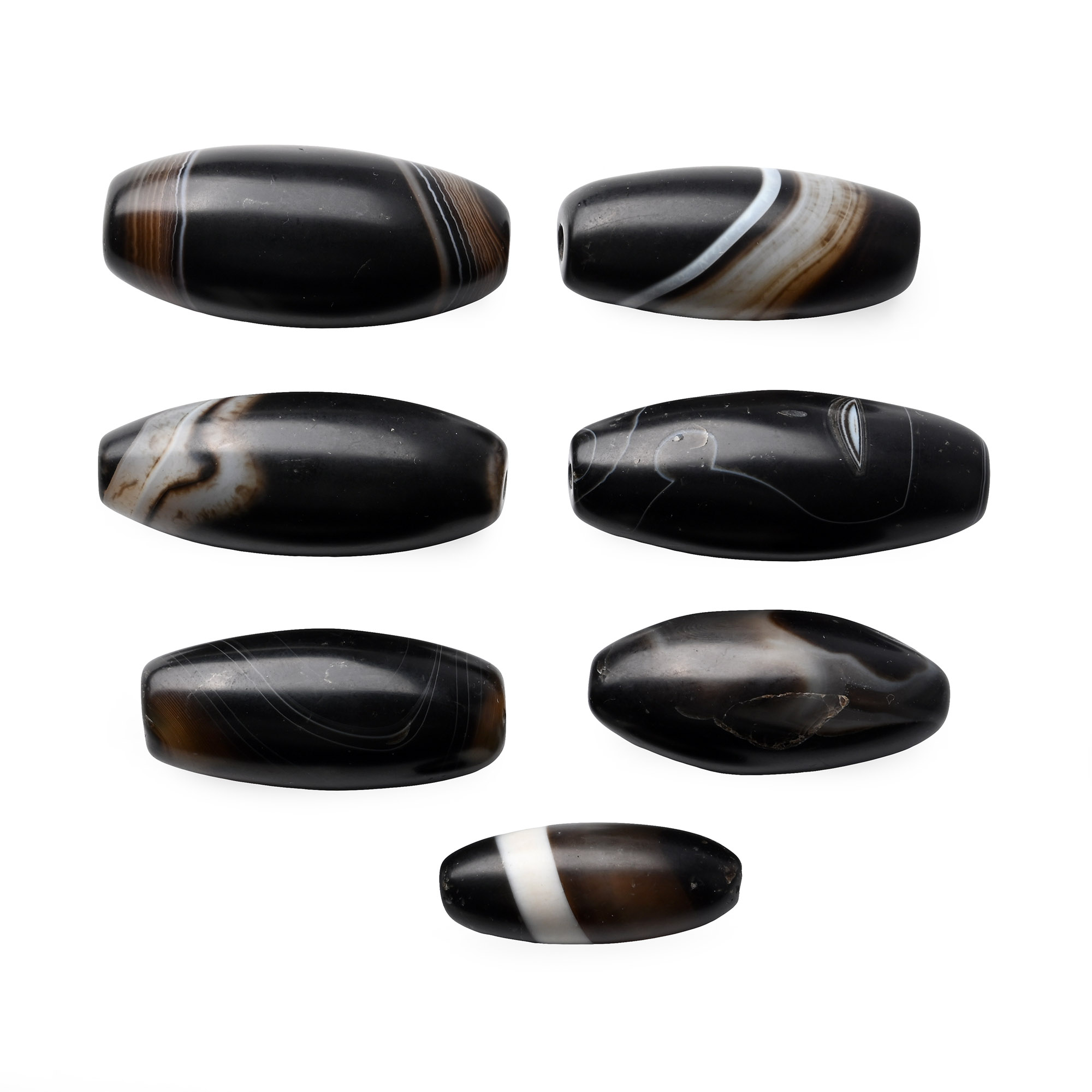
Large Bactrian Banded Agate Bead Group
CIRCA 1ST MILLENNIUM B.C.-EARLY 1ST MILLENNIUM A.D. OR LATER
1 3/8 - 2 in. (166 grams total, 35-50 mm).
Comprising of large fusiformed beads. [7]
ProvenanceAcquired on the UK art market.
Private collection, England.
TimeLine Auctions follows a vetting process to ensure the authenticity and legality of all items, reinforcing our commitment to integrity and responsible trading. Each antiquity, antique, and coin lot undergoes thorough examination by a vetting committee of at least ten external specialists, professional trade association members, scientists, and archaeologists: Our Vetting Process
AUCTIONS:
TimeLine is a leading auction house specialising in antiquities, ancient art, collectables, natural history, coins, medals, and books. Our auctions offer museums, collectors, historians, and enthusiasts the opportunity to acquire unique and historically significant pieces.
LOT 1190
Large Bactrian Banded Agate Bead Group
Estimate £400 - 600€460 - 700 (for guidance only)$540 - 810 (for guidance only)
-
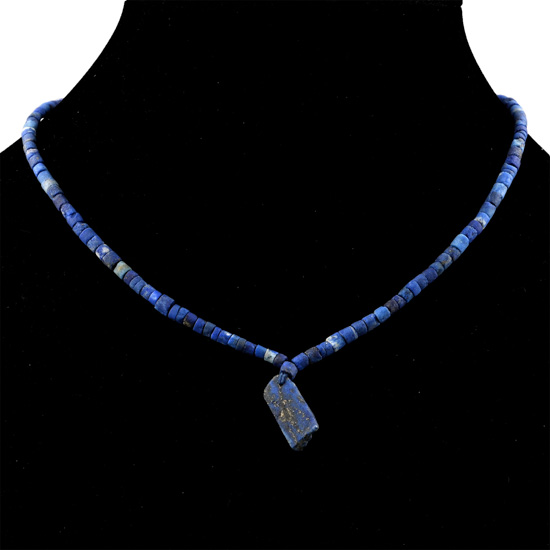
Bactrian Style Lapis Lazuli and Other Bead Necklace String
20th century A.D.Sold for (Inc. bp): £52
Composed of small tubular beads with a tabular pendant; restrung. 9.91 grams, 33 cm
From London, UK, gallery collection, 1990s. -
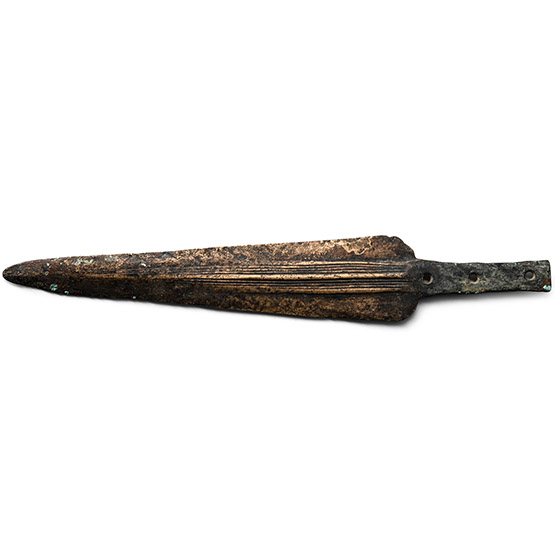
Luristan Bronze Dagger Blade
800-600 B.C.Sold for (Inc. bp): £195
With a triangular blade fitted with three fullers, with a handle cast onto the blade, showing three fastening holes. 72 grams, 20 cm
Ex Abelita family collection, 1980s-2000s.
These weapons belong to the Early Median and Achaemenid Period. The blades were often inserted inside an openwork scabbard, cast with the lost wax process, while the handle was instead cast onto the blade. -
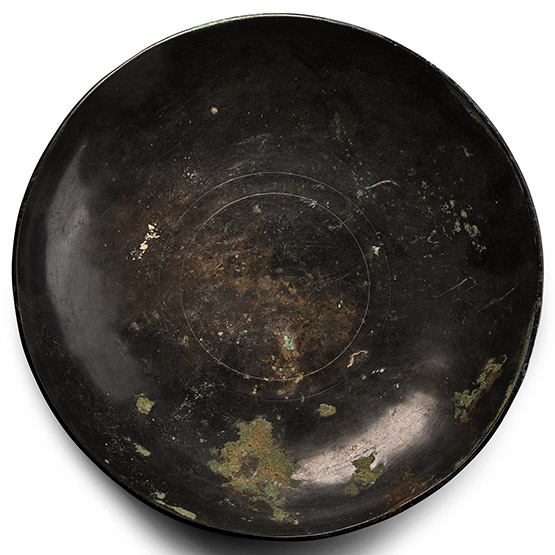
Western Asiatic Bronze Bowl
Late 1st millennium B.C.Sold for (Inc. bp): £85
Broad and shallow with incised concentric rings to the inner face. 220 grams, 19 cm
Ex 1990s collection and with a central London gallery.
