
Loading, please wait...
LOT 1374
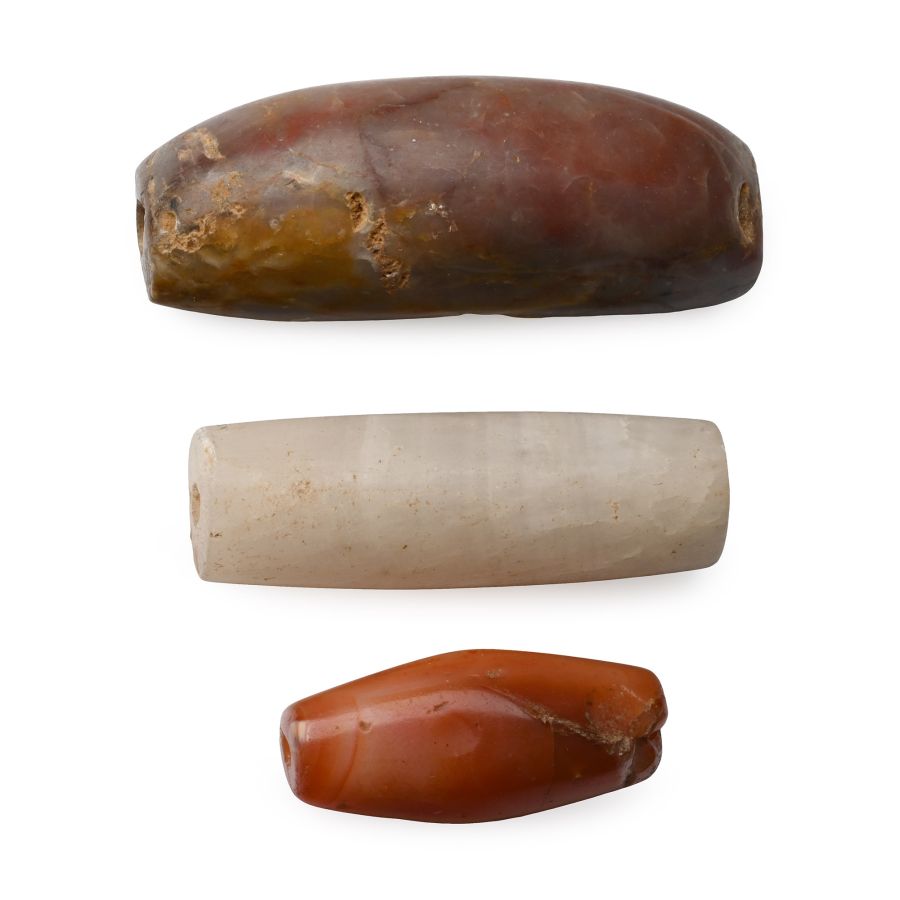
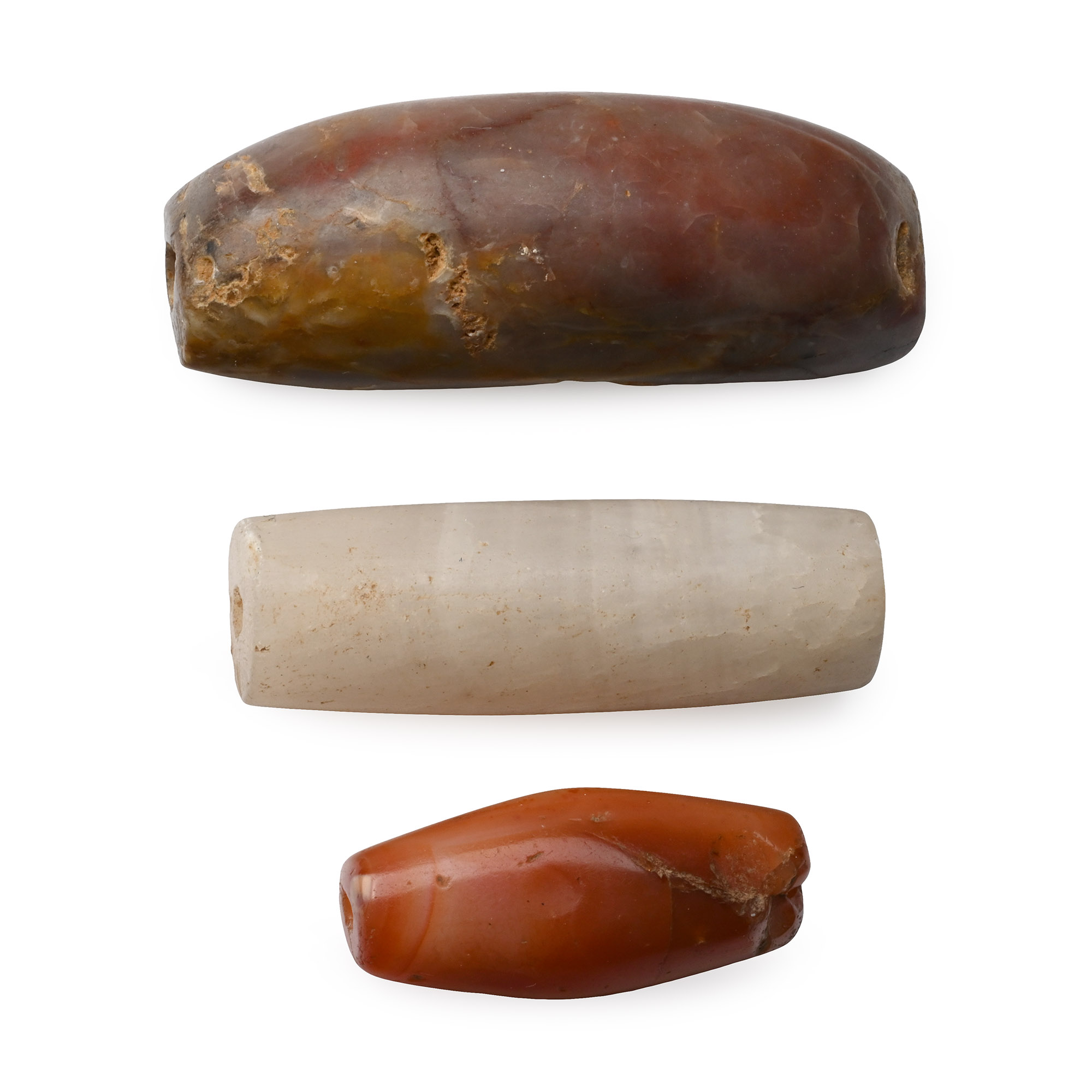
Large Bactrian Agate Bead Group
CIRCA 1ST MILLENNIUM B.C.-EARLY 1ST MILLENNIUM A.D.
1 1/8 - 2 in. (54 grams total, 30-50 mm).
Comprising of tubular and biconical beads. [3]
ProvenanceAcquired on the UK art market.
Private collection, England.
TimeLine Auctions follows a vetting process to ensure the authenticity and legality of all items, reinforcing our commitment to integrity and responsible trading. Each antiquity, antique, and coin lot undergoes thorough examination by a vetting committee of at least ten external specialists, professional trade association members, scientists, and archaeologists: Our Vetting Process
AUCTIONS:
TimeLine is a leading auction house specialising in antiquities, ancient art, collectables, natural history, coins, medals, and books. Our auctions offer museums, collectors, historians, and enthusiasts the opportunity to acquire unique and historically significant pieces.
LOT 1374
Large Bactrian Agate Bead Group
Estimate £200 - 300€230 - 350 (for guidance only)$270 - 410 (for guidance only)
-
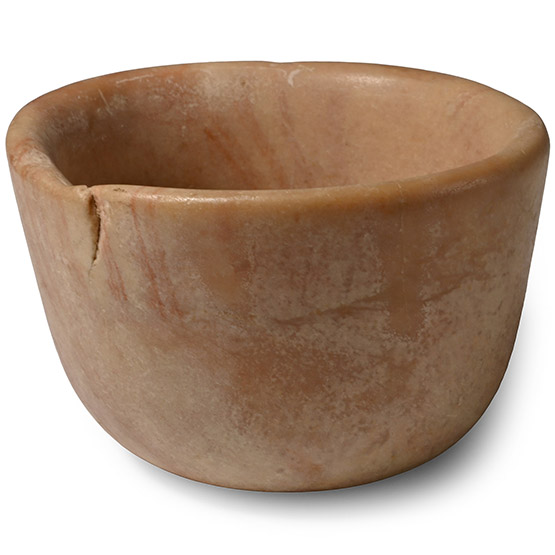
Western Asiatic Stone Cup
1st millennium B.C.Estimate: £100 - 140 (‡+bp*)
Opening Bid: £50
Carved with a broad flat base, gently flared profile, rounded rim. 174 grams, 72 mm wide
Private collection, assembled in the 1950s-1970s, thence by descent. -
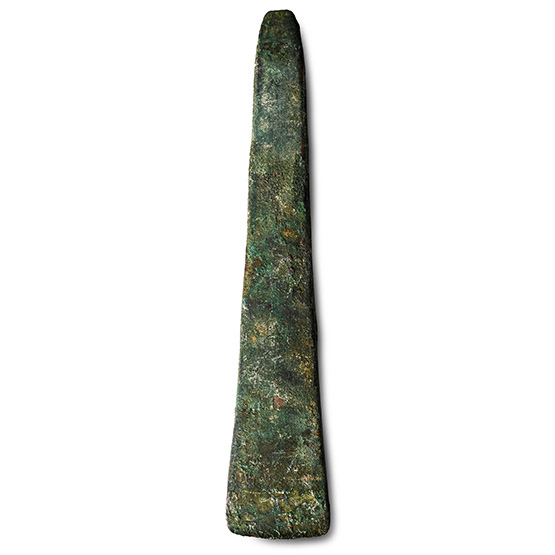
Western Asiatic Bronze Flat Axe
2nd millennium B.C.Estimate: £100 - 140 (+bp*)
Opening Bid: £50
Trapezoid blade with narrow butt and curved cutting edge, rectangular in cross-section. 264 grams, 18.5 cm
Ex Abelita family collection, 1980s-2000s.
This was one of the commonest tool types in the Early and Middle Cypriot Bronze Age, but rarer in the Late Bronze Age. These axes were fixed to a wooden shaft with thongs. -
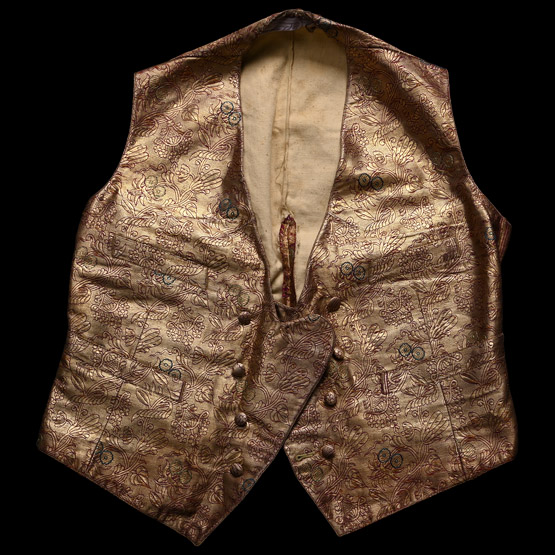
Uzbek Waistcoat with Floral Design
20th century A.D.Sold for (Inc. bp): £98
Sleeveless waistcoat with four external pockets, two vertical rows of covered buttons; some flowers outlined in blue or green; half-belt to rear. 326 grams, 54 cm high
Private collection, UK.
