
Loading, please wait...
LOT 0175
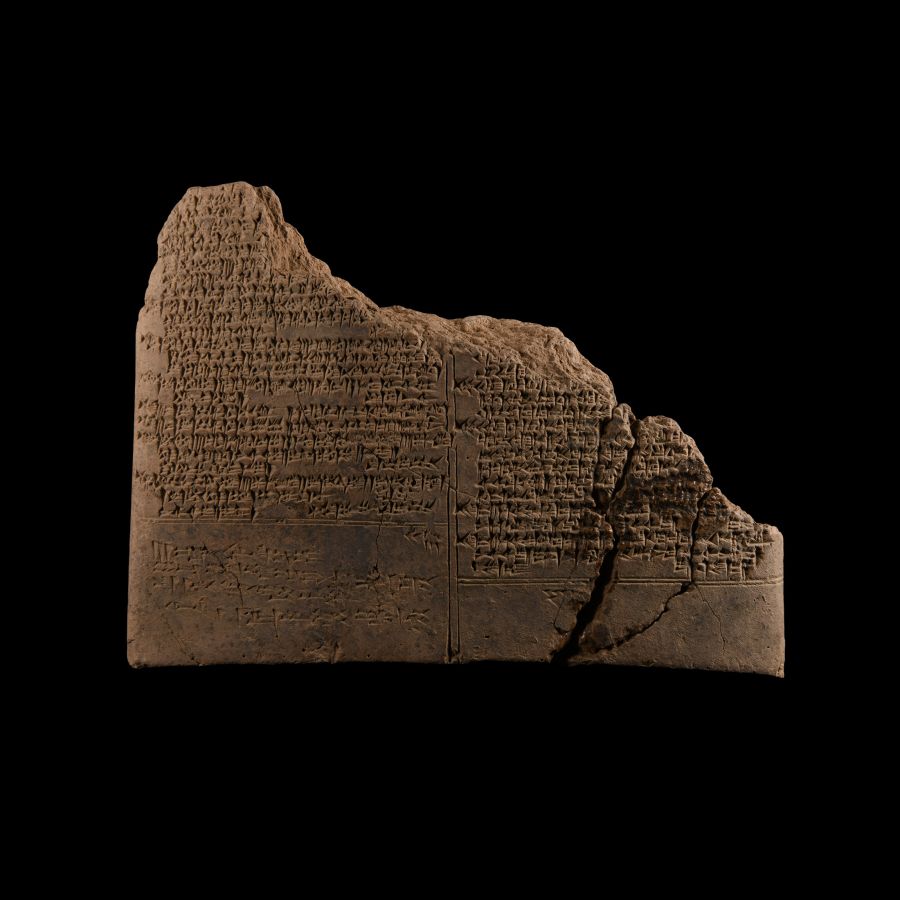
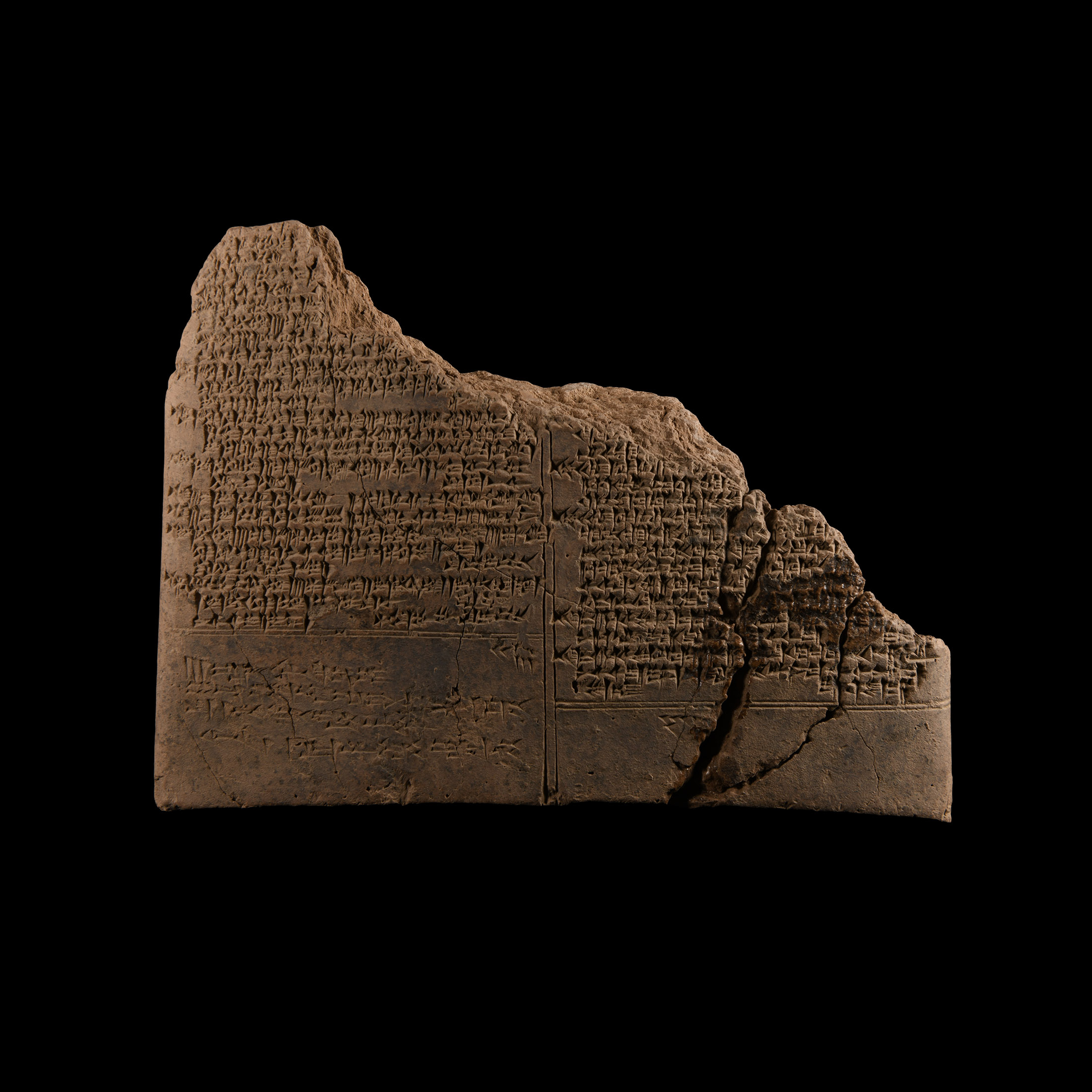
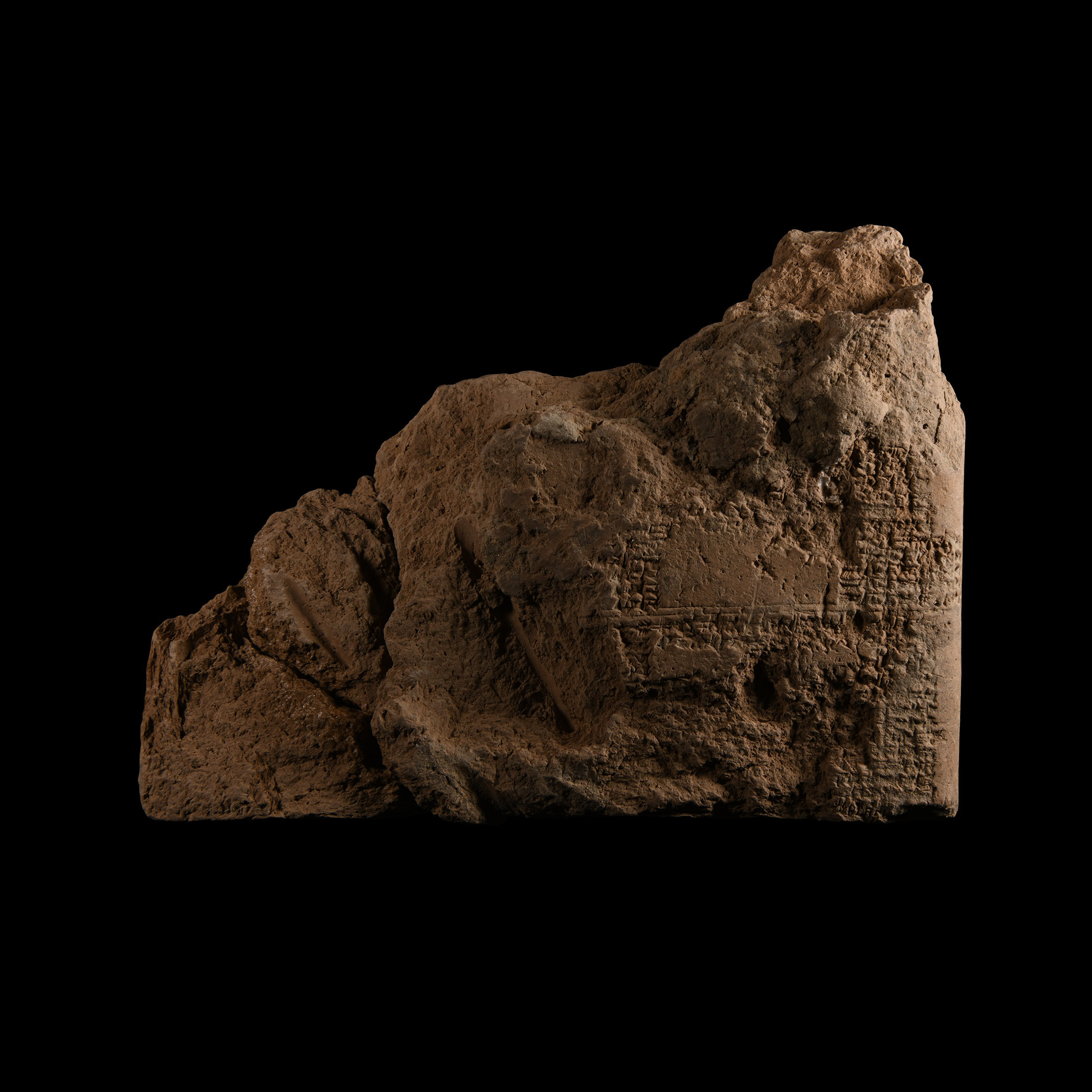
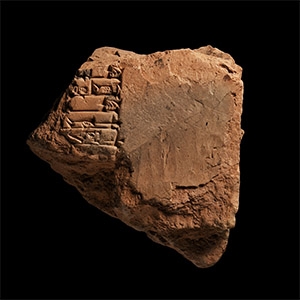
Large Babylonian Cuneiform Tablet Fragment Concerning the Study of the Sacrificial Liver
LATE 2ND MILLENNIUM B.C.
6 1/8 in. (533 grams, 15.6 cm wide).
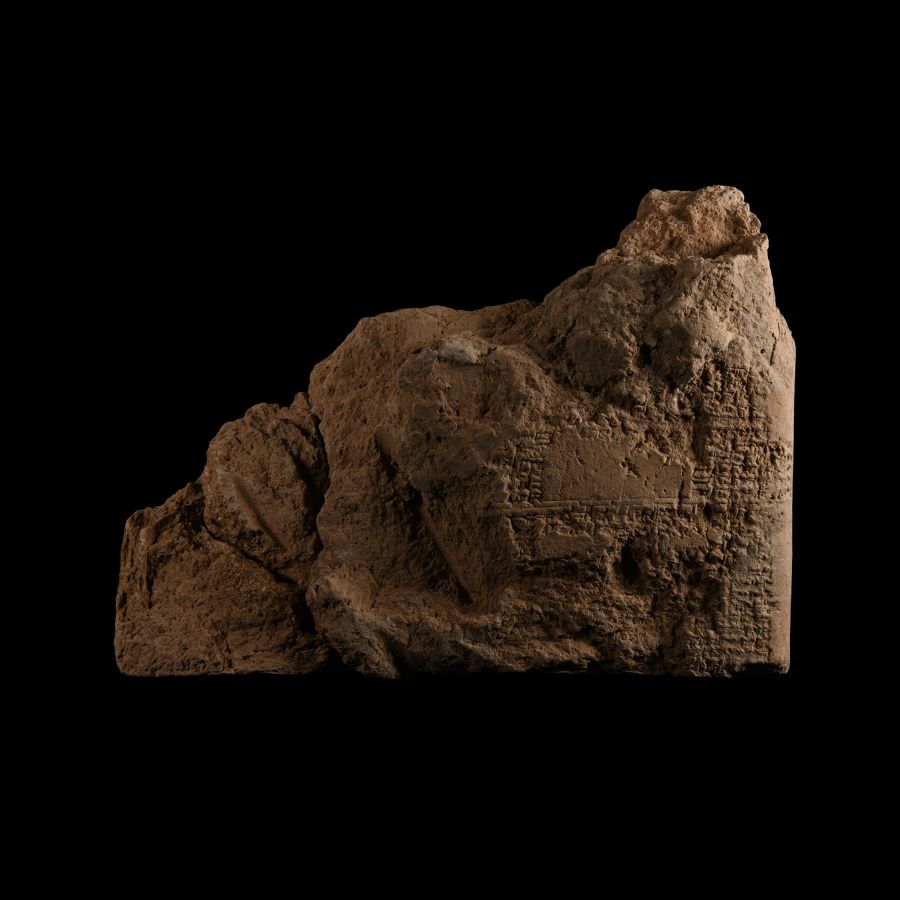
A large clay tablet fragment bearing panels of cuneiform text to the principal face, separated by plain parallel lines; remains of cuneiform text to the reverse; a Babylonian treatise concerning the study of the liver of a sacrificial lamb; repaired.
ProvenanceSpecialised collection of cuneiform texts, the property of a London gentleman and housed in London before 1992.
Thence by descent to family members.
Examined by Professor Wilfrid George Lambert FBA (1926-2011), historian, archaeologist, and specialist in Assyriology and Near Eastern archaeology, in the late 1980s and early 1990s.
The collection is exceptional for the variety of types, including some very rare and well preserved examples.
The prophetic practise of hepatoscopy, was called in Akkadian barûtu, the art of divination. It is a collection of omens in standard Akkadian (including many sumerograms) each composed of a protasis (description of the configuration of the organ at the time of observation by the diviner) followed by the apodosis giving the omen itself. The fragment preserves the beginning of the treaty on the face and the end on the reverse. Among the various omens is a so-called historical one concerning King Sargon of Akkad (ca. 2350 BCE). A colophon indicates that the text is a copy of an ancient original. The name of the scribe is Mudammiq-Adad. His work was verified by Ur-Nintinuga, a Sumerian name from the Cassite period.
CONDITIONTimeLine Auctions follows a vetting process to ensure the authenticity and legality of all items, reinforcing our commitment to integrity and responsible trading. Each antiquity, antique, and coin lot undergoes thorough examination by a vetting committee of at least ten external specialists, professional trade association members, scientists, and archaeologists: Our Vetting Process
AUCTIONS:
TimeLine is a leading auction house specialising in antiquities, ancient art, collectables, natural history, coins, medals, and books. Our auctions offer museums, collectors, historians, and enthusiasts the opportunity to acquire unique and historically significant pieces.
LOT 0175
Large Babylonian Cuneiform Tablet Fragment Concerning the Study of the Sacrificial Liver
Sold for (Inc. bp): £3,120
-
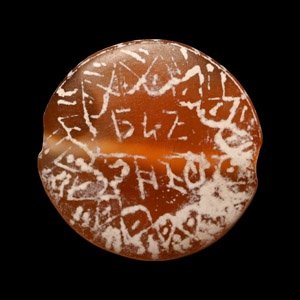
Western Asiatic Bifacial Carnelian Bead with Hebrew Legend
Circa late 1st millennium B.C.Sold for (Inc. bp): £260
A bifacial carnelian coin bead displaying etched Hebrew text within a geometric frame; drilled for suspension. 6.28 grams, 24 mm
Acquired 1969-1999. London collection of the late Mr S.M., thence by descent. -
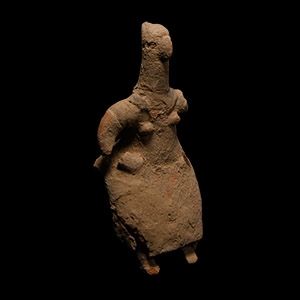
Chalcolithic Female Figurine
Circa 3rd millennium B.C.Estimate: £800 - 1,000 (+bp*)
Opening Bid: £444
A ceramic figure of a seated female with applied facial features, applied collar, arms bent and hands on the hips, flared skirt with separately moulded legs protruding. 135 grams, 12.5 cm
Collection of a deceased London gentleman, 1979-1999, by descent. Accompanied by a copy of a thermoluminescence analysis report no.N122k32 from Oxford Authentication. -
Ur III Cuneiform Tablet Fragment Relating to Food Distribution
Late 3rd millennium B.C.Sold for (Inc. bp): £203
A fragment of a pillow-shaped ceramic tablet with neatly impressed columns of cuneiform text, accounting of Ur III food distribution, representing wages. 82 grams, 67 mm
Fine condition.
Ex UK art market, 1970s. Property of a London gentleman.
