
Loading, please wait...
LOT 0290
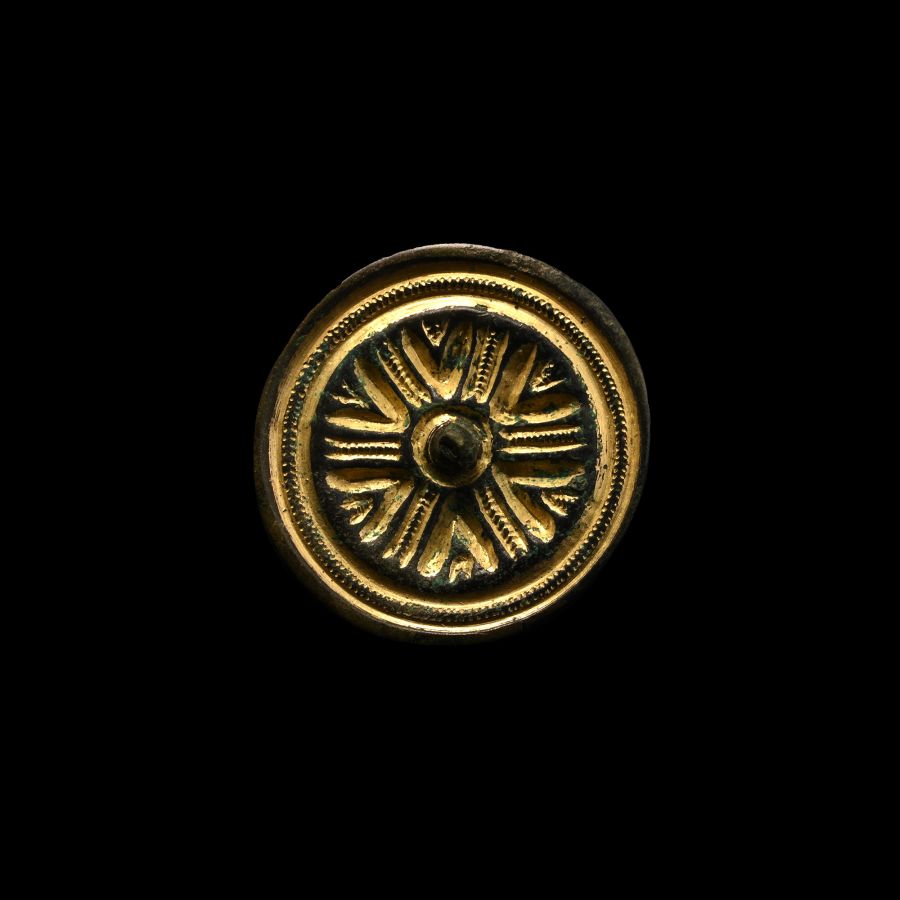
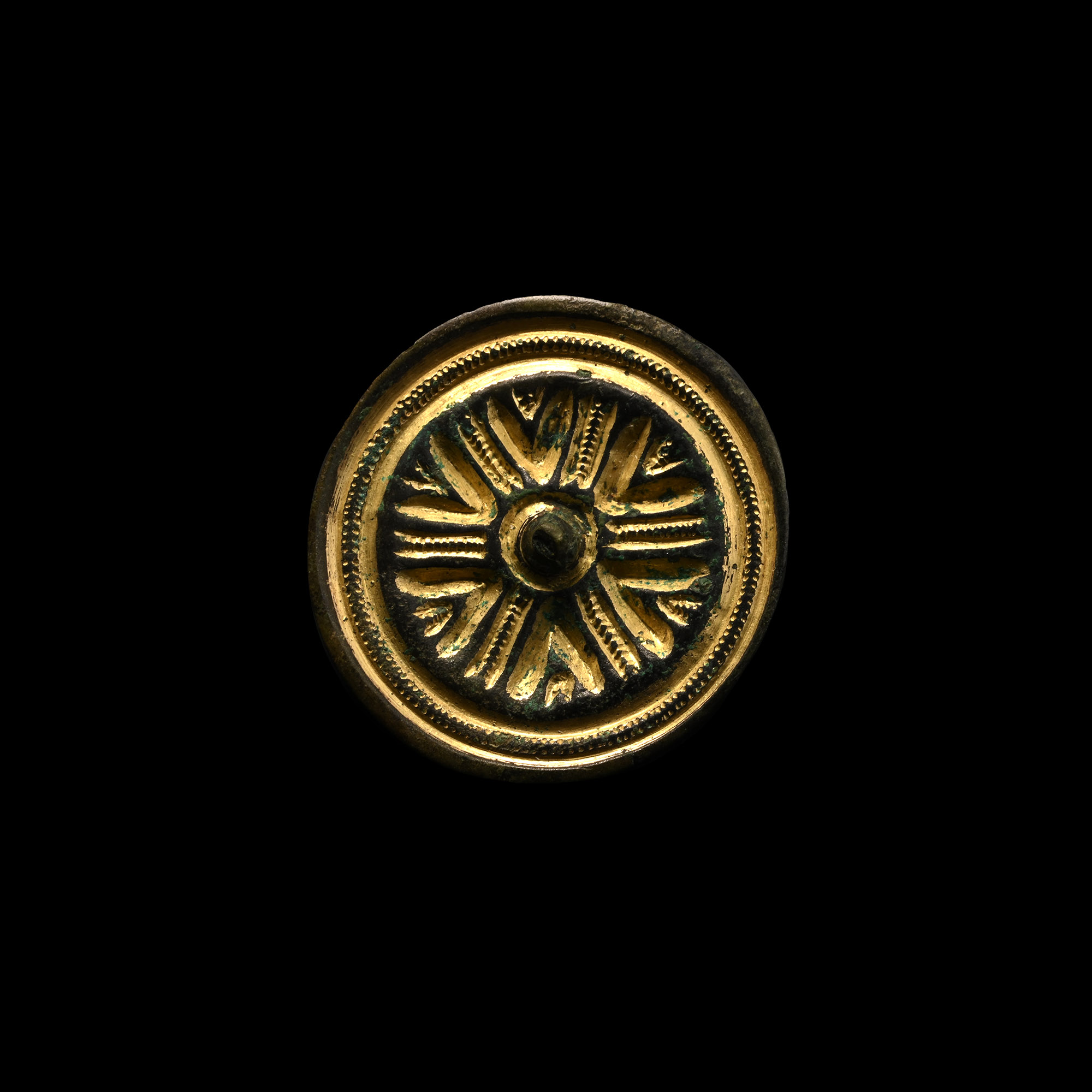
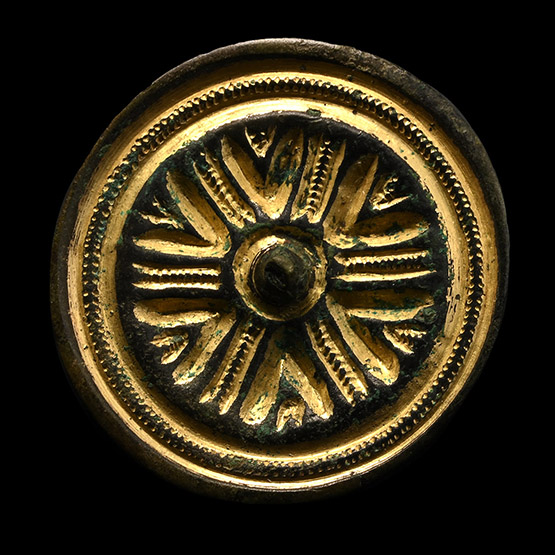
Large Anglo-Saxon Gilt Bronze Saucer Brooch
LATE 5TH-6TH CENTURY A.D.
1 3/8 in. (20.4 grams, 37 mm).
Discoid in plan with raised rim and inner ridge decorated with notches, six radiating arms with notch detailing and interstitial chevrons; central knop rivetted from reverse; remains of catch to reverse.
ProvenanceFound Seaham, Co Durham, UK.
Property of a Durham private collector.
Cf. MacGregor, A. & Bolick, E., A Summary Catalogue of the Anglo-Saxon Collections (Non-Ferrous Metals), Oxford, 1993, item 2.27, for type.
FootnotesThe saucer brooch was one of the commonest types of brooches used by Anglo-Saxon women, usually occurring in matched pairs on the chest. This typology extends in time from the 5th to the late 6th century, especially diffused south of the Humber and East of the Severn, with a concentration in the south Midlands and Upper Thames Valley.
CONDITIONTimeLine Auctions follows a vetting process to ensure the authenticity and legality of all items, reinforcing our commitment to integrity and responsible trading. Each antiquity, antique, and coin lot undergoes thorough examination by a vetting committee of at least ten external specialists, professional trade association members, scientists, and archaeologists: Our Vetting Process
AUCTIONS:
TimeLine is a leading auction house specialising in antiquities, ancient art, collectables, natural history, coins, medals, and books. Our auctions offer museums, collectors, historians, and enthusiasts the opportunity to acquire unique and historically significant pieces.
-
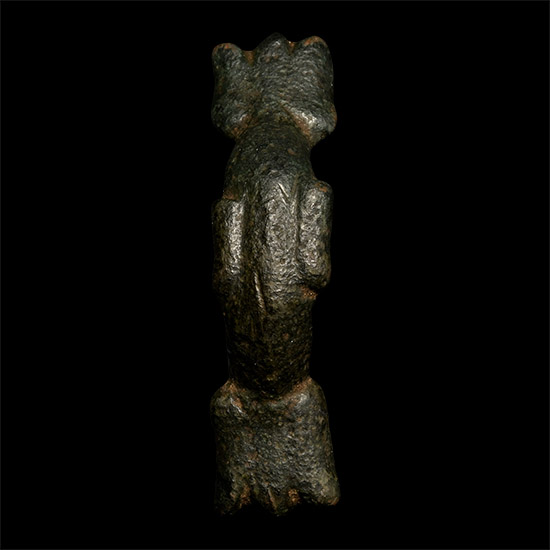
Anglo-Saxon Bronze Equal-Armed Brooch
Circa 700-900 A.D.Sold for (Inc. bp): £13
Deep bow with lateral flanges, pinlugs and catchplate on the reverse. 10.6 grams, 43 mm
Found North Yorkshire, UK. -
Large Anglo-Saxon Bronze Florid Cruciform Brooch
Late 5th-6th century A.D.Sold for (Inc. bp): £442
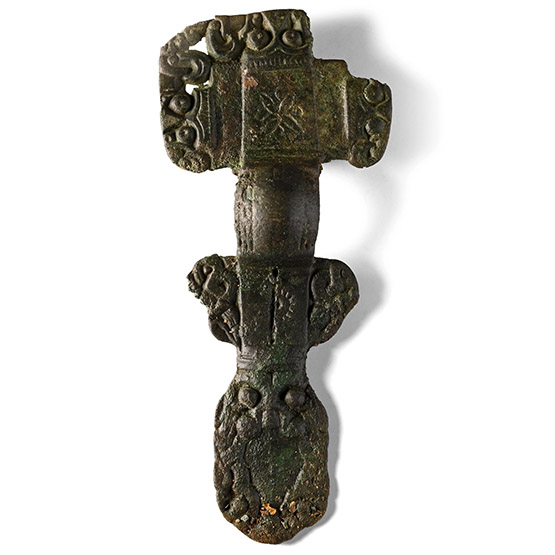
With highly decorative openwork border of Style I ornament to the headplate formed as a rectangular median plate with lateral wings, enhanced with punched-pellet detail to the sides and top edge of each; raised central square panel with incised rosette; to the middle of each edge a Style I human mask in plan, formed as a T-shaped brow-and-nasal with two pellet eyes, with pairs of Style I profile bird-heads with curved beaks; the bow deep with facetting at each end; the footplate rectangular with Style I lappets; transverse collar above a finial Style I human mask with complex beard below; pin-lugs and scar for catchplate to reverse. 52 grams, 12.3 cm
Found Seaham, Co Durham, UK. Property of a Durham private collector.
The florid cruciform brooch presents a headplate as a rectangle above the bow, with wings visible to either side. The top and side-knobs show stylised human faces with prominent eyes. The decoration is in style 1. The finial also has the prominent eyes found on the headplate surrounds, with the nose formed by an extension of the footplate and curly moustaches forming at the same time as the part of the flanking animals. -
Large Anglo-Saxon Gilt Bronze Saucer Brooch
Late 5th-6th century A.D.Sold for (Inc. bp): £754
Discoid in plan with raised rim and inner ridge decorated with notches, six radiating arms with notch detailing and interstitial chevrons; central knop rivetted from reverse; remains of catch to reverse. 20.4 grams, 37 mm
Found Seaham, Co Durham, UK. Property of a Durham private collector.
The saucer brooch was one of the commonest types of brooches used by Anglo-Saxon women, usually occurring in matched pairs on the chest. This typology extends in time from the 5th to the late 6th century, especially diffused south of the Humber and East of the Severn, with a concentration in the south Midlands and Upper Thames Valley.
