
Loading, please wait...

LOT 1343
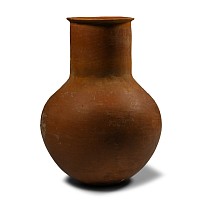
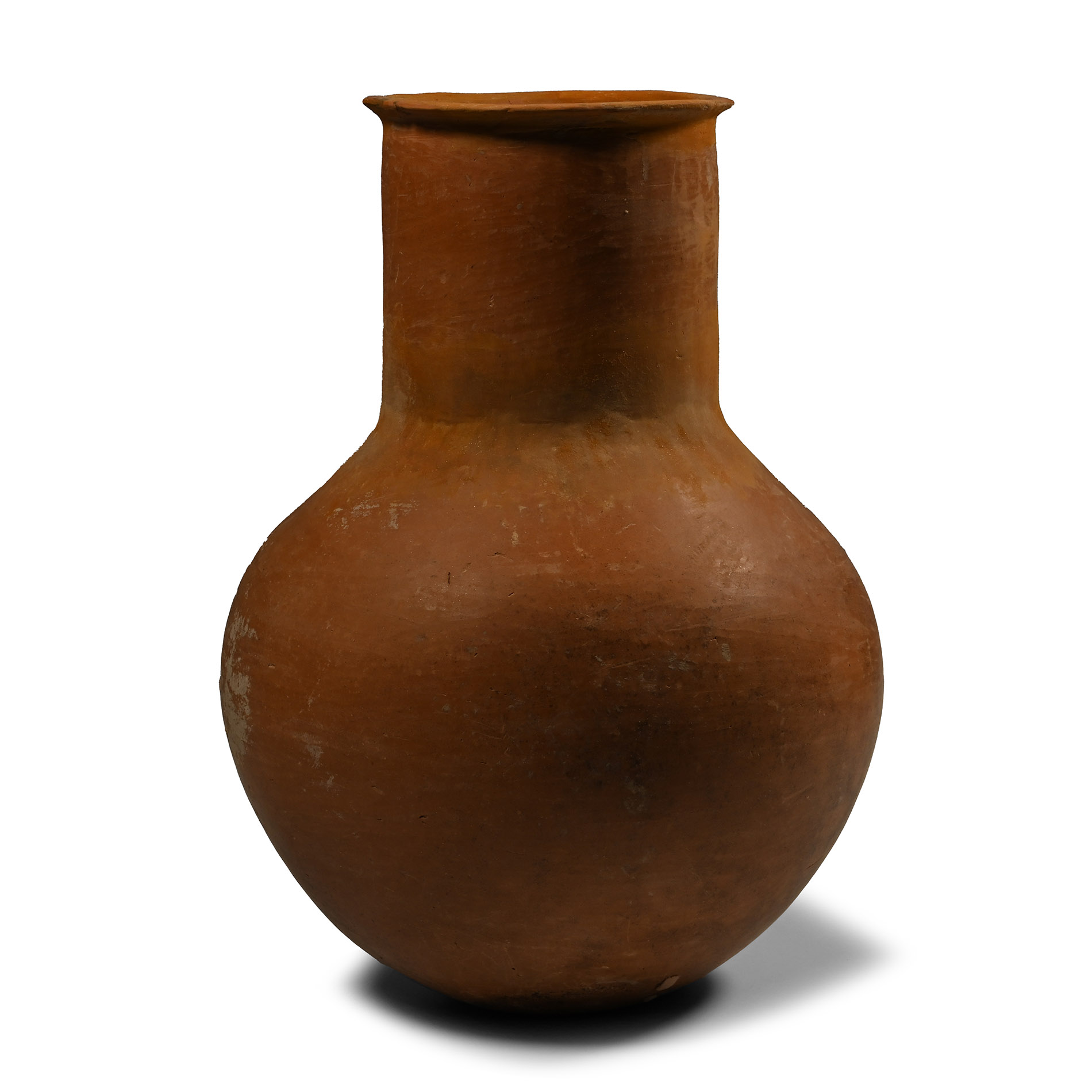
Large Amlash Terracotta Jar
1ST MILLENNIUM B.C.
9 3/4 in. (1.09 kg, 24.7 cm).
With bulbous body, broad shoulder, tall neck and flared rim to the mouth.
ProvenanceFrom a London, UK, gentleman's collection of ancient pottery and artefacts, 1990s.
This lot has been cleared against the Art Loss Register database, and is accompanied by an illustrated lot declaration signed by the Head of the Antiquities Department, Dr Raffaele D'Amato.
TimeLine Auctions follows a vetting process to ensure the authenticity and legality of all items, reinforcing our commitment to integrity and responsible trading. Each antiquity, antique, and coin lot undergoes thorough examination by a vetting committee of at least ten external specialists, professional trade association members, scientists, and archaeologists: Our Vetting Process
AUCTIONS:
TimeLine is a leading auction house specialising in antiquities, ancient art, collectables, natural history, coins, medals, and books. Our auctions offer museums, collectors, historians, and enthusiasts the opportunity to acquire unique and historically significant pieces.
-
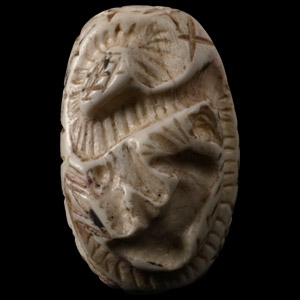
Mesopotamian Susa Type Stamp Seal
Circa 3rd millennium B.C.Sold for (Inc. bp): £293
A large oval stamp seal with a loop to the top with engraved X-motifs, the underside with a quadruped and snakes, stars(?) in exergue. 20.7 grams, 39 mm
From the 'S' collection, acquired 1970-1990s. The collection was seen and studied by W.G. Lambert, late Professor of Assyriology at the University of Birmingham, 1970-1993. Accompanied by a copy of a report from Peter Gert Van der Veen, senior lecturer of Levantine Archaeology Johannes Gutenberg-Universität Mainz. This lot has been cleared against the Art Loss Register database, and is accompanied by an illustrated lot declaration signed by the Head of the Antiquities Department, Dr Raffaele D'Amato. -
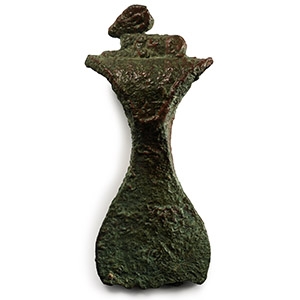
Mesopotamian Bronze Axehead with a Reclining Ibex
3rd-2nd millennium B.C.Sold for (Inc. bp): £468
With a paddle-shaped blade and short neck, round-section socket expanding at the rear with a reclining ibex, the quadruped modelled in a relaxed attitude with its right foreleg and hindleg positioned away from the body, erect head and large curving horns. 143 grams, 10.4 cm
UK private collection before 2000. Acquired on the UK art market. Property of a London gentleman. This lot has been cleared against the Art Loss Register database, and is accompanied by an illustrated lot declaration signed by the Head of the Antiquities Department, Dr Raffaele D'Amato. -
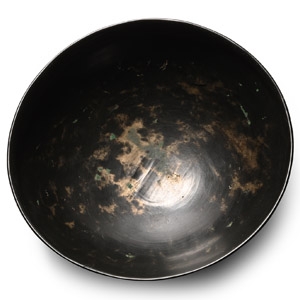
Sasanian High Tin Bronze Bowl
3rd-7th century A.D.Sold for (Inc. bp): £124
With rounded body and base, inverted rim. 192 grams, 14.5 cm
Acquired 1980-2015. Ex Abelita family collection. This lot has been cleared against the Art Loss Register database, and is accompanied by an illustrated lot declaration signed by the Head of the Antiquities Department, Dr Raffaele D'Amato.
