
Loading, please wait...
LOT 1518
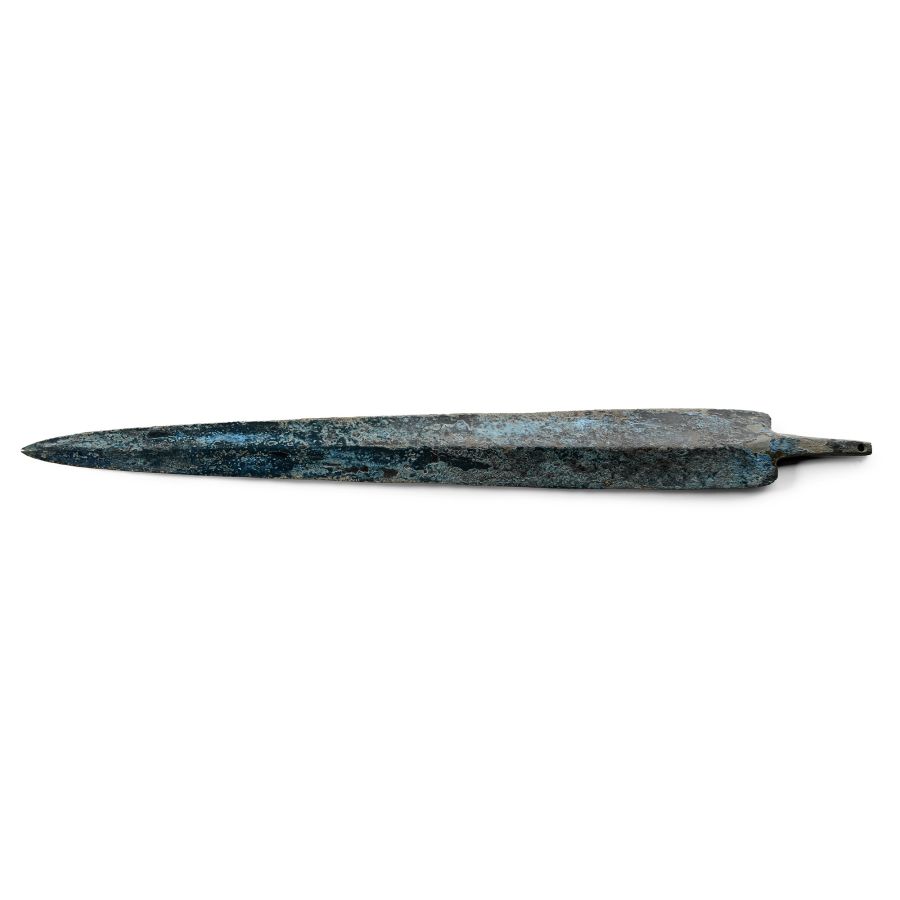
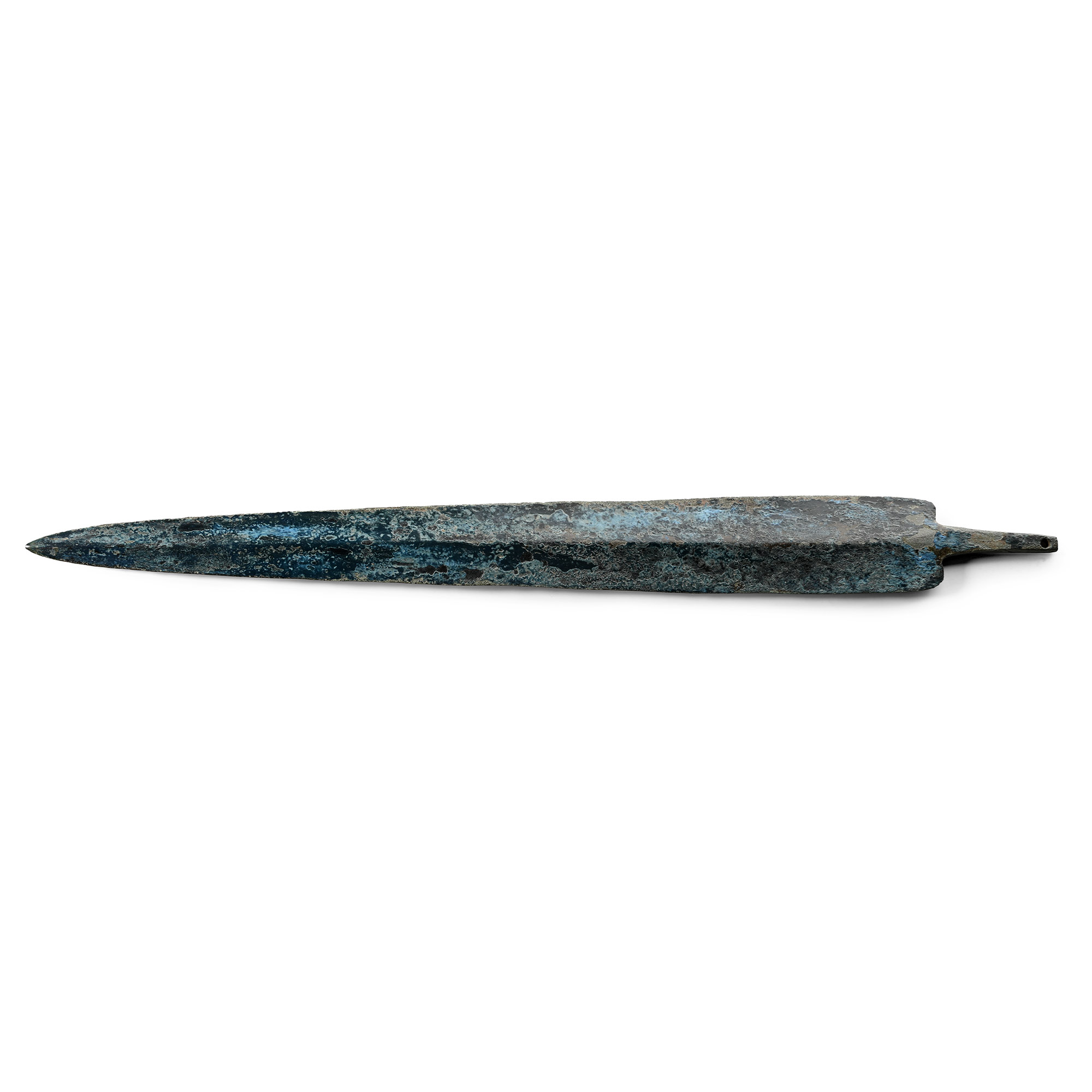
Large Amlash Bronze Spear-Head
14TH-10TH CENTURY B.C.
15 3/8 in. (300 grams, 39 cm).
Slender blade with raised midrib and a short, pierced tang; Amlash or Marlik.
ProvenanceEx Abelita family collection, 1990s.
LiteratureCf. Khorasani, M.M., Arms and Armor from Iran: The Bronze Age to the End of the Qajar Period, Tübingen, 2006, nos.275,282, for types.
CONDITIONTimeLine Auctions follows a vetting process to ensure the authenticity and legality of all items, reinforcing our commitment to integrity and responsible trading. Each antiquity, antique, and coin lot undergoes thorough examination by a vetting committee of at least ten external specialists, professional trade association members, scientists, and archaeologists: Our Vetting Process
AUCTIONS:
TimeLine is a leading auction house specialising in antiquities, ancient art, collectables, natural history, coins, medals, and books. Our auctions offer museums, collectors, historians, and enthusiasts the opportunity to acquire unique and historically significant pieces.
-
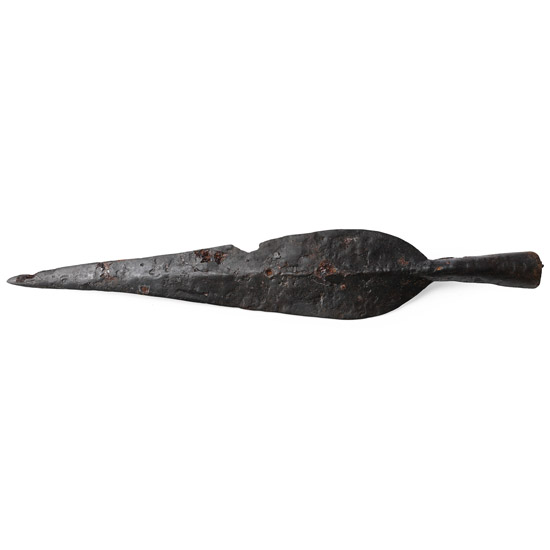
Iron Age Celtic Socketted Iron Spearhead
2nd-1st century B.C.Sold for (Inc. bp): £312
With a slender heart-shaped blade, thick midrib, flared closed socket. 120 grams, 28 cm
From a 1980s collection. Ex North West London gallery. with TimeLine Auctions, 22-27 May 2018, no.1480. Private collection, Suffolk. -
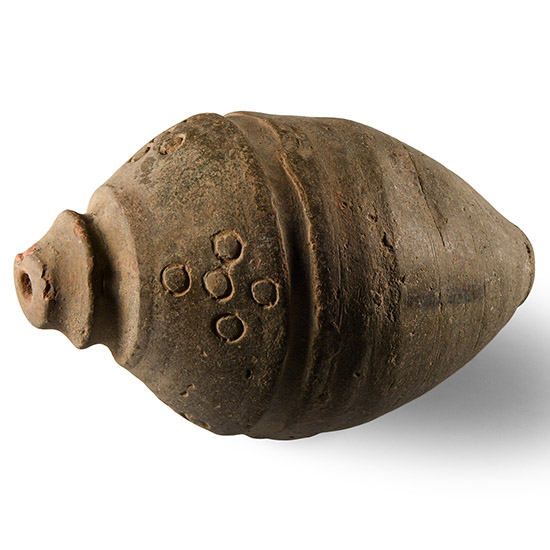
Byzantine 'Greek Fire' Ceramic Fire Bomb or Hand Grenade
Circa 11th-14th century A.D.Sold for (Inc. bp): £156
With a piriform body and domed mouth, stepped rings to the foot, engraved decoration on the shoulders with crosses and grapes; intended to be filled with explosive liquid and wick, used as a hand grenade. 573 grams, 15 cm
Acquired 1990s. From the H.N. collection, Milton Keynes, Bedfordshire, UK. Accompanied by an academic paper by military specialist Dr Raffaele D'Amato, dated 15 July 2019 and titled 'Eastern Roman Empire - Greek Fire Bomb or Hand Grenade (μεσαίον kακάβιον) 9th-11th century AD'.
Apart from the use of siphons or manual flame-throwers called cheirosiphona, special Roman soldiers employed terracotta grenades, in the form of small jars, abundantly evidenced in archaeological excavations. Such were the γανωτα, vessels (sometimes also in bronze) used for Greek fire. They were called μεσαία kακαβιά or κυτροκακάβια where the former had a bulbous shape and the latter a more cylindrical form. -
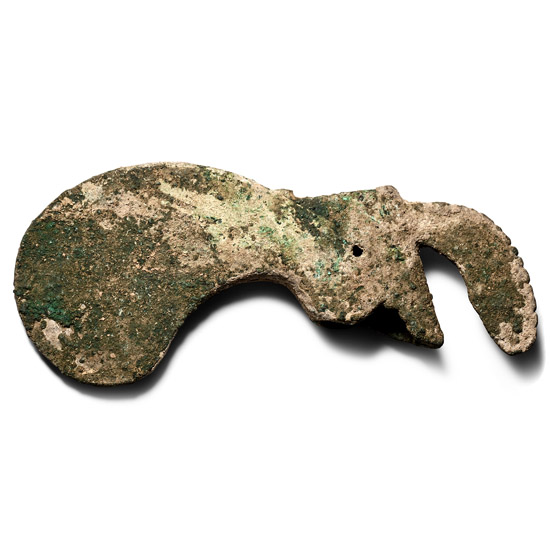
Western Asiatic Paddle-Shaped Axehead
3rd millennium B.C.Sold for (Inc. bp): £140
With a paddle-shaped, curving blade, a short neck, and an oval-shaped socket with a comma-shaped extension on the rear. 250 grams, 15.3 cm
From a UK collection formed in the 1980s. Property of an Essex, UK, gentleman.
