
Loading, please wait...

LOT 2476
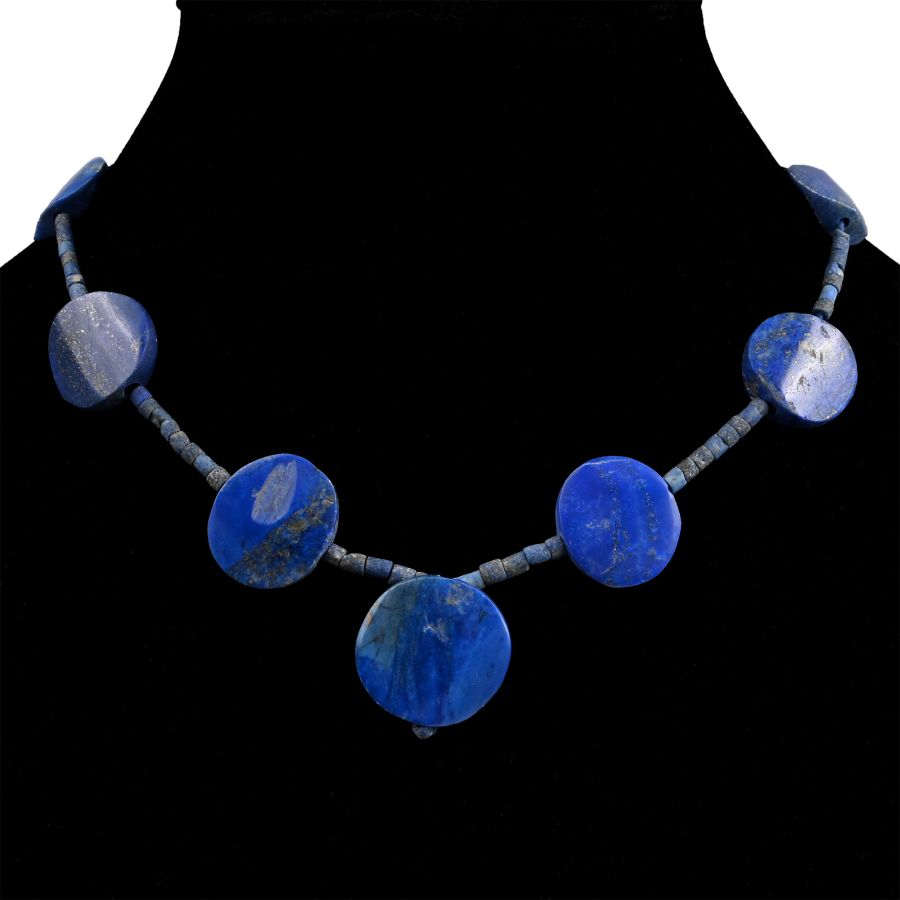
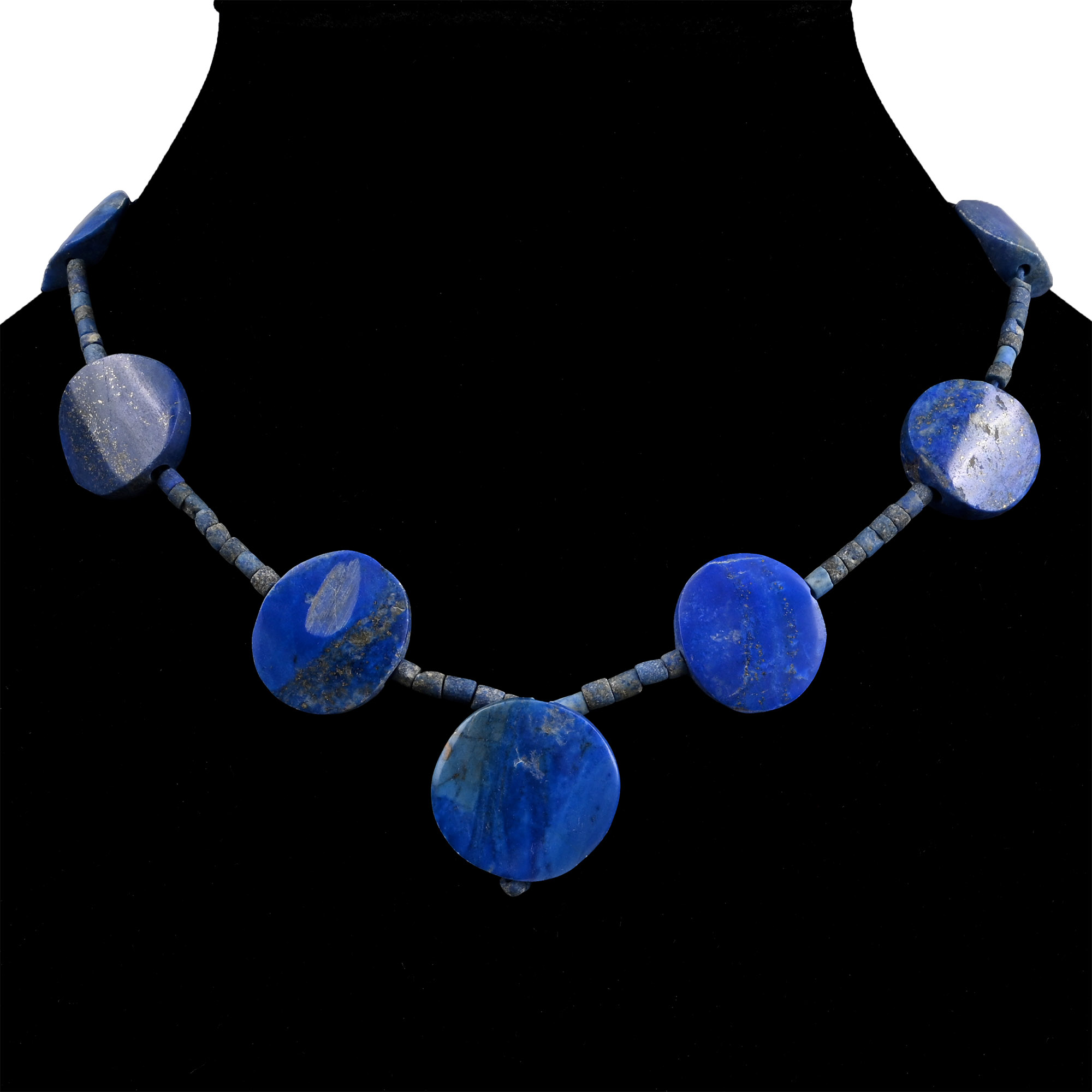
Lapis Lazuli Bead Necklace String
20TH CENTURY A.D.
12 in. (35.8 grams, 30.5 cm).
Composed of tubular and polished coin-shaped beads, restrung. [No Reserve]
ProvenanceEx West London, UK, collection, 1990s.
CONDITIONTimeLine Auctions follows a vetting process to ensure the authenticity and legality of all items, reinforcing our commitment to integrity and responsible trading. Each antiquity, antique, and coin lot undergoes thorough examination by a vetting committee of at least ten external specialists, professional trade association members, scientists, and archaeologists: Our Vetting Process
AUCTIONS:
TimeLine is a leading auction house specialising in antiquities, ancient art, collectables, natural history, coins, medals, and books. Our auctions offer museums, collectors, historians, and enthusiasts the opportunity to acquire unique and historically significant pieces.
LOT 2476
Lapis Lazuli Bead Necklace String
Estimate £50 - 70€58 - 81 (for guidance only)$68 - 95 (for guidance only)
Opening Bid
£5 (EUR 6; USD 7) +BP*
-
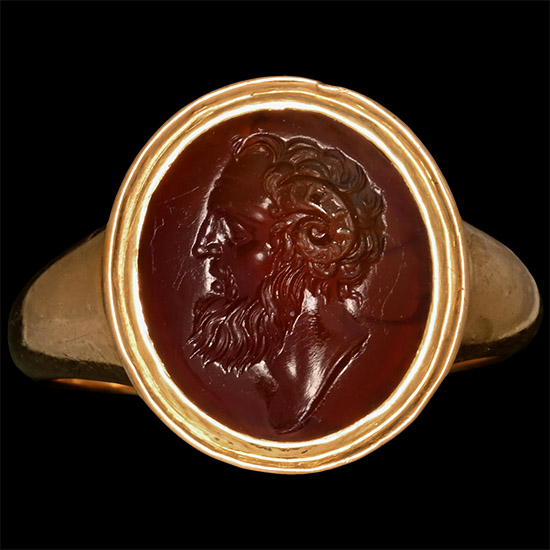
Post Medival Gold Ring with a Carnelian Intaglio of Jupiter Ammon
Circa 19th century A.D.Estimate: £1,500 - 2,000 (+bp*)
Opening Bid: £750
D-section hoop set with an oval carnelian intaglio depicting the mature bearded head of Jupiter Ammon in profile, the face framed by curled hair and a substantial beard, the curling ram’s horn around the ear, the deity’s distinguishing attribute. 4.41 grams, 20.20 mm overall, 16.59 x 15.14 mm internal diameter (approximate size British L 1/2, USA 6, Europe 11.87, Japan 11)
Acquired on the European art market. UK, private collection. -
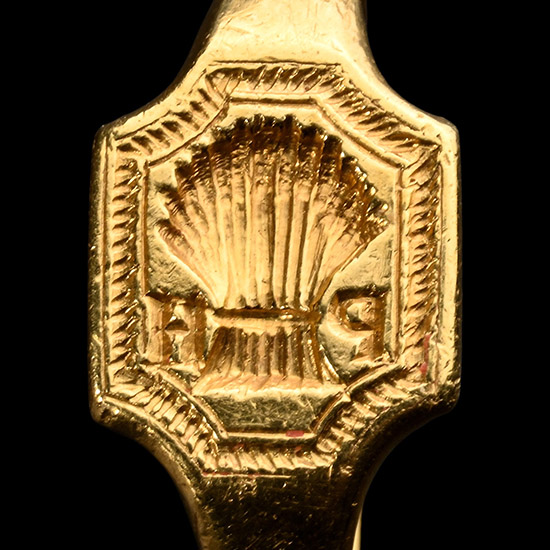
Post Medieval Gold Signet Ring with a Wheat Sheaf
Germany, 15th-16th century A.D.Estimate: £5,000 - 7,000 (+bp*)
Opening Bid: £2,500
Comprising a large hoop with a cut-cornered bezel engraved with a wheat sheaf flanked by the initials P and H. 9.51 grams, 24.71 mm overall, 21.03 x 17.66 mm internal diameter (approximate size British R 1/2, USA 8 3/4, Europe 19.38, Japan 18)
Acquired on the European art market. UK, private collection. This lot has been checked against the Interpol Database of stolen works of art and is accompanied by search certificate no.13488-263468.
The family name of the coat of arms with the owner’s initials P and H cannot be identified, but it is possibly German. The garb of wheat, often simply called a ‘garb’ in heraldry, is a bound sheaf of grain and one of the most recognisable agricultural charges in coats of arms. Its traditional meaning is abundance, fertility, harvest, prosperity, and the honest reward of labour. Because wheat was a staple crop, the garb often points to a family connection with farming, landholding, milling, food supply, or rural prosperity. In heraldic terminology, it may be shown in gold to emphasise wealth and ripeness, or in natural colours to stress its agricultural character. -
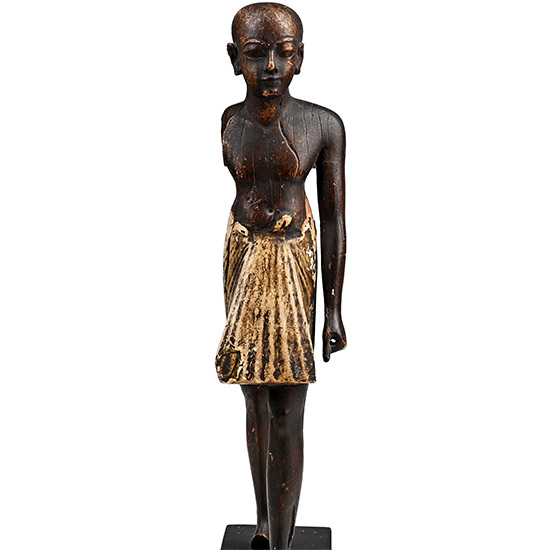
Wooden Statue Studio Reproduction of Amenhotep III
20th century A.D.Estimate: £60 - 80 (+bp*)
Opening Bid: £5
carved in the round wearing a flared and pleated kilt; mounted on a wooden stand. 1.01 kg total, 37 cm highi including stand
From the private collection of Peter Clayton, FCILIP, Dip, Arch, FSA, FRNS, Hemel Hempstead, Hertfordshire, UK; formed since the late 1950s.
