
Loading, please wait...
LOT 1578
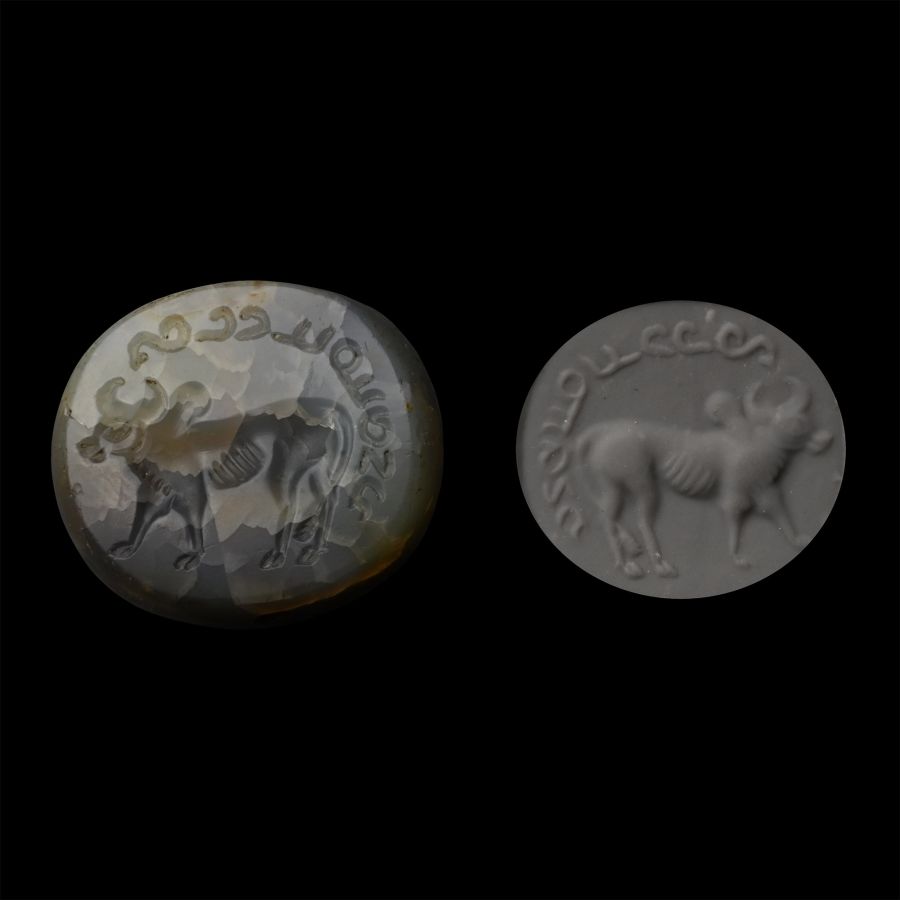
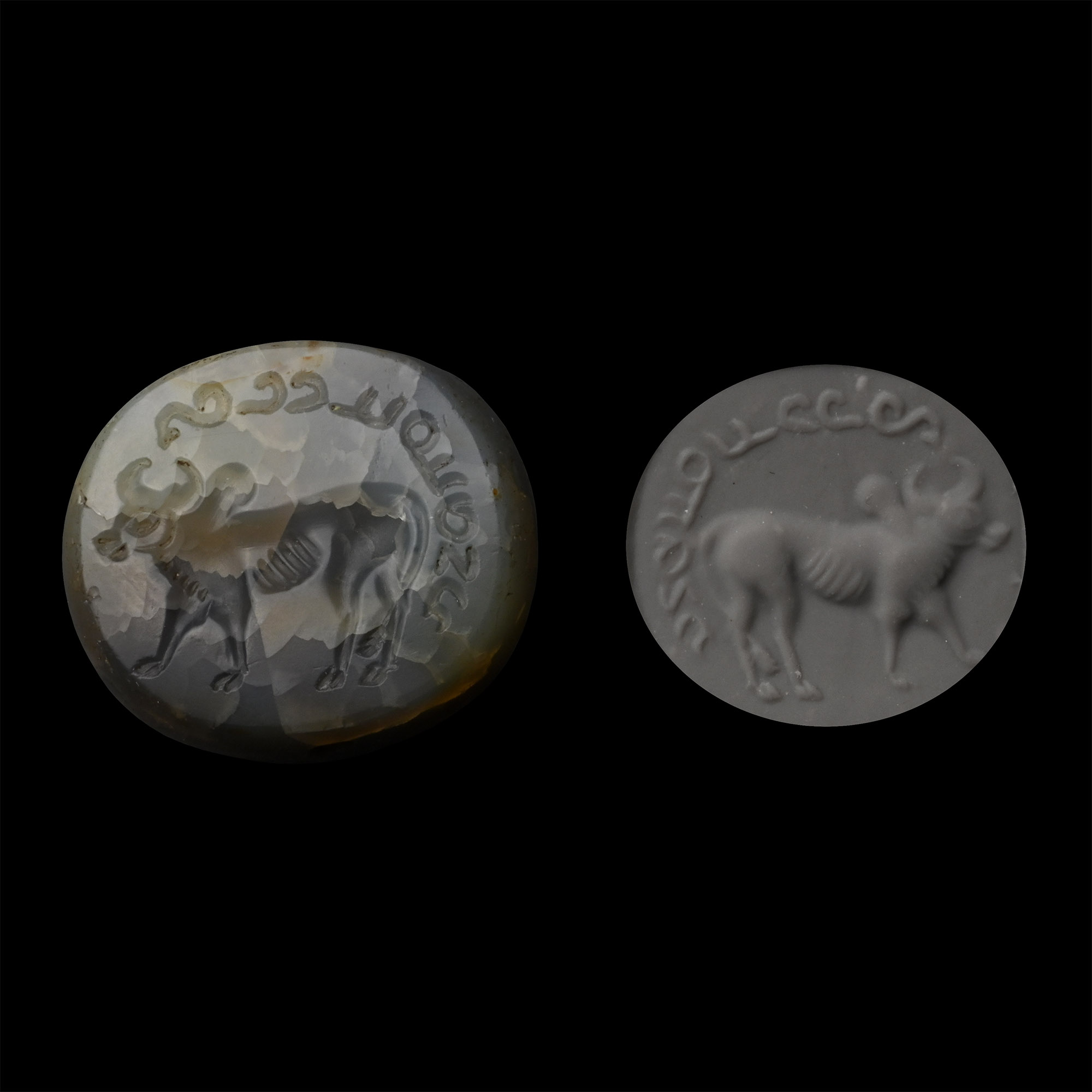
Kushan-Sasanian Chalcedony Stamp Seal
3RD-4TH CENTURY AD. AND LATER
1 in. (13.6 grams, 24 mm).
Plano-convex type with narrow transverse hole; possibly later incuse zebu standing with possibly later inscription above. [No Reserve]
ProvenancePrivate collection, 1970s.
Acquired Chiswick Auctions, 2 February, 2016, no.109.
Private collection, London, UK.
TimeLine Auctions follows a vetting process to ensure the authenticity and legality of all items, reinforcing our commitment to integrity and responsible trading. Each antiquity, antique, and coin lot undergoes thorough examination by a vetting committee of at least ten external specialists, professional trade association members, scientists, and archaeologists: Our Vetting Process
AUCTIONS:
TimeLine is a leading auction house specialising in antiquities, ancient art, collectables, natural history, coins, medals, and books. Our auctions offer museums, collectors, historians, and enthusiasts the opportunity to acquire unique and historically significant pieces.
-
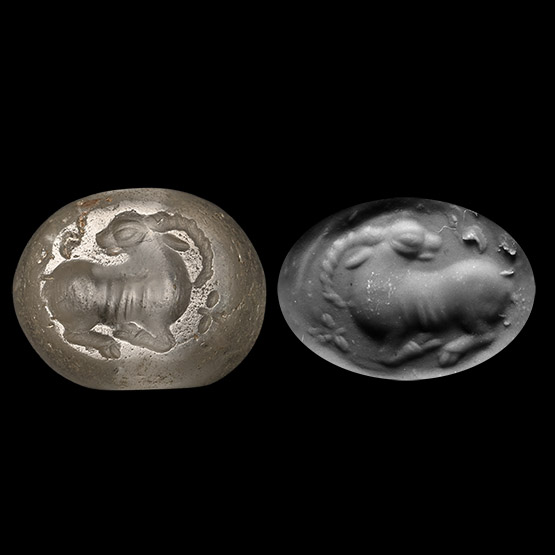
Sasanian Domed Rock Crystal Stamp Seal with Deer
3rd-5th century A.D.Sold for (Inc. bp): £33
Plano-convex with incuse motif of an ibex with legs folded beneath the body. 6.77 grams, 19 mm
London, UK, art market, 1980s. Private collection, London, UK. -
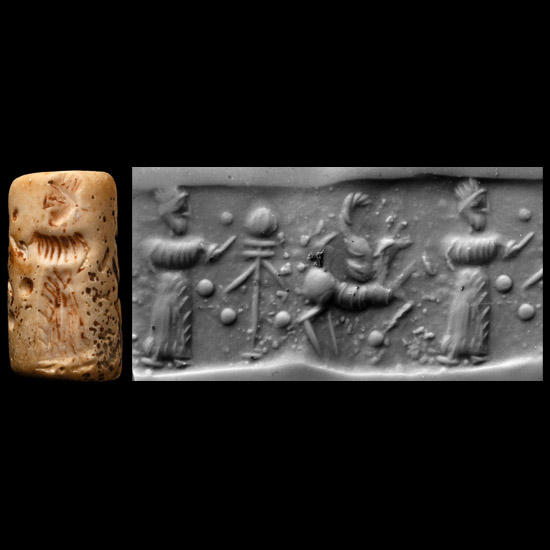
Western Asiatic Cream Stone Cylinder Seal with Figure and Gryphon
2nd-1st millennium B.C.Sold for (Inc. bp): £143
Frieze depicting a standing robed figure in profile with one hand raised to an orb above a column, advancing gryphon to the other side; supplied with a museum-quality impression. 2.33 grams, 17.06 mm
From the private collection of a European gentleman (1942-2024), formed since the 1970s. -
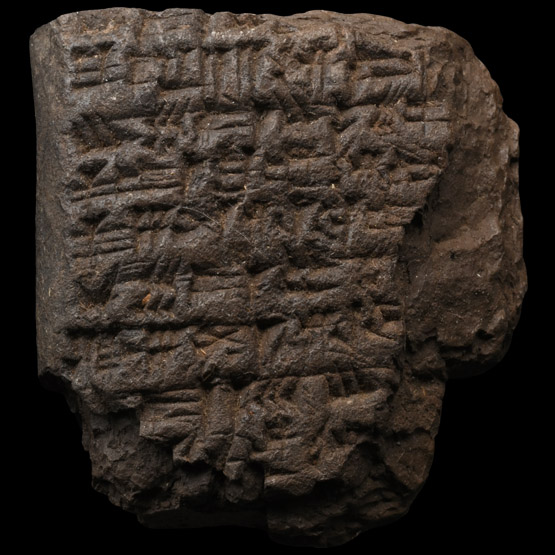
Babylonian Cuneiform Tablet Section
2nd millennium B.C.Sold for (Inc. bp): £390
Fragment of a pillow-shaped tablet with impressed cuneiform text to the outer surface. 51.8 grams, 50 mm
From an old English collection formed before 1990. Acquired from Alan Cherry, Bournemouth, Dorset. Property of an Essex, UK, gentleman.
