
Loading, please wait...
LOT 0434
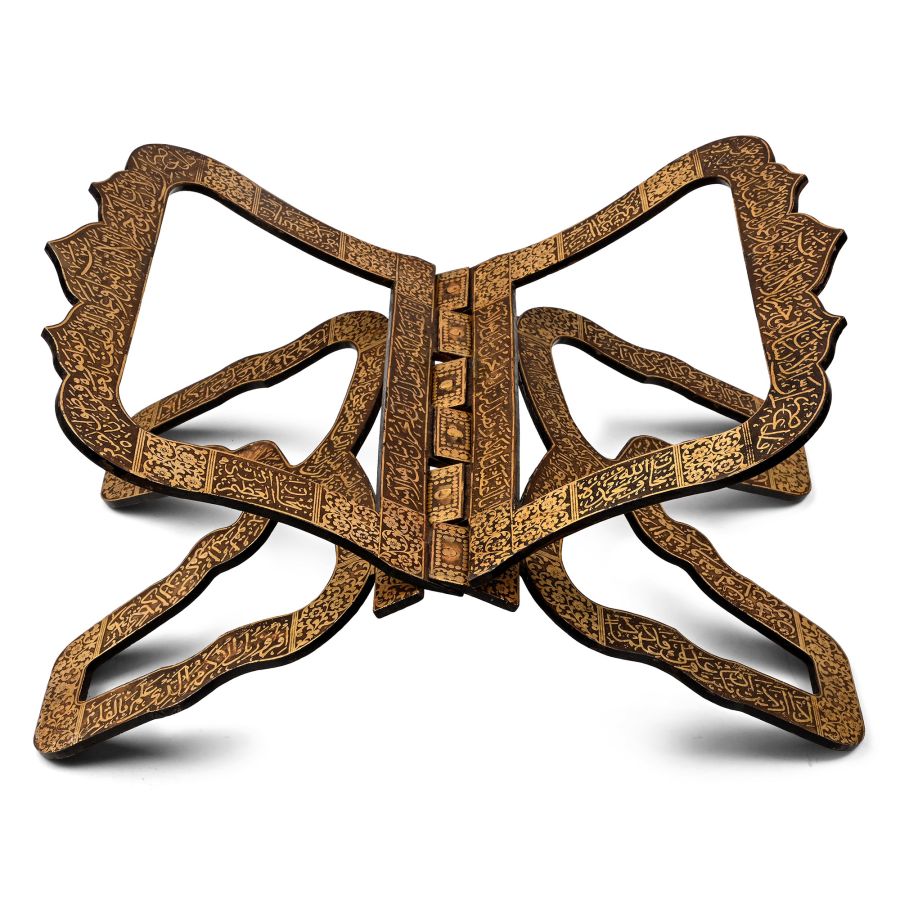
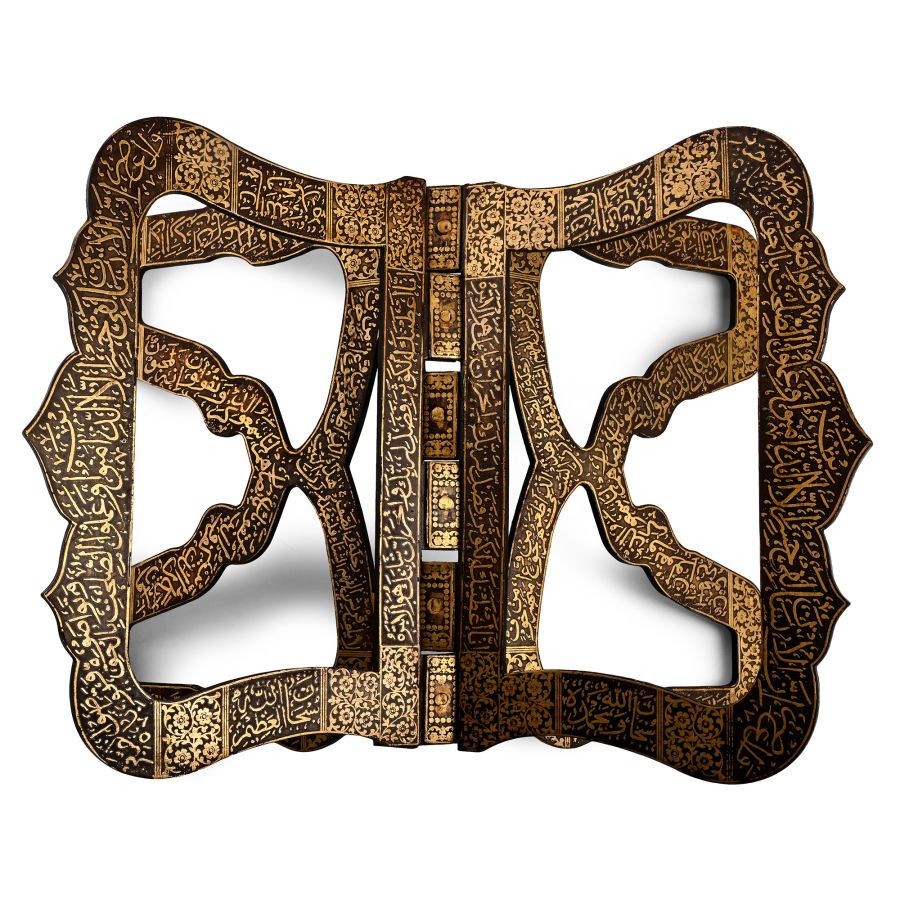
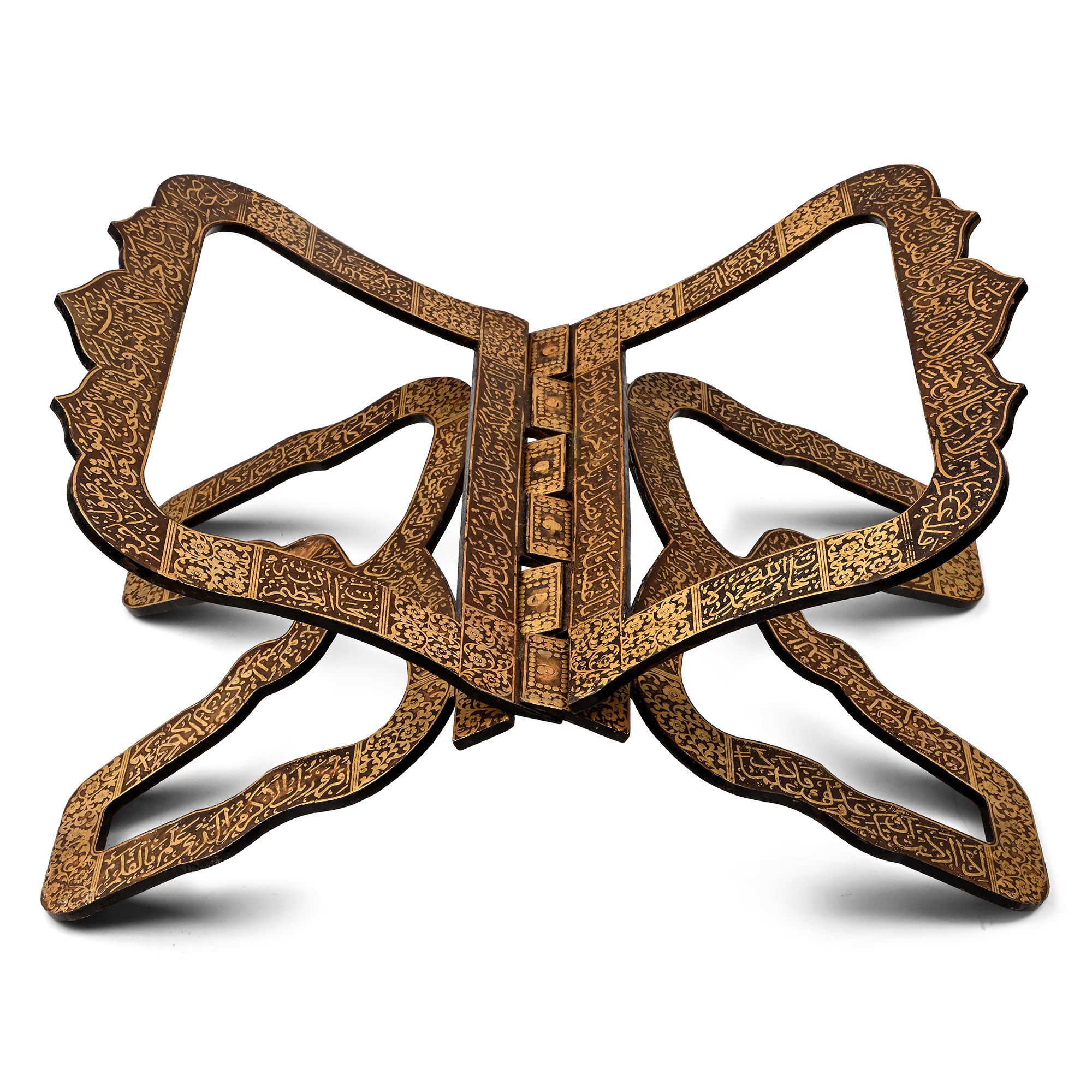
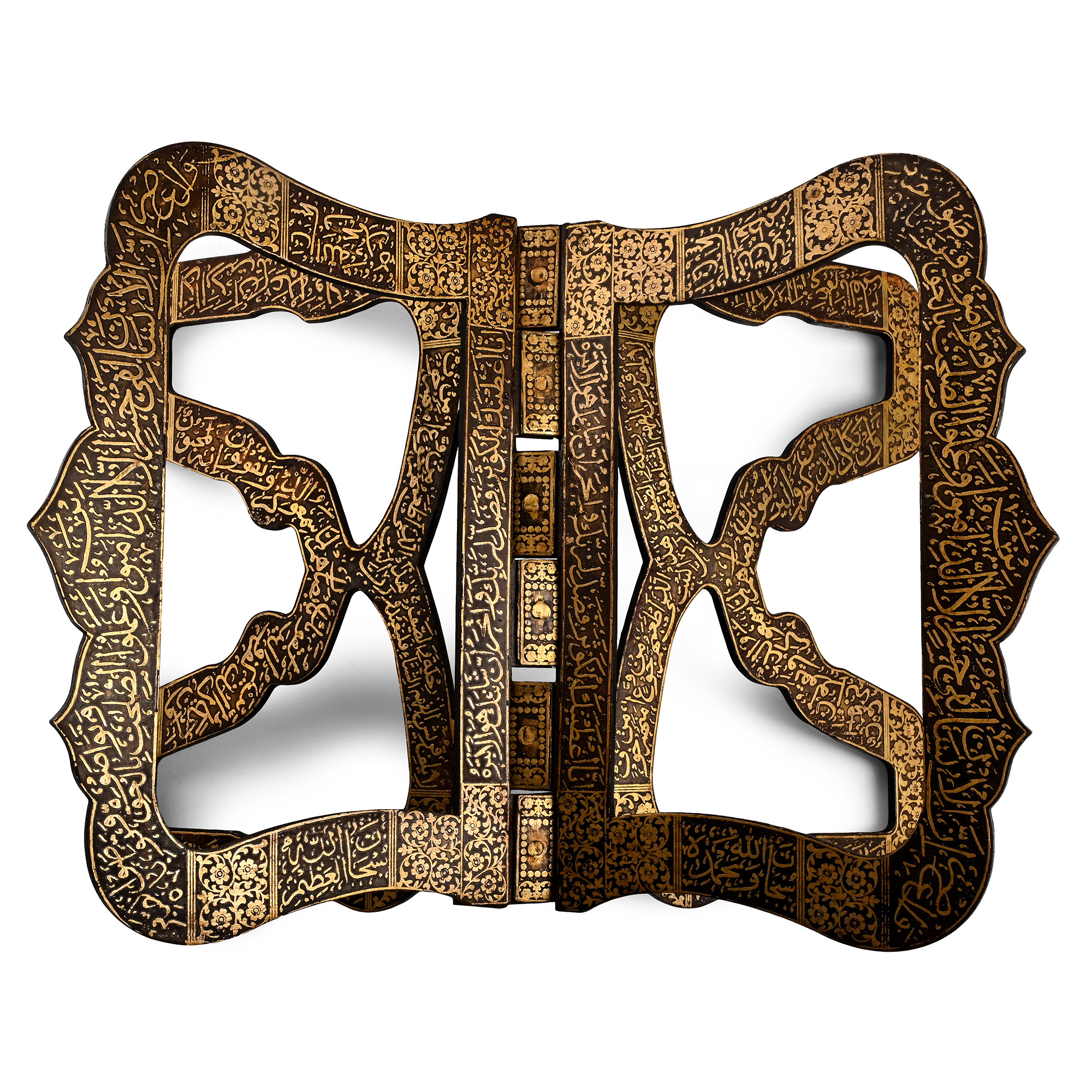
Koftgari Brass Inlaid Iron Quran Stand
INDIAN, 19TH CENTURY A.D.
14 3/4 in. (3.3 kg, 37.5 cm).
Formed as two hinged folding leaves, the lower sections pierced with rounded voids and the upper with a subrectangular slot; the entire surface decorated with inlaid floral panels and passages of calligraphic text.
ProvenancePrivate collection, London, UK.
This lot has been checked against the Interpol Database of stolen works of art and is accompanied by search certificate number no.13160-248446.
Cf. Bonhams, 18 October 2016, no.247.
CONDITIONTimeLine Auctions follows a vetting process to ensure the authenticity and legality of all items, reinforcing our commitment to integrity and responsible trading. Each antiquity, antique, and coin lot undergoes thorough examination by a vetting committee of at least ten external specialists, professional trade association members, scientists, and archaeologists: Our Vetting Process
AUCTIONS:
TimeLine is a leading auction house specialising in antiquities, ancient art, collectables, natural history, coins, medals, and books. Our auctions offer museums, collectors, historians, and enthusiasts the opportunity to acquire unique and historically significant pieces.
-
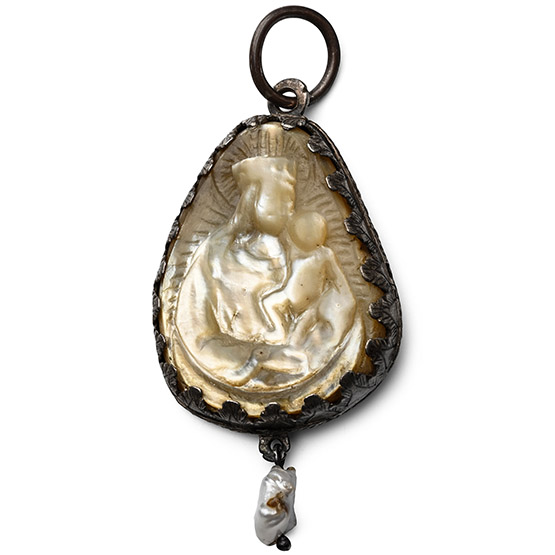
Medieval Silver Pendant with Mother-of-Pearl Scene of Virgin and Child
Germany, 15th century A.D.Sold for (Inc. bp): £2,210
Tear-shaped frame with loop and irregular dangle below; carved nacre relief of the Virgin and Child; Mother of God shown crowned and in profile, tenderly supporting the Christ Child on her lap; applied gold Corpus Christi to reverse. 20.5 grams, 70 mm
Private collection, Europe. Acquired on the German art market. This lot has been checked against the Interpol Database of stolen works of art and is accompanied by search certificate number no.13056-248332.
The carving, with its luminous iridescence and softly modelled planes, captures both the sacred intimacy of the subject and the shimmering qualities of the material. The mount is worked in silver with chased foliate detail and suspends a natural baroque pearl drop. The reverse is finely engraved with radiating rays, clouds, and the inscription INRI, centred by a parcel-gilt figure of the Crucified Christ affixed to the ground. This juxtaposition of the Virgin and Child with the Passion underscores the dual themes of Incarnation and Redemption, reflecting late medieval devotional practices. -
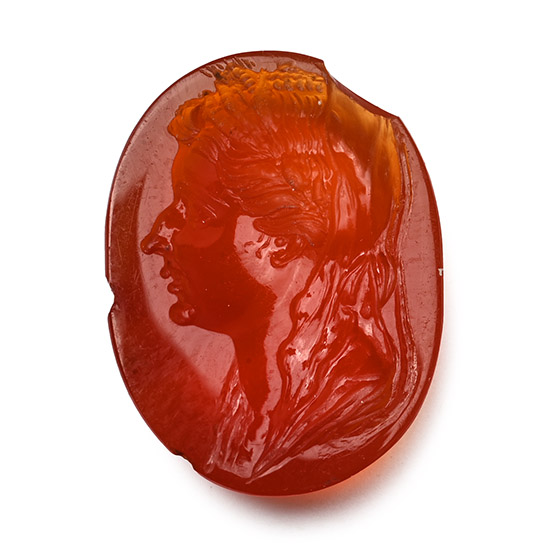
Neoclassical Carnelian Gemstone with Bust of the Roman Empress Livia as the Greek Goddess Ceres
Italy, 18th century A.D.Sold for (Inc. bp): £650
Intaglio profile bust of Empress Livia with laurel wreath to her long hair, presented in the guise of Ceres; supplied with a museum-quality impression. 1.51 grams, 19 mm
Private English collection, formed between the late 1970s and early 1990s. Private collection, London, UK.
Livia Drusilla (59 B.C.-A.D. 29) was Roman empress from 27 B.C.-A.D. 14 as the wife of Emperor Augustus. She was known as Julia Augusta after her admission into the Julian family in AD 14. Charis (Greek: Χάρις meaning 'Grace') was a goddess in Greek mythology, one of the 'Charites' or 'Graces' associated with charm, beauty, nature, creativity and fertility. -
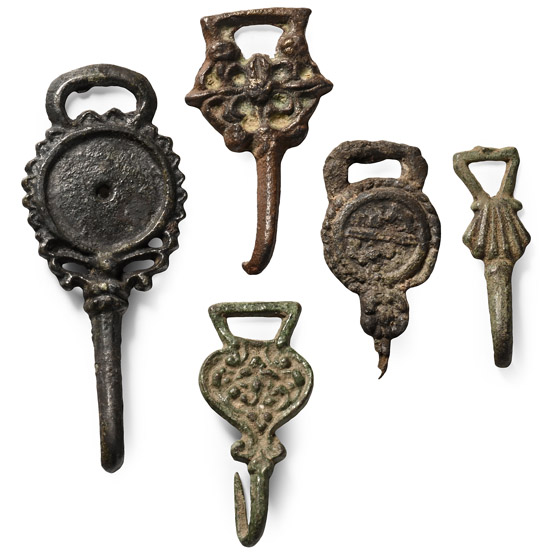
Tudor Bronze Clothes Hook Fastener Group
16th century A.D.Sold for (Inc. bp): £26
A mixed group of hooked fasteners including disc-shaped, leaf-shaped, shell and foliage plaque; each with suspension lug. 18.87 grams total, 31-56 mm
From the private collection of the late Graham Slater (1927-2024), Cambridge, UK, acquired 1980s-1990s.
