
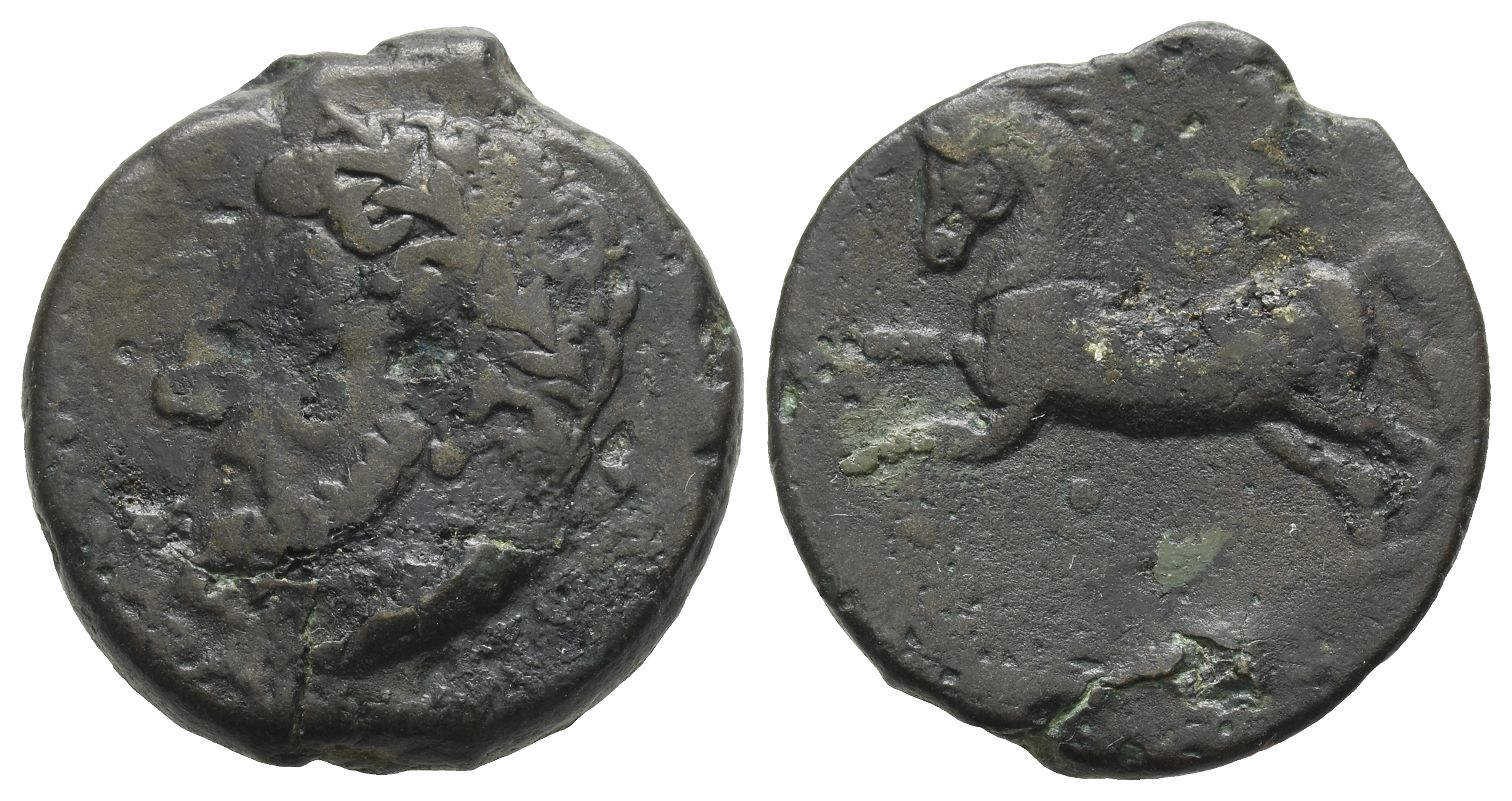
LOT 3334
Kings of Numidia, Massinissa or Micipsa AE Unit. 203-148 BC or 148-118 BC.
Laureate head to left / Horse galloping to left; pellet below. Mazard 53; MAA 18a; SNG Copenhagen 505. Near Very Fine.(14.70gr, 27mm, 12h.).
ProvenanceAcquired on the UK art market.
From the collection of Mr Carlos Bahamonde, Manchester, UK.
TimeLine Auctions follows a vetting process to ensure the authenticity and legality of all items, reinforcing our commitment to integrity and responsible trading. Each antiquity, antique, and coin lot undergoes thorough examination by a vetting committee of at least ten external specialists, professional trade association members, scientists, and archaeologists: Our Vetting Process
AUCTIONS:
TimeLine is a leading auction house specialising in antiquities, ancient art, collectables, natural history, coins, medals, and books. Our auctions offer museums, collectors, historians, and enthusiasts the opportunity to acquire unique and historically significant pieces.
-
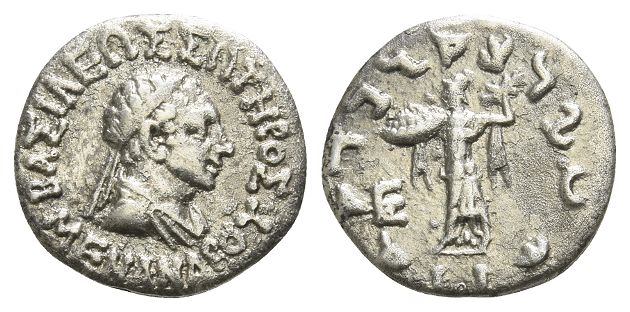
Indo-Greek Kingdom, Menander I Soter AR Drachm. Circa 166/155-130 BC. Taxila mint.
Sold for (Inc. bp): £72
ΒΑΣΙΛΕΩΣ ΣΩΤΗΡΟΣ ΜΕΝΑΝΔΡΟΥ, diademed bust to right, with aegis on shoulder, holding spear / 'Maharajasa tratarasa Menamdrasa' in Kharosthi characters around Athena Alkidemos standing to left, hurling thunderbolt and holding aegis; in right field, monogram. Bopearachchi series 7, 26; Mitchiner 224e; SNG ANS 723. 1.88gr, 16mm, 12h.
Very Fine.
London, UK, art market, 1980s. Private collection, London, UK. -
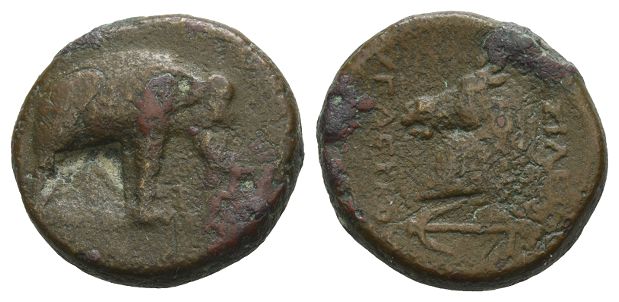
Seleukid Empire, Seleukos I Nikator AE 21mm. Circa 300-281 BC. Apameia on the Orontes mint.
Sold for (Inc. bp): £65
Elephant walking to right; countermark within incuse square / Horse's head to left; anchor below, ΒΑΣΙΛΕΩΣ to right, ΣΕΛΕΥΚΟΥ to left. SC 35; WSM 1128; HGC 9, 79. 8.43gr, 21mm, 11h.
Near Very Fine.
Acquired on the UK art market. From the collection of Mr Carlos Bahamonde, Manchester, UK. -
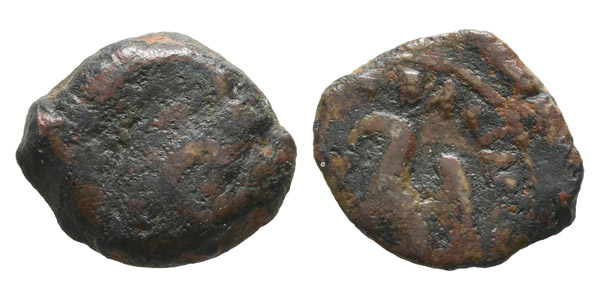
Ptolemaic Kingdom of Egypt, Kleopatra III & Ptolemy IX Soter AE Chalkous. 116-107 BC. Uncertain mint in Cyprus(?).
Sold for (Inc. bp): £13
Diademed head of Zeus-Ammon to right / [...] ΒΑΣΙΛΕ[...], eagle with open wings standing to left on thunderbolt. Cf. Svoronos 1716 (Ptolemy X-Alexandreia); cf. SNG Copenhagen 668-9. 1.97gr, 14mm, 12h.
Good Fine.
Acquired on the European coin market. Property of a Kent, UK, gentleman.
