
LOT 2646
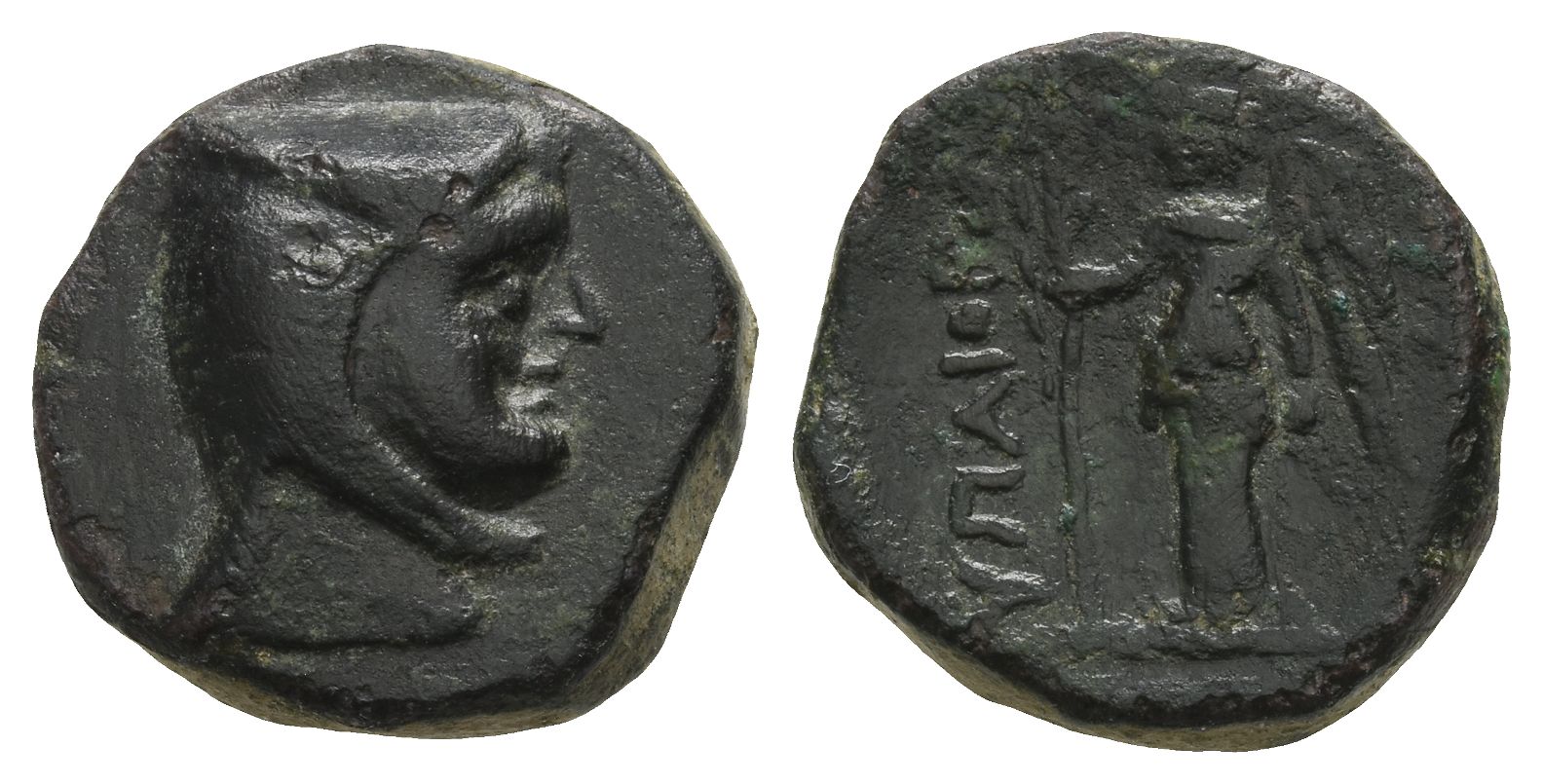
Kings of Cappadocia, Hypaioros AE 17mm. Circa 250-187 BC.
Uncertain mint. Head to right, wearing bashlyk / ΥΠΑΙoΡo[...], Nike standing facing, head to left, holding long palm in extended right hand. Unrecorded ruler but cf. Roma Numismatics, E-81, 607 ('ΥΠΑΙ' legend on coin of Ariarathes) and HGC 9, 493b (similar reverse of issue of Antiochos III). Good Very Fine. Unpublished and unique; of great historical and numismatic importance.(5.00gr, 17mm, 11h.).
ProvenanceEx 'V' gentleman's collection, Switzerland.
From the property of a North London, UK, gentleman.
It is not rare when a coin can be the only evidence about the existence of a person or city from the past. On this particular coin, it is the inscription of YΠΑΙΟΡΟ that makes it difficult to attribute. No city or ruler is recorded with this name and the only ancillary evidence we have is its similarity to some other types.
First of all, the style of the leather helmet (called bashlyk, common for the Cappadocian bronzes) and the lack of the royal title, refer us to the king of Cappadocia, Ariaramnes. The Roma's example is the only other example who bears the abbreviated legend YΠΑΙ but on a coin of Ariarathes. On the other hand, the reverse type and style of legend resemble the bronze coins of Antiochos III struck in Southern Coele-Syria (SC 1100a; HGC 9, 493b).
It is not certain whether the name refers to a city or to a ruler. Bronze coins of Ariaramnes can have the name of the mint abbreviated (cf. Simonetta 9a&b), but it is considered unusual in this period to have a bronze coin with a full ethnic and the portrait of the ruler.
It is very likely that we are dealing with the name of a Cappadocian ruler who was active for a short period in the second half of the 3rd to the first part of the 2nd century and participated in the recovery of the outlying provinces of the Seleucid Empire from Antiochos III.
TimeLine Auctions follows a vetting process to ensure the authenticity and legality of all items, reinforcing our commitment to integrity and responsible trading. Each antiquity, antique, and coin lot undergoes thorough examination by a vetting committee of at least ten external specialists, professional trade association members, scientists, and archaeologists: Our Vetting Process
AUCTIONS:
TimeLine is a leading auction house specialising in antiquities, ancient art, collectables, natural history, coins, medals, and books. Our auctions offer museums, collectors, historians, and enthusiasts the opportunity to acquire unique and historically significant pieces.
-
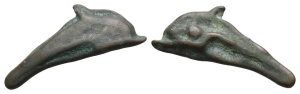
Skythia, Olbia Cast AE Dolphin. Circa 500-450/25 BC.
Sold for (Inc. bp): £46
Dolphin / Dolphin. SNG Stancomb 334-337; SNG BM Black Sea 359-367. 2.07gr, 26mm x 11mm.
Very Fine.
From a private collection formed in Europe in the 1980s. From Westminster collection, central London, UK.
The method of casting this unique type of coin was adopted by the Gallic Celts who originally came from this region. Dolphins were generally struck in the form of a "tree" attached to the tail, although some examples appear to have been cast individually. -
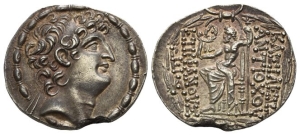
Seleukid Empire, Antiochos VIII Epiphanes (Grypos) AR Tetradrachm. 121/0-97/6 BC.
Sold for (Inc. bp): £520
Antioch mint; struck circa 109-96 BC. Diademed head of Antiochos to right within filleted border / ΒAΣΙΛEΩΣ ΑNTIOXOY EΠIΦANOYΣ, Zeus Nikephoros seated to left, holding sceptre; monogram of PE above A in outer left field, control mark beneath throne; all within wreath. SC 2309.2c. 16.06gr, 31mm, 12h.
Near Extremely Fine. Beautifully toned.
Acquired in 1995. From a private collection in Europe.
The Greeks loved to give nicknames to their kings, a custom that lasted until the late years of the Byzantine empire. An example of this is Antiochοs VIII Epiphanes, the so-called Grypos ('hook-nosed'), a fact confirmed in his iconography. -
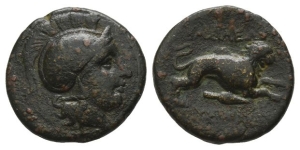
Kings of Thrace. Lysimachos AE 20mm. Circa 306/5-301/0 BC.
Sold for (Inc. bp): £39
Lysimacheia mint. Head of Athena to right, wearing crested Attic helmet / Lion leaping to right above spearhead to right; BAΣIΛEΩΣ above, ΛYΣIMAXOY below. SNG Copenhagen 1150; HGC 3.2, 1758. 4.89gr, 20mm, 12h.
Near Very Fine.
From the collection of a London antiquarian, formed since the 1980s.
