
Loading, please wait...
LOT 0111
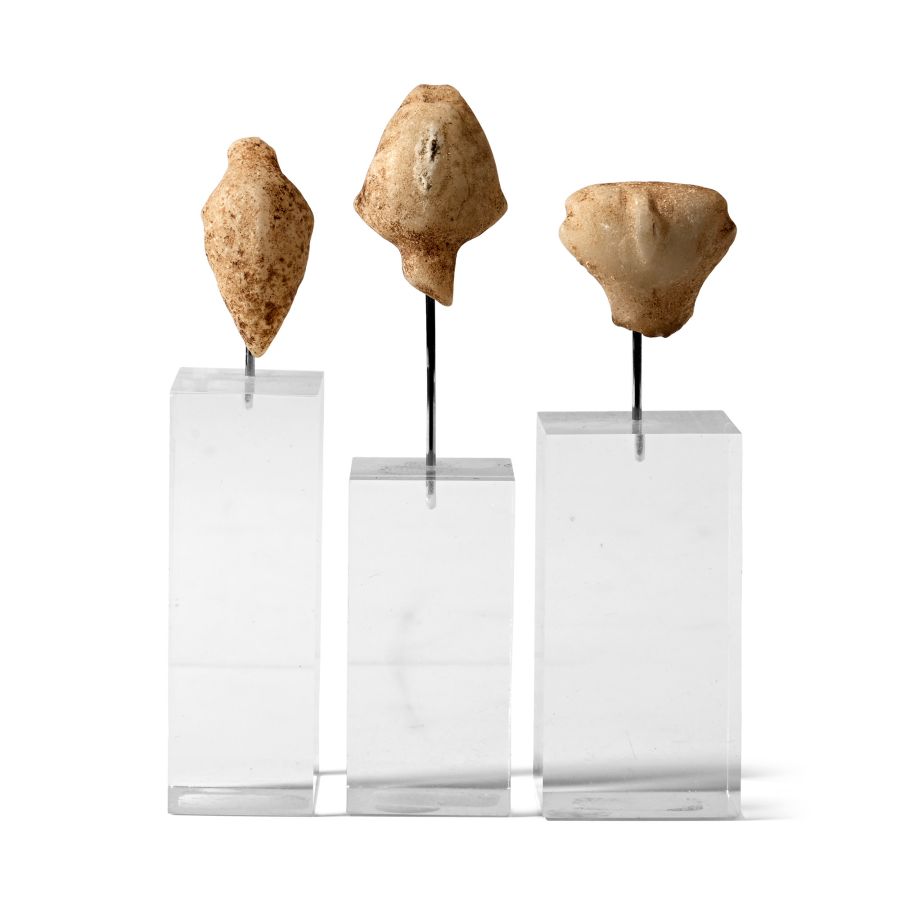
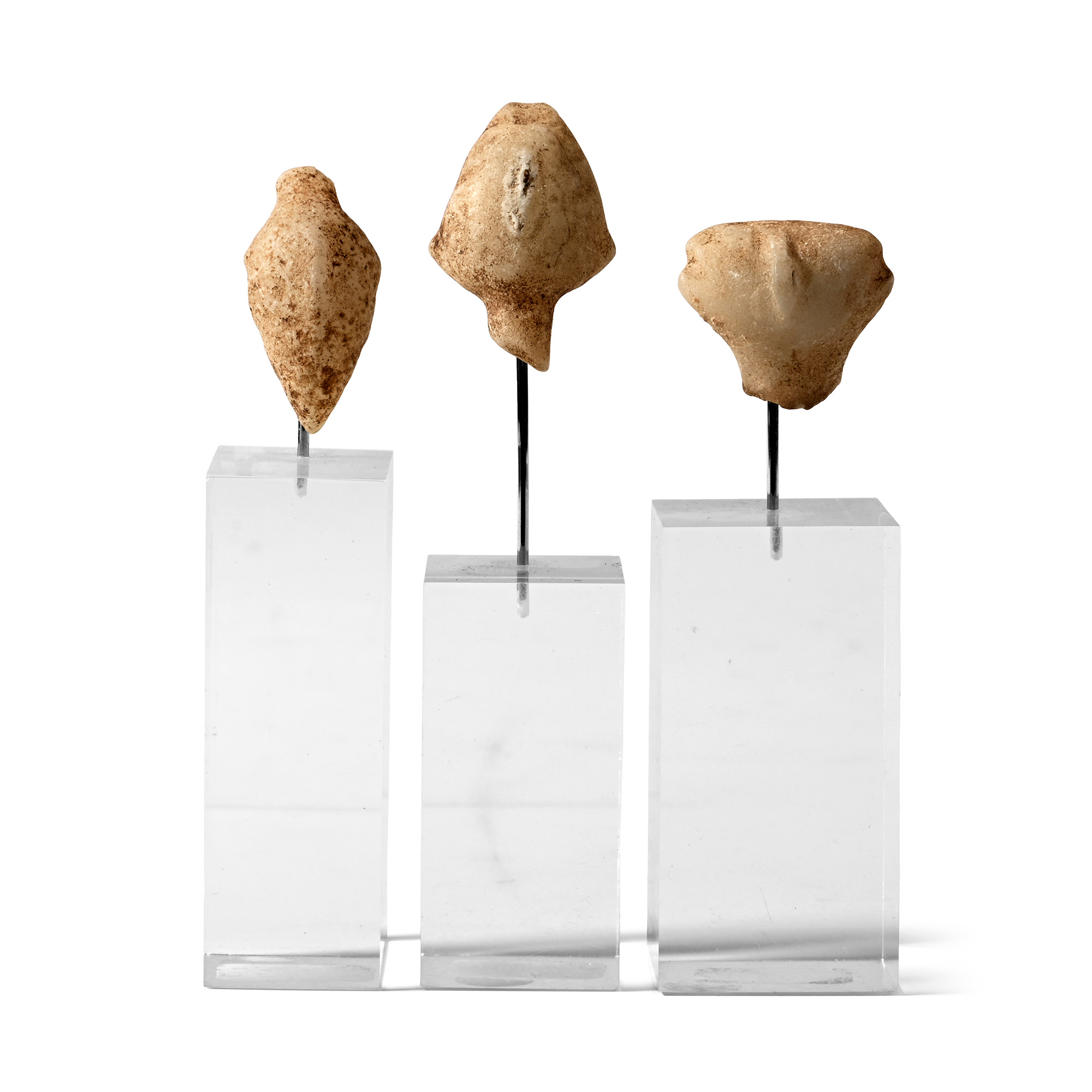
Kiliya Idol Head Collection
4TH-3RD MILLENNIUM B.C.
3 - 3 3/8 in. (79.7 grams total, 76-87 mm including stand).
Group comprising: (a) horizontal oval face with long, straight nose and small ears; back of head flat, very slender neck; (b) pointed top of head, long straight nose, ears positioned low on the head, nose and top of head slightly worn; (c) head with pointed top curving backwards; slender neck and long straight nose, small ears; mounted on custom-made display stand. [3]
Provenancewith Gorny & Mosch Auction, Munich, 11 July 2006, nos.612.1, 613.1 & 613.2.
CONDITIONTimeLine Auctions follows a vetting process to ensure the authenticity and legality of all items, reinforcing our commitment to integrity and responsible trading. Each antiquity, antique, and coin lot undergoes thorough examination by a vetting committee of at least ten external specialists, professional trade association members, scientists, and archaeologists: Our Vetting Process
AUCTIONS:
TimeLine is a leading auction house specialising in antiquities, ancient art, collectables, natural history, coins, medals, and books. Our auctions offer museums, collectors, historians, and enthusiasts the opportunity to acquire unique and historically significant pieces.
LOT 0111
Kiliya Idol Head Collection
Estimate £1,000 - 1,400€1,160 - 1,620 (for guidance only)$1,350 - 1,890 (for guidance only)
Opening Bid
£550 (EUR 638; USD 743) ‡+BP*
-
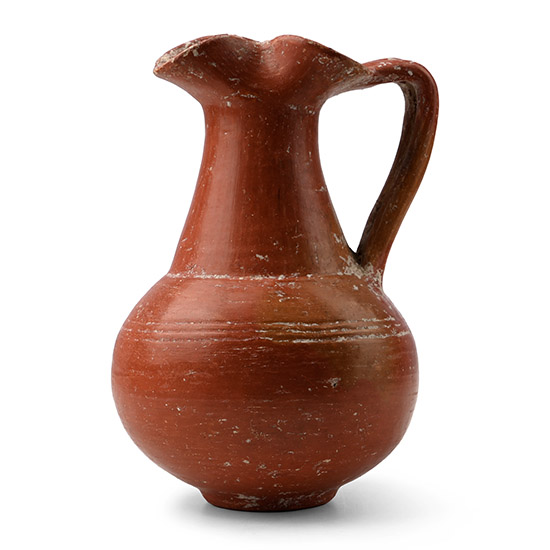
Graeco-Phoenician Glazed Terracotta Oinochoe
7th century B.C.Estimate: £600 - 800 (‡+bp*)
Opening Bid: £325
With a folded trefoil mouth, an applied ribbed handle and basal ring, and incised concentric rings above the equator. 491 grams, 17 cm
Private collection, acquired in the late 1980s-early 1990s; thence by descent.
Throughout the 7th century BC, the Phoenician ports received goods from the East, from Cyprus, Eastern Greece, Pithecussa, and even Etruria, likely in exchange for grain, oil, and wine. Among the various archaeological finds unearthed in these ports are Attic, Corinthian, and Rhodian pottery, some of which was manufactured by the Greek colonies of the West, such as Ischia-Pithecussa. -
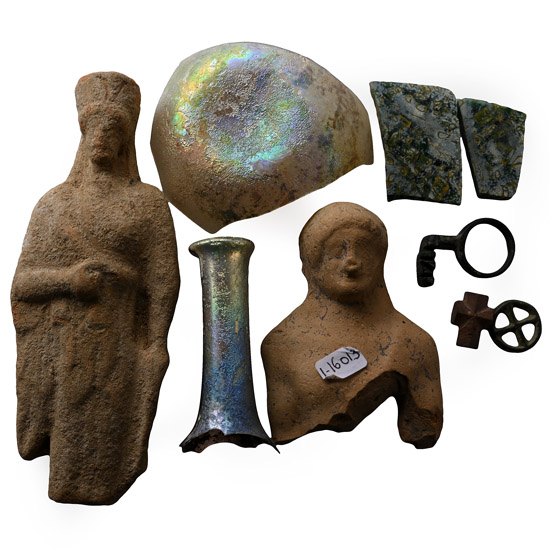
Greek and Later Artefact Collection
6th century B.C. and laterEstimate: £300 - 400 (‡+bp*)
Opening Bid: £180
Mixed group of items, including iridescent glass vessel fragments, a key ring, a kore statuette fragment, and others. 159 grams total, 1.6-12.8 cm
Private collection, Switzerland. -
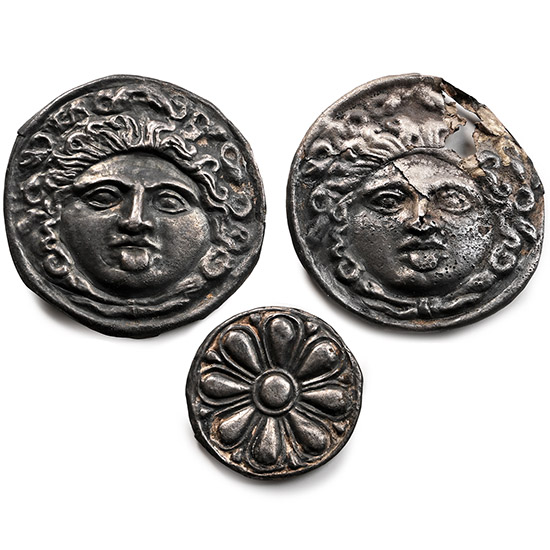
Greek Silver Medusa Repoussé Horse Harness Phalera Group
Circa 2nd-1st century B.C.Estimate: £600 - 800 (+bp*)
Bids: 5 | Current Bid: £110
Comprising: two sheet silver phalerae, each with a facing gorgoneion motif and fragments of a third; sheet-silver roundel with a lotiform rosette motif. 14.2 grams total, 31-50 mm
Private collection formed in Europe in the 1980s. Westminster collection, central London, UK
Similar phalerae were manufactured in the Greek workshops of Olbia or the northwestern Black Sea Region, including the Bosphorus and Asia Minor. These pieces were the top decorations of domed phalerae, used by Hellenistic horsemen, Thracians and Sarmatians. They were characterised by a variety of border designs, while, although rare, some of them have the upper part decorated with a frieze of horizontally arranged floral patterns. The image of Gorgon-Medusa is very common.
